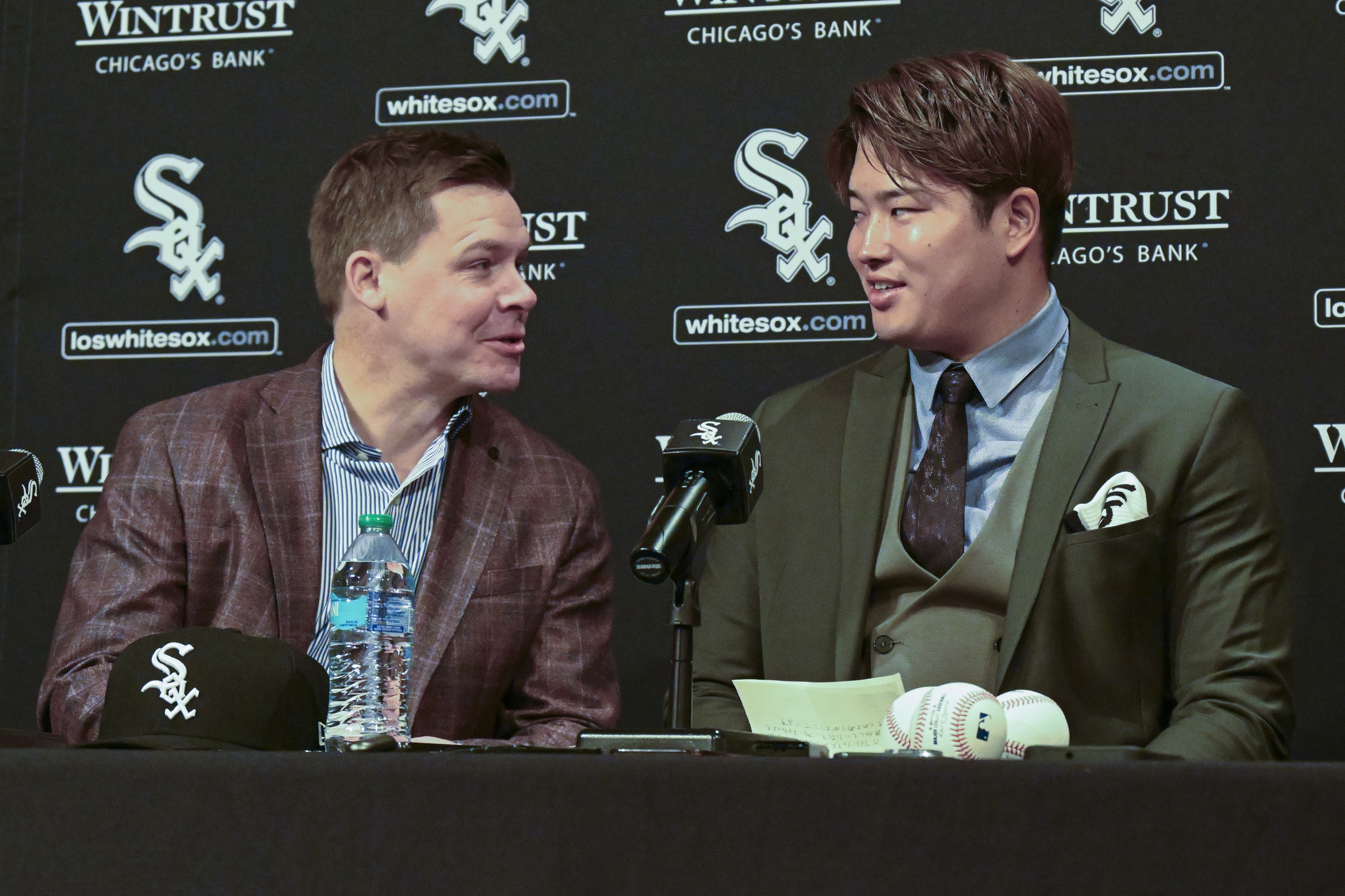
In December, the White Sox won the right to pick first overall in a deep 2026 MLB Draft, which everyone assumed at the time — correctly — set them up to add the long-ballyhooed UCLA shortstop Roch Cholowsky. Friday night, they traded 2023 first-round selection Jacob Gonzalez, hauling in the 34th overall pick to provide scouting director Mike Shirley a bonus pool of over $20 million; the largest in MLB history.
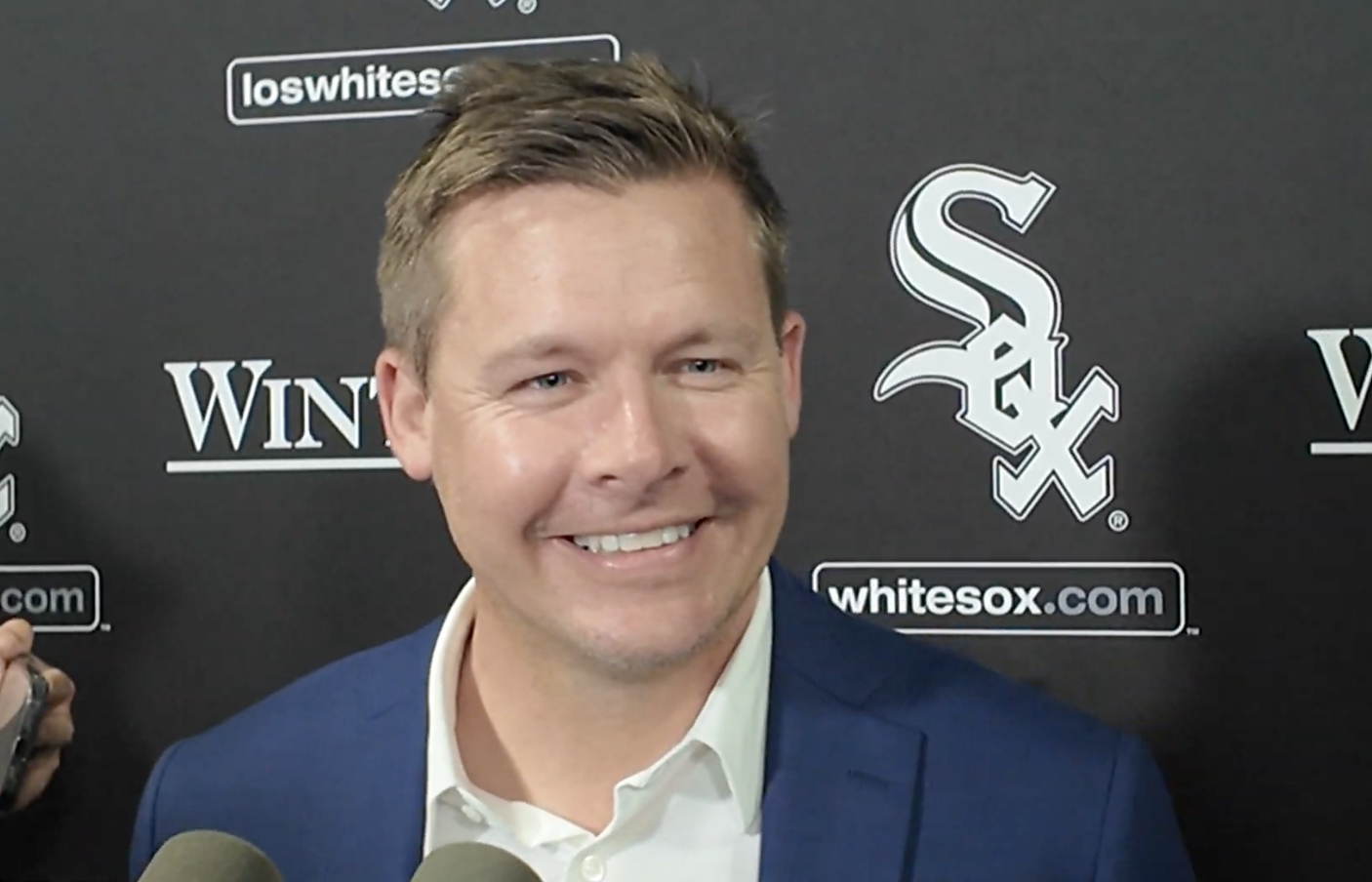
"We made the decision to insert more talent in the draft to set up for future decisions," said general manager Chris Getz, as to why Gonzalez was used to add draft capital rather than pitching at the trade deadline. "We wanted to maximize this draft. We felt like this was a draft to get creative and add picks and value and pool money to the draft, so when the draft day is done tomorrow, that we felt really good about where the organization sits, where our farm system is and sets us up for the future."
After their first day of deploying these enhanced resources, landing Cholowsky with an agreement that’s expected to set a new MLB draft bonus record with room to spare, before selecting a pair of prep hitters in Landon Thome and Cole Prosek that required ample bonuses to pry away from college commitments, Shirley and Getz spoke repeatedly and extensively about the plan centering around being able to get these players significantly better.
“When you break down the swing, there are some things that need to be adjusted at some point,” Getz said of Cholowsky. “He’s open-minded and excited to dive in on his offensive game. We felt like if we unlock that, we’ve got an even better player than where he currently is.”
"The visit he had here was pretty substantial in meeting with hitting director Ryan Fuller, understanding the comprehension of how much he understands his swing, the plan we think we can go with was pretty special," Shirley said. "How he handled the whole process, you see the professionalism he brings to the table. That was the driver of the engine this player is going to be better as we move forward."
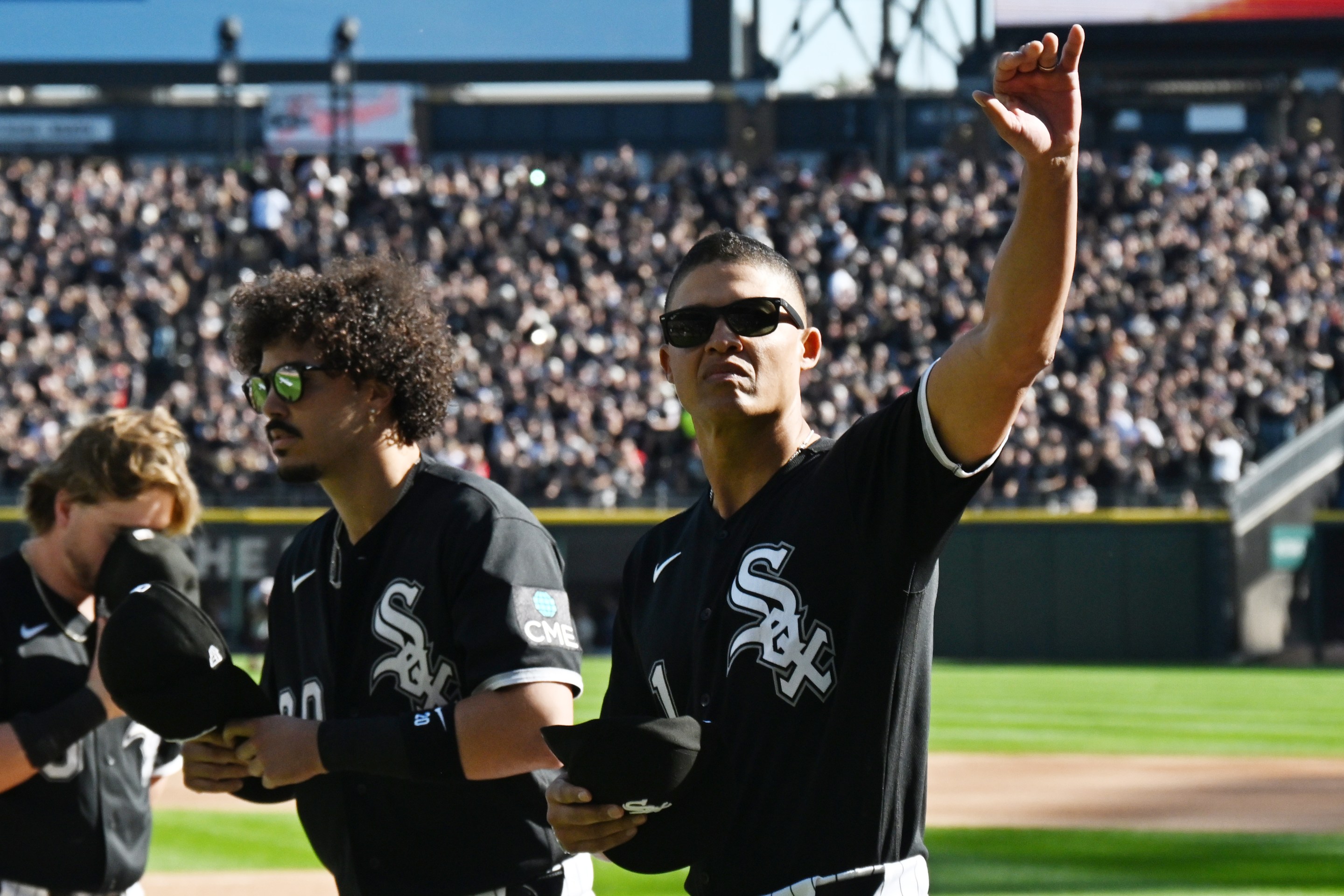
The influential book The MVP Machine came out seven years ago, and player development has been vital currency in MLB for longer. But the novelty of a first overall pick, let alone a hitter anointed as a potential 1-1 talent for years on end, being discussed in terms of altering his swing and setup still remains. In many ways, the White Sox's shocking 2026 turnaround and three position players they're sending to the All-Star Game in Philadelphia are about their newfound ability to make hitters in their organization better.
But the central anecdote Cholowsky dwelled upon in describing how he became sold on the White Sox as his professional destination is about that, too.
"We had all the same opinions about my play, my swing and my offensive side of the game, and he kind of told me all the things they did for guys that were in similar shoes," Cholowsky said, detailing a planned 45-minute lunch with Fuller that sprawled into a longer introduction to the team's professed non-restrictive hitting development ethos.
"We both know that not everyone’s going to swing the same way, not everyone’s going to move the same way. It’s about finding what works best for you. They told me that other people question some of the ways I swing the bat or how I set up and he said, 'It’s how you hit, it’s how you’ve hit forever and we’re going to do our best to try to elevate that,' which I really appreciated."
Negotiations on the financials continued until Saturday morning. Shirley professed uncertainty about the true direction the team would take with the first pick that lingered past 11 p.m. Friday, a month after Cholowsky visited Rate Field and celebrated Braden Montgomery's walk-off home run in the White Sox clubhouse. So, hitting development alignment still has limits in how much it dictates contractual agreements.
Cholowsky hit .329/.448/.624 with 52 home runs in 178 career games at UCLA, yet plateaued in his production against top competition and struggled against inner-half velocity enough to drive some below-average projections on his hit tool. A version of Cholowsky who can still load into his above-average power with reduced pre-pitch movement, or whose production is vaulted by -- as both sides have already discussed -- junking a two-strike approach and setup that limited his contact quality deep in counts, can be more easily envisioned out-performing Grady Emerson and Vahn Lackey.
It just requires a lot of trust to bank on the team’s ability to convert such a process. With the path the Sox laid out for Cholowsky reaching the majors, likely still at an accelerated pace, as well as two prep hitters who are generally unlikely to remain at premium defensive positions, they assert that they have that trust.
“I’ve been here for a while and I think a lot of the plan has changed,” Shirley said. “In my early years with the White Sox, we were constantly looking for the pitching, pitching, pitching. Now we’re constantly looking for the offense, offense, offense. The detail and our history has changed a little bit.”
To be clear, Shirley's description of the philosophical change is also simply rooted in scarcity. The White Sox struggled to acquire hitting prospects throughout much of their recent teardown trades, and their draft strategy reflects that as much as anything. Still, their pitching development has not provided nearly as many easy success stories this year, but the selections of two college arms at the end of the first day are similarly locked into their perceived strengths.
Third-round pick Joey Volchko from Georgia has a bit more flashes of upper-90s than fourth-rounder Eric Segura from Oregon State, leading Shirley to describe the former as "a monster." But both are fastball-slider heavy college right-handers who can supinate the baseball, but lack reliable and established arm-side weapons. The organization that found alternative changeup types for Davis Martin and Shane Smith is relying on their ability to do it again.
"From [Brian Bannister]'s perspective, he feels like he can continue to build pitchers out with all the sequencing stuff they do, all the changes to the repertoire," Shirley said. "With Joey, we think some of those things have to get a little better. So we unlock what he does, something going right, because he has a tendency to make the ball go left, to make it in simple terms, pretty significantly. Even Segura, Banny feels like he’s going to be that seam-effects guy. Put that seam-effect sinker in there and it will really take off."
Will it work? The good and bad news is that is no one actually knows at this juncture. Remarkably, all 30 MLB teams' scouts got creative and found value yet also landed the guy at the top of our board, all on the same day. While parrying that question about using Gonzalez to land a pitcher, Getz posited that a deeper farm system could better enable future moves, and that still has to be converted upon before it can be said that the Sox are serving the needs of the 2026 team as well as they're loading up on high school position players.
Now that they did choose to try to have the biggest draft ever, the prevailing theme reads as their scouting decisions trying to line up with what the player development staff feels they're good at, with some actual recent examples from which to draw. For what it’s worth, the centerpiece of their efforts seemed to notice.
"[Fuller] ran me through the Colson Montgomery story, about how he struggled a little bit and they took him back and did some things to help him and now seeing him do big things at the big-league level is pretty cool," Cholowsky said. "Being able to understand how much goes into it and how invested those guys are into the players is something I’m really excited about. Talking to Getz on the phone after the pick and getting a text from Fuller and [Josh] Barfield and [Phil] Nevin, they’re super invested in the players and I’m happy; happy to be a part of it.”