The White Sox want to grab hold of every opportunity to press any perceived advantage. But when it comes to the league's eighth-best scoring offense that's vaulted them into contention for the American Central crown after three straight 100-loss seasons, they're also ... kind of chill?
"[Friday], after my second at-bat, I had struck out on a 3-2 pitch and hit a groundout to the shortstop, [Will Venable] came up to me," said Kyle Teel. "He said, 'Hey man, you're being really hard on yourself. You need to just stay within yourself, you're doing a great job. You're really close. Just keep going. You look great.' The next at-bat, I hit the homer."
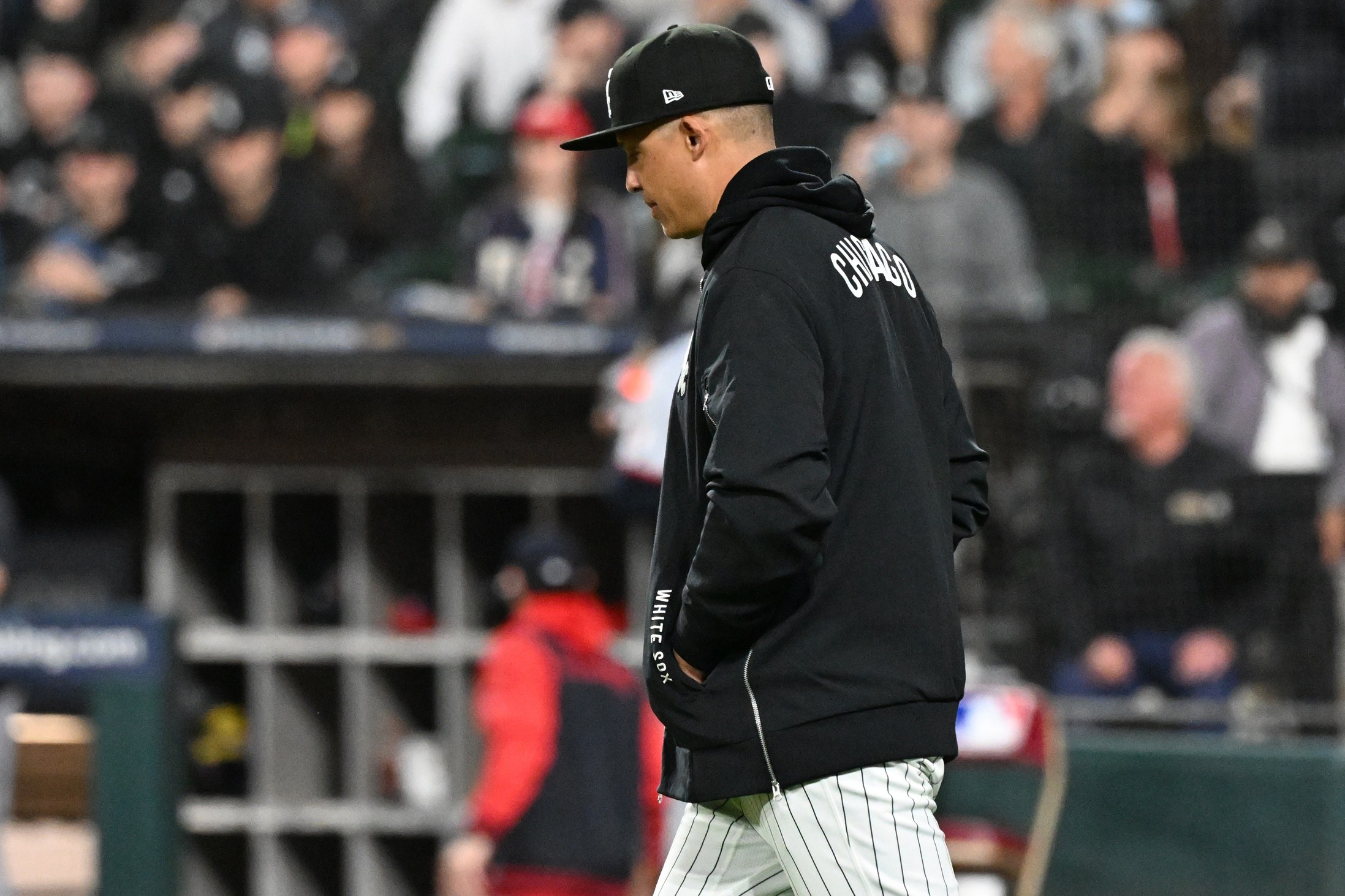
Teel offered this anecdote as an example of how the coaching staff's efforts to keep Sox hitters as even-keeled as Venable during a postgame media scrum. This offense is second in MLB in home runs and also fourth in strikeout rate, they alternate between final scores of 22-1 and 2-1, so their production can feel boom-or-bust in nature.
Unless maybe you have cultivated an environment where lean periods are viewed differently.
"I don't get discouraged, I don't even think of any of this stuff as downs or a bad stretch," said Colson Montgomery. "It's just part of the game. The times where it seems like I'm not producing to what I can be, that's just times where I'm adjusting. You look at all the different power hitters and guys like that, they're getting pitched in so many different ways every single night, so those are just the times I'm adjusting."
The White Sox constantly drill home their three pillars approach to offense of swing decisions, contact and damage, with physical reminders like a medicine ball set on top of a bucket during batting practice to represent the heart of the strike zone, as well as a statistical model that pumps out grades of swing decisions for players to digest when appropriate. Their Driveline-derived bat speed training program has produced success stories like Sam Antonacci, and the team average is up a tick from last season, while Teel and Miguel Vargas credit their gains more to offseason strength additions that align with the team emphasis on swinging with more authority. And it's simply not a good idea to bring up hitting with Jacob Gonzalez if you're not prepared for a demonstration of how Ryan Fuller & Co. identified and remedied an inefficiency in how he rotates his hips.
But for all the necessary steps Sox hitting development has taken to modernize itself under Fuller, it's largely rested upon hitting coaches Derek Shomon, Joel McKeithan and Tony Medina to administer these new capabilities with a feel to which the player group in Chicago has responded.
"Sho does a really good job of allowing us to take our shots," said Randal Grichuk. "In Toronto, we had swing decision charts and they put metrics on if you swung at this pitcher, you didn't swing as a positive or a negative. It kind of hindered some guys, just due to the fact of now you're chasing that instead of being in that bat, being ready. If you're hunting the pitch 0-0 and you're looking for a heater and you chase a slider, [Shomon is] saying, 'Who cares? You've got two more strikes. Let's go. Stay in the at-bat.' Where I think some hitting coaches might get frustrated with that."
"He understands how hard this game is and the confidence he has and he instills in us every day, it’s awesome," said Chase Meidroth. "He lets us be free and be ourselves every single day.”
"They kind of just let me be who I am, and tell me just play the way that I play," said Antonacci. "They trust you and trust your game plan to go in the box every night. With the advance reports that we get, we know what our plan of attack is and they just trust us to go out there every night to be ourselves. We all have different attack options that are different for each and every one of us. We just out there and execute it to the best of our ability."
The Sox clearly care about swing decisions, to which the multiple placards about them in the spring training complex can attest. If they didn't, then it would be hard to explain how they have one of bottom-10 chase rates (eighth-lowest) in the league for the first time in forever, which is both a jokey description, and reflective of FanGraphs not having data for O-swing% prior to 2007. This Sox offense chases less than any other Sox offense for which we have comparable information. But the irony is that the coaching staff that's pulled off this leap forward is one that came into organization already knowing it's possible to overcook this element.
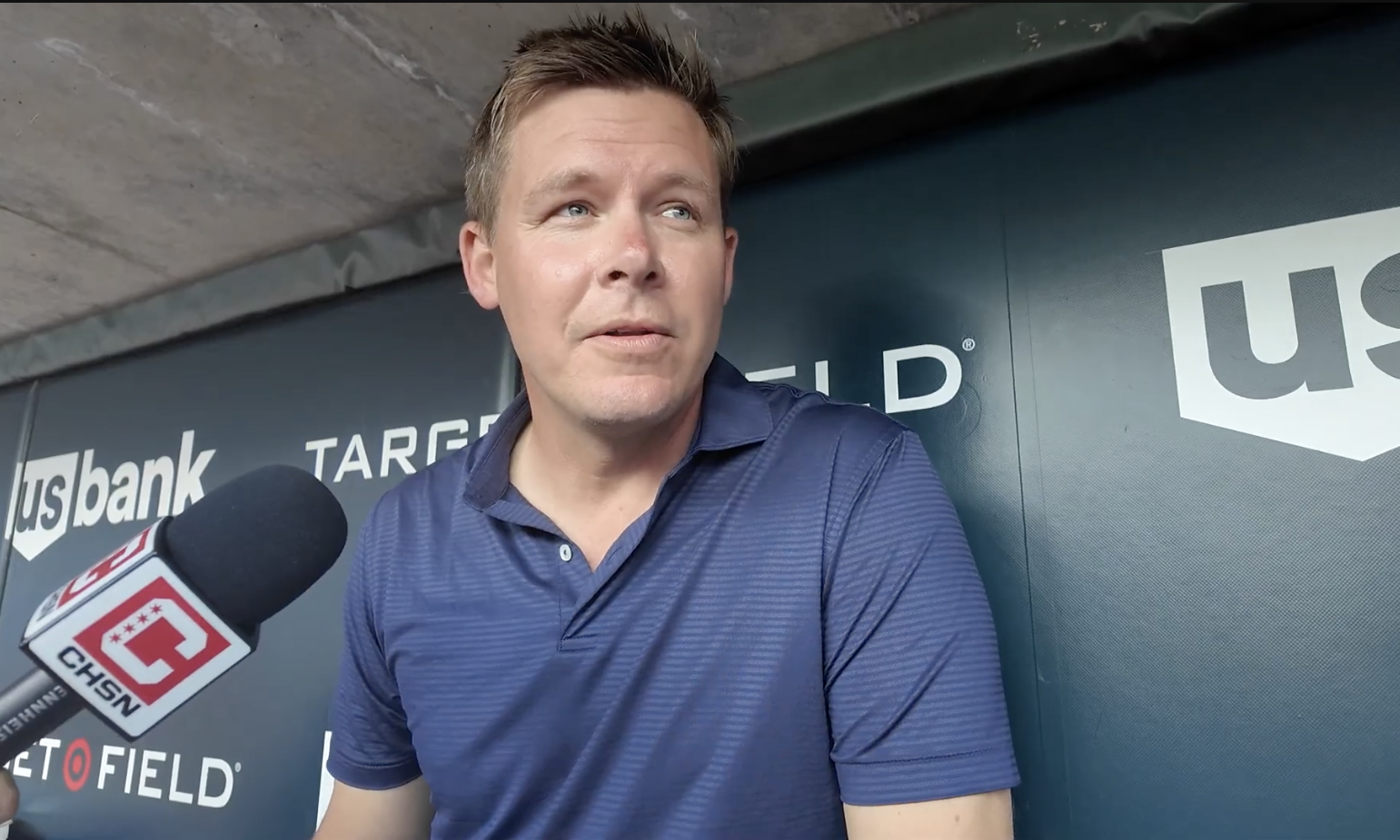
"What they have to do is fucking hard, and we can never lose sight of that as coaches, as anybody that's non-player, don't lose sight of how difficult this is on a, like, daily basis, every single night, what they have to go out and face," said Shomon. "That doesn't mean we want a total fucking hack of an at-bat, but we also don't hang it over their head. They have access to that information with postgame at-bat reports that shows their swing decisions and how it grades out with our model here at the White Sox. So they have access to the information, but we're not down their throats to a point where you paralyze them."
"He brings you a lot of positive stuff and gives you a lot of confidence when you come to the plate," said Vargas, who is running one of the 10 lowest qualified chase rates in the sport this year. "It allows you to be free at the plate, which is what I feel like we all want to be. Baseball is a game of mistakes. You always make mistakes and you have to learn from them."
Even on a 35-plus home run pace, Vargas is reluctant to talk about himself as a power hitter, rather than a complete one. But he adds that Shomon has been in his ear since spring training about taking his opportunities to let it rip with his fastest swings, and not let his commitment to having good at-bats hem in his power potential. While Venable admits he's outright surprised by the amount of slugging his offense has produced, Shomon describes it as seeing potential for it "on paper," and leaning into the more it's emerged, with even unlikely sources feeling empowered to take their shots.
"My goal in that at-bat was to, especially on the first pitch, just hit it as hard as I could and that’s what I tried to do and I did it," said Tristan Peters after his grand slam Friday night. "I’ve been working on that, my bat speed specifically. But also trying to maintain that contact as well. Sometimes it’s a little give and take, but I’m just trying more to do damage. More of an approach thing, too."
"More than like pivot, it was just lean into it, and lean into it because the guys really attach to that," Shomon said. "There's a ton of freedom in there, and they feel that, that they can go be themselves. But they also understand that there's an expectation and it can't be a total hack of an at-bat. They are willing to hear that feedback. They are willing to work on what needs to be worked on. Right now it's kind of this cool pairing of be yourselves, be athletic, be free, be dynamic, be explosive, look to hit balls hard, look to launch, but if it goes sideways, we are going to reel it in."
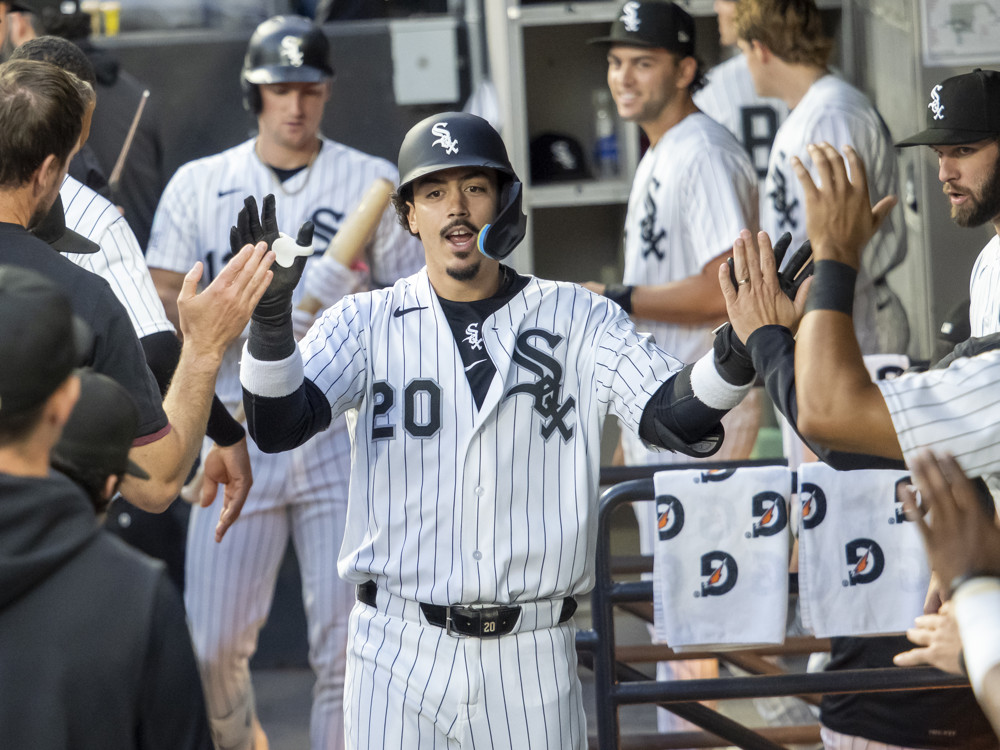
At this point, it wouldn't be terribly off base to wrap things up here and say that the joyful, affirming atmosphere that the Sox have fostered has enabled their best offense in years, their most disciplined one possibly ever, and given all the dingers, one of their most fun to watch. That's not inaccurate, since I've lost count of how many times I've witnessed Meidroth quietly counseling a teammate who had a tough game after a loss, and the original premise of this story was how the offensive ethos lines up with their use of Clarence Carter's ribald 1986 hit "Strokin'" -- a silly song about having lots of sex -- to celebrate their many home runs.
But all this soft, supportive handling, all this freedom to make their own decisions wouldn't be as valuable to the Sox if it didn't buy the credibility to give honest feedback, and have it be received as such. In 2026, every pro hitter has their own private coach on the side, so understanding what every individual's own benchmarks are and holding them accountable to it takes some real relationship building.
"I rely on him to keep me in check, keep me on my stuff in the cage and not cut corners," Montgomery said of Shomon. "It's such a long season, there are times you might feel you don't really want to do too much that day. But he's going to be the guy that'll tell you that we need to work, you need to do something challenging. One of his biggest things is to challenge yourself in your work."
"Colson's smart and he does know when he's not calibrated, so it's just, 'Hey, get your shit together, you're on the right track, so fucking do it,'" Shomon said. "You see it, you feel it, now it's just a matter of doubling down on it. Course-correcting in a way where you're almost over-cooking it so you bring out that swing, that move that you want in a game environment. I think that's accurate. Thankfully, he knows it's not jumping his ass just to jump his ass and MF him."
Somewhere amid all the spasmodic affirmations Shomon offers during batting practice -- "Shooter!" for low line drives, "Swing it!" for more extra-base type contact, far as I can tell -- the clubhouse t-shirts with "Strokin'" under the batterman logo that would probably sell like hotcakes if they ever were made available to the public, and all the hitters meetings and cage sessions, a measure of trust about the coaching staff's intentions has been built. There's plenty of mystery of where these White Sox will wind up at the end of the year, but they've been a good hang. And even with all the tech upgrades their success has required, it turns out that's still an important quality.
"We spend freaking seven months, at least, with these dudes," Shomon said. "Humor is a way to be able to connect with them and keep things light, while also being honest with them. The saying is 'there's truth in all humor,' so there's a way to get a point across while being humorous or sarcastic with a guy that's not necessarily just jumping down their throat. So I think what you see is accurate. It is light, but we find different ways to get the point across, and it doesn't always have to be with an iron fist."