The White Sox's approach to in-game strategy, an endless wave of pinch-hitters, openers and defensive substitutions that regularly empties Will Venable's bench before the ninth inning, requires some sort of snappy summary to better explain the overriding concept.
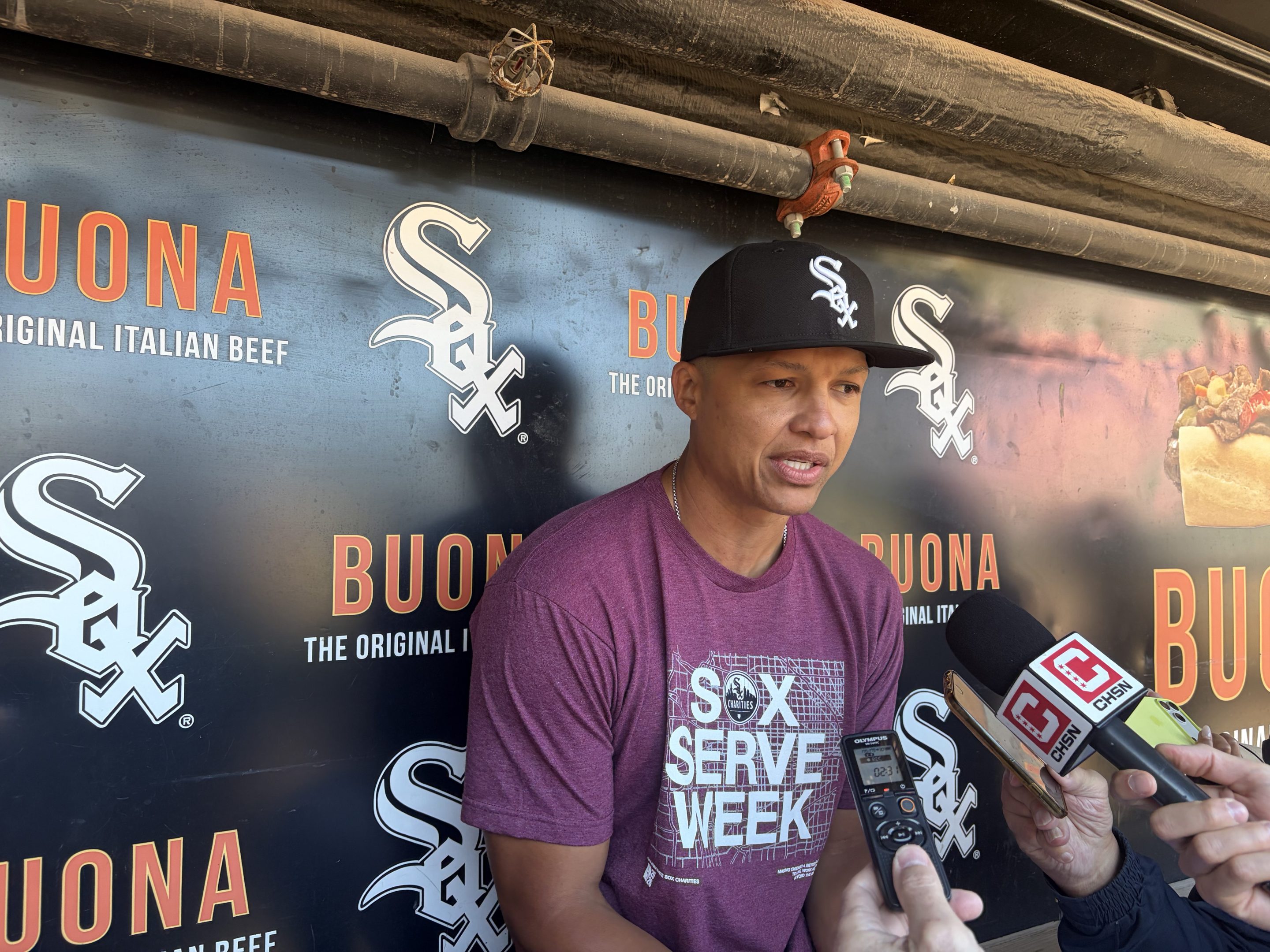
"If we see five dollars on the ground, we pick it up," said bench coach Walker McKinven. "That's kind of the thought process."
This brand of why wouldn't we just go for it reasoning bleeds into every piece of in-game strategy the Sox employ, seeming from first pitch.
Chris Murphy's four outs on Wednesday marked the Sox' league-leading 17th time using an opener this season, which Venable often portrays as a win-win for always forcing the action in some measure. He reasons that either the opposing team leaves their lineup as is, and someone like Bryan Hudson slices through an unaltered slate of lefties. Or they push right-handed hitters up in response, and Venable contends a bulk arm like Erick Fedde gets more right-right matchups squeezed into his outing. When quizzed recently about the prospects of losing relief depth for the end of games, Venable quickly cited Sean Burke averaging longer outings behind openers, best demonstrated by the right-hander handling the final 7 1/3 innings of a 5-1 win over the Yankees in The Bronx.
They like being aggressive, and treating the first inning like a leverage situation is part of that.
"There's other factors that go into the opener and there's some negatives to it, like it upset the starting pitcher's routine, but that's a bit subjective and guys can pitch in different roles, and have throughout their baseball lives," said McKinven. "There's a run expectancy in the first higher than pretty much every other inning. We try to apply who we want to pitch to those hitters. It's generally the other team's best hitters. If we can gain a platoon advantage, great."
"We’re going to continue to do it," Venable assured, unsurprisingly.
There are no future considerations, potential downsides, or notions of finite opportunities to weigh in the provided example of seeing five dollars on the ground. And yet when it comes to subbing hitters out of the game, and burning through ABS challenges, the Sox remain ideologically consistent.
Venable's 1.39 pinch-hitters used per game is second in MLB, behind only A.J. Hinch's Tigers. The Sox have called for the fifth-most replay challenges in the sport, and their players -- largely the catchers -- have called for the third-most ABS challenges in the league. In a league environment where sharply-defined roles have largely disappeared, the constant aggression becomes a kind of reliable consistency for hitters.
"The role has been defined since I've been here," said Randal Grichuk, who has whacked three pinch-hit home runs in his seven-week tenure. "Will's done a great job of keeping this bench fresh. We're up or down a few, where it's like, hey, probably most teams might not pinch-hit here, he's still pinch-hitting, giving us at-bats, which goes a long way. Honestly, it goes into the mindset of getting loose for a possible pinch hit.
"There's been teams I've been where you could pinch-hit, but probably not, or we don't really know, it's a coin flip. And then here it's been 'I'm 95 percent sure we're going to pinch-hit here, so I'm preparing to get an at-bat. So the work is better, crisper, and then obviously you're getting the at-bat to get some feel."
Under the premise of there's no assurance of a better opportunity to attack an inviting matchup coming up later in the game -- or that there's a $10 bill waiting further down the road -- Venable will and has emptied his bench ahead of the ninth inning multiple times this year.
The benefits might have needed to be placed into the context to be appreciated last year, like when a series of moves saw Michael A. Taylor whack a dramatic, game-tying pinch-hit double in the ninth last June in Texas, only for the Sox to lose the DH and run out of hitters in an 11-inning loss. But with greater talent resources on hand this season, the Sox are not only receiving an MLB-best 142 wRC+ (.236/.364/.493) from their pinch-hitters, but also easily leading the league in wins above replacement thanks to their high volume. They have 107 plate appearances of their pinch-hitters producing like Munetaka Murakami, whereas no other team has pinch-hit more than 90 times yet.
"They all want to help contribute and win and do whatever it takes to help doing that," Venable said. "It gives us this flexibility to mix and match, to ask guys to do different things on different situations. It allows you to find the path and strategize and make those moves and there’s an understanding and willingness for whatever we ask them to do."
The same energy animates the Sox's ABS strategy, with perhaps as much or more math and research behind it. New bullpen catcher Bennett Markinson was a data science and economics major while also running an .800 career OPS as Northwestern starting catcher through last year. After being hired to the Sox coaching staff this winter, Markinson spent the run-up to spring training using minor league ABS data to build out a "baseline strategy" for challenges, which is now being continuously modulated as major league data rolls in. Complementing his efforts was major league analyst Johnny Nienstedt, another new staffing addition for this season, building a statistical model that pumps out a score for the value of each challenge based on game situation.
Talk of monitoring challenges for leverage value might conjure notions of White Sox players waiting until late-game moments to start tapping helmets. And sure, the Sox have come to some defined conclusions about catchers being best-suited to make good decisions, with Venable even shutting down challenges for hitters in late-game spots with his team in the lead, and they provide info on umpire tendencies to try to guide players on what quadrants of the zone they should be more ready to challenge. Yet their prevailing insight is one that matches up with their larger strategic ethos: Go for it, try to grab that $5 bill off the ground if you think you can get it.
"Being aggressive and making sure that we're kind of using our bullets was huge," Markinson said. "There's a fear a lot of people [have] about the idea that you want to save in for like a high-leverage, late situation, but a lot of times that wouldn't come up. We want to make sure that we're firing them off and we're getting them in."
The success rate can obviously make this strategy look a little crude. The Sox have the fourth-lowest ABS challenge success rate in MLB at 47 percent; one of six teams under 50 percent. They adhere closely to their strategy of largely letting catchers drive the bus, as only the analytically-driven Brewers and Marlins have had their catchers call for more challenges, but their 46 percent success rate is second-worst in the league. Anyone who has read this far into a White Sox managerial strategy piece probably has a memory of Edgar Quero burning the team's last challenge with innings left to go, but hasn't let such incidents deter them from their larger ethos.
"With the strategy we have in erring on the aggressive side, that's bound to happen," Markinson said. "Within that, there are opportunities to kind of separate and say within our aggressive strategy, this is still a good opportunity to fire it and we're okay losing it. Or maybe in a lower leverage spot, or a pitch that was a little bit more clear in some eyes, that this is still a 'bad challenge,' even though we are aggressive. So there's ways to separate it, and we have data that can back that up."
Which is to say that both Markinson and McKinven acknowledge that they want and expect player aptitude to improve with time and experience, especially since their challenges are mostly going to be executed by the catching group. It's just that their emphasis on wanting players to seize opportunities to alter the game when they see them rather than hesitate, means any guardrails will likely be subtle.
There can actually still be some subtlety embedded within this gonzo-aggressive managing style. Like how Venable regularly treating showdowns with the middle of the opposing batting order in the seventh and eighth --o ften when the option to pinch-hit with left-handers is also still present -- as potential game-altering moments, has obscured how long he's been choosing Grant Taylor as his top right-handed option in those situations already. It's a fact not lost on Seranthony Domínguez, but it's probably served to hide the struggles of his closer running a 5.07 xERA more than it might have been otherwise.
With such a demonstrated through-line of aggression permeating the approach to everything, perhaps that enables some understanding of how Venable has found his team tied for the league lead in 21 sacrifice bunts, if not acceptance. He's tied with Kevin Cash of the Rays, and Pat Murphy of the Brewers is in third with 20, but Venable also wouldn't bother telling you that the math and run expectancy is fueling his view that bunts are a necessary element to his strategy.
"What analytics tells you about bunting is something that we factor in and is part of the process for how we view these opportunities," Venable said. "But we've committed to this idea of doing whatever it takes. If there's going to be times in the game in which we're in areas of our lineup, we have certain skill sets in that lineup that are good at bunting and can impact the game with bunts, or at least the threat of a bunt, it's really meaningful.
"Every day really has its own path to finding a win. Sometimes you're playing a team with a really good bullpen, and you need to find a way to find that one run, even though analytically, in the fourth inning, maybe that's not the time to bunt in a certain situation. But we'll do it to try and get that lead, just because of how meaningful it could be to have a non-leverage arm in there and give the middle of our order a chance to do some damage against them. We deviate again from that information, as far as the hardcore analytic, the traditional analytical perspective on bunting."
Granted, he mostly used it to talk about dessert consumption, but my late father was fond of the saying of "anything worth doing, is worth doing to excess." Venable probably would decline to co-opt that phrase, and maybe in future years with White Sox teams expected from the outset to overwhelm their competition on talent, he will take a more conservative tack. But just like he wouldn’t wait on a chance to have Grichuk face a lefty, Venable isn’t going to wait around for a future scenario. So in his second year, managing a team that is blowing away preseason expectations, it's clear across the board that he and the coaching staff at large are more comfortable wearing the downsides of pushing too hard to move the needle with this team in 2026, than those of not doing enough.