
There are a lot of commonalties in the additions the White Sox have made to their offense this winter, but one springs to mind. From Munetaka Murakami dominating NPB pitching in Japan, to Tanner Murray scuffling in Triple-A, none of them had success at the big league level last year. If their reported interest in Michael Conforto bears fruit, the trend will still continue.
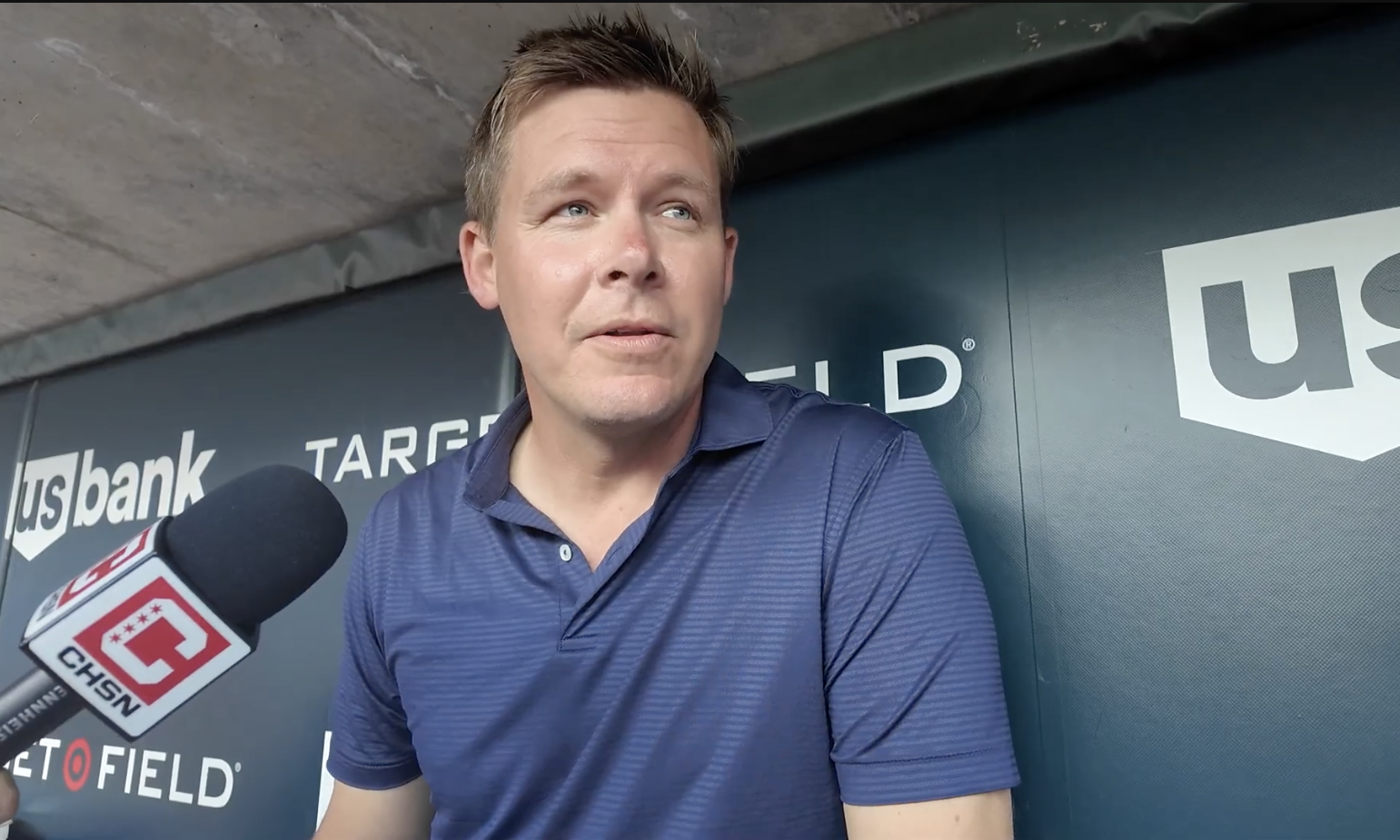
So it falls upon Ryan Fuller and the White Sox hitting infrastructure to craft a plan for outperforming their meager projections, and since he conducted this interview by phone from a prospect performance camp in the team complex before a scheduled call with newly acquired outfielder Tristan Peters later in the same day, the work is already at hand.
Though for the biggest addition of the Sox winter, it could be a case of responding to what the league dictates.
Munetaka Murakami
Before spending the last two years sitting around a ~63 percent contact rate that scared the bejesus out of a lot of MLB teams, Murakami was safely in the 70s in 2020 and 2021, lining up with Fuller's -- and Derek Shomon's -- assertions that there is more latent hitting ability present than the slugger has shown recently. Asked if Murakami could simply replicate the production that Joey Gallo managed in his prime with a league-worst contact rate, and Fuller was resistant to put such restrictions on what the club's new first baseman will be able to do offensively.
"Two-strike counts, he has the ability to back the ball up, move his ball flight down a little bit, use the whole field, rather than just looking to do damage to the pole side," Fuller said. "So, this is an advanced hitter."
That the slugger hasn't shown it in recent years is something Fuller sees as the product of intentional strategy visible not just in Murakami's production and plate approach, but in his swing (his 48.4 percent fly ball rate in 2025 was a career-high). See if you can spy any difference in the uppercut plane of the only home run Murakami hit (out of his 22 in 56 games) in the upper third of the strike zone last year, versus one of the 12 (of 39 total) he hit in that location in 2021.
"More than anything else, this guy, his swing is built to work up through the zone and hit pitches far out of the park," Fuller said. "If you are focused on doing more damage, then most of the time, contact is going to fall off a little bit. But if the damage is at an elite level, contact being a little bit lower is okay. However, hitters are smart, Mune is a really smart guy, and he's going to see if the damage isn't that high at this time."
What the response will be if Murakami's leveraged hack produces more whiffs than his slugging can justify is to be determined. While some have suggested the way his hands load far away from his body--a common setup for NPB hitters--as something to target to reduce length in Murakami's swing, Fuller pointed out that there was similar suggestions when Shohei Ohtani was coming stateside, but that he's succeeded without scrapping his traditional setup.
Moreover, installing major prescriptive changes to one of the greatest sluggers in Japanese baseball history doesn't seem like the vibe here. If failure is the greatest teacher, Murakami hasn't had much reason to learn new tricks in his last few years in NPB, and Fuller is eyeing both how he's attacked in the WBC and planning lots of time for him against the Trajekt at Camelback Ranch for feedback on what needs to be tweaked. Sox hitting coaches have been and will continue to speak to Murakami through an interpreter, but want their communication with their new attraction to be more collaborative problem-solving than lecturing.
"We do a really good job with the White Sox of making sure the guys have simple, actionable plans," Fuller said. "Rather than the coach talking at them for 20 minutes, it's, 'Here are visuals. Here's what we're trying to do. Here are the ranges we're trying to get to. Are you on the same page?' And usually it's, 'Yes, that makes sense. Let's go do it.'"
"He wants to be challenged, he wants to be great. So it's making sure that we are understanding his swing, what he values, and then challenging it, to make sure that it's going to hold up."
Jarred Kelenic
Last week's piece on Kelenic covered the multitudinous tweaks he's made to his swing over the years, so it should be fairly unsurprising for Fuller to detail that the switch from a leg kick to a toe tap was actually Kelenic's idea, and something he was working on prior to signing a minor league deal with the White Sox.
If a fundamental premise of adding Kelenic is that someone who hit fastballs as well as he did in 2023 (.494 SLG) would be useful to the Sox, then Fuller's multiple batting cage sessions with him in Nashville have him on board with a loading action that won't force him to shift his weight so dramatically onto his back leg.
"One of the things he's felt in the past is just being stuck on his back side where his bat path doesn't work on plane as much as he'd like it to be," Fuller said. "What can happen is you're trying to stay on your back side, but now you're stuck back there, and when you want to swing, you shift forward a little too hard."
Kelenic's major league performance has often been held back by his poor performance against breaking balls, calling his spin recognition ability into question. Quietly, the .455 he slugged against breaking balls in limited big league time last year was the best mark of the 26-year-old's career, but the extreme nature of his swing had Kelenic in a place where he could be timed up for fastballs or slow stuff, but not both.
So a big focus of Fuller and Kelenic's session together has been mixing up the speeds he's facing with machine reps, and stress-testing whether his toe tap has him in position to react to both.
"After that toe tap, when he gets to that launch position where his front foot hits the ground, he's in an athletic posture to make adjustable movements, regardless what pitch is coming to him," Fuller said. "As he's maturing, it's understanding I don't have a swing for the fastball, and I don't have a separate swing for the breaking ball. How can we get you into the box to feel like this is what I'm able to compete with against all pitch types? I don't have to feel like I'm doing anything different, and I'm trained and I know how to do it."
Everson Pereira
Kelenic is the guy on the minor league deal here, but between having some past big league success and already working directly with Fuller, the plan for him can feel a bit more fleshed out. By contrast, Pereira was legitimately pretty good in Triple-A last year (.256/.359/.508), but the 24-year-old has whiffed at very high rates so consistently at a pro that his contact limitations are more defined.
Even in an article already discussing two players with plus bat speed, Pereira's bat flies through the hitting zone at light speed, granting plus raw pop despite a smaller frame. Even though he's run a 29.3 percent career minor league strikeout rate, his swing decisions grade out pretty well. He simply swings and misses -- both in and out of the zone -- substantially more than the typical big leaguer, with a stroke that is more physically impressive than coordinated.
"He already does a good job of working subtly up through the zone where he can match plane, it's just doing it at a more consistent spot when his body is synced up and timing is in a good spot," Fuller said. "Any guy who have a little bit of a barrel tip, it's getting that synced up with their lower half, so when they get to that launch position, everything is in a strong position to be able to get their swing off like they want to."
Since Murakami also does his own version of a barrel tip, where he tilts his bat toward the pitchers to simultaneously add length but also force to his swing, we can glance at how synced up it looks compared to Pereira. But just like there's only so much use at look at old video of Kelenic since he's ditched his leg kick, Shomon and Joel McKeithan have already met with Pereira during the offseason to install some drills to help sync up his upper and lower half movements, so hopefully it already looks a little different.
Another through-line with this trio, beyond being question marks, is that all have plus bat speed, above-average raw power and concerns about where they have enough plate coverage and contact skill. Does that mean the Sox have particular faith in their ability to address hit tool shortcomings?
Ehh, they'll probably need a longer track record of success before that starts dictating their acquisitions. Fuller looks at it more from the other direction, in a way that includes Murray, who needs to curb excessive chase, and the more contact-oriented Peters and his attempts to build off thrashing Charlotte pitching in the last week of the season. As long as the Chris Getz-led front office is prioritizing up-the-middle athletes while the Sox are scrounging the bargain bin for upside bets, these are the sorts of projects they'll be undertaking.
"Higher bat speed guys are going to have higher ceilings here," Fuller said. "It's making sure we feel confident and comfortable with having the plan in place for the skill of need that they have, while also maintaining their strengths. All these guys offer, certainly, offensively upside, but they're also bringing defensive and speed to the equation as well."