
We received so many questions in response to our P.O. Sox prompt from Sox Machine subscribers that we're breaking the responses into two mailbags.
If you'd like to get in on the action, subscribe to Sox Machine -- or upgrade your subscription -- at the 10 WAR tier or higher.
Finally, we are on the cusp of having the problem every team wants to have: too many shortstops! With Colson Montgomery looking like he may have a few years of play at the position, Billy Carlson, Caleb Bonemer, Kyle Lodise, and William Bergolla all at various stages in the system, and presumably Rich Cholowsky set to join them this summer, what do you expect the pecking order to be of most of these guys wind up panning out? Even with staggered timelines it could get crowded in a hurry, so who gets to stay at short and where do the rest wind up?
Trooper Galactus
Jim: I'd start by filtering out Lodise and Bergolla to simplify matters. They could very well play shortstop at a major league level, but it'd probably be in a utility role if they hit reasonably optimistic projections, and if they somehow look worthy of everyday major league run at that position, then they'll probably be traded, because their offensive ceilings aren't such that they'd be able to replicate that value at other positions. Then I'd set aside Bonemer. He's playing shortstop as long as he can, but sharing a roster with Lodise at the end of 2025 was the start of him playing other positions, and I imagine he'll continue to do so. Given that the White Sox resisted inviting him to spring training, I think we're at least a full season away from him experimenting in the outfield, but he's probably trailing the field with regards to his future on the dirt.
From there, assuming Montgomery is healthy and his 2025 defense is repeatable, he probably has the position for at least a couple more years. If Cholowsky is indeed the pick at No. 1, then he might be the guy in the 2028-29 window, and then they're both kicked out for Carlson if Carlson is able to matriculate all the way up to the majors.
The one complicating factor – OK, the second complicating factor, because the first one is development isn't linear and players have a way of surprising in both directions for all sorts of reasons – is whether the White Sox grant shortstop a sort of captaincy, whether formal or informal. They seem to prioritize versatility over titles, and nobody's objected to bouncing between unfamiliar positions so far, but flexibility is something that's easy to impose on players when they have no standing. If Montgomery somehow becomes an All-Star shortstop, is he going to lose the position to Cholowsky sight unseen? I don't think this would be an issue if the buy-in on team issues is as strong as they profess, but sometimes you don't know the answer until it actually pops up.
So the White Sox are making noise about the Asian amateur market for prospects. Since they don't seem to want to spend the big bucks it would take to sign the top guys, what is their plan? US teams generally try to not recruit players away from Asian teams, right? Can they scout for amateurs? Work the track of Rikuu Nishida to encourage Asian amateurs into the US college system? Pick off Americans who went abroad to learn a new pitch?
John G.
And:
Between Murakami, KBO, and NPB signings, I would like to have more info on the Sox Asia Pacific scouting operations. In the Getz behind the scenes Murakami signing story with Scott Merkin, they reference Satoshi Takahashi. Who is he and what does his operation look like?
Bud Black Metal
James: Munetaka Murakami, Erick Fedde, Anthony Kay and Rikuu Nishida represent three different phenomena. Nishida came stateside and played collegiate ball at Oregon and was just a conventional college player taken in the 2023 draft. There are other Japanese amateur players taking this route rather than enter the NPB draft, with Rintaro Sasaki being the popular current example. A lot of good scouts develop a relationship of trust with players where they’ll share honest feedback with what their best options are, and maybe the US collegiate route will look more legitimate with more guys going through it. But this doesn’t look like an area where teams can really exhibit much influence, nor are either of those two major prospects, or where you’d expect to see mentions of Takahashi, who is their dedicated Pacific Rim scout as part of the team’s efforts to re-establish a foothold in the region.
Kay and Fedde represent a couple of realities of the MLB labor landscape. Being an up-and-down guy, a fringe major leaguer, which is what Kay was and what Fedde was about to be after getting non-tendered by the Nationals, is hell. With the reduced head counts for the minor leagues, and the way teams covet optionality and facilitate churn, there’s a whole class of players for whom getting a chance to start or play everyday abroad feels like a better opportunity to develop and/or just prove themselves. For teams, there’s going to be less and less of a discount as it becomes a more proven route for players to market themselves for MLB deals, but it’s basically as if there was a collection of Quad-A leagues full of free agents available to be signed every year or two, and there’s a full-time job to be had just for having someone on the ground to get looks at targets in NPB, KBO, CPBL, etc. In that way, a lot of the work that could see Takahashi’s name on it is essentially pro scouting to evaluate if guys are ready to contribute to the majors.
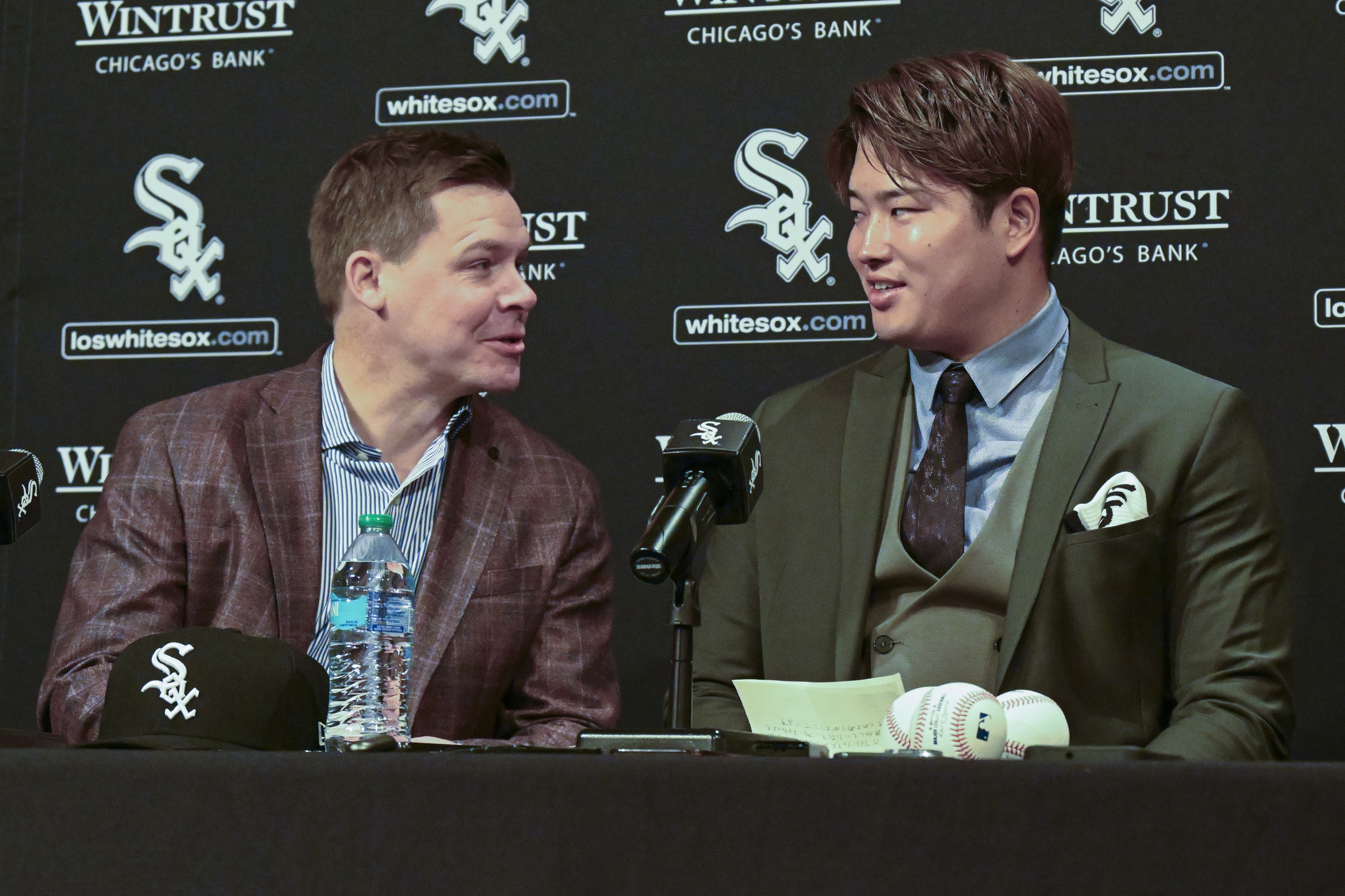
Murakami is much more your traditional Japanese superstar coming over via the posting system, where a free agent of his caliber involves plenty of in-person looks from David Keller and is a full front office effort. Having a regional scout in place is useful for a case like this where they haven’t been a major player in this market for a while, and need special insight for a really contentious debate on whether Murakami will be able to acclimate. The posting system exists to prevent a world where MLB teams are recruiting away Asian players in the manner you describe, As Murakami himself indicated, the appeal of playing in the most difficult and wealthiest league on the planet is still its own recruiting pitch.
What are your predictions for the assignments for Everson Pereria and Jarred Kelenic - who the Sox were enthused about but have not played/well - and the two R5 picks?
Andrew S.
James: Would love to be proven wrong with a quick recovery and return to form, but Everson Pereira has now missed the first two weeks of Cactus League action with his oblique strain and there’s three weeks until Opening Day. Starting him on the IL to open the season seems like the best way to cautiously get Pereira up to speed from an injury that can easily be reaggravated, and steer him away from the dueling incentives of trying to make the team and ease back in. If Pereira is out, that more easily enables a scenario where Acuña, Hays, Benintendi, Baldwin and Kelenic are the five outfielders breaking camp, since the Sox have indicated that Kelenic is an NRI they’re particularly interested in from the start.
Who is the center fielder of the future if Acuña doesn’t work out?
Mark S.
James: Brooks Baldwin is the easiest answer because if Acuña struggles you will immediately see him take playing time in center throughout the 2026 season, which has a way of inserting him into the conversation. Samuel Zavala might be the most skilled outfield defender in the organization. Jaden Fauske and Braden Montgomery will play games there in the minor leagues this season, but are both likely corner outfielders long-term. We drove around the block just to delay saying what I was always going to: there is not a center fielder of the future type of prospect in the organization at the moment. In case that sounds like careful wording to avoid saying Roch Cholowsky will be out there, an outfield conversion seems like a waste of both his and Billy Carlson’s specific infield skills at this point.
Why does the media refuse to hold Jerry Reinsdorf’s feet to the fire for this historic cock-up of a franchise? The coverage of his 90th birthday (“he’s loyal to his employees and still sharp as a tack!”) was sickening.
Mark M.
Jim: Good job phrasing the question in a way we had to answer, or else we'd be as complicit as everybody else. We see you, and we respect you.
I didn't quite understand that story myself, at least as a single-source venture. Watching both of his franchises, it's abundantly clear by now that Reinsdorf has perverted the concept of loyalty from an intrinsic good to a net negative. I'm sure it's great if you're on the payroll. “How does that benefit the customers who don't know him personally?” is a lot tougher to answer.
But to the larger point, Reinsdorf has been around for so long, he's so impervious to meaningful evolution, and he's so insulated from public criticism, that it's hard to know what holding his feet to the fire would actually look like, or what it could actually accomplish. One of the autoresponses we'll see to posting any story on social media is “Nothing will ever change as long as Reinsdorf's around,” and while that's true enough, it's also very boring.
There have been and will continue to be reasons to center Reinsdorf in posts, articles and podcasts; things like hiring Tony La Russa over the front office's wishes, hiring Chris Getz without an interview process, 121 losses, dangling relocation to press for public funds, blaming the union for missed games, the concerning response to the ballpark shooting, etc.. Pardon the phrase, but I think there are only so many bullets you can fire before it turns into background noise, and I'd rather save them for the freshest of hells.
Day to day, it's more interesting to treat him as an unpleasant given, and write about how the people who work for him can or can't create great art under the limitations he's imposed. Was Reinsdorf more culpable for the stalling of the last two rebuilds than Rick Hahn? Sure, but I thought the way Hahn struggled to manage the strain was the more compelling story. It’s the same thing with how Getz is conspicuously avoiding Hahn's missteps in his attempt to neutralize Reinsdorf's self-defeating tendencies. That terrible wallpaper isn't going anywhere, but maybe these cute sconces will pop against it.