Your Sox Machine subscription dollars allowed me to attend last November's general manager meetings held in Las Vegas, and good gracious are there a lot of people walking the strip just making social media content. A solid mile of people talking into their phones while walking past the largest and glitziest Denny's you could possibly imagine.
The two-person operations can almost pass for normal, where the subject is merely walking slowly, lingering at points of ideal lighting, acting unaware as their camera operator crawls around and contorts themselves into untold positions, all in pursuit of the perfect iPhone photo angle.
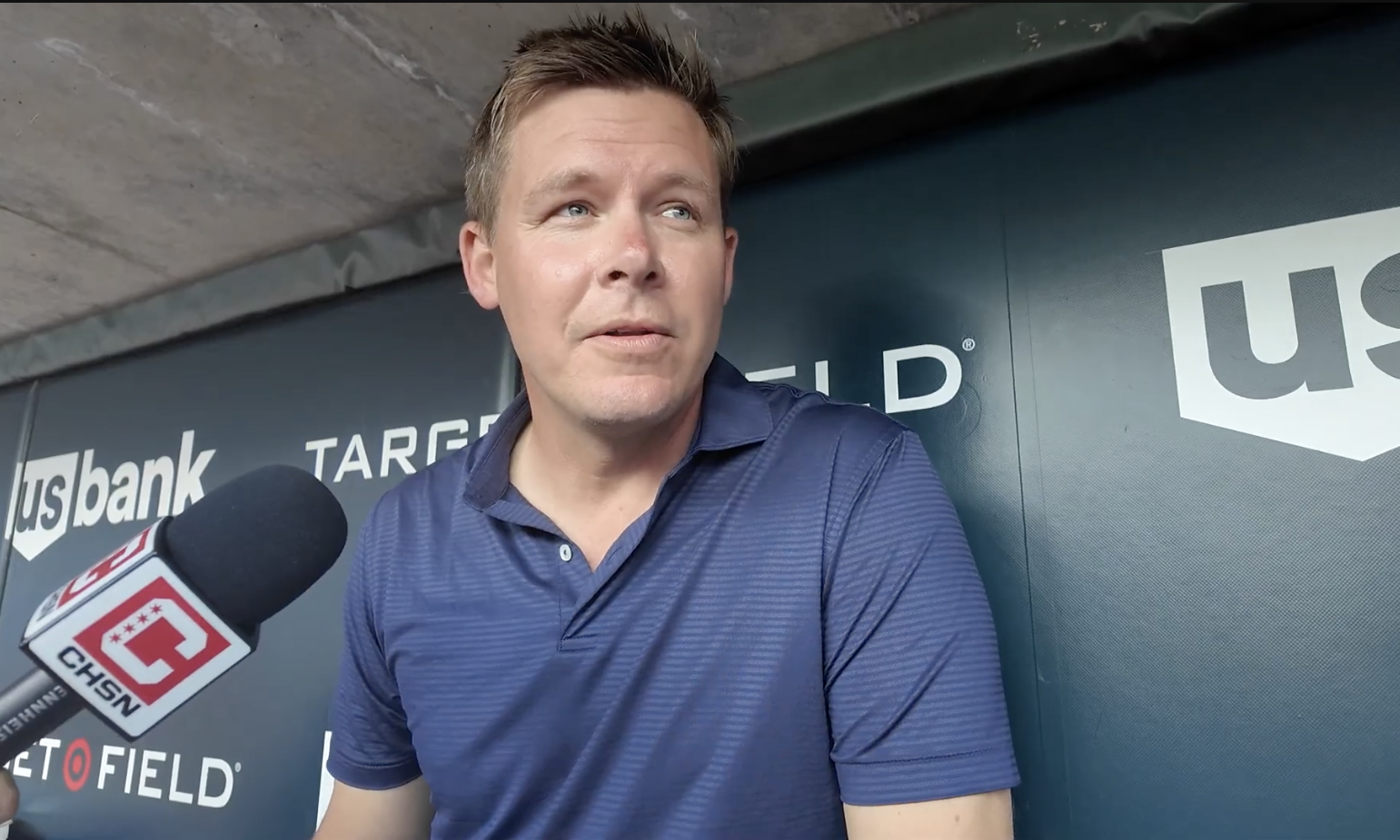
So imagine the surprise to see this latter dynamic being replicated on the Camelback Ranch practice fields. Not so much by Braden Montgomery, who was very genuinely practicing his breaks on fly balls, exploding through his first few steps before returning to the epicenter of three concentric white circles painted on the grass and starting anew. But more so by White Sox manager Will Venable, with his phone in his right hand, folding his 6-foot-3-inch frame to get field-level angles of the prospect outfielder's footwork.
What, exactly, was he doing?
"First-step quickness is obviously very important for us. Pre-pitch technique and how we get into that first step is really where it starts," Venable said, reiterating an oft-repeated point. "He’s a very smart player and was able to take some of these things, things he already implemented, but a big part is continuing to create awareness and showing him on video."
Video seems to be the key point of that answer.
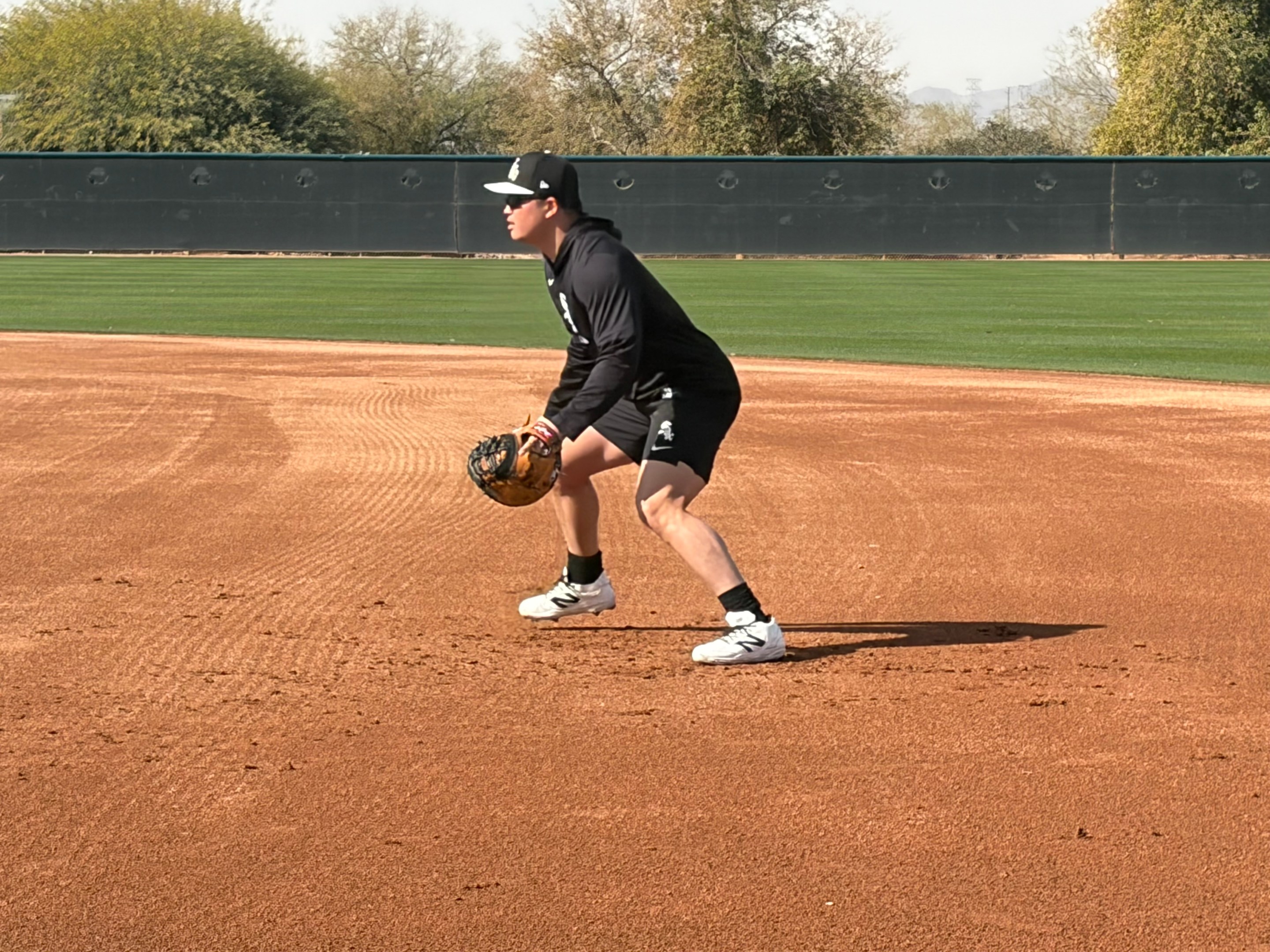
"I don't know if you've seen," said third base/infield coach Justin Jirschele, who's been central in the work of getting Munetaka Murakami adjusted to first base. "We have a video camera set up behind those guys so they're seeing ball off the fungo bat, and when they're landing, and the timing of it."
"You get to see your swing all the time and pitchers get to see their pitch mechanics, but we don’t get great video on defensive stuff," Venable said. "That was intentional coming into this, to be able to give these guys instant feedback as a learning tool. I think creating awareness around what they are doing is something that is really helpful."
The White Sox front office and coaching staff has been extolling the value of pre-pitch movement, first steps and secondary leads since last year, back when it read as a stand-in for when other teams would be discussing their roster additions. But for it to actually be a source of strength, especially after both their outfield (-5 OAA) and infield (-19) defense were rated as below average per Statcast, and Derek Hill on a split contract represents their only returning outfielder whose jumps graded well, they needed to put some heft behind it.
That's especially true heading into 2026, where Miguel Vargas becoming a full-time third baseman after posting a -7 OAA at the spot last season is one of their central projects.
"He's got really good hands, he's got a really good feel for his feet on different angles, different routes to the ball, but it's adding range," Jirschele said. "It's the timing of the pre-pitch [movement], and it's not landing too early to where he gets flat-footed and stuck, and then he's starting from zero. It's kind of creating some momentum to where he rolls into it."
"I try to go frame by frame and see the difference between when I'm late and when I'm on time and I have good rhythm, so it's always good to have video," Vargas said. "You think you're doing the right thing, and then you see your timing is a little off. So now that I have video, it makes me feel better."
While there's a formal camera setup behind the many infield drills that make up morning practice throughout spring training, outfield practice can often take on a more ad hoc shape. Many outfielders find pockets of time in between their own rounds of batting practice to read balls off the bat, or otherwise work on jumps in less formalized setting that team drills. For those moments, even if at first glance it could be mistaken for shooting content for Instagram, White Sox coaches are encouraged to use that pretty expensive camera they're all carrying around in their back pockets.
"I'm doing it all the time," said first base/outfield coach José Leger. "I'm out there with my with my phone. I pull it out and start recording videos. I get behind the outfielders. I'm in charge of the outfielders, so we drew circles in every single one of our fields. We have circles in left field, center field, right field. Those circles are 10-foot circles and five-foot circles. We try to time it, to see how quickly they get out of the circle. So I get behind them, they don't even notice me, and then I'm there, I'm recording, and I go to my computer and upload the video, and now I can slow it down to see who are the quickest guys and who needs work on getting out of the circles."
No one in Sox camp shot down my suggested premise that pre-pitch movements are like hand loads in swings, where everyone has to find the way to get in motion that best suits them. For someone like Brooks Baldwin, who was the everyday shortstop at Double-A Birmingham at the start of 2024 but now might find most of his playing time in center field, parsing his pre-pitch move in detail has been part of self-assessing and determining how it varies from his infield to outfield work.
"Mid-practice, we're working on first step and stuff and you can kind of see what you're working with, and see how well it's working," said Baldwin, who felt he had a breakthrough with establishing a little two-step as his pre-pitch move later on in an otherwise challenging 2025 defensive season. "Infield is slightly different just because of having to have that slightly quicker reaction, so it's a little more of a hop for me in the infield. Not as high as you see some guys, just a little more to be a little more weightless, to be able to go left and right. Outfield, I still want to be weightless, but basically having both feet on the ground where I can I can move left and right, forward and backwards."
While Venable and Sox coaches have been harping on first steps since last year, the player buy-in seems to stem from a specific message of where they were deficient last season and need to improve. Despite the emphasis on winning on the margins, the Sox finished second-to-last in Statcast's Baserunning Runs last season, with the second-fewest attempts to advance in the league, which served to explain why Chase Meidroth redirected the conversation to baserunning back when I still thought this story was just about defense.
"My first step needs to be a lot better out of the box," Meidroth said. "A lot of us are looking at that first step out of the box and looking to get even better at it. Whether it's a single, whether it's an out, just being consistent with our first steps, trying to always advance an extra 90, I think a lot of us are gonna take a lot of pride in that."
"One thing that is being discussed a lot in the industry is that false step," Leger said when asked of a baserunning element that video has made easier to address. "When we were growing up, we were taught to cross over with the left leg, and now you can see that like, fast-paced runners, they don't even think about it. They accidentally pick up their front foot and kind of put it backwards, like you're going backwards instead of advancing. So when they do it, and they don't realize they do the false step, when they see it in video, they go, 'Oh, shoot, I do a false step.' It provides that feedback, because there's a lot of things where you may feel like you're doing something, but you don't actually know exactly what you're doing to see it in video."
By their own definition of what success looks like for them, the White Sox have to become great at this, where they develop enough of a consistent standard in their first step fundamentals to wring value from it even in matchups where they otherwise seem outgunned. It also just feels crucial to the identity of the team that they're trying to establish.
Venable opened his first media session in spring by briefly acknowledging the passing of outfielder Terrence Gore, whom he coached during his time on the Cubs staff. Both on the record then and in chatting about him later, Venable kept harping on remembering Gore as more than a speedster, but someone who had diligently cultivated a skill set in a way that took real time and focus.
"A master at his craft," he said."