It's never a good sign for a trade deadline haul when a team might've been better off making zero trades than the four that went through. Or that the most productive player of those four was hurt in his third game, and might not be available the rest of the season.
As James wrote in the wake of the trade deadline, Chris Getz tried to balance immediate and longer-term interests by acquiring players -- Luis Castillo for the rotation, Huascar Brazobán for the bullpen, Joey Bart for catching, Brenton Doyle in the outfield -- who addressed 2026 needs without being pure rentals, but with a prospect cost the team could tolerate.
The White Sox tried to thread the needle, but one month after the deadline, they've instead poked themselves in the eye with it.
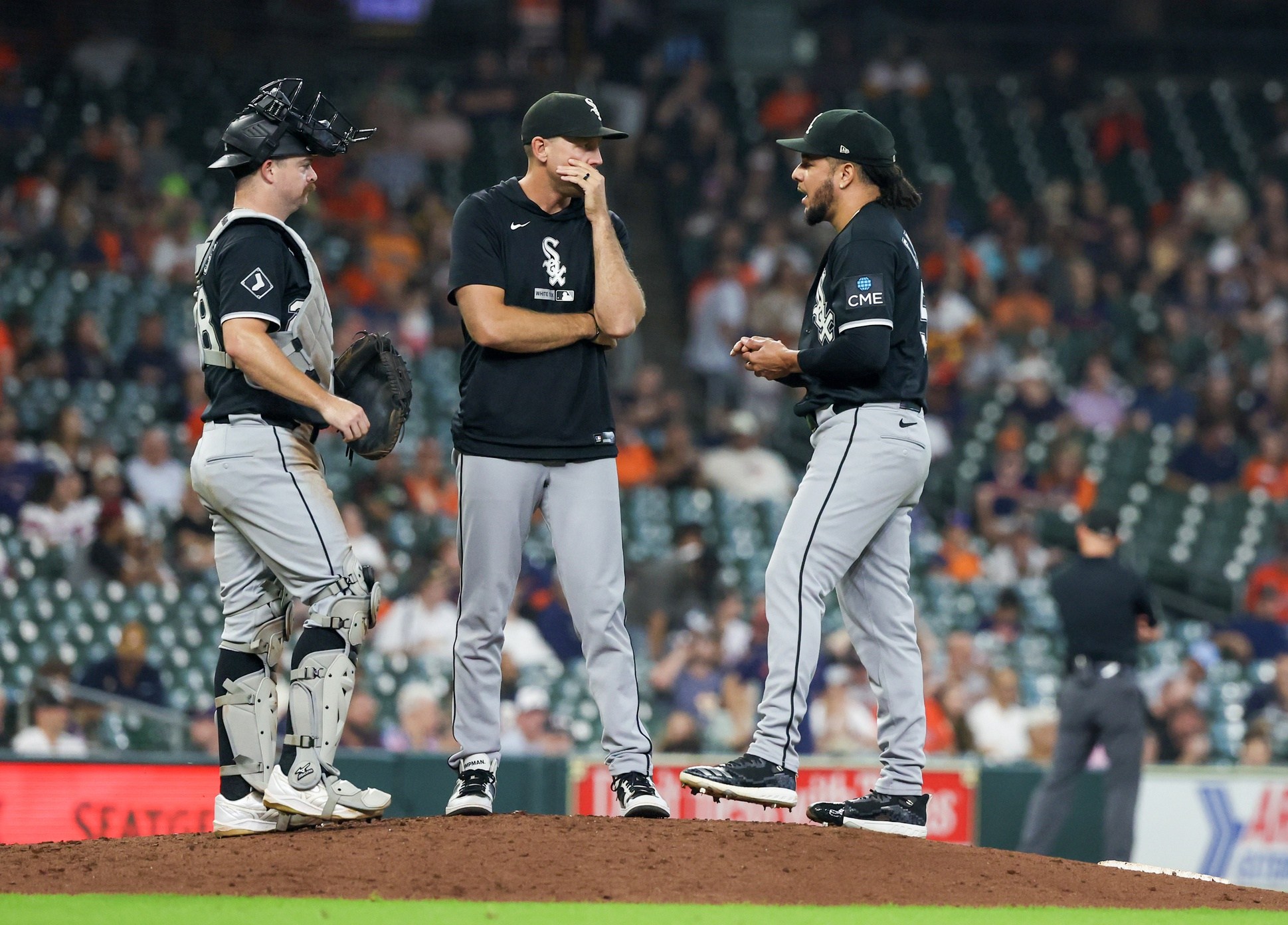
It's hard to say it could be going much worse. Castillo was brought aboard to settle a rotation spot, but he's failed to complete five innings in five of his six starts, including six runs over four innings in the loss to Houston on Thursday. Even with his seven scoreless against the Cincinnati Reds included, he has a 7.52 ERA with the White Sox, and opponents are hitting .325/.379/.605.
Brazobán came to the White Sox having limited hits, walks and homers with the Mets. All three immediately took a turn in the wrong direction after coming to Chicago, and now he's working his way back from a lat strain that sent him to the IL.
Doyle has popped a couple of homers in Chicago, giving him one more than he hit for the Rockies, but his lack of a plate approach has become his defining characteristic. It's not just that he's yet to draw a walk with the White Sox, he's seldom seeing a ball these days. His last six plate appearances, coming over the span of three games:
- Three-pitch strikeout
- First-pitch out
- First-pitch out
- Three-pitch strikeout
- Three-pitch strikeout
- Four-pitch strikeout
And in that last plate appearance, he managed to lay off a slider after falling behind 0-2.
That leaves Bart, who went 0-for-6 with a walk and four strikeouts over nine plate appearances before a pitch to the hand resulted in a broken finger. That at least allowed the White Sox to claim Jake Rogers when the opportunity presented itself, and while Rogers is just 4-for-30, one of those hits was a very cool walk-off homer.
The best thing you could say about Getz's half-in deadline moves was that he left himself options. Those options are literal in the case of Brazobán and Doyle, both of whom can be sent down. Bart couldn't have been so freely moved from the roster, but it only cost a DFA'd player to acquire him, and Kyle Teel's return offered the a natural opportunity for revisiting the position regardless of how Bart fared.
(The White Sox have indeed reinstated Teel from the injured list today, and they chose to retain Rogers by optioning Drew Romo to Charlotte.)
Castillo is the exception, and an increasingly awkward one due to the cost. Back when the White Sox traded for him, some here and elsewhere took umbrage when writers noted that the White Sox would be taking the entire remainder of Castillo's contract, as though that weren't normally the case, or that White Sox weren't sending Seattle the entire financial obligation owed to Seranthony Domínguez.
But while it was true the White Sox were only adding around $10 million to their payroll by accepting Castillo's $22.75 million salary for 2027 in place of Domínguez's $12 million figure, there was still a sense -- or at least an awareness of the possibility -- that the White Sox might've been doing the Mariners a favor. Both pitchers haven't been helped by the change of scenery, but a $12 million reliever is easier to bury in a bullpen than a $22 million starter can be obscured in a rotation, and a $22 million salary is harder to dump from this point forward.
There's pressure to make it work, yet given how Castillo pitched with Seattle, there's not much reason to think a quick fix is right around the corner. That creates a tension between what his acquisition represented and what his performance merits, and as long as he's making his best professional effort, the coaching staff is likely to offer a pretty narrow range of sentiments. You're not going to see Will Venable or Zach Bove trash a guy who just got here and needs help, and indeed, everybody's offering support so far.
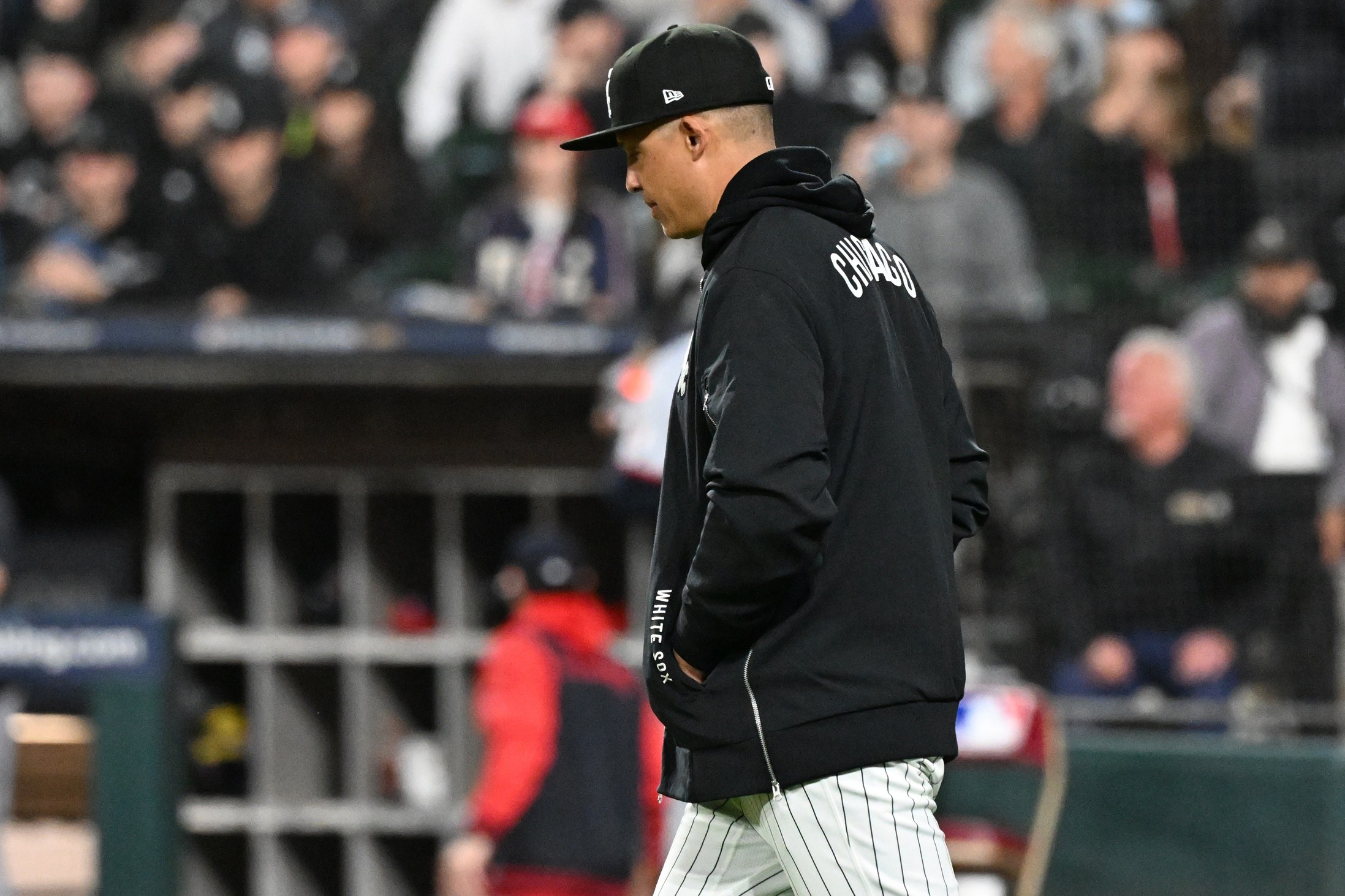
From Venable's postgame briefing with reporters in Houston on Thursday (emphasis mine):
"We believe in [Castillo]. He's here to help us and ultimately his job is not to go out there and throw six scoreless innings. He needs to give us a chance to win. And there's been a couple in which we haven't been able to get there. But we believe that he can do that. We have confidence in him. We're going to continue to support him. We're going to continue to work. He's not somebody that you need to push to work and make adjustments. He's open to anything and so we've just got to keep working and find the right one for him."
I just wouldn't take that any such comments as a signal that they'll remain steadfast to the status quo. "We're going to continue to work" can be read as commitment, but it can also be read as as an acknowledgment of the bare minimum while waiting for greater action to be taken. What Venable said about Castillo hit a lot of the same notes as one of his predecessors when dealing with a similar situation:
"Right now we’re trying to make him better and we’re going to continue to work at that and continue to make him better so he can help us.”
That's Robin Ventura on John Danks after the Orioles touched him up for six runs over five innings on April 28, 2016. Danks never pitched in the majors again, as the White Sox designated him for assignment before his next turn. It didn't matter that Ventura failed to offer foreshadowing, because the writing on the wall did all the talking.
The consequences for Castillo's struggles aren't likely to be that severe, but if he continues to flounder while David Sandlin or Noah Schultz or Jonathan Cannon make cases for change in Charlotte, I wouldn't assume the decision-makers will sit on their hands based on what they're saying now. "He's not somebody that you need to push to work" is another way of saying "Ultimatums through the media aren't necessary."
We're all in uncharted territory with this manager and front office with regards to how they respond to September stakes, so we're learning their tolerance and tells. Perhaps they stick with Castillo well beyond the expiration date, but if they have a change in mind, the revolution isn't probably going to be telegraphed. Veterans tend to earn a certain amount of discretion, even if it was earned elsewhere.