The White Sox acquired four direct additions to their 26-man roster, and three of them have at least provided some idea of the hoped immediate returns.
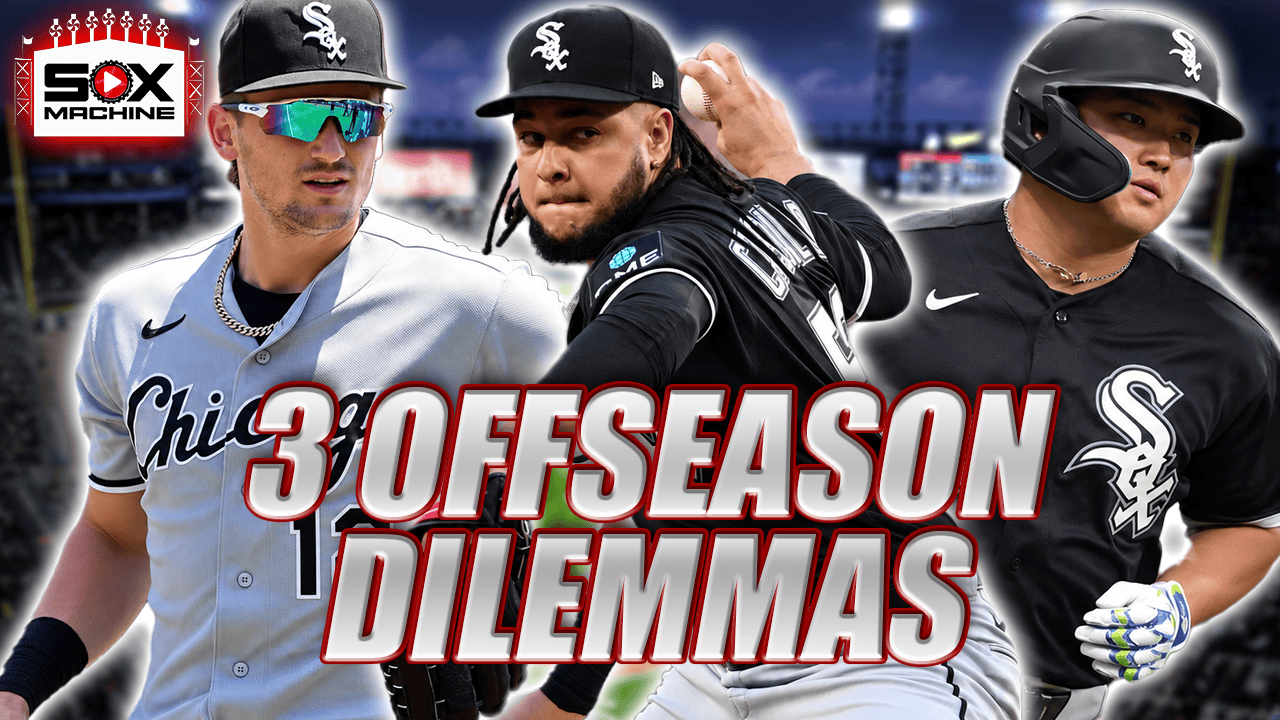
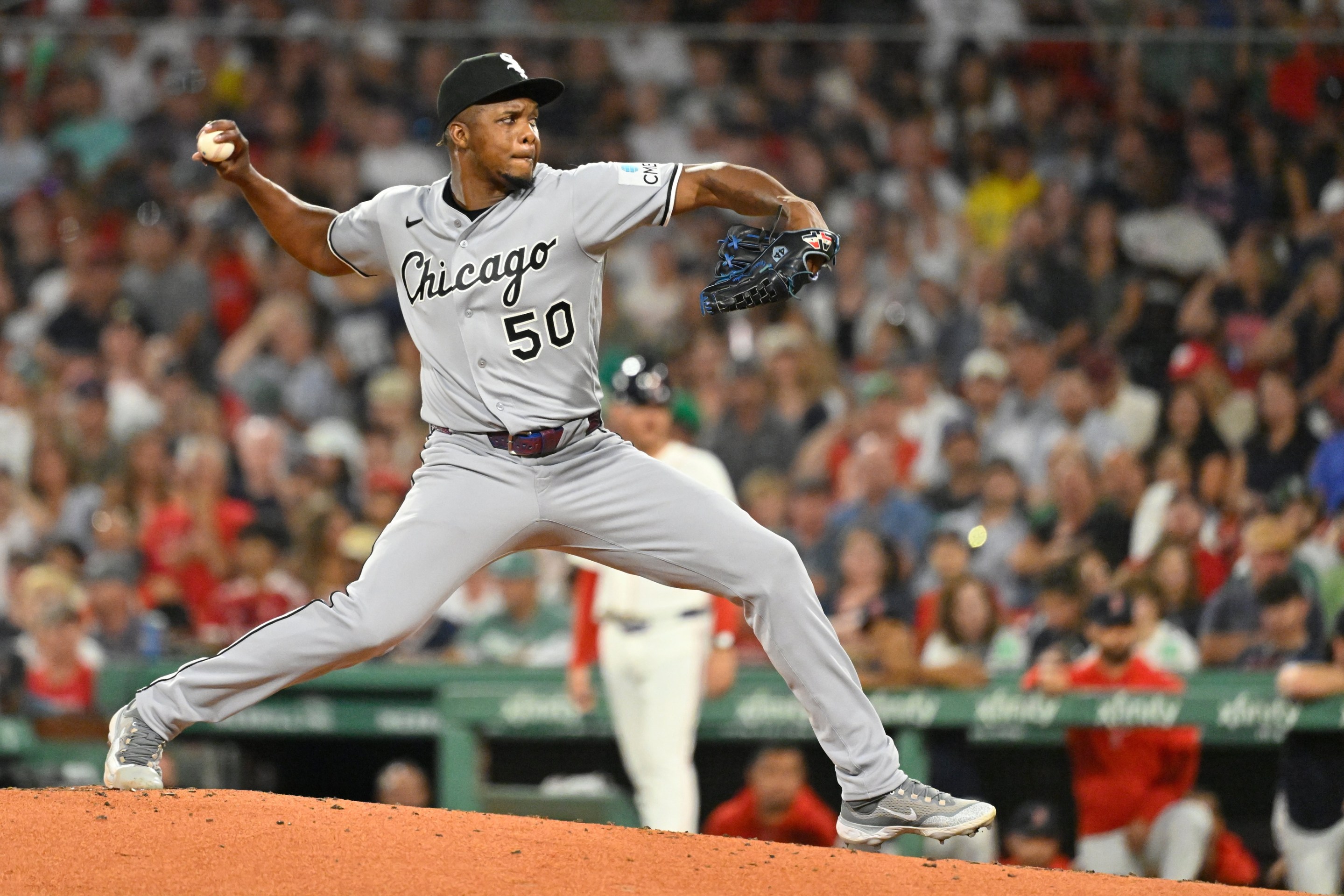
Luis Castillo? He threw seven shutout innings on the strength of a reemphasized changeup. It's the only good start he's thrown out of three, but it's enough to continue rolling him out.
Brenton Doyle? He's hit a homer, but while he hasn't personally contributed much to the offense, he gives the roster another true center fielder who can absorb starts against lefties, and it probably isn't entirely coincidental that Tristan Peters is hitting .343/.439/.543 since Doyle arrived.
Joey Bart? He was catcher with experience squatting behind home plate in major league games, and now Jake Rogers fills that role after a pitch broke a bone in Bart's hand.
And then there's Huascar Brazobán.
Brazobán was supposed to be the most plug-and-play option of them all; a 36-year-old who was already having a great season for the Mets and needed to change nothing to supply value for the White Sox. Instead, he's somehow the one who's furthest from the plot.
Even before Brazobán walked the Cubs' No. 8 and No. 9 hitters on nine pitches to put the White Sox in a bind that led to the tying run scoring on Tuesday night, he was already producing bizarre results, to the point that even his best outing of the month was somewhat discouraging.
Let's go back to Aug. 9, when Brazobán retired all five batters he faced as part of a herculean bullpen effort that allowed the White Sox to salvage a victory from the game where a rain delay forced Davis Martin to exit after one inning. Brazobán shouldered the second-biggest load of seven pitchers, and he needed only 22 pitches to do it. Superficially, it was a job well done.
Yet it was confounding that all four batted-ball outs he generated were in the air, and all were decently struck, ranging from 88.2 mph to 97.4 mph. Brazobán's success with the Mets was keeping the contact soft and on the ground, and that guy hasn't pitched for the White Sox.
| Team | IP | GB% | LA | EV | BB% | K% |
|---|---|---|---|---|---|---|
| Mets | 52.2 | 52.6 | 8.3 | 83.9 | 11.1 | 23.7 |
| White Sox | 7.1 | 29.2 | 17.8 | 92.7 | 9.7 | 9.7 |
These are results the White Sox shouldn't have anticipated, but when re-reading the FanGraphs write-up of the trade -- which cost the White Sox a pair of pitching prospects in Gabe Davis and Zach Franklin, just to get that in here -- a sentence from Davy Andrews now trips my radar in a way it didn't before.
I don’t know if this is a trade where everybody wins. I worry that Brazobán could turn into a pumpkin just like he did when the Mets traded for him in 2024, but this is a trade involving a trio of players whose organizations have helped them find a new gear.
And the first comment registers to a newfound degree as well:
Brazoban is a workhorse with a good changeup…for the first 4 or 5 months of every season. Then he hits a wall and blows up
Indeed, the Mets traded for him two deadlines ago, sending Wilfredo Lara to Miami in return. Dan Szymborski wrote up that deal and called Brazobán "better than several bigger name relievers who were traded this deadline," but it didn't pan out that way. Brazobán took the loss in his second appearance in New York, and wobbled enough afterward to drop into low-leverage situations by September. Similar to his early work with the White Sox, the components were all off, just to a smaller degree.
| Team | IP | GB% | LA | EV | BB% | K% |
|---|---|---|---|---|---|---|
| Marlins | 30.2 | 50.0 | 7.1 | 81.9 | 8.8 | 27.2 |
| Mets | 21 | 40.0 | 14.6 | 82.9 | 15.2 | 18.5 |
A second-half slip can't quite be called an annual phenomenon, but while Brazobán's post-break numbers in 2025 were on par with what came before, he also spent a month at Triple-A after the Mets optioned him to cycle in fresh arms. (The Sox are free to do the same since Brazobán still has an option remaining, and should this continue, they might have to consider it.)
I imagine the White Sox were guarding against some kind of fade, whether because of Brazobán's precedents, or simply because he's a 36-year-old who came to the White Sox on pace for 60 appearances and 75 innings. And looking back into his Mets performance because circumstances require greater scrutiny, while Brazobán was effective in July, he managed to produce outstanding results around a falling ground-ball rate and a rising hard-hit rate.
Brazobán closed out his Mets career by throwing nine scoreless appearances out of his last 10, so he was probably due for some form of regression. When you combine what he's done with the White Sox, the line -- 18 IP, 12 H, 1 HR, 7 BB, 13 K, 3.00 ERA, 3.53 FIP -- fits comfortably within his profile. In fact, those last two numbers match his 2026 season on the whole (3.00 ERA, 3.57 FIP).
While regression is perhaps the simplest explanation, it can also provide a false sense of security. Brazobán's performance can deterioriate further and still be within the bounds of his career arc, and as we discussed on the day of the trade, his career arc has few true comps.
The White Sox have to treat it like a problem, but then again, it's mostly a problem that it's a problem. On paper, Brazobán joined the White Sox as, at most, the fifth-most vital reliever behind Grant Taylor, Sean Newcomb, Bryan Hudson and a resurgent Jordan Hicks. He was basically insurance against Tanner McDougal not being ready for medium-leverage situations, and that hunch proved correct.
But when the White Sox need two bullpen days to fill out their five-man rotation, that puts a disproportionate strain and focus on the bullpen's lower-middle class. The situation is such that not only is Trevor Richards pitching in tight situations in a prestige series, but he's doing it on consecutive days, and going beyond an inning each time. Until their starters start completing five or six innings with regularity, Will Venable isn't in a position to avoid any reliever with a modicum of leverage ability, and Brazobán probably hasn't pitched enough with the White Sox to exhaust his.