If there's one thing the White Sox have showed us this season, it's that there's no point in overreacting to one bad game, or even a bad series. Two bad series in a row might trigger some alarms, but until they lose four consecutive games, which is something they haven't done this season whether by talent or some odd stroke of sequencing luck, that's a speculative exercise.
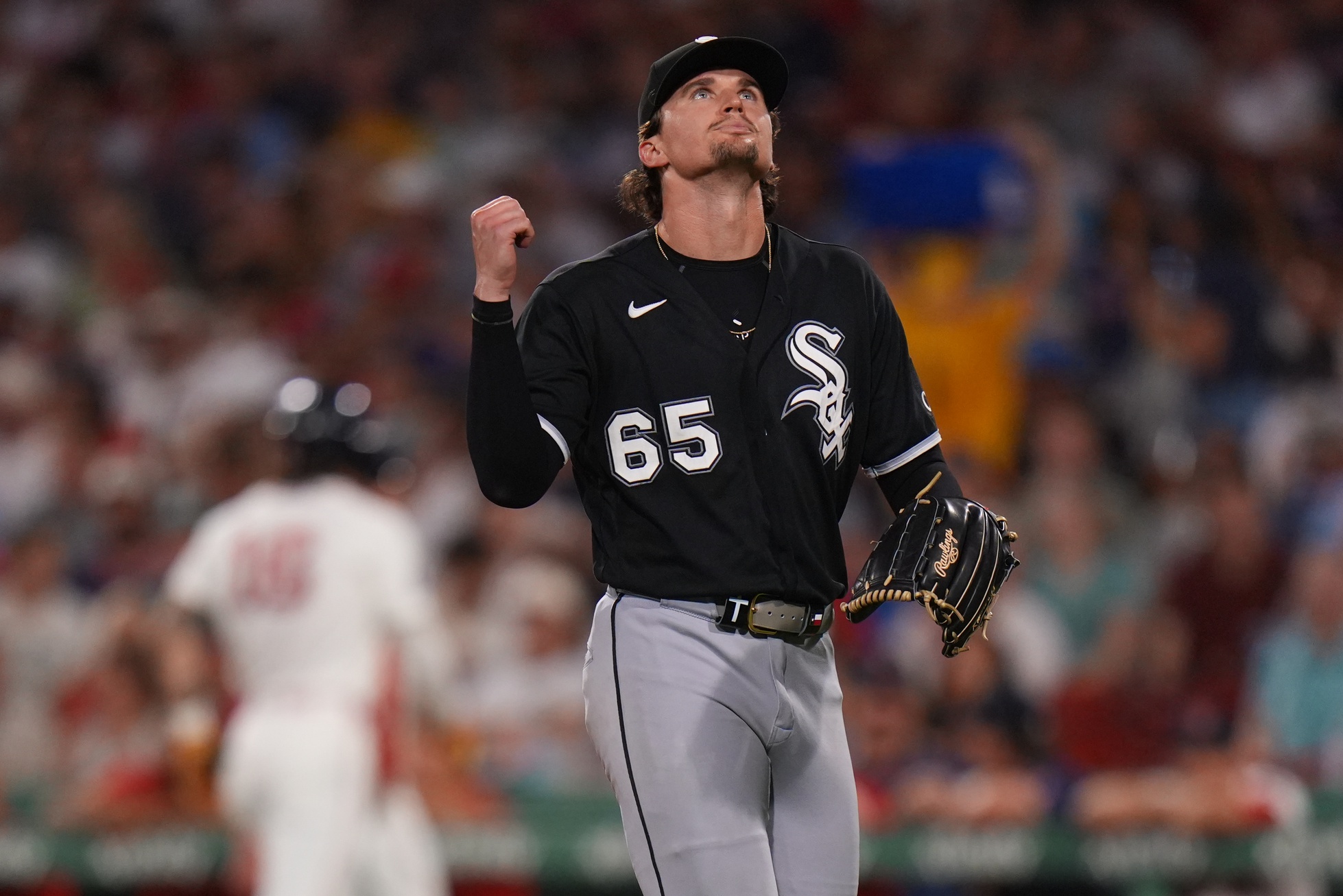
So there's a risk of taking Davis Martin's awful first inning against the Red Sox in the first game after the trade deadline and using it as a cudgel against the White Sox's deadline strategy.
A second consecutive awful beginning for Martin is painting him into a corner, however. He has a 7.76 ERA since the start of July, and while he did clean it up to go five-plus, he floated pitch-tipping as a potential animating force behind this dud.
“We’re going to go back and see what the tip is and how long we’ve been doing it and if that’s going to answer some questions,” said Martin, who allowed nine earned runs in the game and has given up 23 in his last 25 ⅔ innings, covering five starts. “If it doesn’t, we still have to make some better pitches. But it would explain some things.”
Injured catcher Kyle Teel caught the tipping from the dugout and alerted Martin and new catcher Joey Bart.
The immediate avalanche brought to mind Lucas Giolito's Patriots' Day disaster back in 2021, when he gave up six runs in the first inning, then two more when Tony La Russa sent him back out there for a second. I'd remembered there was a pitch-tipping conversation after the game, but Giolito wasn't the one to introduce the notion, and he didn't advance it.
Giolito got one swing and miss on his changeup in the first inning. He seemed to dismiss the notion he was tipping pitches, which came to mind when the inning started with a homer followed by five consecutive singles (one a bunt).
“The big thing was leaving my changeup up, and it didn’t have good action, based on the replays and stuff I saw,” he said. “They didn’t miss them.”
When rewatching Martin's first inning, that's what it looked like, at least to a layman. One reason why Caleb Durbin hit a grand slam off Martin was that Willson Contreras missed two low, plate-splitting fastballs earlier in the at-bat appearance before looping a middle-middle slider to center. This was not a guy working the edges.
That's not to discount the idea that tipping played a part. The Red Sox have a reputation for identifying and relaying tips, and there's only so much replaying the game might identify. Tipping can take a lot of different forms, as Sean Newcomb reminded earlier this season when he told Jesse Rogers that teams could tell whether he was going to throw a fastball by how fast he was chewing his gum.
For his part, Giolito could have very well thought he might have been tipping that morning five years ago, but didn't feel like it was worth indulging publicly. There is a last refuge feeling to it, especially for a starter who is short on satisfying answers to pressing questions. Martin's next start -- which is on track for the Reds series next week -- will inform the conversation more than anything else, but it made me remember that the White Sox have a coach who considers tipping his purview, and we haven't heard a lot about him this season. This is your moment, Chris Denorfia.
⚙️⚙️⚙️
For the time being, Martin's struggles could amplify the pressure on Luis Castillo when he makes his White Sox debut on Thursday. While Chris Getz might have wanted to avoid paying the price for a rental starter and putting all his eggs in the 2026 basket, he courted second-guessing by acquiring a starting pitcher who needs tweaks, rather than somebody whose arsenal and approach to hitters in 2026 is more turnkey.
For all of Getz's activity over the 72 hours before Monday's deadline, it's hard to find a third party that came away impressed. Rifling through the "winners and losers" reactions that are a staple at this time of year, if the White Sox inspired any emotions from their moves, it was mild skepticism, mostly stemming from the Castillo commitment.
The White Sox were busier than just about everybody in the last week, but because most moves amounted to little more than better depth, their deadline will be defined by the Luis Castillo trade. Not only did GM Chris Getz take on the $30 million left on the contract of an aging starter with a 5.06 ERA this season, but he parted with a real prospect to do so. It’s unclear where catcher/outfielder Boston Smith will land on the diamond, but it’s not hard to see that the kid can hit. Seattle is happy to have him.
The White Sox roster is better than it was a week ago — Huascar Brazobán strengthens the bullpen; Brenton Doyle fills out a Gold Glove platoon in center; Joey Bart eases a need at catcher while Kyle Teel is hurt — but there was no big win to make up for the Castillo overpay.
⚙️⚙️⚙️
When the Mets acquired Luis Robert Jr., they set out to avoid the same fate that befell the White Sox, but instead they've replicated the whole experience from beginning to end. There was the significant months-eating injury, the underperformance around the injury, and now the inability to trade him by the deadline.
While center fielder Luis Robert Jr. created some conversations in the trade market, the money the Mets would’ve had to pay down didn’t make sense for the value of the prospects teams would have offered in return. So, essentially, there was no significant interest. Robert is owed $5.9 million for the rest of this season plus $2 million for a buyout on a team option for next year worth $20 million.
In hindsight, the White Sox should have traded Robert after his 2023 season, but I maintain that any trade at that time would have felt short because he hadn't -- and still hasn't -- tied together two healthy seasons, much less productive ones. The acceptance of his market rate probably wouldn't be able to be fully understood for months, no matter when the deal was struck.
To that end, when the White Sox traded Robert for Luisangel Acuña and Truman Pauley while the Mets paid full freight, the return was anticlimactic after years of speculation, but looking at it now, at least there was a return. The best time to trade Robert was always yesterday, and the second-best time was today -- at least until today was too late.