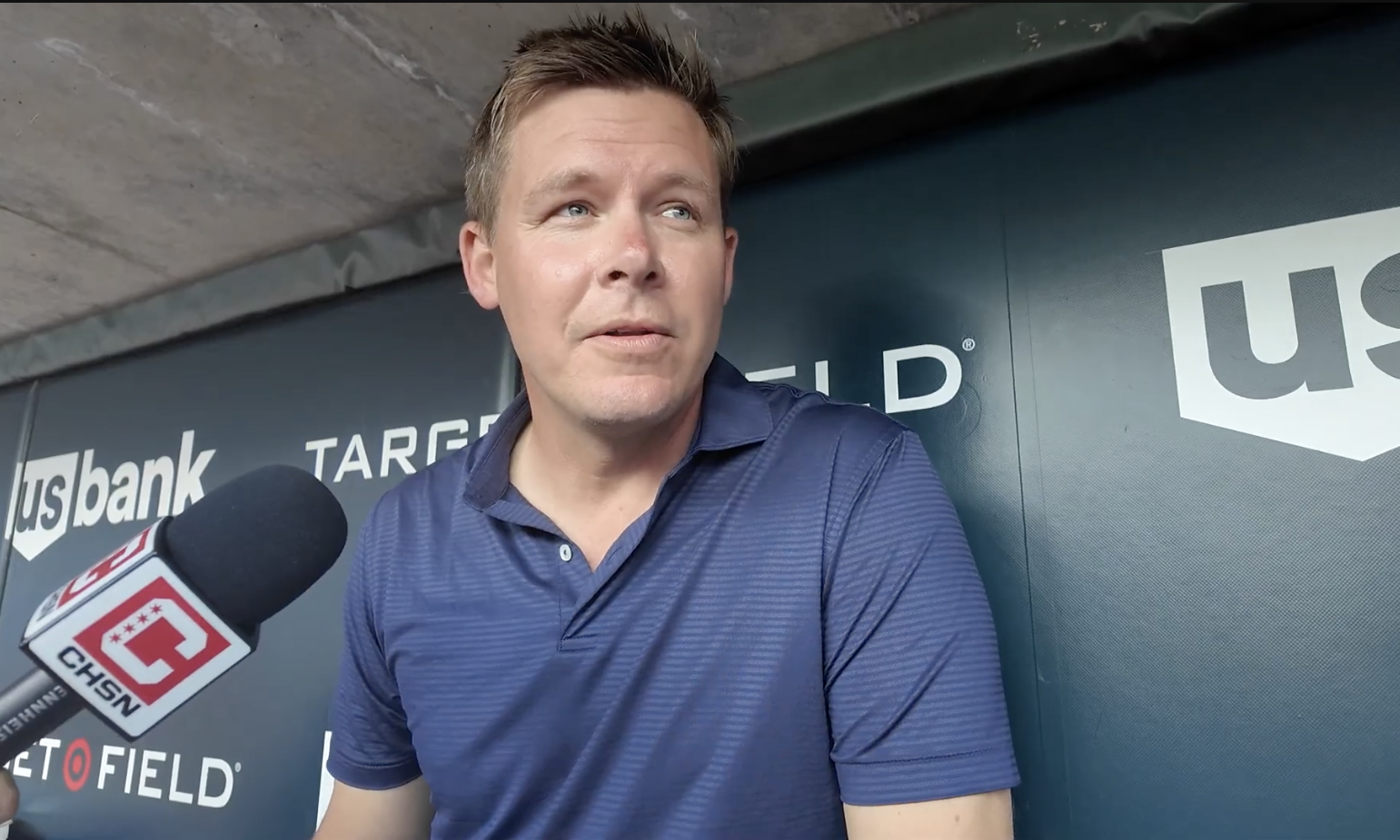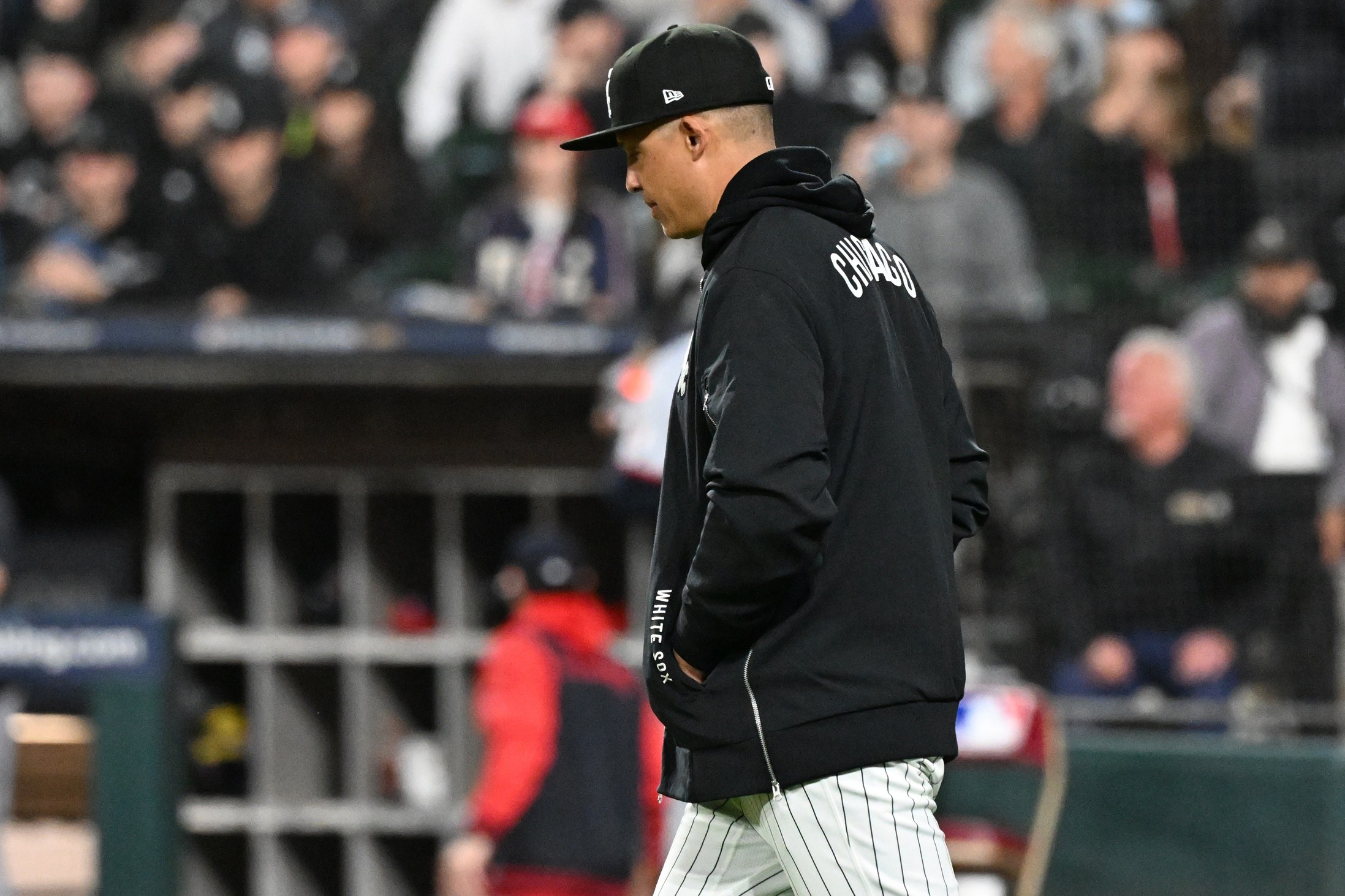

In a recent postgame session, a reporter asked Will Venable if his team's offensive rally was a testament to the value of just put the ball in play. Even in the afterglow of a run-manufacturing rally that day, the manager of an offense that's fourth in home runs but also runs the third-highest strikeout rate in MLB, asserted that just put the ball in play is not the philosophy of a resurgent White Sox offense.
"The messaging from the hitting guys has been to take your best bat speed to good pitches," Venable said. "Put yourself in a position to see the ball, be on time and get good swings off."
Instead, more conversations with the Sox hitting group reveal they believe the old adage is often counterproductive.
"There are few guys for whom that works, and there are a handful of guys where that puts them in a really fucked up mindset," said hitting coach Derek Shomon. "Their swing breaks down, decisions get fucked up, either too passive, too aggressive. We want our guys to be free when they get up there to be the athletes that they are. If that means they're willing to take shots early -- and that may come with a whiff on a secondary pitch early in the count -- so be it. Such is the game of baseball."
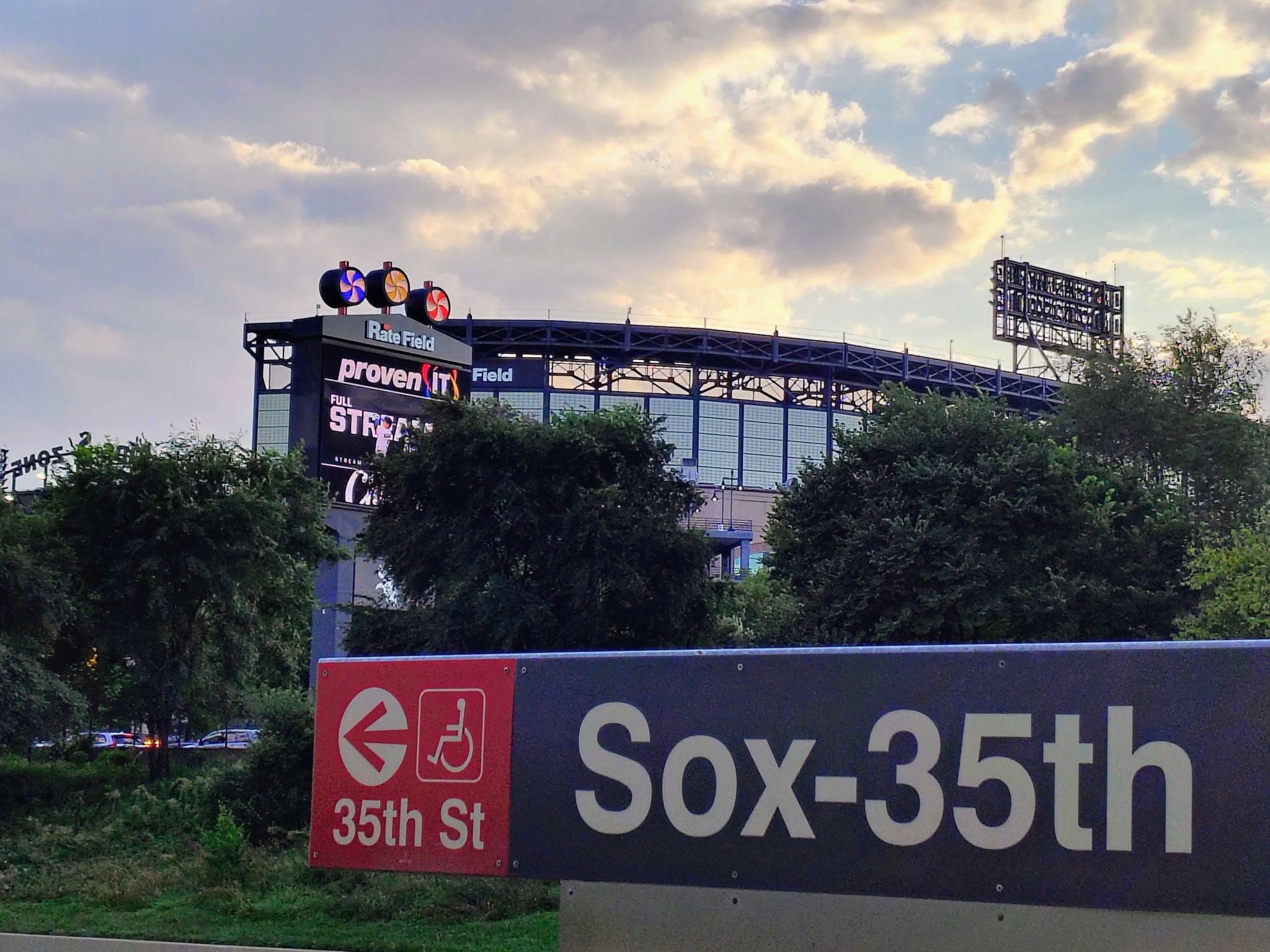
"If they are foolish enough to throw it over the middle, we want to take our best swing to it," said hitting director Ryan Fuller. "The other side of it, more often than not, 'Look for a good pitch, be short, put it in play,' it feels defensive. These guys are going out there feeling offensive. Especially once Rate Field gets hot and the wind is blowing out, these guys are looking to go up and drive the baseball. That doesn't mean hit lazy fly balls, it's drive a ball on a line hard with a good pitch."
But as referenced, the Sox are producing around the downsides of that approach at well. Their offense has the steepest approach angle in the sport -- which indicates a more uppercut swing plane -- and as a result, the second-lowest contact rate on pitches in the strike zone in the sport. Series like Seattle last month, where they faced a trio of starters with good, riding four-seamers (Bryan Woo, Bryce Miller, Logan Gilbert) and struck out 36 times in three games, is the type of stuff that can happen to them at present.
To that, Fuller doesn't downplay the issue, but harps upon how much they value more contact-oriented hitters in the lineup like Chase Meidroth, Sam Antonacci, Tristan Peters, and ideally a resurgent Edgar Quero, to balance things out.
"Diversity in the lineup is very important," Fuller said. "If you lean too far one way, it's going to be susceptible to going through some tough times. But we've seen over the last few weeks where we didn't hit a home run but did a great job situationally, guys hit it around line-to-line, pole-to-pole and still found ways to win."
So, do the Sox have a preference? Add Rikuu Nishida and William Bergolla Jr. in the minors, and they have a slate of very contact-oriented hitters, with Antonacci and Miguel Vargas being prime examples of their ability to add bat speed and power to make those profiles more viable against big league pitching. At the same time, they have had Munetaka Murakami and Colson Montgomery serving as the heart of their offense, despite both featuring some of the lowest contact rates in the league, and Braden Montgomery and Caleb Bonemer are hoped to be future power-hitting fixtures despite ample swing-and-miss rates in the minors.
"The three main skills we have -- decisions, contact, damage -- most big leaguers have at least two of three average to above-average," Fuller said. "Look at the Meidroth profile: decisions and contact, and damage is a little bit below-average. We feel good about being able to, over time, influence that damage profile a little bit, whether it be through moving better, being able to swing the weighted bats a little faster, giving them the freedom to have their A-swing earlier in the count.
"But then also you look at Mune: decision and damage but you're going to be a little bit more light on the contact. All those profiles can be really productive. All these guys know where they are and what they need to lean into while still working on the other skill that might be lower than the other two."
The Sox paid up for Murakami's power, and used considerable draft capital for Montgomery's and George Wolkow's as well. Wolkow's recent swing change aside, they have more concrete examples of quick turnarounds with adding power to contact-oriented hitters. Asked if Jacob Gonzalez finding a mechanical fix after years of searching was a sign of advancement in Sox hitting development's capabilities in Fuller's second year as director, he both didn't answer it directly, but also wound up referencing the Hawk-Eye data utilized for it -- only recently widely available across the farm system -- so much that it could only be interpreted as an affirmative.
"When he was hunched over in his setup, it was limiting his ability to impact the baseball," Fuller said of Gonzalez. "He was sacrificing driving the baseball just to kind of touch it. What we've talked about with Jacob and he understands it, when you get to Triple-A, when you get to the big leagues, touching the baseball isn't good enough. These defenders are so good, you've got Byron Buxton in center field. The field is very small, to get a hit, you're gonna earn it. Before two strikes, we want to put you in a spot to get your best swing off in a way that matches how your body wants to move..."
"It's not, 'Hey we did this with another player, we think it will work for you.' We work with biomechanics, we work with the performance staff and this plan we really think is tailored to you and we think is going to help you."
With the offense full of developmental success stories, the White Sox might have to anticipate a problem arriving this winter that they haven't dealt with much in the past few years -- a brain drain when other teams hire away minor league hitting coaches and assistants to bigger titles elsewhere. Fuller is generally in favor of his colleagues having success and getting good career opportunities, but also says it's why he has to treat minor league hitting coaches like a second farm system he's trying to develop.
"The coaches have their own plans just like the players do," Fuller said. "Here's what we're going to be evaluating, here are a few things specifically that we want you to work on, and they're getting feedback after every visit; whether it's myself, Sherman Johnson, Danny Santin, the [hitting] coordinators going in. The coaches then have a debrief with us, we go over how the trip went, what adjustments we'd make and we do that at the big league level too. Every time I leave, sit down with Sho and Joel and talk about what we saw. It's an unbelievable environment."
⚙️⚙️⚙️
Bonemer looked solid as a rock as a hitting prospect last season because his contact rate, raw power and swing decisions -- the three principles -- all looked above-average. Whereas this year, he's voraciously pummeled fastballs to such an extreme degree that he's slugging .576 even after a prolonged cool-off period.
That's great, but opposing pitchers have responded by peppering him with breaking balls. It's rare to see a hitter in High-A who sees more sliders than fastballs, but it has Bonemer's contact rate under 70 percent and his strikeout rate around 30 percent in the South Atlantic League.
More than anything, Fuller sees this as a valuable challenge for Bonemer to confront for the first time as a 20-year-old in the minors, rather than in Chicago.
"He went a little heavy in one area, opposition made an adjustment, now we need to counteract that," Fuller said. "He wants to be that player and there are a few. Vargy's doing it right now -- above-average decisions, above-average contact, above-average damage -- Bonny's certainly got that skill set. That's why you play in the minor leagues. You find out where you need to make adjustments, whether that's swing, the approach you have, what you need to do in terms of training time every single day. That's going to be a fun one to find a way to make another adjustment and get on a heater again."
⚙️⚙️⚙️
Billy Carlson will be out for a while with a fractured thumb, and his numbers are frozen in time for a while as an above-average hitter (108 wRC+) in the South Atlantic League. And while his .257/.386/.340 line is inflated a bit by the DSL-level walk rates in Low-A right now, the 19-year-old has compiled an above-average contact rate (78.7 percent) early on.
In watching a rail-thin teenager with big loading actions at the plate, I was curious if Fuller has the same long view of Carlson, where his swing is going to look so different as he fills out, that analyzing his current results-- and certainly his ability to drive fastballs -- is not quite a waste of time, but demands a specific type of focus.
"Young guys who are more loose, lanky movers are going to have bigger moves to get the stretch out of their body and be able to get their swing off and rotate into contact," Fuller said. "The progression over time of players like that, the moves just get a little bit tighter. They don't have to make as big of a move to be able to get that slack out of their body. That's what we're going to see with Billy. We've already seen it from the time we drafted him last year to where he is now. Everything has gotten a little bit sharper.
"Ultimately for him is be able to get your moves off in a time that when the ball is halfway, you're down and ready to take your best swing to it. For him: good posture, being able to hold his bat path over the middle of the field, be able to adjust to the fastest pitch he's going to face to the slowest one, that adjustability is what we want all our hitters to have."