This past Sunday in his weekly column on USA Today, Bob Nightengale had a bullet point about the Chicago White Sox and what he was hearing about their thought process with the first overall pick.
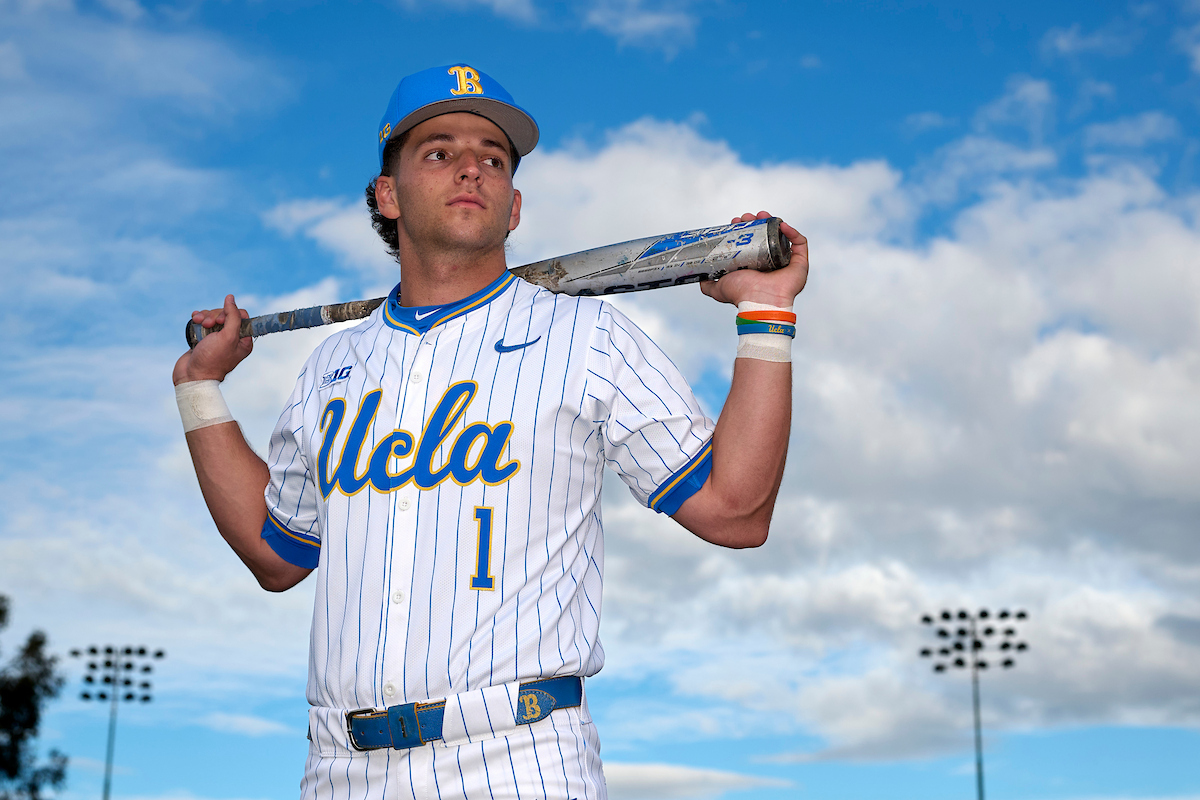
The Chicago White Sox remain uncertain who they will draft with the No. 1 pick in July, and insist they have not committed to taking UCLA shortstop Roch Cholowsky, the consensus top player in the draft. It’s also unclear, several executives say, whether the White Sox are Cholowsky’s top preference.
In his recent appearance on 670 The Score’s Mully & Haugh show, Nightengale struggled in vetting the thought process driving this notion that Cholowsky is not a slam dunk at first overall.
Is this line of thinking that the White Sox would pivot off Cholowsky first overall crazytownbananapants? It might be considered that Cholowsky is 8-for-22 with five home runs in his last five games.
I’ll take the fool’s errand of attempting to make sense of why the White Sox want the league to know they are still considering their direction with the first overall pick, even though it very well could be a smokescreen.
The Leverage Play
I don’t think using Nightengale to create signing bonus leverage for this year’s draft is all that beneficial.
As the calendar flips into May, the negotiating season begins for scouts and targeted prep prospects. At the start, it’s a feeling-out process of what kind of signing bonus would be needed to buy out a college commitment. With that number in hand come July, draft war rooms will start debating in the later rounds who the best player they can draft and sign is. No team wants to waste a pick in the first three rounds, although this did happen to Pittsburgh last year when Angel Cervantes decided to attend UCLA.
The White Sox are expected to target prep players with their second- and third-round picks. It’s assumed that with pick 41, they are willing to sign a prep player for around $3 million, which is close to $550,000 over that pick’s slot value. With their draft pool of $17.5 million, theoretically, the White Sox could offer a similar amount in the third round. This type of spending leverage could net them multiple top-60 prospects from this draft class.

Free preview
Enjoying this unlocked story? Get access to all our exclusive White Sox and draft coverage today!
But in order for that to happen, they need to save bonus money from somewhere, and the most likely pick to shave from the slot value is the first overall selection. That’s where Roch Cholowsky enters the picture.
I’ve pointed out this fact multiple times in previous 2026 MLB Draft Reports, but the highest signing bonus ever is $9.25 million by Chase Burns and Charlie Condon. Even if the White Sox set a new record by drafting and signing a prospect first overall at $9.5 million, they will save close to $1.85 million, which can be allocated to picks 41 and 77. Everyone who covers the MLB draft is expecting that Cholowsky will break the signing bonus record, but by how much?
A college junior has very little leverage when it comes to the draft. If they get selected and don’t sign, sure, they could return to school for their senior season and receive some NIL money. But in the following draft, they will have almost zero leverage. This scenario is why it’s very unlikely that college players selected in the first 10 rounds don’t sign.
How Wasserman could impact the 2026 MLB Draft
Cholowsky is represented by Wasserman. They also represent Grady Emerson, Jacob Lombard, and Justin Lebron. Their agency will probably know better than anyone how this year’s first round will shake out.
So by having it leaked to Nightingale that they are not 100 percent sold on Cholowsky as their first pick could be a ploy from the White Sox to help negotiations with Wasserman. The Tampa Bay Rays and Minnesota Twins, with their slot values, could exceed a $9.5 million signing bonus. The only problem for the White Sox is if this leaked info is a leverage play, they will still be talking to the same agency with their backup plans with the first pick (Emerson, Lombard).
Does Wasserman care about the order in which their clients get drafted? Probably not, as long as the prospects are getting fair signing bonuses and their respective teams don’t pull the rug out from under a deal during the physical evaluation process. If Mike Shirley and Chris Getz have second thoughts about Cholowsky being the best player available, Wasserman can help get a deal done with Emerson or Lombard while still helping Cholowsky to set a new signing bonus record with Tampa Bay, Minnesota, or even San Francisco.
The Ceiling Play
In our updated Top 100 prospect list and Mock Draft 1.0, you will see Roch Cholowsky at No. 1 overall. He has the potential to be a power-hitting shortstop with a high, projectable performance floor, garnering many comps to Chicago Cubs shortstop Dansby Swanson -- although with better contact skills against advanced pitching, I think Cholowsky’s ceiling projection could be akin to Carlos Correa.
So does that mean Cholowsky has the highest ceiling in this draft class?
I think a case can be made that Grady Emerson and Jacob Lombard could carry more potential. Both are more athletic than Cholowsky, but at age 18, neither shows the same promise of power. Now, neither did Cholowsky, who bypassed the draft to attend UCLA. He made a significant lower-half adjustment in his swing in 2025, leading to a 23-home run season.
There’s also the age modeling, and boy, is this becoming a bigger topic in the draft and player development. Cholowsky turned 21 on April 7 and is obviously still in the midst of a college season.
The White Sox's top position player prospect, Caleb Bonemer, is younger than Cholowsky. He doesn’t turn 21 until October, but already has over 500 plate appearances against minor league pitching under his belt. Against High-A competition, which is a quality better than what Cholowsky has faced this season, Bonemer has an OPS over 1.100 with 11 home runs in 22 games.
Kevin McGonigle is 21 years old and is currently leading the American League in WAR according to Baseball-Reference. Konnor Griffin just turned 20 years old last week. Jesus Made and Leo De Vries, MLB Pipeline’s No. 3 and No. 4 prospects, are still teenagers.
It’s a bit cherry-picking, but these five players are developing against far better pitching and are much easier to gauge just how major league-ready they will be for their respective teams. I think it’s a bit crazy to assume that Cholowsky will be the No. 1 prospect in MLB next year, as he’s struggling to hit for power against Big Ten pitching. I also think it’s a fair question to ask how exactly Cholowsky is developing into a better player, facing what is, for the most part, mediocre pitching.
| Opponent | GP | AVG | OBP | SLG | 2B | HR | RBI | K% | BB% |
|---|---|---|---|---|---|---|---|---|---|
| Big Ten | 21 | 0.301 | 0.455 | 0.458 | 4 | 3 | 18 | 15.4% | 13.6% |
| Non-Big Ten | 23 | 0.356 | 0.464 | 0.943 | 6 | 15 | 34 | 9.0% | 10.0% |
The White Sox are getting much better at developing their prep draftees. Colson Montgomery looks like a mainstay, Noah Schultz has been flashing his potential against MLB hitters, and is Bonemer the second coming of Alex Bregman?
If there is any part within the White Sox scouting organization, even involving Paul Janish and Ryan Fuller, that believes Emerson or Lombard would develop into better major leaguers than Cholowsky, wouldn’t that be their direction? Isn’t the point of all this to take the best player available?
What does this all mean? Should the White Sox select someone else first overall?
Ultimately, I think Mike Shirley and the White Sox scouts are doing their due diligence. They want the teams drafting behind them to second-guess what the White Sox will do, because maybe it gets those teams off the White Sox's scent with other draft targets in later rounds. This is also the time when every MLB team is trying to show its best poker face and avoid giving away its draft strategy.
A lot more rumors, whispers, and gossip -- gospers, perhaps -- are coming. The best thing everyone in the Sox Machine community can do is keep watching as much baseball as possible. I’ll continue visiting Chicago-area high school games to gather more intel on possible Area Code targets, and I plan to cover the Big Ten conference tournament in Omaha. Your help posting about draft prospects in the comments and on social media helps me a great deal, so thank you for being engaged readers.
From watching Cholowsky at the College Series Showdown in Texas and lots of Big Ten streams, there are other intangibles to consider that suggest he’s a winning player. I’m impressed by Cholowsky’s leadership and how his UCLA teammates gravitate towards him when the game gets tight. UCLA is putting together one of the best college seasons we’ve ever seen, and Cholowsky is right in the middle of that. Coach John Savage has raved about Cholowsky’s work ethic and demeanor in the clubhouse.
So if Getz needs an impact position player that can join the majors in 2028, I still think Cholowsky is the best bet. And I still believe Cholowsky will be very good. Cholowsky knows how to play winning baseball, and his possible arrival to the White Sox appears to come at a critical transition.
But I also wouldn’t be surprised five years from now watching MLB Network if they tout Grady Emerson as the next Corey Seager and Jacob Lombard as the next Manny Machado. Hopefully by then, the White Sox will have enjoyed some postseason success to calm the second-guessing anxiety.
My gut feeling after this thought exercise is that, come draft day on July 11, Getz will go on national TV with a big smile on his face, exuding his excitement about drafting Cholowsky, saying he was their No. 1 guy all along.