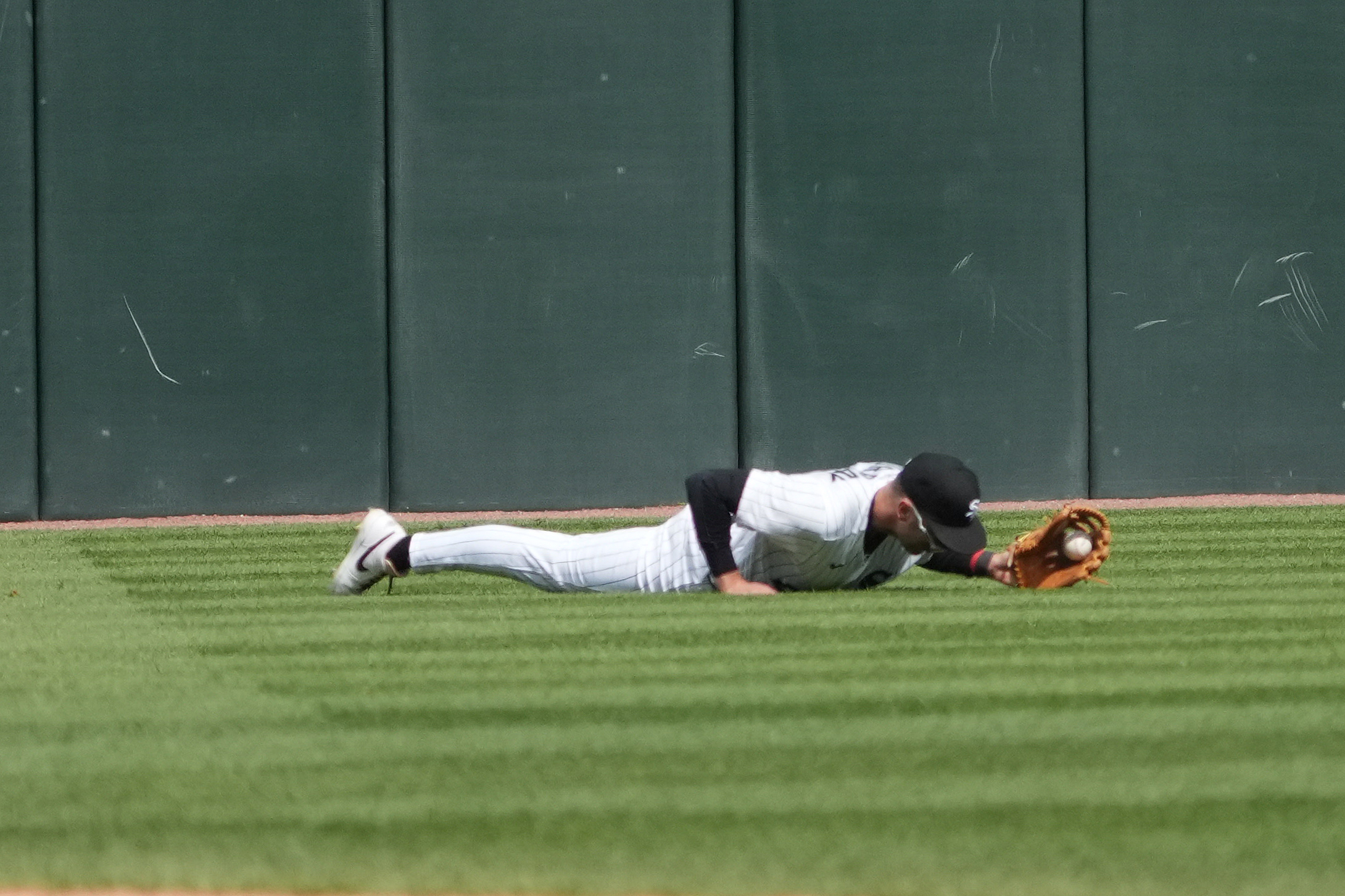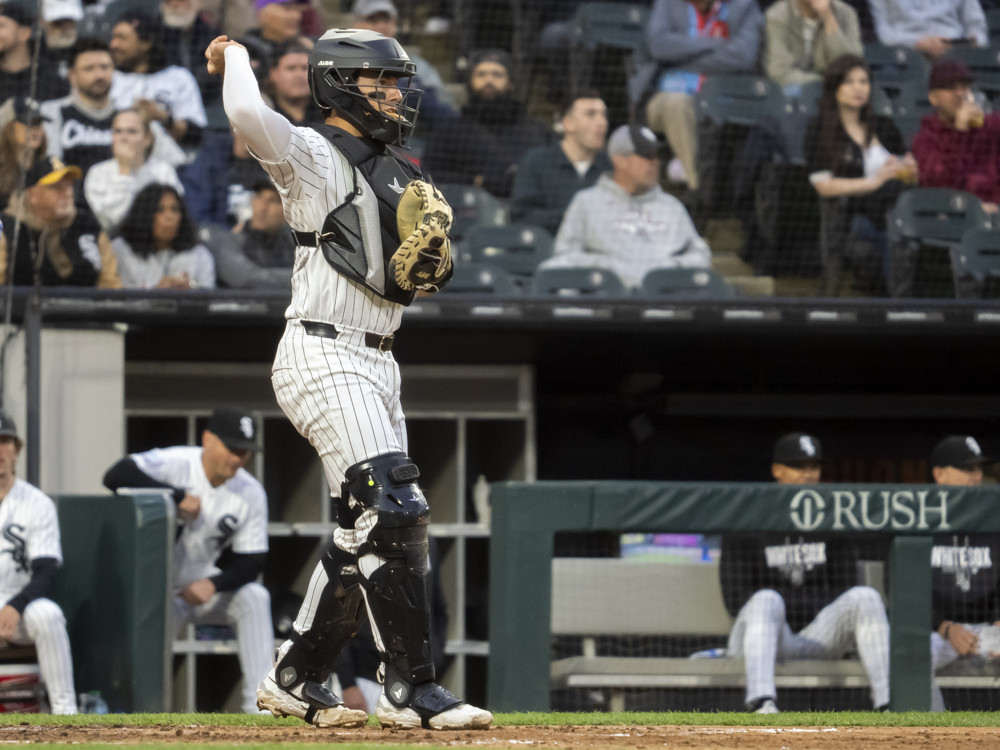
They weren't the only ones to struggle in Seattle, but the White Sox's catchers, Edgar Quero and Drew Romo, had particularly tough times at T-Mobile Park. Quero went 0-for-5 over one start and two pinch-hitting at-bats, and while Romo fared slightly better at 1-for-7, he was at the center of two missed opportunities with runners in scoring position on Wednesday.
Quero's been cold all season, with his heroic performance against the Cubs looking like more of a blip than a turning point. He went 3-for-5 that afternoon, but he's 2-for-22 over the other 10 games in May surrounding it. Romo is still providing above-average production because four of his eight hits have left the yard, but as long as he's hitting .178, he'll have to keep slugging at an unprecedented clip to keep his head above water.
It's one thing when catchers don't hit, because as much as the White Sox miss Kyle Teel's presence at the plate -- and will continue to miss it for another three to six weeks as Teel recovers from his second right leg injury this season -- there are five other teams that are somehow getting less offensive production from their backstops per wRC+, and the team that's one spot ahead of the Sox is also one spot ahead of them in the AL Central. It's the most demanding position on the diamond, and hitting is often sacrificed to make it work.
The problem is that White Sox catchers are also struggling to catch, and in the most basic sense of the word.
The Sox lead the league in passed balls with nine, which certainly checks out when watching enough innings. But while sometimes dropped/missed pitches can merely be an aesthetic issue, Statcast's metric says it's starting to incur a cost.
Statcast has the White Sox's group of catchers rates the worst in the league at stopping the ball. They're graded at 10 blocks below average, comfortably ahead of the Marlins (-8) and Royals and Brewers (-6) on the reverse podium. That number reflects the White Sox's plight well enough, but there are a few of elements that make these struggles play up.
The White Sox are missing easy chances
Beyond the overall number, MLB also sorts blocking opportunities into tough, medium and easy chances according to the probability that Statcast assigns to a potential passed pitch based on a number of factors (location, velocity, movement, where the catcher sets up).
White Sox catchers grade out as among the best in handling tough chances. It's just +1, but they're one of just seven teams in the black, and it helps offset some of the issues from their mediocre performance on medium pitches.
The problem is that they're the worst in the league on easy chances, and in a way that laps the field. They're -8 BAA, and a whole five blocks worse than the next closest team (Red Sox at -3).
Here's a sample of 10 pitches that have produced an extra 90 feet for opposing baserunners over the last month or so:
A lot of these pitches have come in the past couple of weeks, and it's no coincidence that it corresponds with Romo's increase in playing time. He's started two out of three games in each of the last six series, and he's posting the league's worst individual score on easy blocking chances at -5, which matches a passed ball total that is tied for the league lead. Quero hasn't been great in this regard himself (-2), but that's a smaller number with a far greater number of opportunities. Romo's proclivity for letting routine pitches get past him is unmatched this season.
White Sox catchers aren't doing anything else well defensively
The thing about isolating blocking is that there can be an inverse relationship with framing. Catchers who are hellbent on keeping a mitt as quiet as possible tend to let more pitches glance off them, whereas catchers who exert themselves to secure every pitch might visually take strikes out of the zone with extraneous movement. At least before the ABS challenge system was implemented, many teams were fine dealing with the occasional passed ball for an increased frequency of favorable counts for their pitchers.
Patrick Bailey, the defensive stalwart catcher recently traded from San Francisco to Cleveland, is a good example of this. Statcast grades him as neutral in terms of blocking this year, and he's ranged from "above average" to "league worst" in previous seasons. But the fluctuation is more than tolerable because he's consistently atop the leaderboard in receiving and throwing, and he's won consecutive Gold Gloves as a result.
The White Sox aren't getting these gains, as Statcast says they're tied for 24th in baseball with -3 framing runs. That doesn't make them unique, because the Brewers (-2) and Royals (-2) are also below average with their receiving. Where those teams' catchers are earning their keep is with their throwing. William Contreras has cut down an astounding 13 of 25 attempted basestealers this season, and Carter Jensen has joined Sal Perez in giving the Royals two catchers who aren't easy to run on. Again, it's easy to forgive the occasional 90 feet when they remove baserunners just as frequently.
But for the Sox, they're bottom third in this category as well. It's worth noting that they're barely below average (-1 CS Above Average), which represents an improvement over last season, and it's a development that could be worth lauding individually if it holds. In this exercise, however, it's also another negative contributor to their overall defensive grade. Add it all up, and whether it's Statcast or Defensive Runs Saved, the White Sox have the worst defensive catchers in baseball.
What's more...
White Sox catchers aren't hitting
The other teams are trading defense -- or at least blocking -- are at least receiving some offense in return:
| Team | BAA | Rank | BA | OBP | SLG | wRC+ | Rank |
|---|---|---|---|---|---|---|---|
| CHW | -10 | 30 | .171 | .273 | .276 | 59 | 25 |
| MIA | -8 | 29 | .251 | .321 | .400 | 101 | 9 |
| MIL | -6 | 28 | .262 | .365 | .401 | 123 | 4 |
| KC | -6 | 28 | .221 | .287 | .397 | 87 | 13 |
The Brewers and Marlins might have two of the National League's All-Star catchers, as Liam Hicks leads the NL in RBIs while striking out less than 10 percent of the time, and Contreras is hitting .294/.366/.389 while being second in fWAR thanks to his league-best throwing. The Royals aren't quite reaping the same benefits, but they're trying to negotiate a passing of the torch from Perez to Jensen. While Jensen is delivering the league's worst individual blocking performance, he's at least hitting, receiving and throwing well enough to put up with a very specific brand of growing pains.
The White Sox are familiar with that sort of project. Teel was one of the league's worst blockers last year on a rate basis, but had provided enough positives elsewhere to make it tolerable in 2025, with the idea that he could possibly level up across the board this season.
With Teel's absence expected to carry well into June, the Sox seem like they're kind of stuck. Korey Lee is the best option in Charlotte, and the White Sox are past him to the point that they've already tried Reese McGuire in his stead. Maybe the waiver wire will smile on the White Sox with another veteran stopgap, or perhaps there will be some smaller trade to try, but as it stands, the hopes rest of Quero and Romo shoring up one deficiency or another in season.
It's theoretically possible, but hard to bank on after a combined 50 games of proof. As long as they're unable to shore up one deficiency between them, Teel's setback will feel less like "three to six weeks," and more like "forever to an eternity."