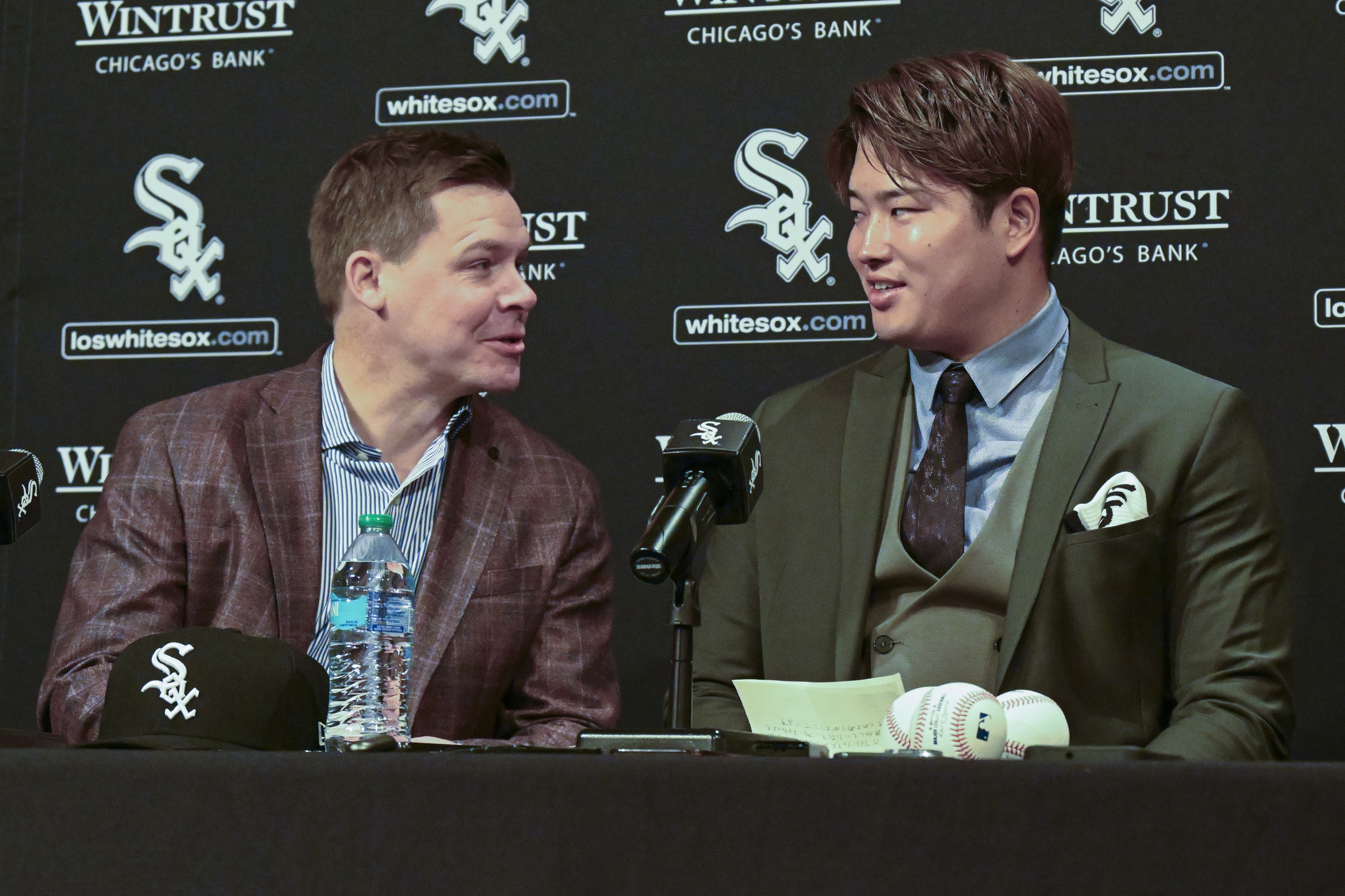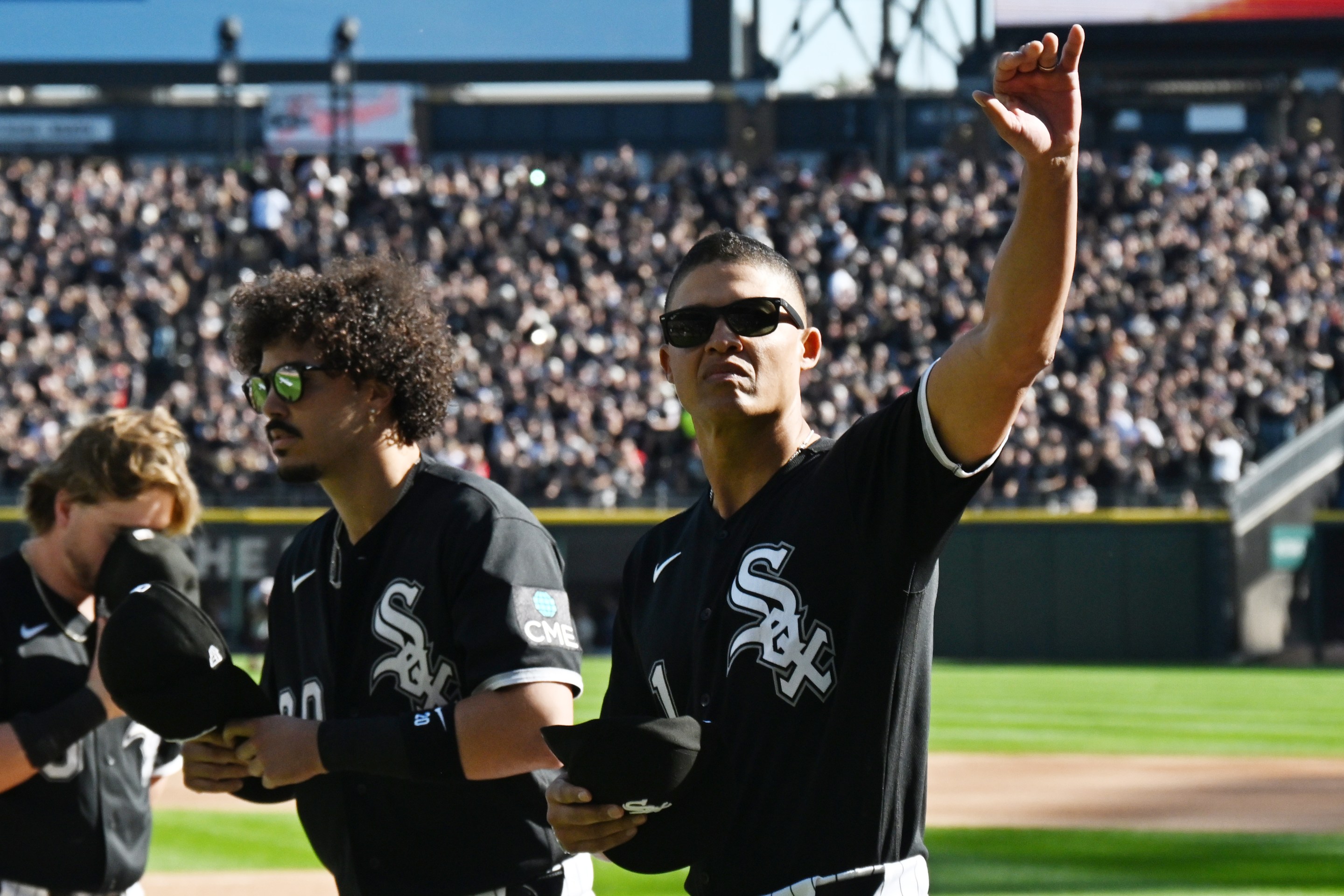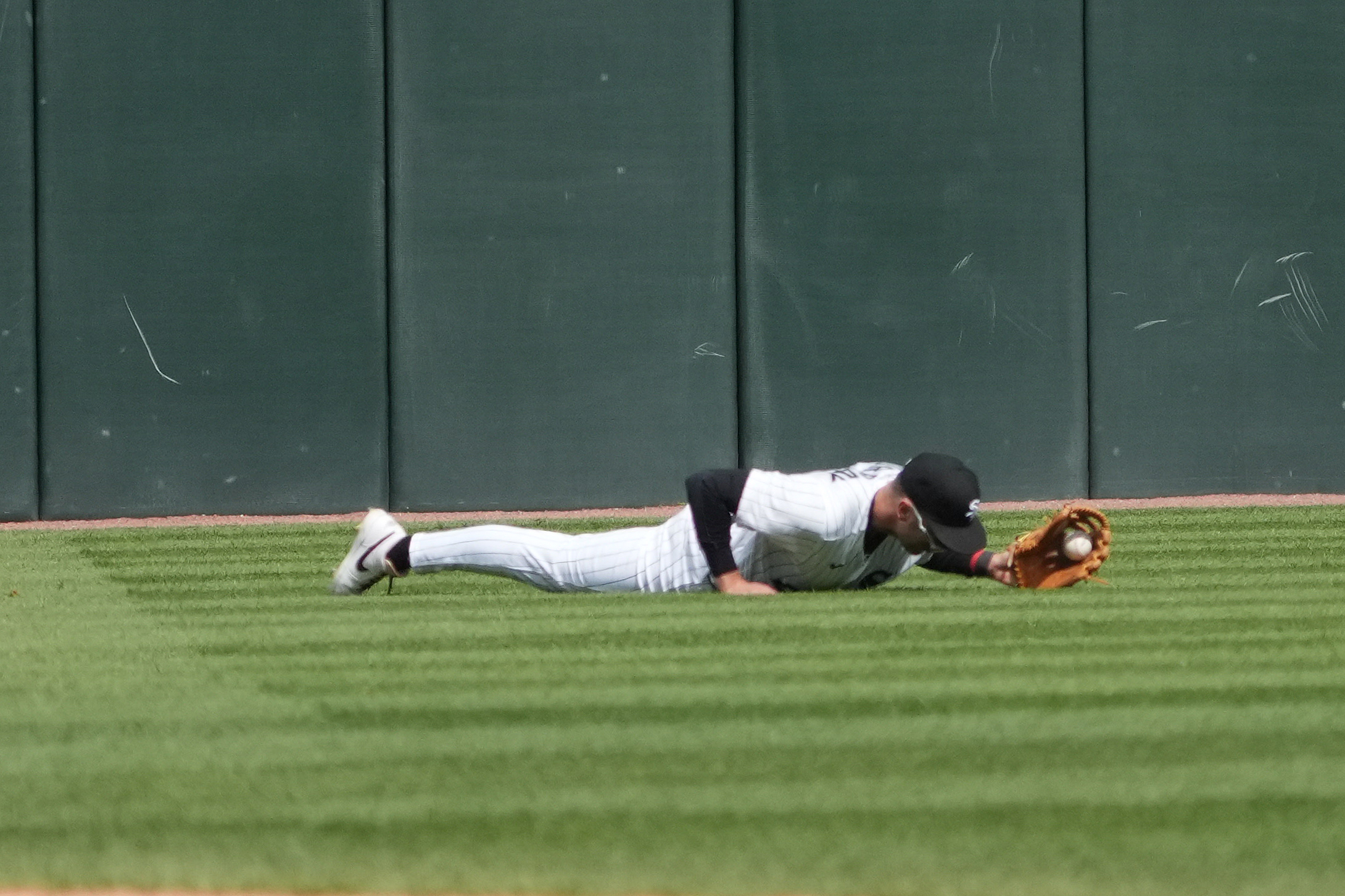
Andrew Benintendi was a strange candidate for any team's franchise-record candidate, and Benintendi admitted as much during his introduction to Chicago at Rate Field after signing a five-year, $75 million contract with the White Sox in December 2022.
There were all sorts of reasons why, but chief among them was that Benintendi had hit just five homers over 126 games the year before, most of them spent with the Royals. He'd hit 17 in the first of his two seasons in Kansas City, but not without other production stats taking a hit, and he told those assembled at then-Guaranteed Rate Field's Conference and Learning Center that Kauffman Stadium felt more rewarding as an all-fields type.
“For me, playing at Kauffman in 2021 I got pretty frustrated just flying out to, we joked about it all the time, these long flyouts,” Benintendi said. “I’m not the biggest guy, it’s going to take everything I can to hit a ball out of that stadium. So going into last year, I was thinking let’s just hit for higher average and higher on-base and hopefully this works, or I’m going to be in a world of trouble. I’m trying to be a complete hitter.”
As everybody including Benintendi knows, it wasn't that simple. He hit just five homers over his first season with the White Sox due to lingering wrist issues, and while he eventually figured out how to wrestle Rate Field's friendlier dimensions to his benefit, it doesn't produce the most aesthetically pleasing form of hitting, and it sounds like he misses the kind of baseball that Kauffman inspired:
"The game now is different and I feel like batting average has gone out the window," Benintendi said. "It's all OPS. That's about the only thing I feel people pay attention to anymore is OPS. Regardless of how you get a high OPS, I think that's where the game is going. Do I like it? No. But that's what guys chase now and it gets you paid better. That's the priority. It's not what I'd like to do, but that's where the priority is."
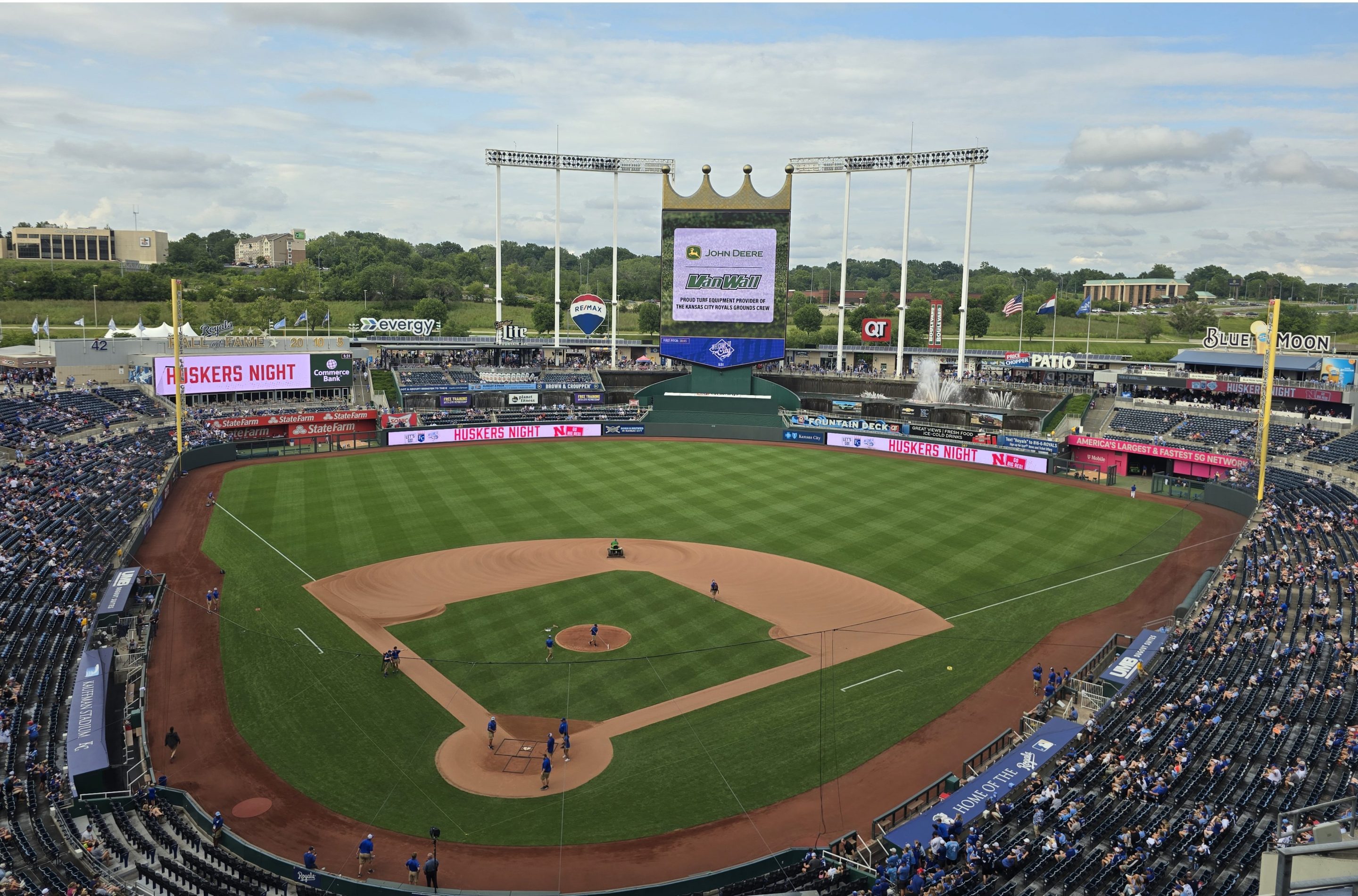
So it ought to be interesting to hear his perspective when the White Sox make their first visit to Kauffman and its shorter fences during the second week of the 2026 season.
The Royals announced this week that Kauffman's outfield will be less imposing for the next five years, which is the stated remainder of the team's term at the Truman Sports Complex. Center field will remain its usual distant self at 412 feet, but the alleys and corners are shrinking by nine to 10 feet, and much of the fencing will drop from 10 feet tall to 8½
A new feel to The K.
— Kansas City Royals (@Royals) January 13, 2026
We're bringing in the walls at Kauffman Stadium, creating more potential for home runs, extra-base hits, home run robberies, and bringing fans closer to the action than ever before. pic.twitter.com/1RcdRli0p5
Various Royals personnel said it wasn't a quest to boost offense, but to create a "fair" environment:
“There’s a lot of different things that go into it,” general manager J.J. Picollo said. “During the course of the season, we just started doing some research, running some numbers and trying to figure out how much this really impacts our offense. Consequently, how would it affect our pitching staff? Ultimately, we concluded that we would be a better team offensively. With our current pitching staff, the changes in the dimensions wouldn’t impact [pitching] negatively as much as it impacts our offense positively.” [...]
“Our goal here isn’t to have an offensive ballpark,” Picollo said. “It’s to have a very fair ballpark. We don’t want it to turn into a bandbox and every ball up in the air turns into a home run. We just want hitters to be rewarded when they hit the ball well, particularly in the gaps.”
To the extent that this decision surprises, it's because Kauffman's dimensions had been baked into their identity, and also hadn't been leveraged against them. This isn't a case like the Orioles, who moved their left field wall back a few years ago because their pitching staff gave up 507 runs (and something like 207 homers to Gleyber Torres) at Camden Yards in 2021. The Royals have posted better records at home in each of the last 11 seasons, in part because they account for the cavernous outfield with an appropriate amount of speed and defense.
But one of the reasons why the Royals didn't make the postseason last year was the league's worst outfield production. KC outfielders hit .219/.283/.334 as a group, the worst mark in all three categories (the White Sox hit .223/.288/.348). It wasn't much better the year before, when they eked into a postseason spot by one game. The sheer square footage in the outfield means they can't get away with an MJ Melendez or Jac Caglianone-grade defender in a corner without suffering a considerable trade-off, and they've felt the full effects of the margins the last two years.
It figures that these changes should benefit the White Sox, but that's only because it literally can't get any worse. Over the last two seasons, the Sox are 0-14 in Kansas City and have been outscored 71-17, making Kauffman Stadium their threshold of Hell.
That laughable disparity extends to both teams' offensive production in those games:
| Team | PA | 2B | 3B | HR | BA | OBP | SLG |
|---|---|---|---|---|---|---|---|
| White Sox | 488 | 20 | 0 | 4 | .213 | .273 | .284 |
| Royals | 495 | 24 | 2 | 13 | .284 | .349 | .436 |
You can't really say any one number jumps out because every column in this chart is spring-loaded, but note that the Royals have more plate appearances despite coming to the plate in 13 fewer innings. They've only had to bat in the bottom of the ninth one time over the last two seasons, and the White Sox would rather us not mention it.
If nothing else, the changes should allow the White Sox to score more than three runs in a game at Kauffman Stadium for the first time since 2023, but it's hard to draw more encouraging conclusion.
When you go to Statcast and search for all of the White Sox's non-homer flies that traveled at least 345 feet at Kauffman the last two years, you can find a handful of batted balls that either would have cleared the fence or banged off it...
... except then you realize that the Royals also get to hit with the shorter fences, and they have twice as many well-struck balls to benefit from:
When accounting for launch angle -- some of the specks that look like homers lacked the traditional loft and landed short of the wall -- the White Sox might've only been shorted one homer over this stretch. Luis Robert Jr. thought this was gone, and so did Len Kasper:
Meanwhile, the Royals had four such drives that would've left the majority of MLB parks, but were contained by Kauffman.
So while the White Sox were outscored 71-17, they're lucky it wasn't worse (the same thing can be said for Jonathan Cannon and his 5.82 ERA, because he showed up in a lot of these clips). Kansas City has the Power and Light District, but the White Sox have just been light on power, and shorter fences would only serve to exacerbate the difference as the White Sox have been constructed.
Perhaps it will be different with a full season of Colson Montgomery, Kyle Teel and Munetaka Murakami, but the Royals are also trying to improve, so it's incumbent on White Sox pitchers to put a bigger dent in this. Perhaps new pitching coach Zach Bove will have some ideas about handling his former employer, although Pedro Grifol's deep knowledge of Royals personnel didn't help in this regard.
What can be said is that watching a game played at Kauffman will be a different experience in a couple of regards. Outside of Robert's close call, Korey Lee had the best claim to an additional White Sox homer with this double to left center back in April 2024:
It's 105 mph off the bat and neither outfielder can conceive of running it down, but while Statcast says it would've been a homer in 20 of 30 parks, neither team's announcers harbor such expectations. Those who have developed a reflexive pessimism about any fly balls hit by unusual suspects to the alleys might have to revise their priors.
And while the White Sox haven't been victimized by the rounded outfield corners in a few years, the sharpened angles by the foul poles should create fewer situations where clompy outfielders either lose contain on a double, or give an extra base from exercising excess caution.
The Sox have been dealing with a deficit of talent and skills in all three phases of the game, so the number of homers-turned-doubles and doubles-turned-triples that are specific to Kauffman Stadium aren't numerous enough to tilt the balances of the most imbalanced season series. Maybe the White Sox will improve enough to bring the marginal moments into play. But should the beatings continue, the specific trauma from the Kauffman Complex, like the new outfield configuration, will probably take a more generic shape.