Rewatching Game 5 of the American League Division Series is painful, even for those who don't root for the Chicago White Sox. Constantly seeing major league hitters look slow and unaware is jarring, as White Sox hitters clearly didn’t know what pitches to look for in each at-bat. Cleveland starter Gavin Williams threw more breaking stuff early in the count, getting first-pitch strikes in 11 of 16 plate appearances. Then, when it was time to throw heat, Williams, fueled by postseason adrenaline, increased his average velocity by more than 1.5 mph, hitting an eye-opening 99.1 mph on his four-seamer and 98.7 mph on the sinker.
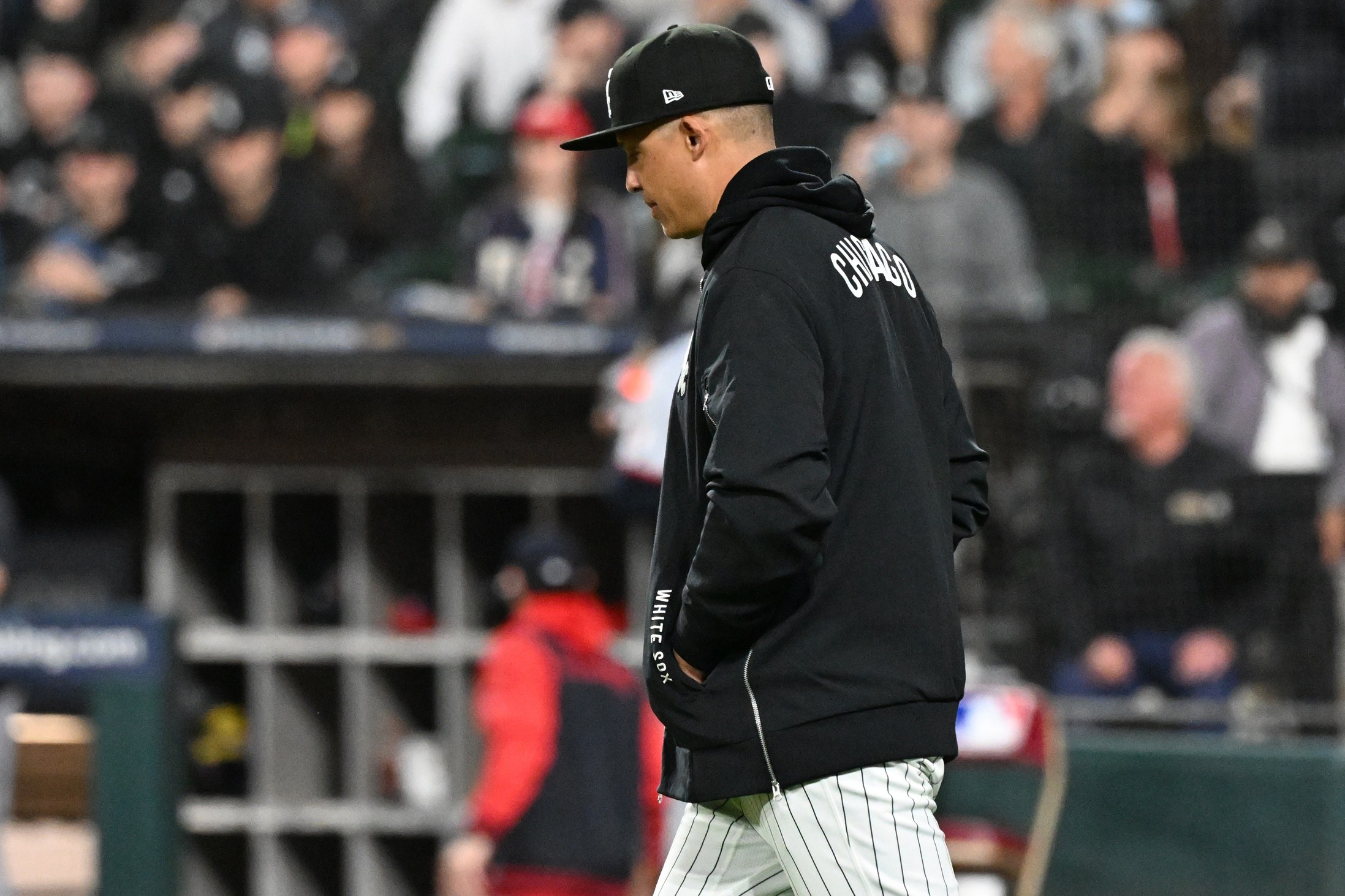
It’s easy to see how the White Sox set a new nine-inning low regardless of regular season or postseason, striking out 21 times in a single game. Looking at their losses to Cleveland, a pattern of trouble with the heat emerges. Being better against fastballs isn't a new sermon manager Will Venable would be preaching to his clubhouse. This was a point of emphasis coming out of the 2025 All-Star break, and his young team took heed, sparking an offensive turnaround.
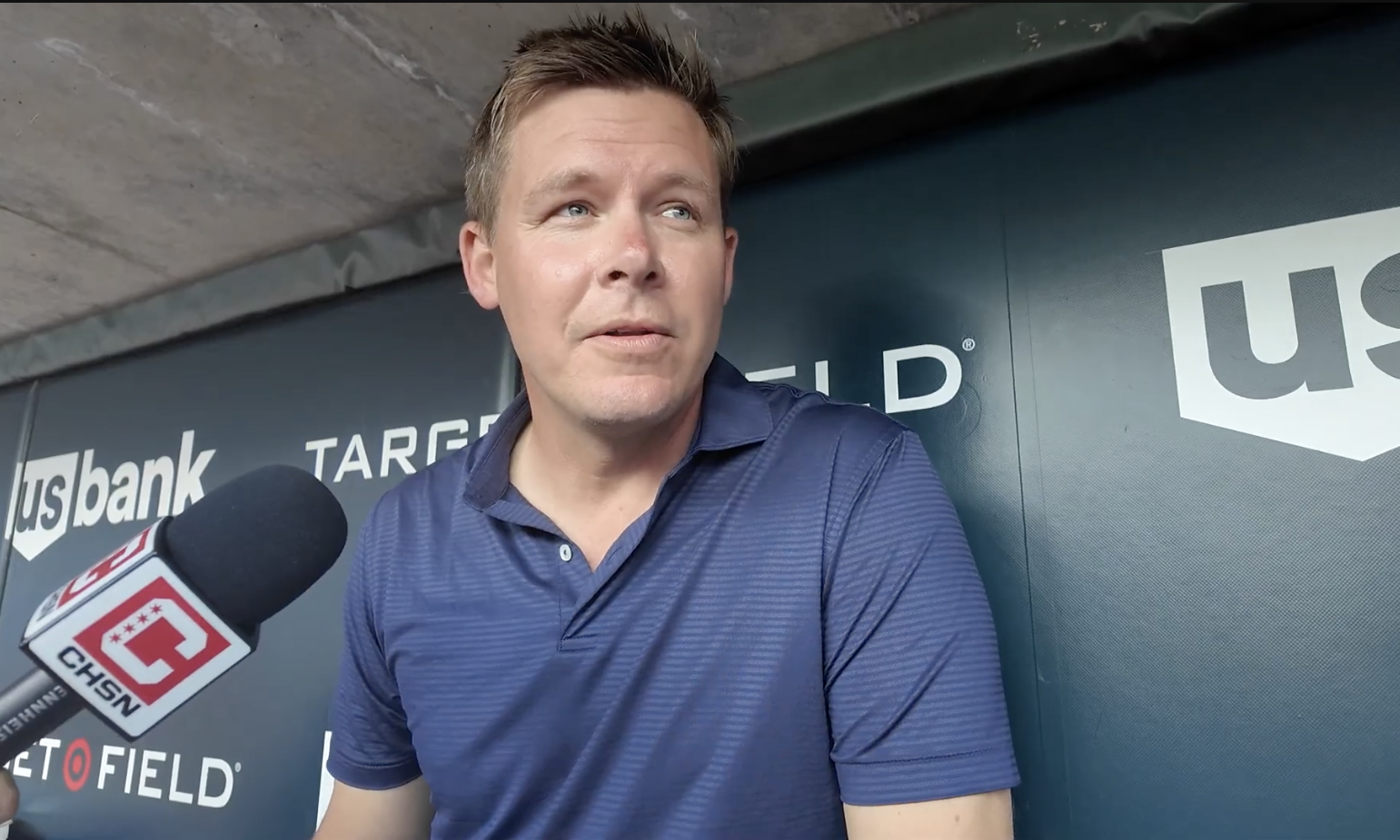
Looking at 2026 season data, it appears that production against fastballs must be addressed during the offseason, especially from opposing right-handed pitchers. In his end-of-season presser, White Sox general manager Chris Getz was asked about the team’s strikeout issues.
“What can't get lost is what got us to the playoffs, and you look at the amount of runs that we scored throughout the season, leading the American League, I think a significant reason for the output that we had was the slug. And oftentimes what could come with hitting with power are strikeouts,” said Getz.
“It was exposed at times and certainly exposed certainly the last two games of the playoffs. To say that it's mechanical or approach, truthfully, they're interconnected. And I'd say a majority of it is probably more of a mechanical than approach. You've got to have set mechanics to be able to have a certain approach in a game.”
Collectively, the White Sox hitters have a few swing mechanics to work on this offseason. The home run leaders -- Miguel Vargas, Munetaka Murakami, and Colson Montgomery -- are at the center of it.
Where the White Sox ranked against average or better fastballs
Fastball velocity in MLB continues to increase. Since pitch tracking was implemented in 2008, the average four-seam velocities from right-handed and left-handed pitchers have increased by almost 3 mph.
In 2026, the average four-seam fastball velocity from right-handed pitchers is now 95.3 mph. From southpaws, it’s 93.5 mph. That not only affects performance on the field, but it also keeps raising the bar when evaluating minor league and amateur prospects (i.e., 50-grade fastball velocity in 2008 would be 40-grade today).
With the filter set to four-seamers from right-handed pitchers at 95 mph or greater, the White Sox rank near the bottom in MLB in batting average and in the bottom five in strikeout rate when facing average or faster heat.
| vs. RHP | Four-Seam (>= 95 mph) | MLB Rank |
|---|---|---|
| Batting Average | .229 | 29th |
| xBA | .241 | 29th |
| Slugging | .420 | T-23rd |
| xSLG | .440 | T-22nd |
| K% | 23.9 | 25th |
When the bar is set lower at 93.5 mph or greater for four-seamers from left-handed pitchers, White Sox hitters fare much better.
| vs. LHP | Four-Seam (>= 93.5 MPH) | MLB Rank |
|---|---|---|
| Batting Average | .257 | 16th |
| xBA | .281 | 6th |
| Slugging | .475 | 5th |
| xSLG | .509 | 4th |
| K% | 21.0 | 11th |
Miguel Vargas feasts on below-average velocity, but struggles against average or better fastballs
Miguel Vargas feasted on 93 mph fastballs from righties and 92 mph four-seamers from lefties in 2026. Facing a pitcher with consistent or better average velocity was a different story.
| Miguel Vargas vs. RHP | >= 95 mph | <= 94.9 mph |
|---|---|---|
| Batting Average | .185 | .293 |
| xBA | .199 | .263 |
| Slugging | .359 | .585 |
| xSLG | .383 | .505 |
| K% | 27.2 | 14.30 |
| Whiff% | 29.4 | 19.60 |
| Miguel Vargas vs. RHP | >= 93.5 mph | <=93.4 mph |
|---|---|---|
| Batting Average | .174 | .316 |
| xBA | .273 | .371 |
| Slugging | .174 | 1.000 |
| xSLG | .349 | 1.053 |
| K% | 20.80 | 4.5 |
| Whiff% | 25.30 | 10.60 |
Vargas’s expected vs. actual production against average-or-better fastball velocity from lefties shows a sizeable gap. But an expected .349 slugging percentage is nothing to gloat about from a right-handed batter. It makes one wonder whether a pitcher like Cleveland’s Parker Messick will challenge Vargas with heat far more often next season. But for pitchers who are not packing that level of velocity, Vargas consistently hurts them.
Theoretically, that should make cage work in the offseason simpler for Vargas. To take another step in his production, he just needs to keep working on his timing on above-average-velocity fastballs.
Munetaka Murakami packs a punch, if he can make contact
Munetaka Murakami’s rookie season ended the way many probably expected, with lots of home-run highlights and demonstrations of his power potential, but also plenty of whiffs that raise concerns about his long-term future in the bigs. This comes as the White Sox still contemplate keeping Murakami past the 2027 season.
“We'll continue to have those conversations. Obviously that stuff is very sensitive and private, but Mune means a lot to us. And we certainly want him to come back here and be here for a long time,” said Getz in his end-of-season press conference.
Murakami still needs to work on timing fastballs faster than 95 mph this offseason. Against right-handed pitchers, Murakami whiffed 47.2 percent of the time against four-seamers clocking in at 95 mph or faster.
| Murakami vs. RHP | >= 95 mph | <= 94.9 mph |
|---|---|---|
| Batting Average | .226 | 0.286 |
| xBA | .214 | 0.291 |
| Slugging | .547 | 0.857 |
| xSLG | .535 | 0.870 |
| K% | 39.60 | 28.60% |
| Whiff% | 47.20 | 30.90% |
| Avg. Exit Velocity | 98.2 | 97.1 |
| Murakami vs. LHP | >= 93.5 mph | <= 93.4 mph |
|---|---|---|
| Batting Average | 0.200 | 0.316 |
| xBA | 0.251 | 0.302 |
| Slugging | 0.600 | 0.579 |
| xSLG | 0.692 | 0.541 |
| K% | 20.00% | 42.1% |
| Whiff% | 25.00% | 39.5% |
| Avg. Exit Velocity | 101.6 | 96.1 |
What’s very impressive about Murakami is the average exit velocity he generates against fastballs. When Murakami does put a high-velocity fastball from a right-hander in play, it has an average exit velocity of 98.2 mph. Against a southpaw, it’s even faster, clocking in on average at 101.6 mph. These readings make it easy to compare Murakami and Kyle Schwarber. Both will rack up strikeouts, but they get paid a lot of money because of the damage they generate when making contact.
That’s what we saw from Murakami in his first 57 games. From Opening Day to May 31, Murakami batted .240/.378/.560 with 20 HR and a 158 wRC+. Even though Murakami was striking out 32.5 percent of the time, the league was still getting burned through their first time facing him.
After a hamstring injury, Murakami hit .181/.322/.413 in his last 70 games, with 15 homers and a 107 wRC+. In September against right-handers, Murakami went 3-for-29 against fastballs with a 51.6 percent whiff rate and an in-zone swing-and-miss rate of 48 percent. Opposing pitchers found it too easy to beat Murakami with fastballs in the strike zone.
Back to the Schwarber comparison: Against right-handed pitchers, the Phillies slugger didn’t have an in-zone whiff rate above 30 percent. If Murakami can cut down on swinging through at fastballs from righties, it’s hard to tell how high his power ceiling is. Putting 15 percent or more fastballs into play would make a big difference for Murakami and this White Sox lineup -- especially if Will Venable is set on having Murakami bat behind Vargas.
“I look at Mune and the questions on hitting velocity, and so he really focused on putting himself in a position to do that and execute that. Now that may have opened up some susceptibility in other areas that led to more swing-and-miss,” said Getz.
“But I also know the makeup of the player. He will because of the determination in making these adjustments, I have full faith he’ll do that.”
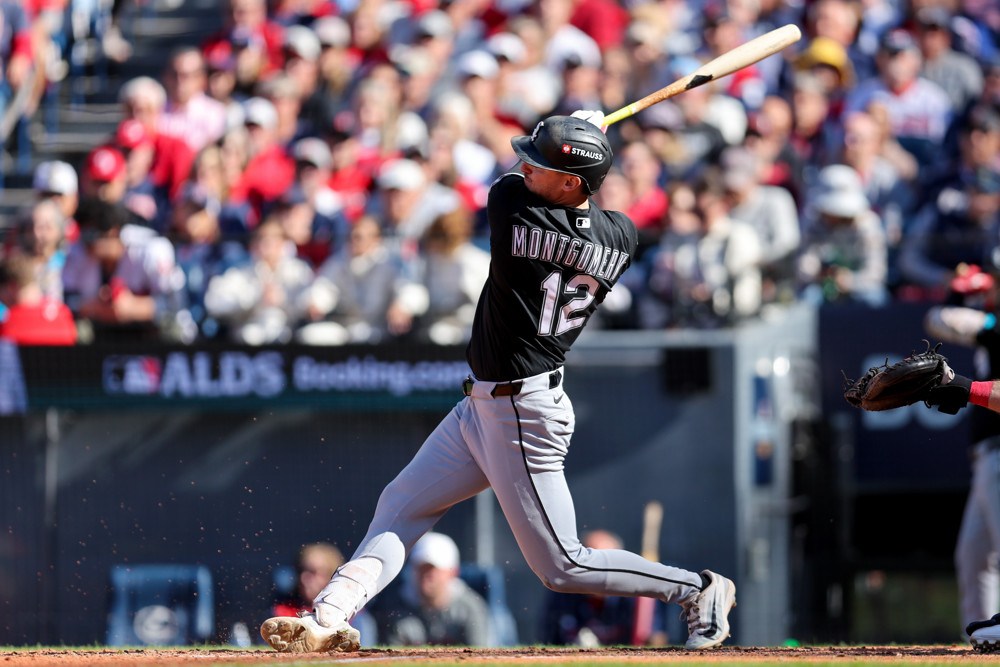
Does Colson Montgomery have to go back to the drawing board?
While Vargas and Murakami need to improve their timing during offseason training, Colson Montgomery may, for another time in his career, have to go back to the drawing board with his swing.
From Opening Day to May 31, Montgomery had a terrific start, hitting .235/.329/.498 with a 129 wRC+, 15 homers and 11 doubles, which put him on a path to making his first All-Star team.
Whether it was physical, mental, or an adjustment in approach, Montgomery’s 2026 season fell off a cliff. In his last 95 games, Montgomery batted .175/.253/.346 with a 67 wRC+. Even Gold Glove-caliber shortstops have a difficult time getting away with those types of offensive numbers without fear of being optioned or DFA. Montgomery doesn't need to worry about a demotion right now, but the White Sox have used their last two first-round picks on shortstops.
The data suggests that if you haven’t watched Montgomery swing, you’d assume he hits right-handed. He fared much better against average-or-above fastball velocity from lefties than against righties.
| Montgomery vs. RHP | >= 95 mph | <= 94.9 mph |
|---|---|---|
| Batting Average | .138 | .233 |
| xBA | .164 | .215 |
| Slugging | .264 | .442 |
| xSLG | .309 | .403 |
| K% | 32.2 | 22.7 |
| Whiff% | 33.0 | 32.0 |
| Avg. Exit Velocity | 85.2 | 87.7 |
| Montgomery vs. LHP | >= 93.5 mph | <= 93.4 mph |
|---|---|---|
| Batting Average | .353 | .100 |
| xBA | .309 | .157 |
| Slugging | .824 | .400 |
| xSLG | .614 | .498 |
| K% | 41.2 | 20.0 |
| Whiff% | 25.7 | 24.0 |
| Avg. Exit Velocity | 90.3 mph | 91.6 mph |
Right-handers still challenged Montgomery with high-velocity fastballs in 2026. As the season went on, Montgomery's numbers got worse.
| Month | AVG | SLG | Avg. Exit Velocity |
|---|---|---|---|
| April | .260 | .480 | 90.9 |
| May | .220 | .561 | 89.9 |
| June | .167 | .286 | 89.2 |
| July | .125 | .313 | 89.3 |
| August | .171 | .314 | 88.3 |
| September | .156 | .406 | 85.6 |
Unlike Murakami, who continued to post impressive exit velocities when he made contact, Montgomery struggled to do the same. Sam Antonacci, Chase Meidroth, and Tristan Peters all had higher average exit velocities against right-handed fastballs than Montgomery. It’s a wonder how Montgomery hit 31 home runs in 2026 with these struggles.
So it’s another offseason for everyone within and outside the White Sox org to ponder what they have in Colson Montgomery. He’s still pre-arbitration, and Roch Cholowsky didn’t get enough time in the minor leagues to become a serious challenger in spring training. It’s hard to imagine that Montgomery will stick with the same swing when he trains during the offseason. He doesn’t make enough contact, and when he does, it lacks consistent juice.
Lockout will put the onus on players to improve
Major League Baseball sent a memo to all 30 teams in early October outlining what staffs can and can’t do if a lockout happens, and a big impact is that all communication between coaches and players will be banned during that time.
That’s a tough spot for someone like White Sox director of hitting Ryan Fuller. His job is to help all hitters work on drills and fine-tune mechanics during the offseason so they can hit the ground running when spring training starts. If a new CBA isn’t agreed upon before 11:00 p.m. CT on Dec. 1, Fuller will be stuck with other White Sox fans watching hitting cage videos on social media.
For someone like Vargas, who just needs some minor tweaks, that shouldn’t be an issue. For Murakami and Montgomery, that’s a different story.
Getz heard from other general managers and was cautioned from overreacting to what happened in the ALDS against Cleveland. Three high-strikeout games shouldn’t overshadow the progress this White Sox offense made in 2026, which fueled one of the best turnarounds in baseball. The White Sox know they have more development work to do, and adjustments have to be made.
To keep this train moving and push back against regression, the White Sox have to be better against fastballs, and Vargas, Murakami and Montgomery are at the heart of it. If their struggles persist, then the White Sox lineup will need to find a new core. However, if they develop an answer and contain the regression to the second half of 2026, White Sox fans could have something to look forward to in 2027, whenever the season is allowed to begin.