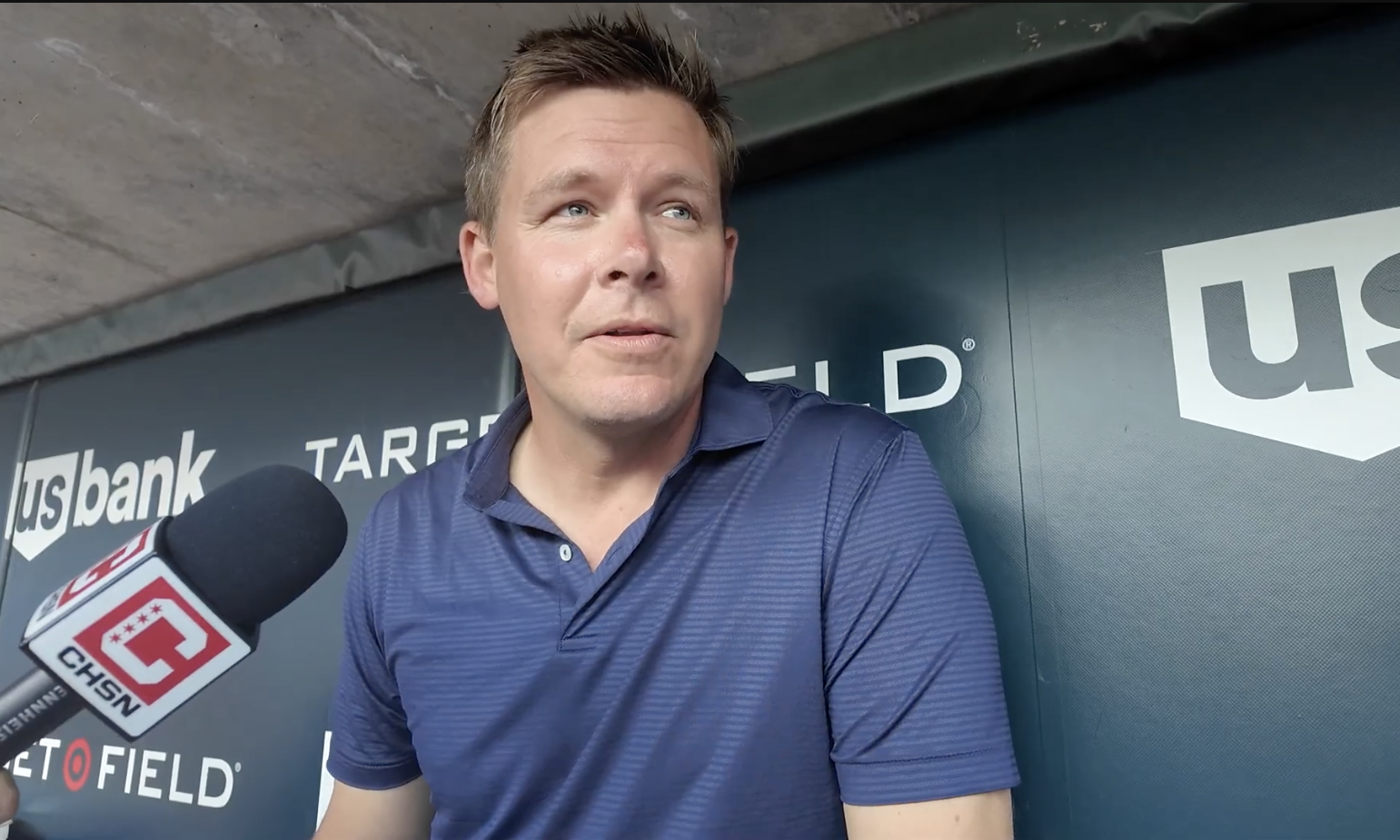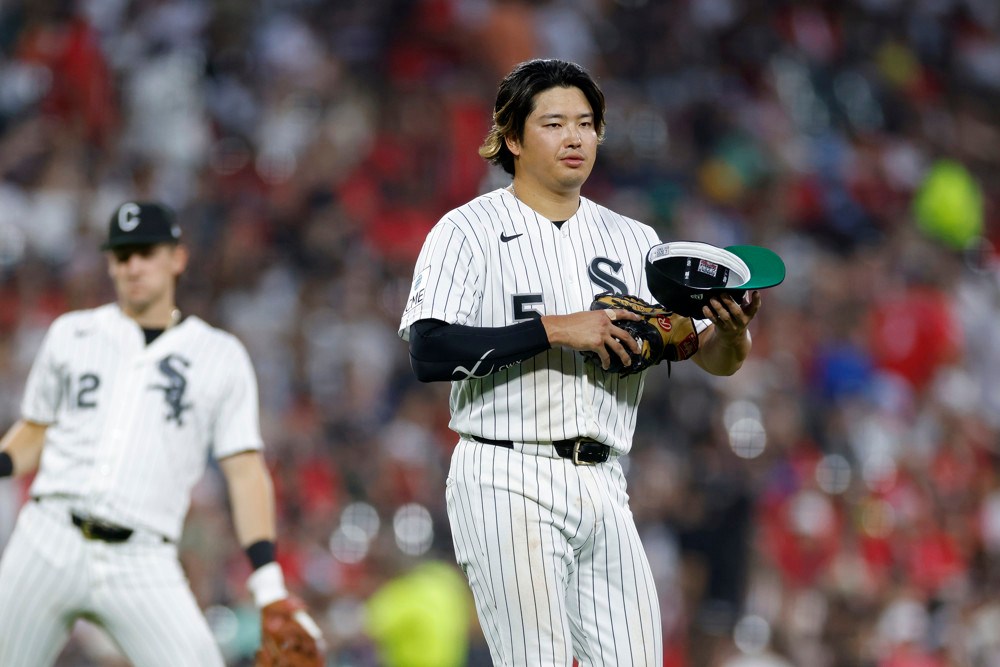
Chatter about a potential Munetaka Murakami extension is always on the periphery, and it perked up late last week due to a Chris Getz appearance on the New York Post's baseball podcast with Jon Heyman and Joel Sherman, although the White Sox GM came short of bringing something new to the conversation.
"I think he's really happy here, and we're happy to have him here," Getz said. We would love to have him here long-term. It seems that he has interest, and we do as well. We've had some conversations, but we'll just leave it at that."
That's where both sides have left it for months, be it in May, the All-Star Game or now. The White Sox love what Murakami has brought to Chicago in terms of production, ambition and vibes; Murakami has found an environment that allowed him to prove the doubters wrong, a fan base that has embraced him, and he's contributing to a first-place team to boot.
But while there's been a lot of public pressure -- or at least urging; it's not like fans are withholding their support -- to make them kiss and agree to an extension beyond his initial two-year, $34 million commitment, the incentives for both sides haven't adhered to the same timeline.
On Murakami's side, he wouldn't have settled for a two-year deal if he weren't intent on testing the open market after proving himself, or at least using impending free agency to command something close to market prices.
On the White Sox's side, a low-average, high-SLG, high-strikeout slugger requires walking a fine line in order to remain productive, and the threat of decline, or at least prolonged outages, puts a cap on his open-market value. Kyle Schwarber is third in home runs since 2021, and might lead the National League in that category for the third time in five years, but the contracts he's signed -- four years, $79 million in 2021, and five year, $150 million last winter -- aren't typical budget-busters. Joey Gallo, the other extreme all-or-nothing hitter to whom Murakami was compared, never made it to that one big payday. The Rangers went year-to-year with him in arbitration, and then he settled for a couple of one-year deals afterward before a transition to pitching that hasn't produced news since February.
Murakami is far closer to Schwarber thus far, but his performance over August served as a reminder that he hasn't yet established his baseline in the majors, either. He hit a Gallo-like .147/.304/.343 with 46 strikeouts over 125 plate appearances this past month. That strikeout rate is up a little bit, and it's paired with more suboptimal contact, as both his ground-ball rate and his pop-up rate have ticked up. Pitchers appear to be working him inside with fastballs more, and he hasn't been able to access his pull power, nor find the right launch angle on his opposite-field stroke.
He's still a huge net positive on the season, of course. Murakami remains able to draw walks during this downturn -- including three on Monday in Houston, one with the bases loaded -- and the swing decisions remain sound in a binary ball-strike sense. That's why White Sox coaches haven't expressed alarm when asked about his struggles, and why they've batted him second in his last 58 starts dating back to before the hamstring injury. Aside from batting order, there's also little recourse against a slump lasting the rest of the season, because just like the Colson Montgomery conversation, it's not like they can play somebody who offers more promise without opening a hole elsewhere in the lineup. Perhaps this is worth revisiting if Kyle Teel returns with a vengeance, but otherwise, I'm assuming that September will see the White Sox dancing with who brought them there.
There will be a lot of pressure for players and front office execs alike this month, but none of it is financial. Regardless of how Murakami finishes the season, he'll still be under contract for $17.5 million in 2027. After that, the White Sox are staring at a blank payroll, as Andrew Benintendi and Luis Castillo are off the books. The hope is the Sox invest in the roster this coming offseason to add the good kind of clutter, but for the time being, the only 2028 commitment is Anthony Kay's $2 million buyout, and the only major figure to account for is Miguel Vargas' salary in his second arbitration year. If Schwarber remains the comp, the White Sox will have room to not be priced out.
This is where we pause to acknowledge that the White Sox have never signed a nine-figure contract, and the franchise has a knack for validating the most reflexively cynical responses. But between the uncertainties over what the CBA negotiations will or won't produce, the unknown impact of the White Sox's increased drawing power, and the Justin Ishbia transition window drawing one year closer with new ballpark maneuverings to take place in the interim, there are more variables than usual to consider even before getting to the boom/bust potential of Murakami's production. Everything points to both sides letting the original contract play out in the most endearing, amicable fashion possible, to the point that the sudden announcement of a contract extension would generate more uncertainty than the ongoing open-endedness of it all.