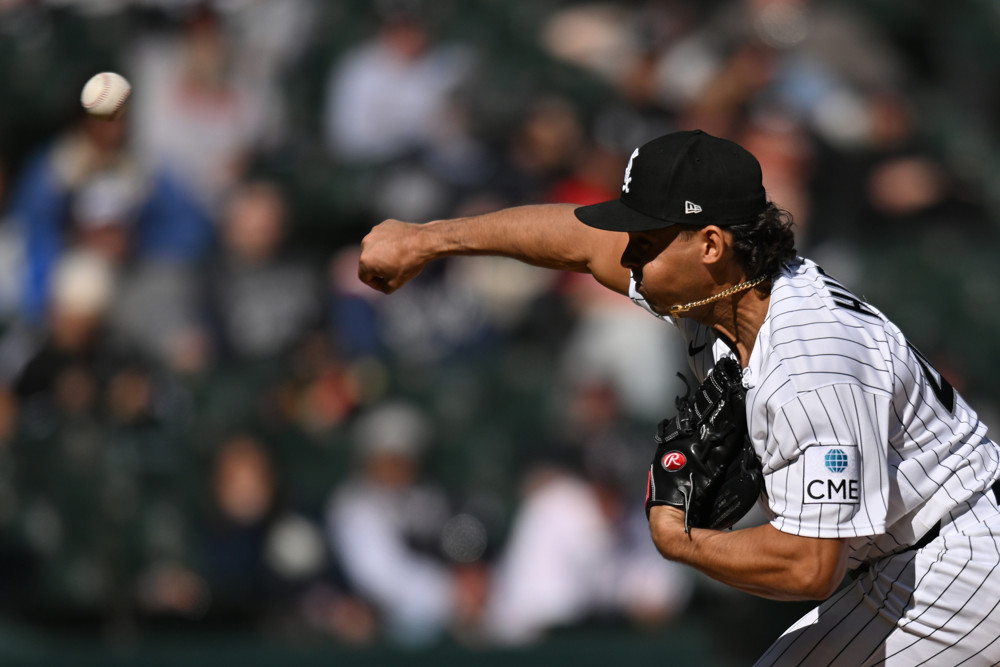
Even when his walks dwarfed his strikeout totals, even as his ERA ballooned over 5.00 earlier in the year, even when he went on the injured list with a lat strain, Jordan Hicks maintained at least one steadfast supporter in his bullpen colleague Sean Newcomb.
"I've been excited since spring to see how that would go, getting back to his old role," Newcomb said. "There's not many guys in the game with that kind of electric stuff. Obviously when he was in San Francisco he was in a different role. Now he's had a year to lock into just one inning, two innings of just pure, nasty stuff. It's been cool to watch."
Seems pretty straightforward, right? For the bulk of his career, Hicks had been a pretty good reliever who threw extremely hard, even if his sinker didn't miss as many bats as his elite velocity might suggest. He signed with the Giants heading into the 2024 season to try to become a starter, his velocity predictably declined in longer stints, and it didn't work out. And now that Hicks is back to relieving, it took a bit for him to re-adjust.
| Date | IP | H | R | BB | K | Hardest Pitch |
|---|---|---|---|---|---|---|
| 6-21 | 0 | 1 | 0 | 0 | 0 | 100.4 |
| 6-26 | 1 | 0 | 0 | 0 | 1 | 101.2 |
| 6-28 | 1.1 | 0 | 0 | 0 | 2 | 100.6 |
| 7-1 | 1 | 1 | 0 | 1 | 2 | 101.7 |
| 7-3 | 1 | 1 | 0 | 0 | 3 | 100.4 |
| 7-7 | 1 | 0 | 0 | 0 | 2 | 101 |
| 7-9 | 1.2 | 0 | 0 | 0 | 2 | 100.5 |
| 7-12 | 1 | 0 | 0 | 0 | 3 | 101.6 |
| 7-18 | 1 | 0 | 0 | 0 | 0 | 100.7 |
| Total | 9 | 3 | 0 | 1 | 15 | 101.7 |
Newcomb wasn't worried, so why were you? I mean, have you seen what he's done since getting back from the IL?
"He’s been great," said Will Venable. "Really good use of the four-seam fastball and the two-seam in the zone. That’s the most important thing, that he’s throwing hard. The sweeper has been really good. The story for him is that he’s got his good stuff and throwing a lot of strikes. When he does that, he’s really hard to handle."
The praise comes as Hicks' opportunities have been brought along quite slowly. His first appearance off the IL, in a 10th inning jam that was already beyond saving in Detroit, still constitutes his most traditional high-leverage assignment he's been given since returning from the injured list, and the only victories he's appeared in during that span have been blowouts. But something has clearly changed.
"It's hard to talk about, I'm more of a do it person," Hicks said. "I feel good and I like getting swing-and-miss or ground balls. If you want to swing at it early and put it on the ground, that's ideal. Less pitches, lower pitch count. But if I get to two strikes, I'm trying to strike you out. That's the mindset right now."
Maybe the feeling of increased leverage and force that he feels moving down the mound, allowing him to access triple-digits more regularly is hard to describe, but otherwise Hicks can actually talk quite plainly about what's happened. Early in the season, the White Sox concept for restoring Hicks involved lowering his arm slot. Their analysis suggested it would feel more natural to his body. Hicks was on board, and rooted plenty of his early season optimism, including his sense that he could return to hitting 102 mph, in his new mechanics.
Alas, it didn't work.
At the end of May, Hicks had a 5.60 ERA, with 17 walks over 15 strikeouts in 17⅔ innings, and his sinker averaged 98.4 mph before he missed a month with a lat strain. But one way baseball is like life is that it just keeps chugging along, and you get to apply the lessons of one failure to the future.
"We felt at times the slot was getting too low, kind of scoopy in execution, but he also had brought it up right when he went on the IL," said pitching coach Zach Bove. "I just have this view of anything: Obviously, we're going to use all the information. We're going to be objective, we're going to see how it is. But also it's a trial-and-error process. He self-reports that maybe the lower slot feels natural, but what are the results? What are the hitters telling you? The command wasn't good. Maybe the shape on a movement plot was good, but hitters maybe barrel it. But his problem was the walks."
And so, this explosion of velocity, bat-missing and improved control from Hicks has come as he's re-raised his arm slot. As the chart above shows, it's back to territory he's been in before, and Hicks describes it as a small adjustment that just feels larger to carry out in-season.
And with respect to what the White Sox were trying to accomplish at the beginning of the season, it's not a change made without any reservations.
"I've always -- well, not always -- but I felt like like it's a good spot for me to be in right now, especially out of bullpen," Hicks said. "Going onto the IL, I knew I wanted to work on the arm slot and then work on throwing more four-seams. My four-seam is metrically better from that slot too. I was trying to use it, but it just didn't have the same effect early on. This has been better. The slot definitely helps with getting more ride on the four-seam."
Bove noted that Hicks' sinker lost some sinking action in response to raising his arm slot, but the Sox feel that's more than canceled out by the effect of opposing hitters having to account for a viable four-seamer, rather than just expecting everything he throws to move downward. Amusingly, Hicks' rate of pitches in the strike zone has remained near-identical pre (48 percent) and post-injury (47.2), it's just that with livelier stuff and two distinct fastball shapes, hitters are chasing out of the zone against him literally twice as often (41.8 percent O-swing vs. 20.2). This version of Hicks rushes hitters into poor decisions.
"They can't just be like, 'I'm gonna see this guy down because he's got sinker and sweeper'," Bove said "'I gotta see up too.' You put him in this conundrum, so to speak, and it's just gonna give him more options and we're gonna take those odds."
"I'm less rotational with everything, I'm just through the mound and through the catcher," Hicks said. "I try not to overthink it. Just go out there, be confident myself, and let the work that you put in take over. I can't be out there thinking about like all the little things I just worked on during rehab to get back here. But when you're out there practicing, you're hoping that it turns into muscle memory."
In his career, Hicks has never used a bat-missing four-seamer as much as he has since coming off the IL (22.8 percent usage), so there's a chance he's turning over a new leaf entirely. But in the Sox search for an effective late-inning mix in response to Seranthony Domínguez's struggles and the opportunity to add relief help at the deadline, one bit of muscle memory that could be restored is just returning Hicks to high-leverage opportunities.
He's done it before, and is pitching like he deserves it again.
"He's been around, he's done it, he's pitched obviously in extremely high leverage, so that definitely is a benefit," said Bove. "There's the trust that we have in him, but really he has it himself. It's like, 'Yeah, I don't care.' It could be a one-run ball game, middle of the lineup, it's 'All right, Hicksy, go get 'em.'"