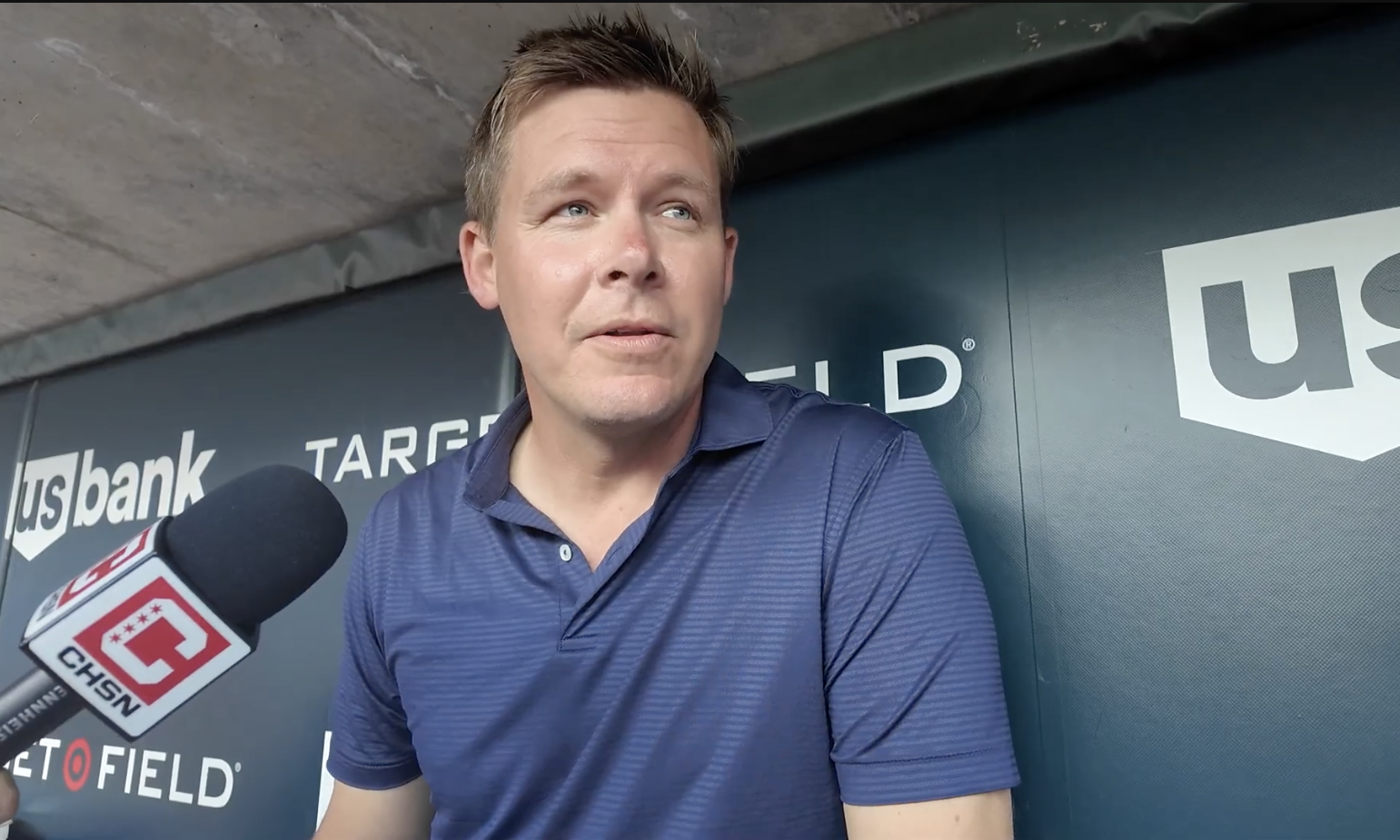
Before the White Sox coming to town, Baltimore president of baseball operations Mike Elias said the Orioles would be buyers if the trade deadline were one week away, rather than one month away.
“I know our record is backwards, but apparently, this is infecting a whole bunch of other teams, too. I can’t explain it,” president of baseball operations Mike Elias said prior to Saturday’s 4-3, 10-inning loss to the Nationals at Camden Yards. “I wish we were arriving at that in a much different way, and the context around that is unusual. But we’re right there.
“So, we’re going for it. I’ll let you know if that changes.”
The Orioles were 1½ games out of the final wild card when Elias spoke, but they're now 4½ out after losing the final two games against Washington, then the first two games against the White Sox. At 40-48, their rhetoric seems like it should change, but as long as the only requirement for an American League postseason berth is a .500 record, every team that wants a reason to believe can find one.
As the White Sox survey the landscape for starting pitching help, this will-they-won't-they dynamic makes it hard to know which teams are inclined to pack it in. The Sox are fortunate in the sense that they can cast a wide net. They could use a postseason-grade starter, but given that they've been operating with 3½ starters over the last few weeks, a regular season-grade starter helps just as much, and whatever rotation they can fashion for October will be gravy.
Even if he didn't just limit the White Sox to a Sam Antonacci leadoff homer over six innings on Wednesday, a now-healthy Dean Kremer makes some sense sense as a potential target for a White Sox team that doesn't want to thin out its farm system just yet. He's 30, he's missed most of the season with a quad strain, his peripherals limit him to a 2 WAR ceiling, and he might make something like $8 million in his final year of arbitration next year. He also throws six pitches -- including three different fastballs, which is de rigeur right now -- limits the running game, fields his position well, and is under team control for one more season, even at a non-negligible salary, so his on-field production could very well exceed his name-brand value.
Should the Orioles trade him for the best possible return because a turnaround is beyond Kremer's help? Are they better off keeping him because their need for depth starters overrides his value in prospects? This is the kind of debate that's most prevalent with Detroit and Tarik Skubal, but it permeates multiple tiers of free agent pitching.
Beyond Kremer, the Orioles also have a couple of impending free agents in Trevor Rogers and Chris Bassitt, the latter of whom has been sidelined with minor back surgery, if such a thing even exists. But given that the Aug. 3 trade deadline is a month and a day away, it's worth fleshing out a view of the market to monitor if and when names start coming off the board. We can start with the teams that would typically be selling and get 10 more names to bat around, and feel free to add your own.
In reverse order of team record...
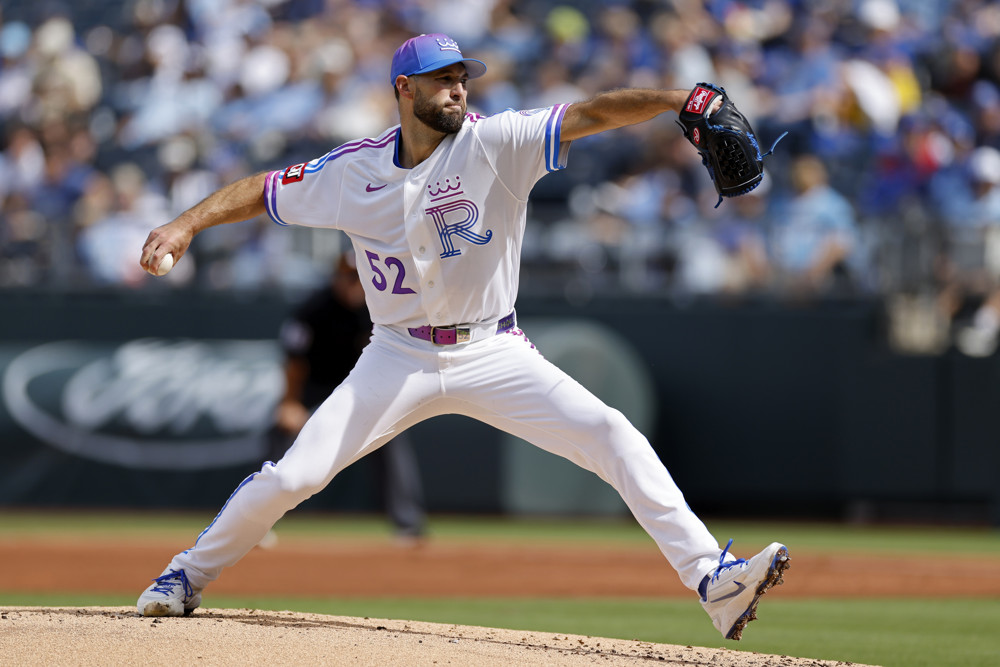
Kansas City Royals: Michael Wacha, Seth Lugo
Wacha leads the American League in innings, and the White Sox should have no trouble grasping why, as he's shut them down in two games this season. Depending on incentives reached, he can make upwards of $18 million in 2027, with a $14 miliion club option in 2028. Lugo is useful, but has been less effective than Wacha, and will be more expensive over the same period. Their familiarity with pitching coach Zach Bove, who viewed them both as templates for how Davis Martin could emerge as a frontline starter, is an ancillary bonus.
New York Mets: Freddy Peralta
Peralta has been one of baseball's biggest disappointments, as he went from finishing fifth in Cy Young voting with Milwaukee to a near-5.00 ERA with a Mets team whose rotation he was supposed to anchor. He's only making $8 million this season and is a free agent after the season, so the economics aren't complicated. It's more a matter of whether a team thinks it can solve Peralta's mechanical issues before it's too late to matter.
This is the idea that ESPN's David Schoenfield floated in his article about what every should do at the deadline, and while it's the kind of spitballing that doesn't deserve much weight, it's refreshing to see the White Sox on the adding side of the ledger for once.
Los Angeles Angels: Reid Detmers
The Angels just fired their GM, but Arte Moreno is still there, and he tends to like to hold onto a few recognizable players and call it a day. Detmers makes a good case for selling high because he's perpetually underperformed his FIP, except now his FIP (2.96) is so low that he can still underachieve it by a full run (3.88 ERA) and be considered above average. But he also has two more arb seasons left, so a team whose front office is in flux might want to wait until the next administration to properly assess his value, or use that reason for justifying a natural inclination toward inaction.
San Francisco Giants: Logan Webb, Robbie Ray, Adrian Houser
Webb is coming off three consecutive 200-innings season is on pace to throw 180 innings for a fifth-straight year. He's owed $47 million over the next two seasons, but if he were reaching free agency, two years and $47 million would be a price every team would happily pay, so the surplus value remains considerable. For what it's worth, Giants president of baseball operations Buster Posey is kind of regularly saying they won't consider dealing Webb, but things are a mess over there right now, so it's worth monitoring.
Ray is a pure rental making $25 million in the last season of the contract Seattle gave him, and he's coming off a June in which he avoided allowing an earned run in four of five starts. In terms of his 3.39 ERA, he's effective as ever, but he's struck out just 82 batters over 95 ⅔ innings while giving up 14 homers. It's not the kind of performance that's guaranteed to translate to a smaller park, but Ray is accomplished enough that you imagine that he knows how to use a ballpark to his advantage.
Houser's only halfway through the first season of a two-year, $22 million deal, but he's already been relegated to the bullpen. Given that the White Sox dusted off Erick Fedde and restored him to usefulness, Houser feels like he merits a mention. There was plenty of mutual appreciation expressed when he departed the Sox last July.
Boston Red Sox: Sonny Gray
Gray holds a no-trade clause, and he sounds like somebody who's inclined to leverage it toward a destination of his choosing if at all possible. Given that he's summoned all of his veteran guile for an All-Star-caliber first half, he has a chance of tilting the market his way. Also, he's owed the remainder of a $35 million salary this year, and there's a $30 million option/$5 million buyout for 2027 that seems like a gussied-up mutual option. Bob Nightengale prominently mentioned the White Sox as a potential landing spot for Gray, which merits attention, even if it comes with caveats.
Detroit Tigers: Tarik Skubal
Probably not.
Cincinnati Reds: Brady Singer
The rest of the Cincinnati rotation is under team control for several years, whereas Singer reaches free agency after the season, so his spot is where any deadline overhaul would begin. But also, he's the guy who would be traded first because he's given up 19 homers over 77⅓ innings, and the Reds would be happy to get anything of intrigue. He had back-to-back 2.5-3 WAR seasons the prior two years, one of which happened alongside Bove, so there's a concept of why this would help. If you can't count on a Bove Bump, you can at least file him under "he can take the ball," if it's not so important what he does with it.
Are 13 names enough? The comments below will tell, because now it's the Sox Machine community's turn to surface names that are going overlooked.