

Before the White Sox try to finish off a sweep of the Cleveland Guardians at home, let's take a moment to empty out a P.O. Sox mailbag that's bursting at the seams.
The following questions are from Sox Machine members at the 10 WAR tiers and higher, and the following answers are available to all Sox Machine subscribers. As always, thank you for your support.
What does a fair (and hopefully realistic) MLB/MLBPA work agreement look like?
rock_beats_papr
Jim: The simple answer is something close to the status quo, because most parties have found a way to make it work – the teams that want to spend can do so, the teams that don't can pocket revenue-sharing money, players don't have a salary cap, and the expanded postseason means all sorts of teams can get into October, even if the Dodgers have won the last two World Series. Attendance has risen for four years, and the league can't really afford to cut its legs out from underneath itself when negotiating a new package of national TV deals. My concern is that if owners are convinced that imposing cost certainty on payrolls will allow franchise values to skyrocket, all the collateral damage might be worth it to them.
Fairer for me would involve players getting paid earlier, be it a sizable hike in the minimum salary or a shorter period of initial team control, and maybe some nationalization of the RSN money since there's such a disparity between the haves and have-nots for local TV deals and the league is running a lot of them. But that's when you start getting into what's fair for some not being fair for others, and what you pay negotiators for.
Josh: To touch on Jim’s point about the disparity with local TV deals, I believe this is the biggest issue Major League Baseball currently faces. What would be smart for owners is to pool their local TV rights and sell them to a single provider. Too many teams are dependent on the league to broadcast games, and that’s not a very sustainable business model.
Let’s say MLB got 24 teams to agree on a plan of selling every team’s local TV broadcasts to Disney/ESPN for a hypothetical amount of $3 billion a season. That way, each MLB team gets $100 million each season in local TV (on top of the other TV and streaming packages), and fans no longer have to worry about blackouts. From a business of baseball perspective, I think that’s fair and a win-win for most of the league.
The impact that such a business pursuit would have on the MLBPA is unknown. While it would be great to help out Kansas City and Minnesota with local TV money, that doesn’t mean those teams will spend more. That’s what MLBPA is seeking. More teams that are able and willing to pay players. But this local TV pursuit would hurt the Los Angeles Dodgers and the New York teams. Would the MLBPA oppose any plan that hurts those rich franchises?
Instead of tying a new local TV revenue structure to a salary cap, I recommend that MLB and MLBPA agree to a plan that pools local TV rights together, and the outcome is raising the league minimum for pre-arb players to $1 million, and $3 million for veteran players (5+ years of service time). That way, the MLBPA would benefit from this local TV restructuring and help a large part of its voting base.
James: I also find myself in the awkward position of rooting for the status quo given that the all MLB owner concessions are teases to try to make a salary cap – a known redline for the MLBPA for decades that will drive a lockout – palatable to the public, and their recent draft proposal is an attempt to offload the cost of player development and amateur scouting onto the NCAA. On top of that sounding like a less stable plan than Rose and Jack trying to fit on that piano, it would get a lot of scouts and coaches fired, which is more or less the point of it. So yeah, I’ll accept another five-year stretch of ownership trying to incrementally destroy the sport and choke the life out of the baseball writing industry rather than their current carpet-bombing proposals.
Have you identified any new tendencies in Venable's managing in '26 compared to '25?
GarRidgePride
Jim: I think you're seeing the same shape of manager, but he's taken his tendencies up a notch now that the games matter. He went from being eighth in pinch-hitters per game to second, and now the White Sox have the third-highest percentage of plate appearances with the platoon advantage. His comfort with the opener means he's doing what he can to avoid turning long arms into pure fodder, and seven different guys have recorded saves even though the Sox went and signed a closer. The through-line is that he's protecting underqualified players at all costs, or at least until the costs outweigh the benefits.
James: Beyond just co-signing Jim, I would add that I spoke with Randal Grichuk Sunday morning about how much he enjoys the clarity from his perspective of knowing that Venable will pretty much always pinch hit in the type of situations someone like him is expected to be ready for, rather than there still being a level of guesswork for how the manager is reading the game. And speaking to Walker McKinven on Friday, they’re really committed to the idea of making a substitution, pinch-hitting, using an opener to get a good platoon matchup, as soon as the opportunity presents itself rather than waiting around for a later game situation that may or may not happen. So it’s the same Will Venable, but more so.
While I’m all for Chris Getz being aggressive at the trade deadline, I’d like for him to go after players that can help for more than just a 2026 playoff run. Do you think the Reds would part with Hunter Greene, would he be worth pursuing coming off injury, and could they get him without pulling from their current roster or dealing Caleb Bonemer?
Trooper Galactus
Jim: Because I had to look up exactly what the terms of his extension were, I may as well save others the step: Greene signed a contract extension that pays him $15.3 million in 2027, $16.3 million in 2028 with a $21 million club option ($2 million buyout) for 2029.
It does feel like a very Dodgers move – acquiring a guy who isn't a great bet to pitch more than half a season, but is a plus-plus contributor when he's able to take the ball. The difference is that the Dodgers take a strength-in-numbers approach by piling those guys on top of their own in-house solutions, and they have enough volume to where any one of them isn't required to be healthy at a given time. There's increased risk here in that he hasn't logged a major league inning this year due to bone chips, so it feels like a Luis Robert-level disconnect where the price other teams might want to pay is one the Reds might not want to hear, especially since the White Sox would need him to be healthy, and haven't yet built up the surplus of prospects that allow them to give up one they could do without.
James: If this is a specific desire to hold onto Caleb Bonemer at all costs, then a deal is probably possible. If Caleb is a stand-in for simply a prospect cost that would be immensely painful and narrow the contention window, then probably not, and the Reds have shot down speculation about trading Greene in previous intervals. Given the Sox’ limited appetite for purging prospect depth this August, finding a weird discount would suit them, but they’d probably want some more evidence that Greene can actually help this year.
Do you think the Sox will add an experienced SP by the deadline or will they just stay strictly on the developmental path with hopeful additions the Smiths, Sandlin, Adams, maybe Thorpe and of course Schultz. Trading prospects could come back to haunt.
cmansoxfan
Jim: Addressing the question of finding pitching in general, I think they have to add a starter, because every single name in that group has either dealt with a major injury/surgery, or a collection of minor injuries that have clouded any projections about their late-season availability or effectiveness, and last weekend's lack of a spot starter already served as the cautionary tale to heed. I'd be surprised if they spent serious prospect capital on it because I already think Chris Getz wasn't prepared to buy at this deadline, and he strikes me as the sort who would gradually wade into the world of adding, rather than throw himself into Dombrowski Mode.
This is all to say that I'm watching the Giants shift Adrian Houser to the bullpen and wondering if Getz has talked to Buster Posey about how much of the remainder of his two-year, $22 million contract San Francisco is willing to eat. Although Posey has bigger problems at the moment.
Thanks for all the coverage this season, it’s definitely been more fun than expected!
It was maybe a short period, but what was the interaction like between Nishida and Murakami? I imagine that having a shared language would be uniting, but being at such different points of their careers could be a challenge I think.
Captain Euphemism
James: They seemed to really enjoy it, had spent a decent amount of time together in spring and Murakami being able to pass on an observation from an at-bat to a teammate in Japanese is obviously not something he’s able to do with other members of the roster. At the same time, their lockers were on opposite corners of the clubhouse – new callups often just get stuck where there’s room – and Murakami’s pregame routine is laborious to the point of rarely seeing him in the locker room during media availability for home games at all, so it’s a little hard to gauge. Nishida’s journey through the minors was such that someone like Sam Antonacci might have been as thrilled to have him in the majors as Murakami.
Mune is under contract through the ’27. If there is a work stoppage (no season) due to the owners and players not approving a new CBA would he still be under contract through ’28? (IMO it is not in the best interests of either party for this to happen). If the Sox are not going to seriously attempt to extend Mune, or if he is not interested in an extension, then wouldn’t the best business decision (not most fan popular) be to trade Mune while his value is at it’s highest this trade deadline. I assume that the injury and missing several weeks will affect the return they may have received had he not been injured. But he would still bring a good return and it would be better than losing him with no return should there be no baseball or a shortened season in ’27.
DuhSox
James: Optioning Nishida is something that qualifies as “not the most fan popular,” whereas trading Murakami out of contract anxiety would be more in the territory of fan-alienating, clubhouse-immolating. My business-side knowledge is more novice, but trading Murakami at first opportunity would take the steam out of Brooks Boyer’s efforts to court Japanese advertisers. More centrally to my day-to-day observations, the Sox have spoken about taking this opportunity to let this group chase a playoff spot seriously. While there are limits to how much they’re going to make available from the farm system to improve the team, moving the best hitter and a beloved presence on the team for the sake of the ‘28 roster would take the legs out of the ‘26 team in a way that would be impossible to rectify.
Jim: Beyond the specific benefits of Murakami on this roster and for this organization, I don't think you make any moves based on what you think the CBA might be or how long negotiations might take, because if you prepared for a worst-case scenario that never materialized, then it looks very silly. It reminds me of the White Sox trading Ray Durham to Oakland for Jon Adkins at the 2002 deadline because Kenny Williams was afraid changes to the CBA would eliminate compensation draft picks for departing free agents, so he wanted to get something instead of nothing. Which he did, except then no changes were made to the compensation structure, so he missed out on an extra first-round pick and a supplemental first-round pick, which would've been worth way more than Adkins. It was one of the reasons why Williams was portrayed as a fool in "Moneyball,” and while the eventual World Series ring helped offset any humiliation, it wasn't because of anything Adkins did.
Going back to the Mets throwing shade on the White Sox for Luis Robert’s annual trips to the disabled list. . . any thought on how this could apply to Murakami? Last year he only played in 69 games, but consistently played 140 in the prior full (non-covid) seasons? Too small of a sample size to be concerned? How much should I worry?
Bud Black Metal
James: He’s a big-bodied first baseman who swings super hard, so I suppose the oblique injury that shortened his 2025 season is always a looming risk. The hamstring strain, well, it’s a hamstring strain and they pop up whenever. But Murakami has been super active on the bases this year, came to camp in great shape and has been busting it down the line at every opportunity in a manner that his teammates have been noting regularly. I’m betting he’s a bit more conservative upon return.
Jim: I suppose we'll see how much of his outsized effort is ingrained in him, and how much was specifically motivated by the league giving him the cold shoulder during free agency, especially since questions about his athleticism were a big part of it.
Since the organization's pitching and hitting departments have modernized in the past 2-3 years, has this at all changed what James Kruk and Geoff Head do to train and condition players?
Asinwreck
James: I’ve never seen either of them interviewed, so it's a little hard to gauge. I think you hear them referenced by the coaching staff more often in a manner that matches the enhanced collaboration between different departments that has been repeatedly emphasized by Chris Getz. The players are decked out in visible motion tracking technology all the time, and just on Sunday, Will Venable referenced an internal system for tracking player workloads weighing in on whether to rest Miguel Vargas. He also mentioned that they’ve played Vargas more than the system would have recommended, but still speaks like someone drawing from the information provided to him more than Tony La Russa was when he said most of their lineup had been instructed not to run out grounders at max effort.
Do you think we are witnessing Justin Ishbia‘s involvement now because the payroll in 2029 and 30 will begin to grow as all of the players making debuts start their arbitration salary climbs? (Assuming salaries continue to work the way they do.)
Andrew S.
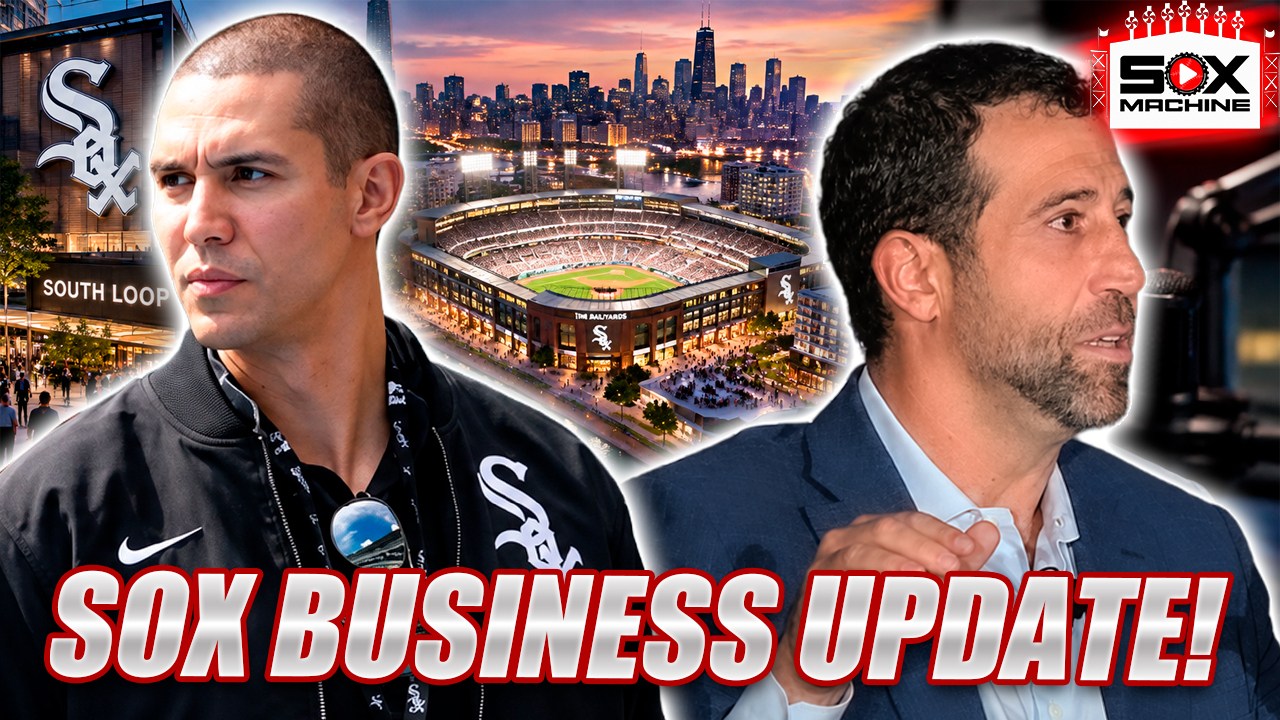
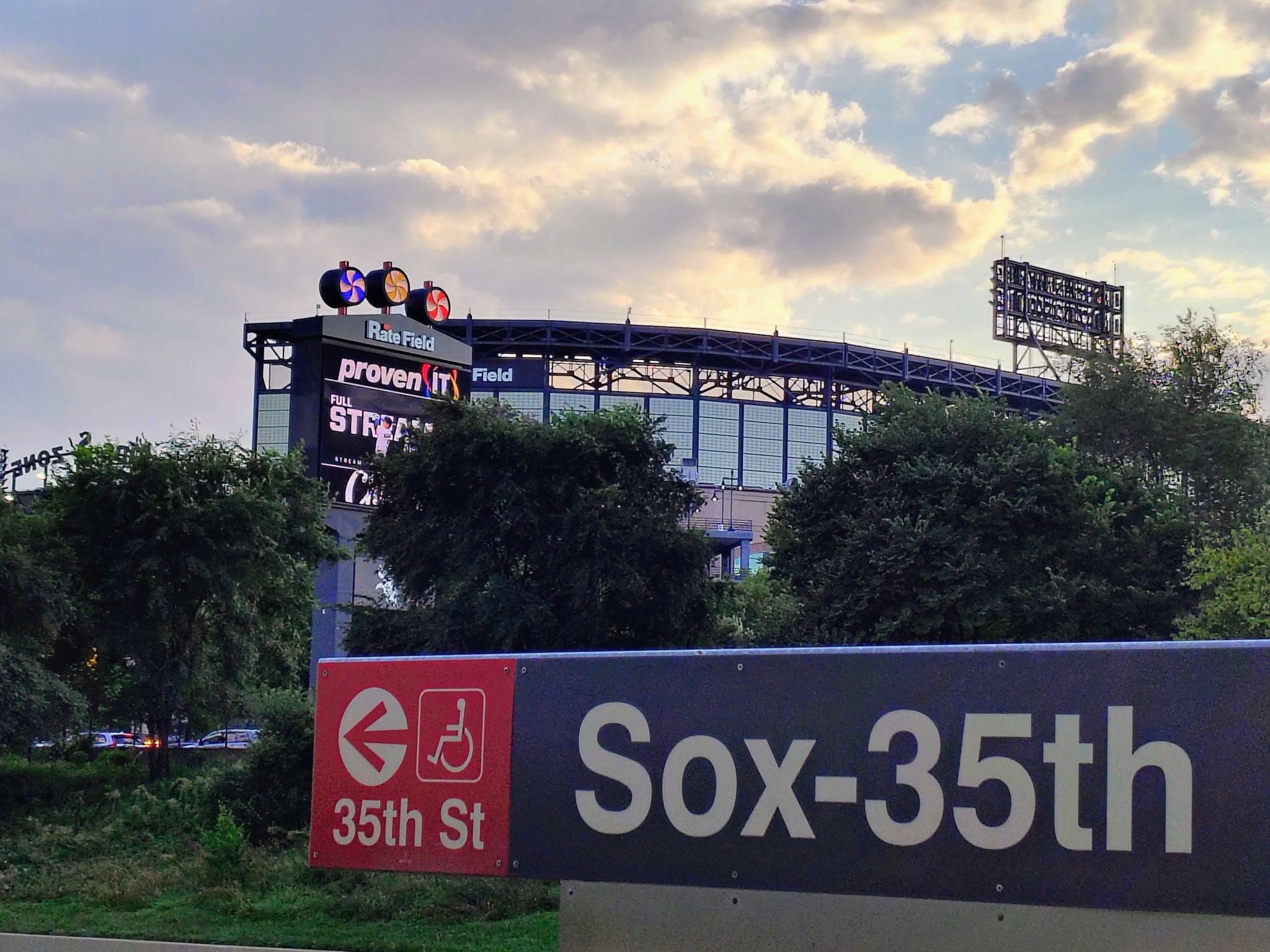
Jim: I think the Rate Field lease expiring after the 2029 season is the bigger driver for formalizing Ishbia's on-deck role and setting that particular year as the first one that Jerry Reinsdorf can sell to him, because the next White Sox ballpark will have a bigger impact on the future of the franchise than any arb number. That would jibe with the way the arrangement has been on display thus far, where Ishbia describes himself as a silent partner and Reinsdorf is the only owner cited by the front office, be Chris Getz, Brooks Boyer or anybody else, on all baseball/roster-related decisions, but Ishbia is free to spend his own resources on real estate maneuverings.
Now that White Sox games matter and they have reason to be players in free agency the way they might not have imagined this past winter, I'm curious whether Ishbia's contributions will advance beyond paying down debt, but first things first, a new CBA has to be ratified in order to establish the new spending environment, and then we'll see what the White Sox are or aren't able to do with the combination of their existing structure and any new rules.