
All the Driveline-branded speed training bats in use across batting cages on both the major and minor league side of the White Sox complex is what we in the business refer to as context clues. Plus, the elements of Edgar Quero's swing that he went to overhaul at Driveline this winter -- a smaller and quicker weight shift in his hips, so he can catch the ball out front and elevate it more -- were the same concepts the Sox were tasking him to improve.
Still, I wanted to ask Ryan Fuller what he thought of the hit tool-oriented young catcher spending his offseason chasing more bat speed and loft. What he offered is that the change Quero is pursuing is too subtle to be considered an overhaul, reminding that despite below average bat speed and power production, his 46.3 percent hard-hit rate was already safely over the MLB mean (40.9).
"The lower the bat speed, the higher the contact quality and your ability to find the barrel has to be," Fuller said. "The bat speed was lower last year, but when you look at Smash Factor -- bat speed into exit velocity -- he's one of the best. He's finding the barrel consistently, so now it's how do we get him off of the ground and on a line more, and also raising that floor and ceiling of bat speed, where you don't have to feel like you're going to be perfect here.
"Where you can be a little bit off the end, or a little bit off the hands, but because you're creating more bat speed, they're going to find holes and that weak ground ball is now getting through. With Q, the bat path is very efficient and consistent. Just turning up his ability to move his bat through the zone in an efficient manner is great for anyone."
To Fuller's point, Quero is still looking hit tool-oriented in a spring that now likely ends with him as the Opening Day starter, as he's slashing .353/.371/.500 in 10 games.
⚙️⚙️⚙️
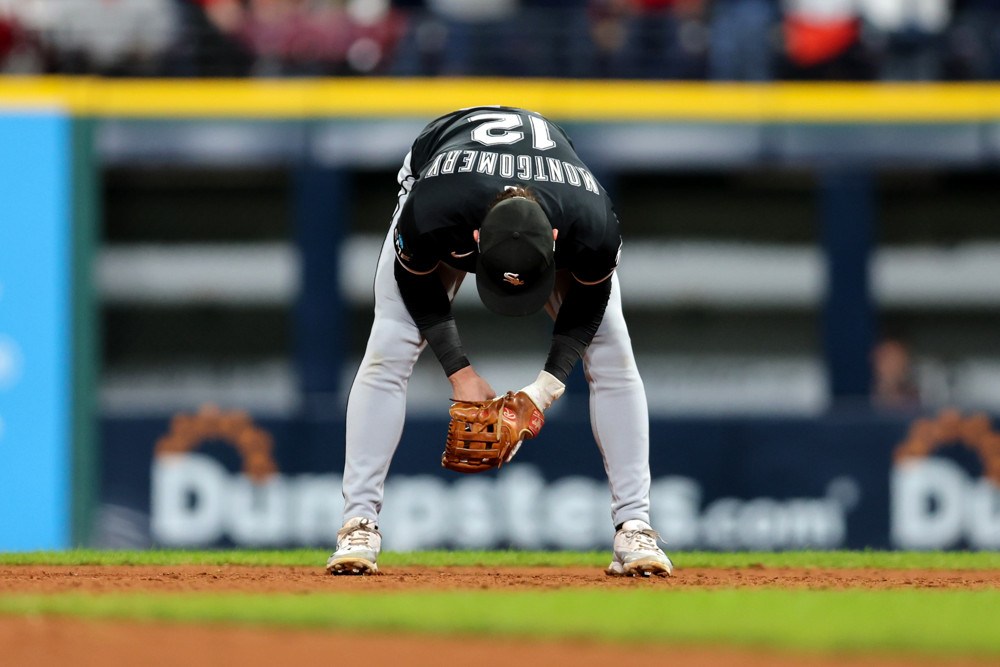
Colson Montgomery is certainly a hitter focused on power; he takes a big cut and accepts the extra whiffs in exchange for exit velocities that few can match. But his in-zone contact rate (82 percent) actually wasn't worlds apart from the league average (85.4 percent). Therefore, the biggest factor in trimming his elevated rookie year strikeout rate (29.2 percent) is something he should have the most control over: chasing out of the zone.
What's more striking is this is something Montgomery was once regarded as being great at. He produced multiple sub-20 percent chase rate seasons in A-ball before it spiked over 30 and stayed there upon his arrival in Triple-A in 2024.
"Colson's composure last year, coming up and checking in on him throughout the year with the coaching staff, and you saw a guy where it was not too big for him at all," Fuller said. "Some guys get up there, they're very aggressive, and then it will go back to their normal behavior. But with him, it was very impressive."
Instead of attributing to simply young player eagerness, Fuller talked more about narrow his focus to just his attack zones rather than covering the whole plate.
"That's something he worked really hard on last year -- at the beginning of the year having those struggles and really focusing on 'Here are the zones you want to attack,' and 'Here is where you can totally give pitchers these spots,'" Fuller said. "That will be paramount this year, as he's one of the more exciting players and came up and hit 20-plus home runs in a really small sample. So teams are going to be aware and he's going to be pitched differently than he was last year. His game-planning, his training, his attention to detail of where he wants to attack is going to need to be at an even higher level."
⚙️⚙️⚙️
Billy Carlson has adjusted his swing significantly over the past 18 months in an effort to add more rhythm, weight transfer and fluidity to try to untap some of the raw power his long-levered frame hints at. Now that he's in pro ball and the White Sox are working with him to add strength, Fuller says the work of shrinking the movements in his load is already at hand.
"Billy is getting stronger, Billy is leaning into the training environments we have," Fuller said. "He's a really smart kid where he understands that even if it was bridge league, he's seeing velo consistently that you don't see at the high school level, and when you're seeing 95, 96 mph, your body is going to understand 'I don't have the time to make the moves that I used to.'
"So to see him tighten things up a little bit, that's what we want to see from all the guys. He has really good bat speed. It's utilizing it in an efficient manner, and his ability to hit balls hard on a line, it's been really encouraging to see him do that. It's a really small sample again with these early camp guys, but to see Billy physically develop, and his swing start to make adjustments with what the game is going to look like, is really exciting."
⚙️⚙️⚙️
The .252/.331/.438 slash line Miguel Vargas had after changing his setup mid-April last year, the White Sox would have taken all day. But after AL Player of the Week-level dominance that the change immediate produced, only to be followed by some lulls in July and after returning from an oblique strain in September, Vargas has been citing "consistency" as his biggest focus all spring.
Vargas confirmed that his new swing mechanics are part of that effort, and you could certainly spy him getting into his move in different ways over the course of last season.
"Vargy is talking about consistency and he's absolutely right," Fuller said. "The adjustments he made last year were a little bit different feel-wise for him than what he was used to. That's usually a good thing for someone trying to make an adjustment. If it feels comfortable to them, they're probably not doing something too much different.
"The fact that it was uncomfortable and he was working through it throughout the year was encouraging, but now it's 'let's lock in.' We know what checkpoints you need to hit swing-wise for you to be successful. We can utilize the lab, we have video feedback at all times. It's making sure that when he leaves spring training that it is dialed in and he's ready to have a full season of being consistent with all his movements that we know produce the best results."
I'm clipping nothing but hard-hit balls to reflect a certain agnosticism about where Vargas' setup ends up, because his mission this season is just about finding a path to his launch position that's comfortable for him to repeat. In that vein, spring looks at his swing find him trying to find a middle-point between rigidly standing in position to start his swing the whole time, and standing more upright before rhythmically dropping into position.
Whatever works.