From his build to his defensive versatility to the relatively low ceiling that's been projected for him, Luisangel Acuña has drawn comparisons to Leury García, and it's not entirely unfounded.
Mentally, I immediately clocked a García comp simply for the way Acuña was acquired.
Back in August 2013, as the White Sox were completing the collapse that triggered Rick Hahn's first rebuild, the White Sox placed Alex Rios on revocable waivers. The hope, at least from the outside, was that the $17 million owed to him through the end of the 2014 season was enough for him to clear waivers and open up trade possibilities with the entire league, but the Texas Rangers placed a claim. Then-Texas GM Jon Daniels said he didn't expect a deal to happen, but there was a breakthrough on an offer that prioritized salary relief, and the White Sox ended up sending Rios to the Rangers along with $1 million for Leury García.
There are some differences here, namely that August waiver trades no longer exist and the Mets picked up every penny this time. But in both cases, the White Sox felt compelled to trade one of their better two-way players in recent memory, only for their lack of surplus value limited their markets, and the return was a utility player who will likely need a fair amount of runway to establish himself as a reliable threat against MLB pitching.
It's a strange trade to evaluate because objectively, Chris Getz did fine, at least at this moment in time. He could have declined Robert's option and easily justified such a decision. Instead he exercised it, let one more market take shape, and acquired a probably-useful MLB player in Acuña and an interesting low-minors arm in Truman Pauley while saving $2 million, because the White Sox never had to pay Robert's buyout.
That's undeniably better than paying $2 million and getting nobody, so in a vacuum, the deal passes inspection rather easily. ESPN's Bradford Doolittle gave the White Sox's side of the deal an A- compared to a C+ for the Mets, and while FanGraphs' Ben Clemens chided Getz for getting less value than he could have in previous periods, he ultimately concluded, "Where we're standing now, this trade makes a ton of sense on both sides."
Yet there are a couple of reasons why it falls flat to those who have been trapped in an elevator with the White Sox the entire time. There's the timing of trading Robert, which missed previous windows that could've yielded more exciting returns. Admittedly, I'm not convinced that Robert could have ever been traded for perceived commensurate value because he missed a lot of games and swung at everything when he played. That's just a difficult combination for a potential suitor to bank on. Teams will accept some injury risk if their production is rock-solid when available, and they'll take streaky players who post enough to let it even out, but a player whose quantity and quality is questioned is a harder sell. I imagined the response to a post-2023 asking price being, "If he does it again, we'll talk," and he never did. Still, a disappointing return after 2023 would beat a fair deal in 2026 because the currency has been so devalued.
Even then, though, quibbling over the individual merit of the trade risks losing the forest for a chopped-down tree, which is the sense that, after three consecutive 100-loss seasons, the White Sox still aren't going anywhere.
You could argue that was mostly the case even before the trade, but after the White Sox acquired Munetaka Murakami in between Anthony Kay and Sean Newcomb, there was a brief glimpse of a White Sox roster that had the faintest of aspirations, even if it was heavily reliant on upside plays. The likelihood of Robert recapturing his 2023 form AND Murakami and Kay making seamless transitions from Asia AND young players like Colson Montgomery and Kyle Teel enjoying linear development had the same odds as one of those six-leg parlays that gambling apps tout to drain the bank accounts of young men, but somehow that's better than Getz's previous two teams, where it was impossible to envision any scenario where -- even while directing focus to notes of organizational progress, even ones as small as secondary leads -- they didn't suck out loud.
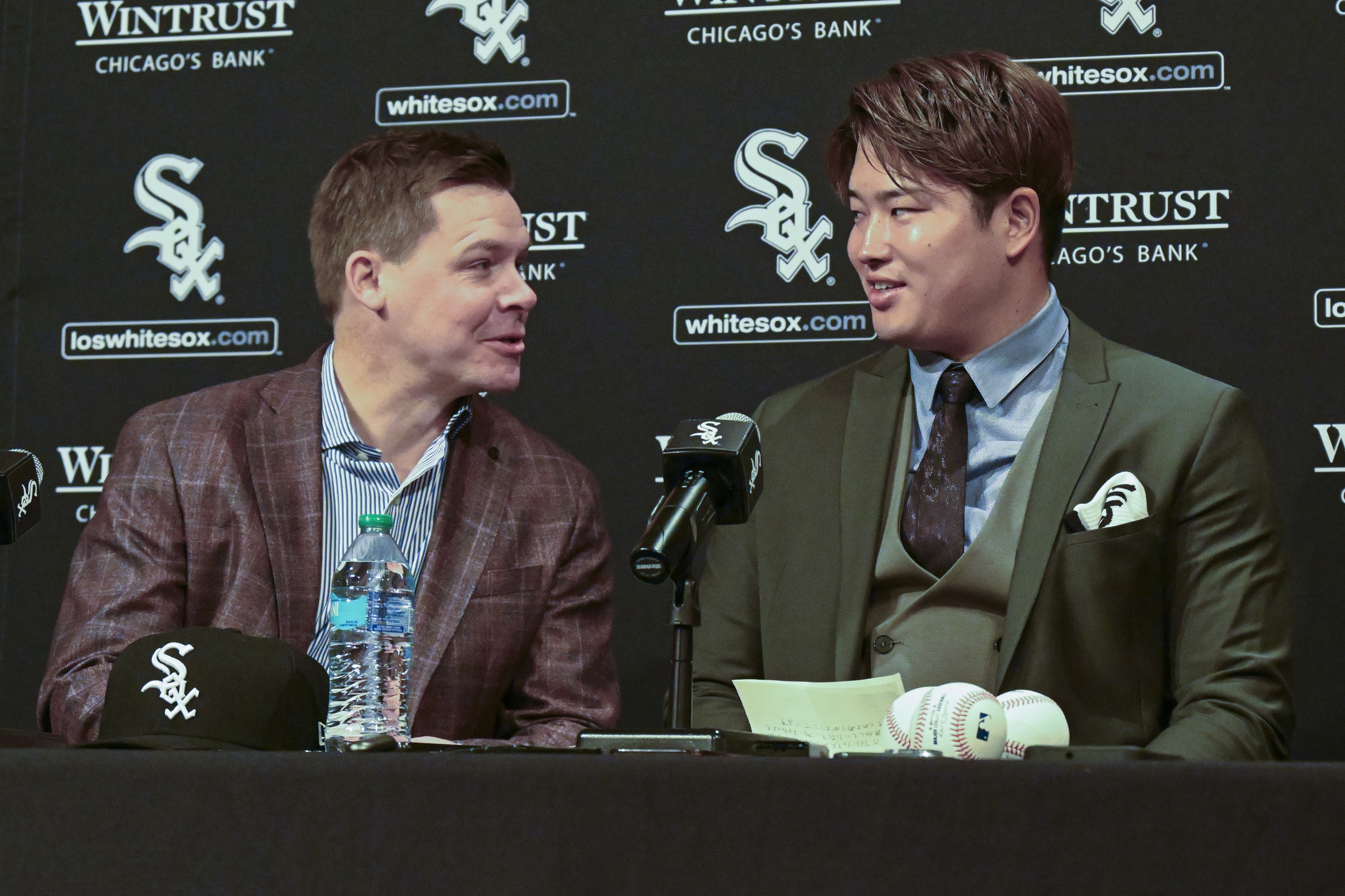
Instead, the career second baseman showed shortstop-grade lateral quickness in sidestepping a question about keeping Robert and Murakami together at the presser for the latter's signing, and dealt the former six weeks later. The Robert trade doesn't exactly kick the Sox back to square one, because his stracotto hamstrings might've immediately accomplished that even if he'd stayed put. Acuña's skill set could transfer cleanly to center field, and with enough MLB reps, the bat could generate sufficient value to produce an average player for the league minimum, putting the White Sox ahead of where they'd be without a deal.
The trouble lies in the bigger picture. Zoom out a little, and there's the matter of the White Sox roster, which now features zero outfielders with a trustworthy skill set. That seems like it shouldn't be the case, whether it's because the Sox have been rebuilding for three years now, or because every team fields three outfielders on every defensive play. There are so many opportunities to discover somebody with some staying power, and yet they've come up empty thus far. The Rios trade back in 2013 cleared a path for Avisaíl García, but Robert stood in nobody's way.
Zoom out even further, and it's just unpleasant that one winter after another is defined by the players the White Sox must trade, rather than the players the White Sox could bring in. For all the work Getz is doing under the surface, and for all the good people he's brought in, there's still too little emphasis on the on-field results, the last two years of which wouldn't be much worse if they forgot to hire a GM and all texts, emails and faxes went unanswered. This problem is not specific to the White Sox -- the Nationals are now trading the players acquired in the Juan Soto trade, setting off another rebuild before the first one went anywhere -- but they're lesser lights in a league where half the teams are eating, and the other half is pushing food around the plate.
The good news is the bad news, in that the White Sox can't cut much further. The roster features just four players making more than six figures, and Andrew Benintendi is the only one who represents the dreams of a previous era, but I fear if Murakami or Kay hits the ground running, it won't be long until the Erick Fedde trade is cited as a time to start making more deals that are defensible on the surface, but never seem to coalesce into a greater vision.