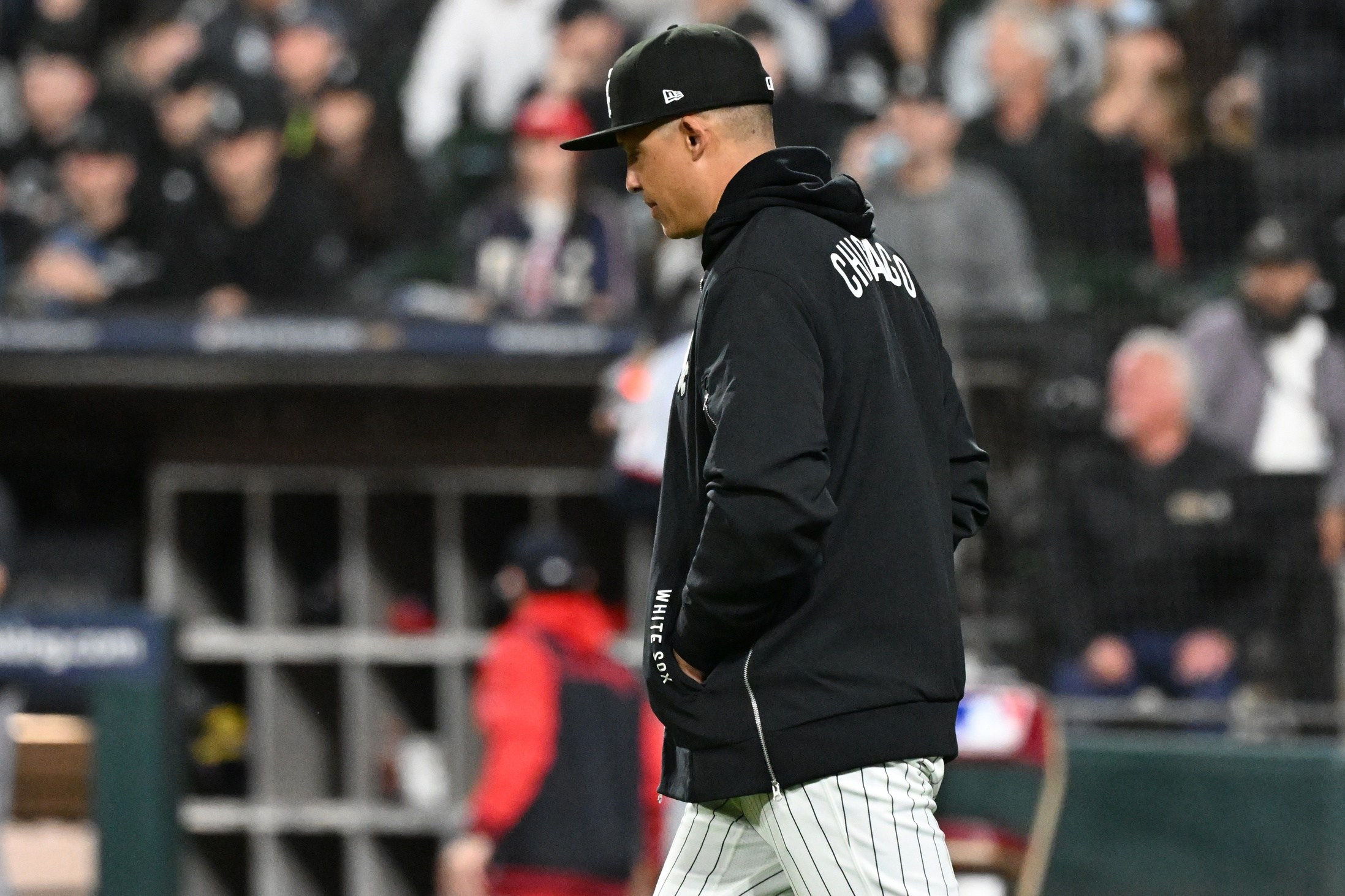
There were a few different ways Will Venable could have manipulated the order of the pitchers he used in Game 4 on Thursday to potentially nurse a one-run lead over the final four innings, or at least stand a chance of winning the game by a score of 7-6, although nothing would've been guaranteed.
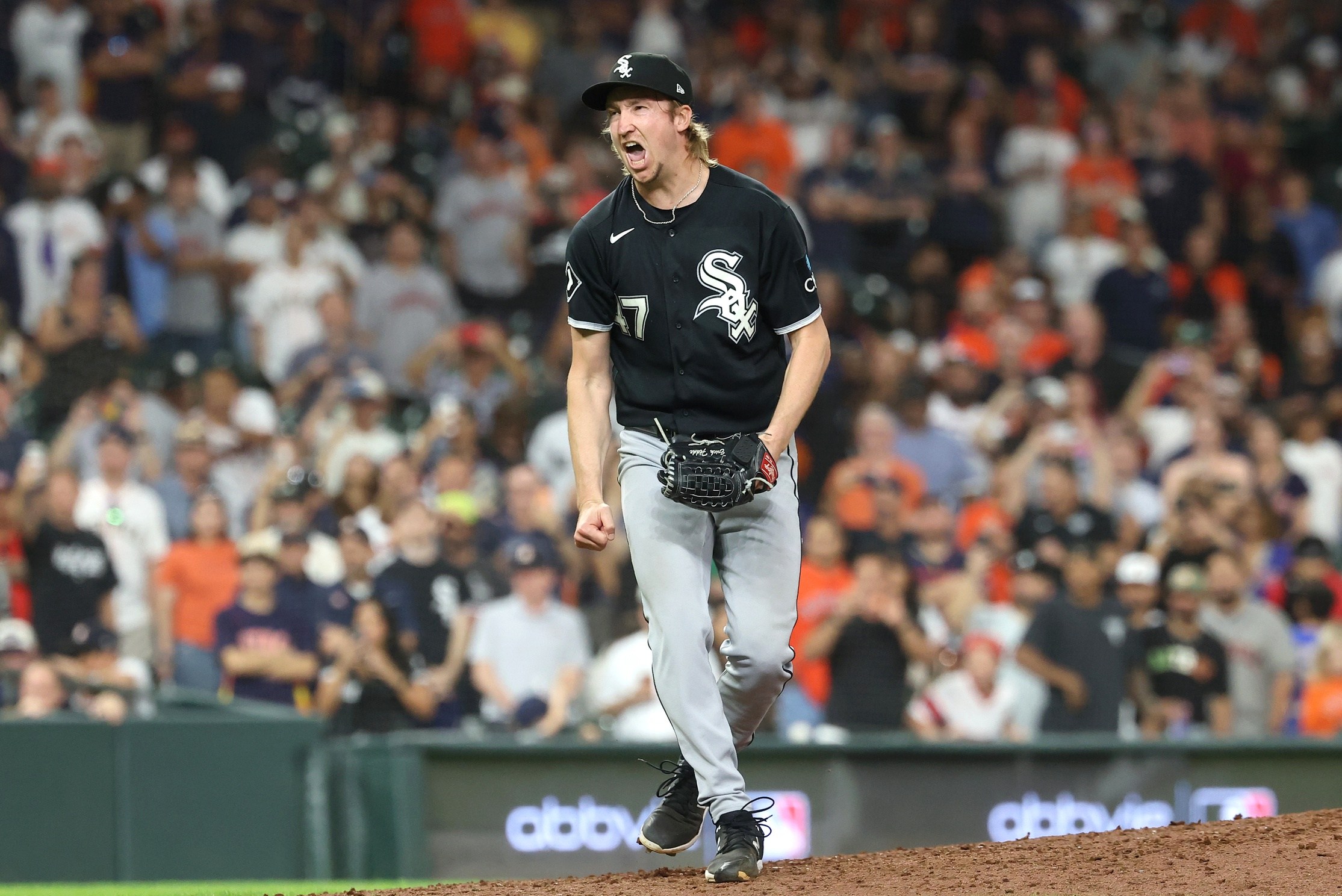
Perhaps he could've stuck with Erick Fedde, even though the leadoff homer to Patrick Bailey was the first of three consecutive hard-hit balls that ushered him out of the game. Perhaps he could've rode longer with Jordan Hicks, even though the White Sox's second-most effective reliever of the postseason gave up a two-run homer to José Ramírez upon entering. Maybe Hicks recovers and completes another whole inning, and that would have allowed him to avoid Anthony Kay entirely. After Thursday's dud, Kay has now allowed seven baserunners over 2⅔ innings this postseason without striking out any of the 15 batters he's faced.
Regardless of which parlay you played to get the White Sox get through the first two-thirds of Game 4, all roads still led to Grant Taylor, and it reminded me of the Calvin & Hobbes strip where Calvin asks his dad about they determine the weight a bridge can support.
- Calvin: How do they know the load limit on bridges, Dad?
- Dad: They drive bigger and bigger trucks over the bridge until it breaks. Then they weigh the last truck and rebuild the bridge.
The way the Taylor's appearance played out -- coming in with a runner on second and one out in the sixth inning of a game tied at 4 and failing to retire any of the six batters he faced -- struck me as a similar feat of crude, brutal engineering. If Taylor passes that test and gets a tie game (or better) through seven, that effectively gives Venable permission to go to Sean Burke with the goal of finishing the series in four games, even if it risks leaving Game 5 entirely up to improvisation.
If Taylor collapses -- and I'm sure Venable wasn't as blasé about that possibility as these theoretical engineers -- then the calculus immediately shifts towards what's best for Game 5, and the rest of Game 4 is about resisting any temptation to throw good money after bad.
Barring some kind of miracle recovery where Taylor is back hitting 101, Saturday night will be Between 2 Seans, with Burke and Sean Newcomb doing the heaviest lifting, preferably in that order. If it doesn't work, then at least the White Sox can say they threw their best starter and best available reliever, and it wasn't enough. Assuming others are needed to help cover the nine (or, knowing this series, more) innings, there's Jordan Hicks from the right side and Noah Schultz from the left. When it comes to high leverage, that's about it. Those are the guys.
Miguel Vargas is being respected
Below are four postseason series batting lines, and the headline gives away the source of one of them.
| Series | PA | BB | K | BA | OBP | SLG |
|---|---|---|---|---|---|---|
| A | 22 | 4 | 1 | .294 | .409 | .824 |
| B | 22 | 10 | 2 | .273 | .591 | .727 |
| C | 30 | 13 | 3 | .4741 | .700 | 1.294 |
| D | 18 | 8 | 2 | .400 | .667 | .700 |
The last one belongs to Miguel Vargas. A, B and C belong to Barry Bonds during his rampage in the 2002 postseason that brought the Giants to within one game of their first World Series title since 1954.
Vargas' line fits right in, and it's actually more impressive in some respects. Beyond the contexts, and the offensive environment in 2026 not being nearly as lively as it was two dozen years ago, 13 of those 27 walks to Bonds were intentional, while Vargas has earned every one of his, including three more on Thursday.
When the White Sox lineup was at its best, Murakami and Colson Montgomery presented no comfortable options for attacking the middle of the order. In its present state, the Guardians know who to avoid, a point Vargas inadvertently drove home with his homer off Cade Smith to lead off the ninth. In all tighter situations, the Guardians are content to face Munetaka Murakami with a runner on, which is why it was nice to see him reach base three times himself, including an opposite-field single off a lefty. Vargas needs a running mate somehow, somewhere.
Let Sam Antonacci lead the way
Speaking of going with guys who got you there, it seems like a Game 5 lineup probably needs to include Sam Antonacci from start to finish.
There was nothing technically wrong with the way the White Sox deployed Antonacci in the two games Parker Messick started. Tommy Pham opened the game in the lineup at DH and went 3-for-4 in quality plate appearances before Antonacci assumed those duties the rest of the way, and given the late-inning scares he provided out in left field in Game 2, the defense isn't something the White Sox have missed.
But if you were to rank the White Sox who look least fazed by postseason pressure, Antonacci is on the podium. The line doesn't immediately jump out because he's just 2-for-9, until you see the three RBIs and four free bases (one walk, three HBPs) against two strikeouts.
If anything, Venable should shift his mitigation efforts to the other corner, as Braden Montgomery is 1-for-15 with nine strikeouts while playing the entirety of the first four games. The one hit was a very big one, but that moment, along with his switch-hitting, potentially provides a false sense of security when figuring out which bench outfielder is the bigger upgrade in a high-leverage situation.
If the Game 5 strategy prioritizes the players who have needed to be productive in order to sustain any hopes of advancing, Montgomery isn't quite there yet. Antonacci, as ever, is right in the middle of it.