If anybody ever uses "pitches per out" as a metric, it's probably used for a start that went fewer than two innings, similar to the way underperforming players are the ones who have their salaries divided into games, hours or minutes.
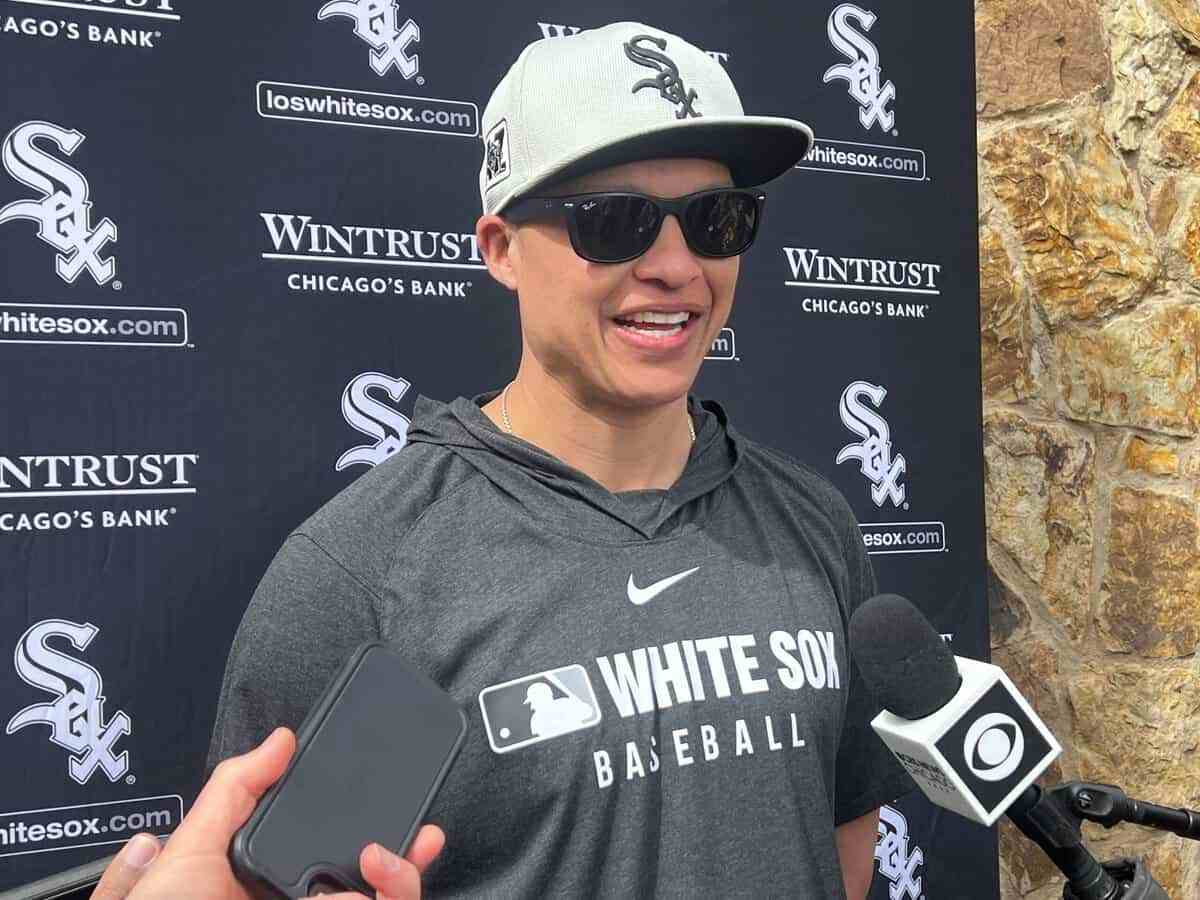
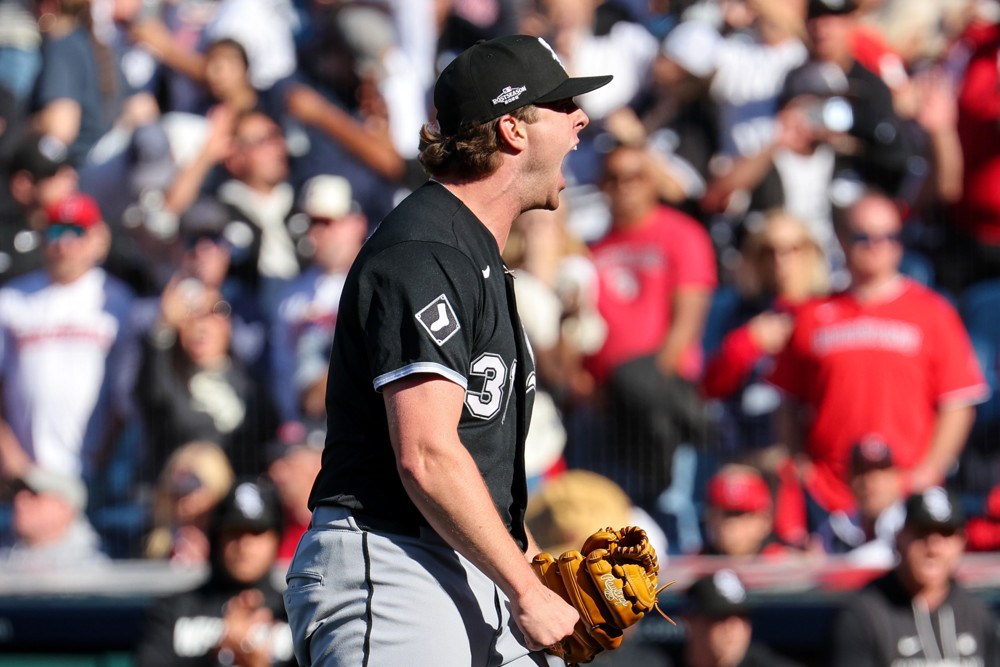
Here, however, it's pretty effective for explaining Will Venable's decision to let Grant Taylor finish the save he started after entering Game 1 of the ALDS against the Guardians in the sixth inning.
Taylor needed a relief career-high 54 pitches to log the 2⅓ innings he threw to close out Game 1 of the Wild Card Series, but he threw just 42 over four innings against the Guardians. That's 7.7 pitches per out on Tuesday, and 3.5 pitches per out on Saturday. At that pace, he might've been able to throw a fifth inning without breaking new ground in pitch counts.
There are more factors going into it than that, but what's interesting is that during his postgame press conference, Venable cited something in his previous instance of pushing Taylor that informed him about pushing him again.
"I think an indicator for him as he gets towards the end of these outings where maybe the fastball command isn't where it usually is is a good indicator that maybe he's at the end of his day, but his fastball command was in a good spot."
Taylor sprayed his fastball against the Astros, but he located his breaking pitches well enough to use his heaters as chase/waste pitches, which might've been for the better. In Cleveland, he had all options available. He just happened to choose the curveball, and Jon Greenberg explained why via Anthony Kay:
As for Taylor’s three-strikeout ninth inning, Kay said you have to give the late-afternoon shadows a not-insignificant amount of credit for the dramatic way those guys were whiffing on his curveballs.
“I mean, his stuff is nasty already to begin with, and then having those shadows, I think, played a little extra into some of those crazy swings,” he said. “But he’s been special all year, and trying to do it for four innings is even crazier.”
As for whether Taylor can keep doing this over the course of the series, he said four innings felt more like "digging deep" compared to 54 pitches, which brought to mind a line that James slipped into his recap of Game 1 from Houston.
Taylor threw his most pitches in a game since April 2025, when he was working as a starter at Double-A Birmingham. He dealt with soreness back then while recovering from starts.
Taylor was limited to three innings in those Birmingham starts with a full five or six days in between, so is it asking too much of Taylor throw another two innings two days from now? Taylor declared himself available for Game 2 in Houston, so there's probably a difference in monitoring soreness at Double-A in late April versus an MLB postseason, when months of rest are potentially right around the corner. Still, the Sox have some role in protecting him from his own competitive overdrive. Ideally the upcoming Game 2 will unfold in a similar fashion as the previous one, where somebody like Erick Fedde is the guy recording the 27th out.
⚙️⚙️⚙️
Cleveland closer Cade Smith threw the ninth inning in Game 1, less because the Guardians desperately needed to maintain that three-run deficit and more because he hadn't pitched in a week, with another off day to come. He used those same shadows to his advantage in retiring the side in order, punctuating it with a three-pitch strikeout of Kyle Teel.
But watching Smith enter in a game that well out of hand while Taylor covered the final four innings made me wonder whether Venable's handling of his closer might inspire similarly aggressive deployment from Stephen Vogt as the series wears on.
Smith is accustomed to going beyond an inning, as he recorded four outs or more in 13 of his 69 appearances this season. But he only threw two whole innings once, his single-game high pitch count is 38 and he hasn't entered earlier than the eighth, so those the numbers to keep in mind when it comes to breaking new ground.
As for those 13 appearances, 12 were scoreless. The White Sox are the exception, thanks to Sam Antonacci's walk-off single back on June 22.
⚙️⚙️⚙️
Most people directly involved thought Tommy Pham's deep fly off Erik Sabrowski with two on and one out in the sixth inning was gone off the bat, and the fact that Angel Martínez caught it up against the wall and started an inning-ending double play still didn't inspire second-guessing about Miguel Vargas' baserunning. Vargas had rounded second on the play, anticipating the opportunity to score from first on a double in the event that he wasn't merely required to trot home, and instead found himself unsuccessfully scrambling back to first after rounding second the other way.
Vargas graded out as the White Sox's best baserunner per FanGraphs' estimation, and Venable was inclined to give him the benefit of the doubt.
“You don’t want that to happen, but you understand the read and trust the player,” Venable said. “I think every single person thought that that ball was at least halfway up the wall, if not a homer.”
Pham pointed to the metrics, which he is wont to do.
“I’ve hit enough to know what is a homer, what should be a homer, and what isn’t,” Pham told the Sun-Times. “Everybody in our dugout was confused there, [with] 106 mph pulled like that. I hit a ball here two weeks ago that went 420 feet that I hit similar to that. This ball I pulled it more.”
At least the White Sox won, and with room to spare, so Pham's fly is more of a curiosity than anything else. As it turned out, it wasn't even close to the most pivotal play Statcast was used to sleuth out on Saturday. That award goes to San Diego's Ty France, whose high deep drive to left field in the ninth inning against Milwaukee hit part of the roof at American Family Field and was caught by Jackson Chourio in fair territory, which ground rules say is an out.
France thought he had hit a go-ahead two-run shot off Trevor Megill in the ninth inning, with his only doubt being about whether it would've hooked foul ...
“I guess the biggest question was whether it was going to stay fair or foul,” France said. “I thought I backspun it and thought it was going to stay fair. Knew it was going out.”
... but Chourio was equally convinced that he had a play on it the whole time.
“I wasn’t all that sure that it even hit anything,” Chourio said. “I thought I had a chance on that ball the whole time off the bat, and the only thing I realized is that it kind of changed directions.”
So that's where you go to Statcast again, which says that with a 105.3 mph exit velocity but a 49-degree launch angle, France's fly would have stayed in every left field except the one the Crawford Boxes cut short in Houston. That can't be taken as definitive proof, because similarly hit balls can carry a little bit differently based on backspin, and if you lower the launch angle by 1 degree, you can find Joc Pederson sneaking a three-run homer into the right field corner of Globe Life field as precedent.
For his part, Pham came away thinking he hit a dead baseball, and given the inconsistencies of manufacturing at Rawlings, that's entirely possible, too. At least his misfortune didn't prevent him from flipping a game and the start of a best-of-5 series. It just might've required Taylor going an inning longer than he's used to, and we'll see if that ends up mattering.