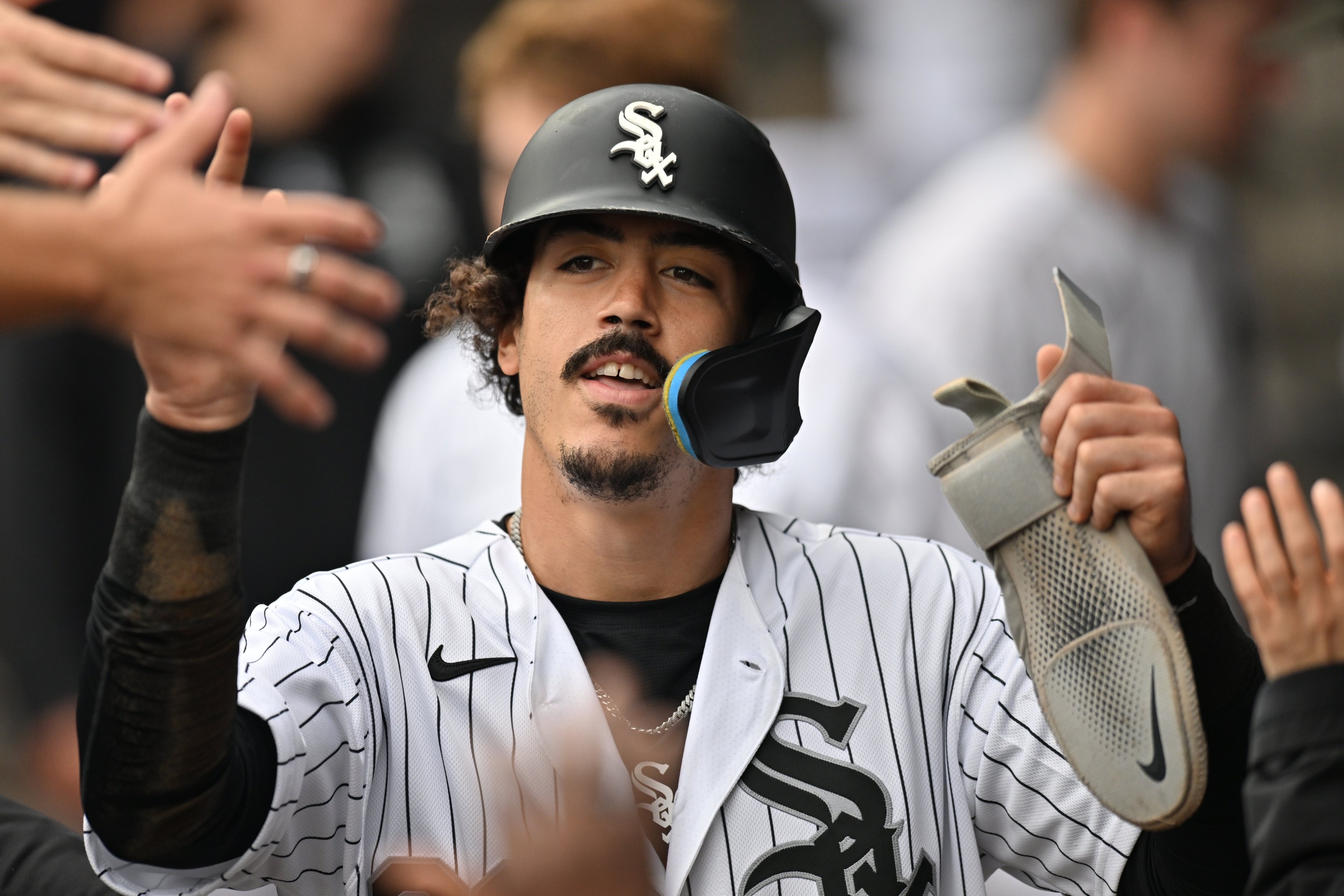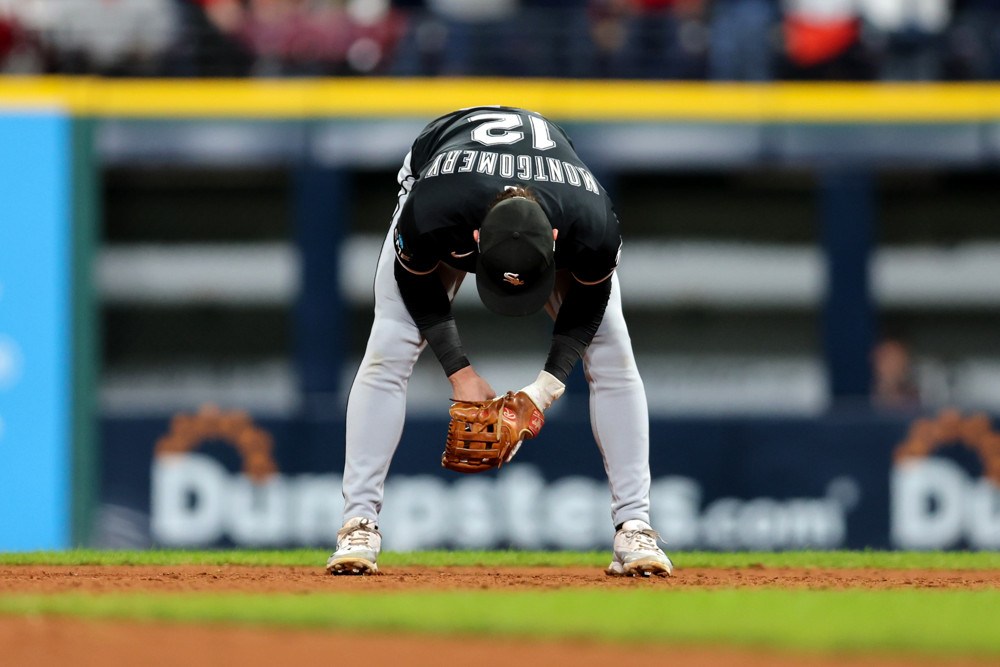
Toward the end of what turned out to be the White Sox's final sustained scoring threat of the 2026 season in Game 5 Saturday night, Miguel Vargas came to the plate with runners on first and second and two outs in the sixth inning and took Gavin Williams' first-pitch slider off the plate for a strike. He challenged, and the call was overturned.
Three pitches later, Vargas took a 3-0 slider below the zone for a called strike. While Vargas pivoted toward the umpire and tapped his helmet on the first pitch, he made no real flinches toward challenging the second time, just a brief tilt of the head. He eventually watched one more slider out of the zone for ball four and took his base, so his unwillingness to challenge a second pitch didn't change the outcome.
During that half a second where Vargas expressed skepticism, I'm curious what kept him from pulling the trigger. Perhaps it was more important to flip 0-1 to 1-0 with two outs and a runner in scoring position. Perhaps there's a natural inclination against using two challenges in one plate appearance if the count leverage isn't make-or-break.
But maybe he just wanted to hit? The walk he ended up drawing was his 10th over five games, and Stephen Vogt called upon Erik Sabrowski to face Munetaka Murakami lefty-lefty. Five fastballs later, the inning was over.
This was my biggest concern about Will Venable's final lineup of the season: The Guardians were obviously content to pick on Murakami, and the White Sox offered no countermove. Murakami struck a huge blow in Game 1 against Parker Messick, but he struck out in 15 of his 23 plate appearances afterward, so the Guardians successfully played the odds.
In Venable's defense, there were just precious few options that protected Vargas and maintained lineup balance, especially as long as Andrew Benintendi looked like an awful matchup against Williams. Basically, Vargas and Sam Antonacci were the only hitters whose plate approaches held up over the course of the entire five games. For just about every White Sox hitter outside Tommy Pham, it seemed like repeated exposures to the same pitchers worked against them, rather than for them. Look at how the strikeout rates ballooned from regular season to the postseason:
| Player | Postseason | Regular |
|---|---|---|
| Andrew Benintendi | 100.0 | 23.9 |
| Braden Montgomery | 56.3 | 19.7 |
| Kyle Teel | 52.4 | 35.4 |
| Munetaka Murakami | 52.4 | 35.4 |
| Randal Grichuk | 45.5 | 20.6 |
| Colson Montgomery | 44.4 | 35.6 |
| Tristan Peters | 40.0 | 18.3 |
| Chase Meidroth | 40.0 | 21.9 |
| Brenton Doyle | 36.4 | 33.0 |
| Tommy Pham | 20.0 | 31.4 |
| Miguel Vargas | 13.6 | 17.9 |
| Sam Antonacci | 11.1 | 14.7 |
| Team | 40.5 | 24.1 |
You can point to a few reasons why the White Sox lost this series, and I probably would have batted Vargas second between Antonacci and Teel to at least acknowledge that particular vulnerability. Then again, Teel reached on a single ahead of Vargas to create that jam in the first place, so he wouldn't have been around to protect Vargas afterward. Also, Teel struck out in his other three plate appearances. When you're dealing with 19, 12 and 21 strikeouts over the final three games, there just aren't many places to turn.
Andrew Benintendi just wasn't made for these times
Going back to Benintendi, the Offseason Plan Project won't begin until we have some time to decompress, but I'm curious to see how the real White Sox GM ends up regarding him by the time spring training opens, whenever it opens.
Benintendi's willingness to have his role reduced was one of the reasons why the White Sox flourished this season. That sounds like a veiled insult, but he contributed what he could, and let the White Sox figure out ways to compensate for his shortcomings without public gripes. Perhaps it could've grown awkward if all the White Sox's outfield options were ever healthy and vibrant at the same time, but as it shook out, the roster always had the need for an average left-handed bat, and that's something Benintendi provided, by and large.
But Benintendi faded to the finish, hitting .189/.267/.302 over September, and although he had a decent showing against the Astros, Cleveland pitching cooked him. He struck out all seven times he came to the plate, and he never looked close to being on time, leading the Statcast's default chart title to be a little too on the nose.
When Benintendi made his postseason debut for the Red Sox in 2016, the average four-seam fastball velocity that October was 94 mph. Smash-cut to 10 years later, and the average four-seam fastball velocity in the playoffs is now 96.3 mph, which is a huge jump.
During his time with the White Sox, Benintendi has lamented that the increase in power arms required him to fight fire with fire at the expense of what used to be well-rounded hitting skills. The fastballs are only getting hotter, Benintendi is only growing older, and now that his contract is one year and $14.5 million away from expiring, it becomes a lot easier to do the accounting for moving on.
To whatever extent Benintendi's veteran presence helped a young White Sox team -- and maybe it helped tons, I wasn't there -- it was something of a happy accident. The front office thought the team was a year away from winning, so it didn't invest in enough proven outside talent to force him out.
The White Sox are now coming off an ALDS collapse rather than a 100-loss season, and Chris Getz's moves are expected to sustain postseason expectations. If experience is what you get when you didn't get what you want, then the rest of the roster has more or less caught up to Benintendi in that department, so the baseball reasons for carrying him are back to the fore.
In the end, players decided it
As we discussed at the start of the postseason, my goal in covering White Sox postseason baseball for the first time in five years was to resist the urge to make everything about the managers. That's the way October baseball is often processed, for reasons valid and invalid. Pregame and in-game decisions are the only things that aren't entirely dependent on the reflexes of humans forcing actions upon one another, and there are a greater number of those decisions in a short series, so you can't afford to get sloppy. But it's also just a little hubristic that non-playing personnel would view the lens through other non-playing personnel and assume they could reverse the outcome if they only did things a different way.
Will Venable didn't have a perfect game in Game 5 in my opinion, but the decisions that were imperfect were perfectly human. I would have called for Benintendi to try bunting on Williams because the swings were just that bad, but he swung away. I would have considered pinch-hitting Randal Grichuk for Munetaka Murakami with the bases loaded and two outs while down two, but Venable didn't. I wouldn't have brought in Grant Taylor with a runner on second and nobody out in the eighth inning when they can't afford any more damage, but Venable did. The guys he trusted in the regular season were the guys he trusted in the postseason, for better or for worse.
But in the White Sox's three losses in the last three games, the shortcomings were basic and out of the manager's hands: White Sox pitchers didn't throw enough strikes, White Sox hitters didn't hit enough strikes, and José Ramírez hit a pitch that wasn't even close to a strike. That the White Sox worked around their shortcomings for as long as they did was a minor miracle, even if a collapse in the ALDS against a team with its own flaws is a particularly agonizing way for realizing it.