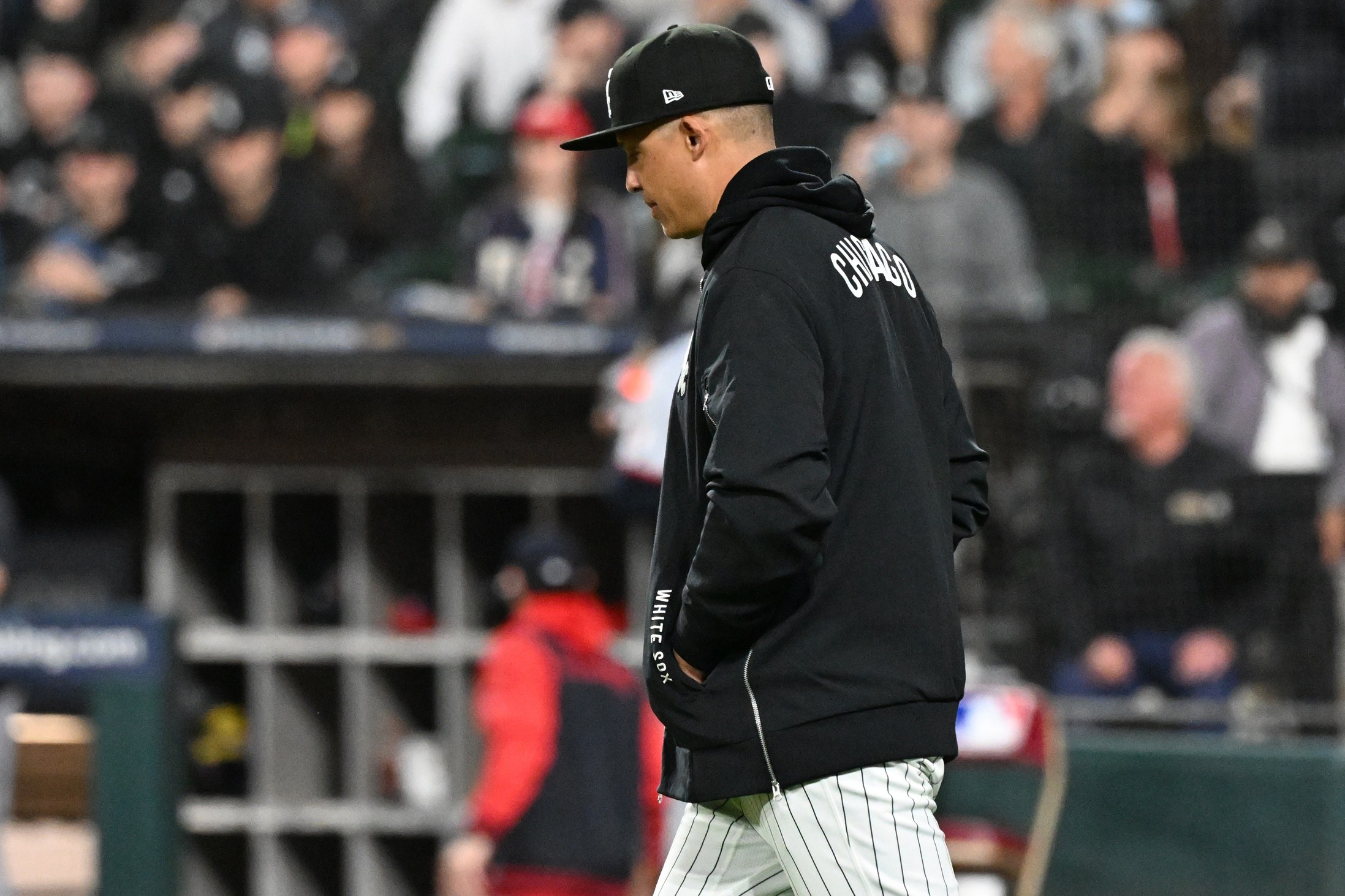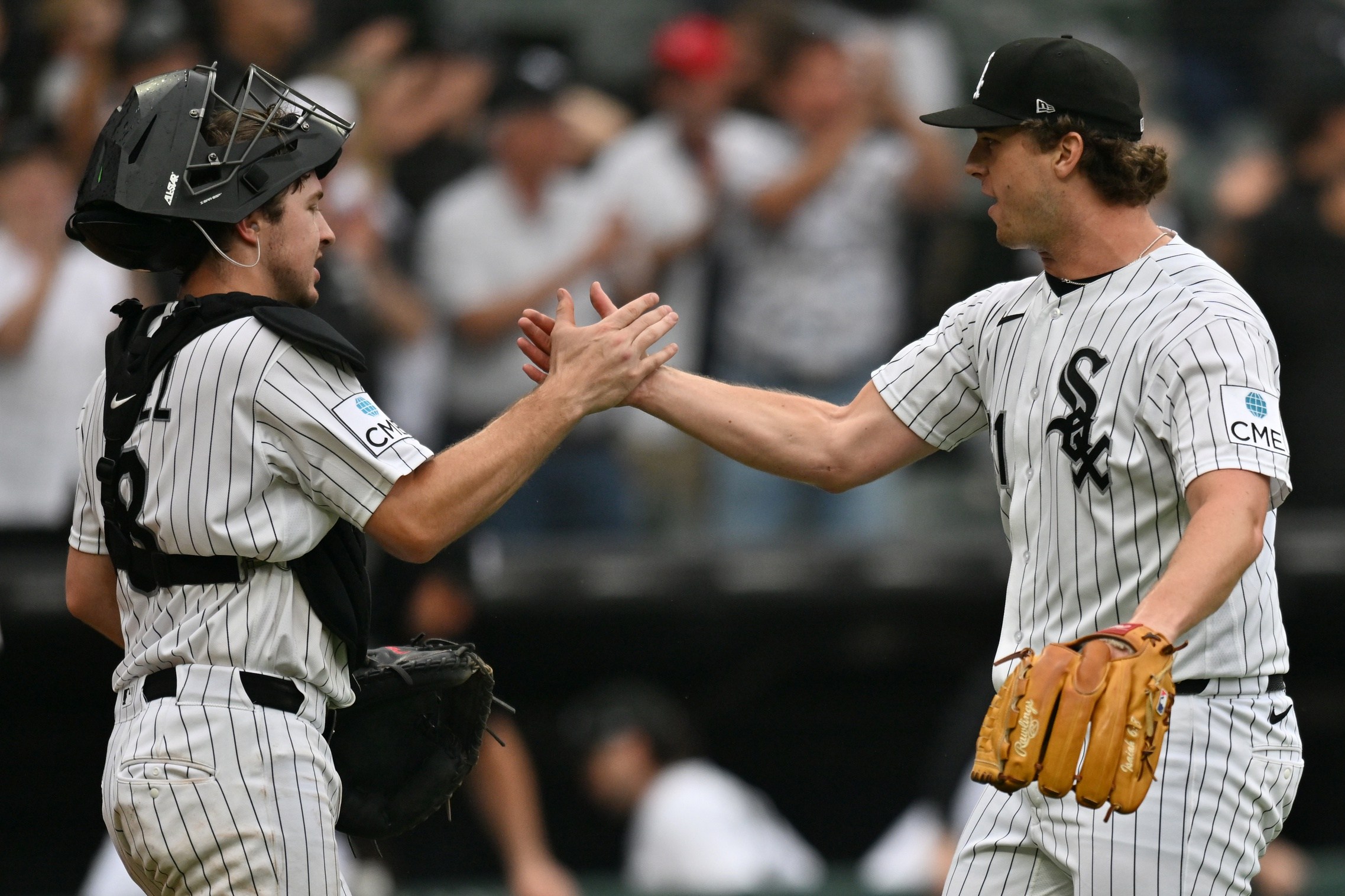
The White Sox's 3-1 victory over the Tigers on Saturday was straightforward enough -- a starter going six innings! only two relievers! -- that it didn't inspire any second-guessing, especially since both second-guessable decisions worked out the way Will Venable hoped. If a Davis Martin-led effort can best a Troy Melton-led effort on Detroit's side, the White Sox will come away winning three of four, and everybody will try to avoid talking about the other game.
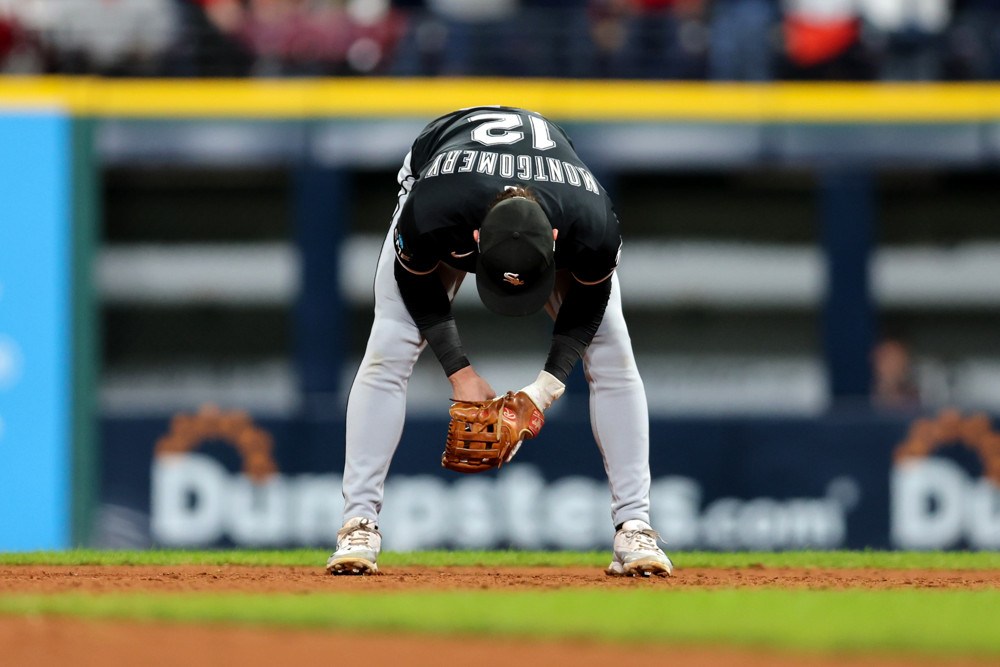
But I do want to talk about that other game -- the 11-8 loss to the Tigers on Friday -- if only to highlight what Sean Newcomb said after another tough outing. He hit Eduardo Valencia with an 0-2 slurve, then gave up a game-tying homer to Hao-Yu Lee, and then ended up taking the go-ahead loss when his walk to Kevin McGonigle came around to score on Bryan Hudson's loss.
Here's what Scott Merkin relayed in his recap:
“Yeah, I mean, results just aren’t working out the way they were early on,” Newcomb said. “Stuff feels good. The hitters being more prepared or a mixture of pitch calling and location, just not going great.
“Everyone has been saying it: It’s playoff baseball essentially as far as it being a tight race and coming down game to game. Doesn’t get more frustrating than that.”
WMAQ670The Elder introduced this quote in the discussion of Friday's recap, and it's a quote worth isolating, because it's the second time Kyle Teel's pitch-calling has come into question by uniformed personnel over the past week.
The first occasion was after Brayan Rocchio's walk-off single against Grant Taylor on Tuesday, when Teel called for a high sinker after getting ahead 0-2 on breaking balls. Rocchio ended up lofting it to the left field corner, out of the reach of Sam Antonacci's imprecise route, for his second game-winning hit on a Taylor fastball this year.
James' recap juxtaposed Venable criticizing the pitch call while Teel defended it:
‘‘You’ve seen Rocchio and even heard from him how he’s selling out to fastballs against Grant,’’ Venable said. ‘‘[He] had him 0-2 with a couple of breaking balls [and] tried to sneak one by him. Really good hitter, made contact and obviously saw the results.’’
‘‘I wouldn’t say [Rocchio] sold out to it,’’ catcher Kyle Teel said. ‘‘Two strikes on him, it’s the right pitch call. Grant’s throwing 101 mph. It is what it is. I liked the pitch call. I think Grant put it in a solid spot. If we spin him there and we throw three [breaking balls] in a row, he could clip that one, too.’’
On Saturday, Lee's game-tying homer also came on a high two-strike fastball, and it happened to be the third attempt to put away Lee on such a pitch.
Taken by itself, you could read Newcomb's quote as an expression of momentary frustration during a month where he's getting crushed. Maybe Teel mashed the fastball button too frequently, but in his defense of the pitch-calling, all but one of the non-fastballs Newcomb had thrown to that point missed their intended locations by considerable amounts.
But to hear two different people reference pitch selection -- and specifically the same idea -- suggests a disconnect or frustration over game plans, which is something you haven't heard in this organization, at least outwardly.
Back when Korey Lee was a possible part of 26-man roster plans, you could only detect a public lack of enthusiasm about his work behind the plate by a shortage of compliments. If Martín Maldonado or Edgar Quero caught a gem, they'd get plenty of credit from coaches and pitchers for guiding the effort, whereas Lee tended to receive "participant" ribbons.
However, Lee only participated in 100-loss seasons, so the stakes were likely never high enough to circle back to any individual decisions he made. Maybe if he was behind the plate at a time when the White Sox were desperately trying to shave down their magic number, the rhetoric would have been more direct.
Teel's in his second year in the majors, and one that has been interrupted by multiple injuries, so he's still learning the ins and outs of the position at the big league level. The White Sox are in their first year of contending, and one they didn't necessarily plan on before the season, so they're trying to figure out how to close the deal with the precious resources they have remaining. We're deducing how the White Sox handle themselves on and off the field when so many small moments have outsized implications, because the games simply haven't mattered much before the last four months. The saying is that experience is what you get what you didn't get what you wanted, and after 155 games, the hope is that all this education won't be packed into painful teachable moments.