A 37-year-old Chris Sale threw yet another gem on Wednesday as he winds down yet another Cy Young finalist-grade season in Atlanta, striking out 10 Cincinnati Reds over 5⅔ innings of one-run ball in a game the Braves won 3-2 in 11 innings. That 10th strikeout gave him 200 on the year, so he joined Randy Johnson as the only lefties to record nine such seasons.
Afterward, he was asked about the passing of Don Cooper, whose death was announced earlier in the day. Cooper was Sale's first big league pitching coach starting when he was a 21-year-old rookie rushed to the big leagues two months and just 10⅓ minor league innings after the White Sox took him with the 13th overall selection in the 2010 draft, all the way through six more full seasons in Chicago, which included five All-Star Games and five top-six Cy Young finishes.
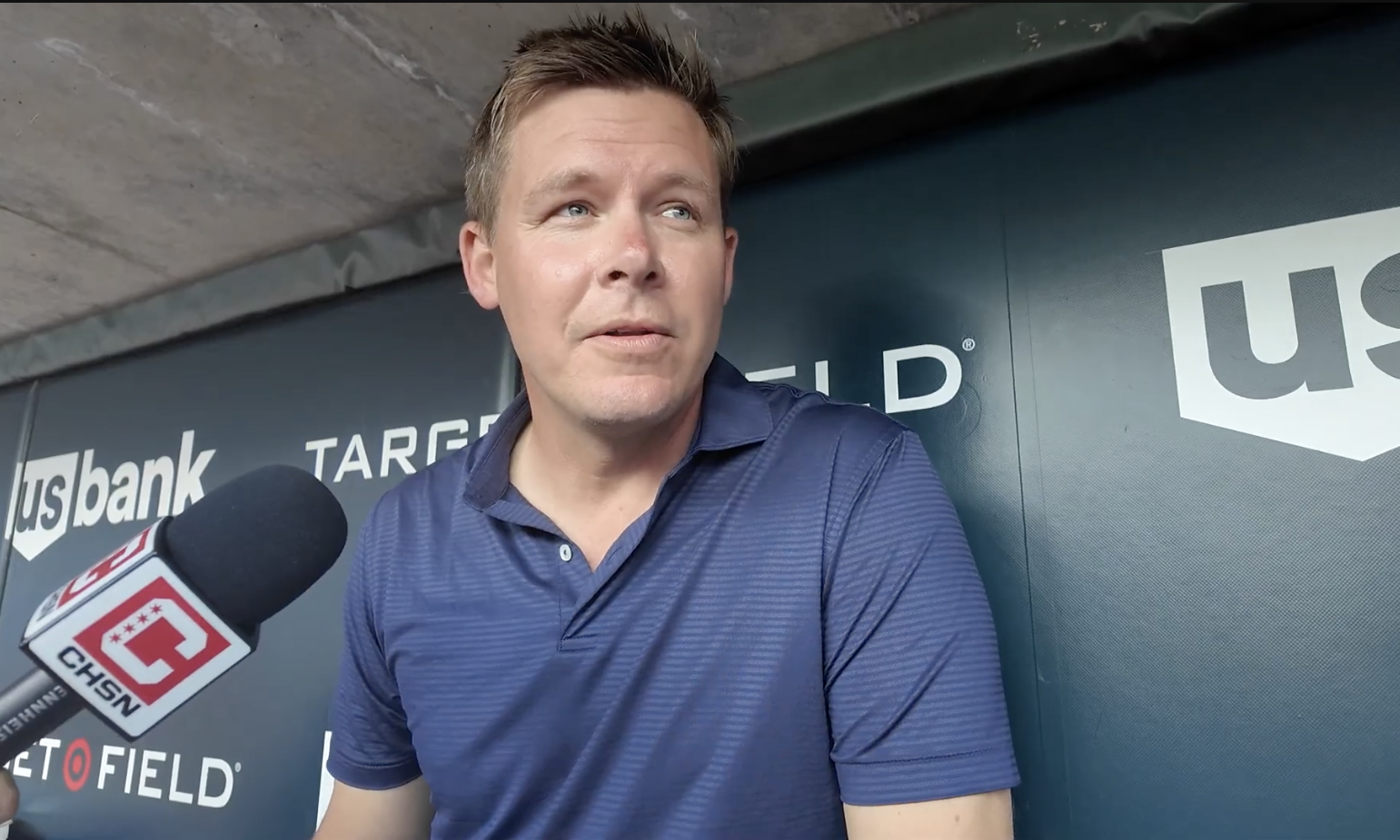
Chris Sale shares his thoughts on the passing of Don Cooper #whitesox
— Brooke Fletcher (@BrookeFletcher) September 24, 2026
Via @BravesVisionTV pic.twitter.com/cl40yHGIv9
Sale told reporters that he was just talking about what Cooper meant to his career on the podcast Baseball Is Dead, and as untimely as Cooper's death is -- he was just 70 years old -- the timing accentuates what he said in that interview. Sale isn't being asked to sum up a legacy under the pressure of poignancy after terrible news -- he's just freely discussing his experiences with somebody who gave him a lot of help in getting his career off the ground, and the praise flows without the sense that it has to be any sort of final word.
To start my career, I had potentially the best pitching coach for me to start my career in Don Cooper. When I came out of the draft, like [podcast co-host Dallas Braden] said, it was assholes, elbows, kneecaps, I mean, I was going all over the place. It was herky-jerky, low three-quarter slot. Nobody thought I was going to hold up. No one thought I was going to be a big league-- you know, injury concerns, the whole thing.
And I remember him, he's like, 'I'm not changing a thing.' He's like, 'You repeat your mechanics well,' and he kind of rattled off a few things and he's like, 'I want you to be you.' And he instilled confidence in me when I really didn't deserve to have any. I was a first round pick or whatever, but like they got me to the big leagues quick and I'm just, I felt overwhelmed. I felt like I was out of place. And he's like, 'No, kid. You're here for a reason and we're going to rip it.'
And I remember there were even sometimes even just random things that just instill confidence in you. I'd be throwing a bullpen midweek. I'd get like four pitches in, and he just like put the balls down on the rail -- because you know how pitching coach have extra balls if you spike one or whatever -- he'd just put them down. He goes, "I've seen enough. I'm out.' And I'm like, 'Well, if he's not going to stick around, I'm not sticking around.' So, I throw like a six-pitch bullpen. He's like, "All right, we're good. Go for it."
And again, he'd sit there and watch me fail. He'd just watch me absolutely implode on a mound and he'd make me learn from it. He coached me down a highway. He didn't coach me down a hallway. So he kind of let me get off a little bit and try to recorrect on my own before he would step in and say, 'OK, this is the deal.'"
What's striking about the response to Cooper's death is the nostalgia it generates, and maybe it shouldn't strike. Cooper was an outsized presence in general, one of the biggest reasons the White Sox have won a World Series in the last 109 years, and the idea of four consecutive complete games in the ALCS only grows more astonishing with each passing year.
Still, there's another layer that is less about 2005, and more just about simpler times that happened to last 18 seasons. You could hand somebody like Sale to somebody like Cooper after 10 innings in the minors and let everybody figure it out on the fly. You could let a Jon Garland or a José Contreras or a John Danks or a Gavin Floyd get knocked around for a year because they wouldn't learn how to throw 200 innings otherwise. You could take a Matt Thornton and revive his career merely by lengthening his stride, and everybody else would get a cutter. "Coop'll fix 'em" was the saying, and if they weren't fixed, it was probably because it couldn't be done.
The longer you go, the more you risk turning into a algorithmic boomer bait t-shirts ...
back in the day...
MEN were MEN
the PITCHING COACH was the PITCHING COACH
200 INNINGS was the MINIMUM
STARTERS didn't need openers
LOCATION trumped velocity
and my WIFE didn't WANT to DIVORCE me
... because while there's reason to rue change, evolution is inevitable, and some developments have benefits. There are more ways than ever for pitchers to improve, more people than ever who have an idea how to make it happen, so it no longer makes sense to put so much clout in the hands of just one person. As many pitchers as Cooper helped in his day, there are inevitably a host of pitchers who would have benefited from today's more open-ended environment.
Yet there was something nice, neat and pleasing about a fast-talking New Yorker being more or less able to sell his method on a wide variety of pitchers and get not just fantastic results, but an easy-to-package product. Everybody watched the same basic cable channels, everybody was aware of the Super Bowl halftime act, and everybody knew who was likely to throw the first six innings of a White Sox game on a given day. The monoculture and Don Cooper kept everything from falling apart.