The White Sox open their series against the Texas Rangers tonight, and Erick Fedde is listed as the starter, but it's probably safer to say that he'll be taking the ball at some point.
More than half of Fedde's 19 games have utilized the assistance of an opener, including six of his last seven outings. The White Sox have won the last three of them, including a 1-0 shutout of the Athletics where Fedde handled four of the nine innings.
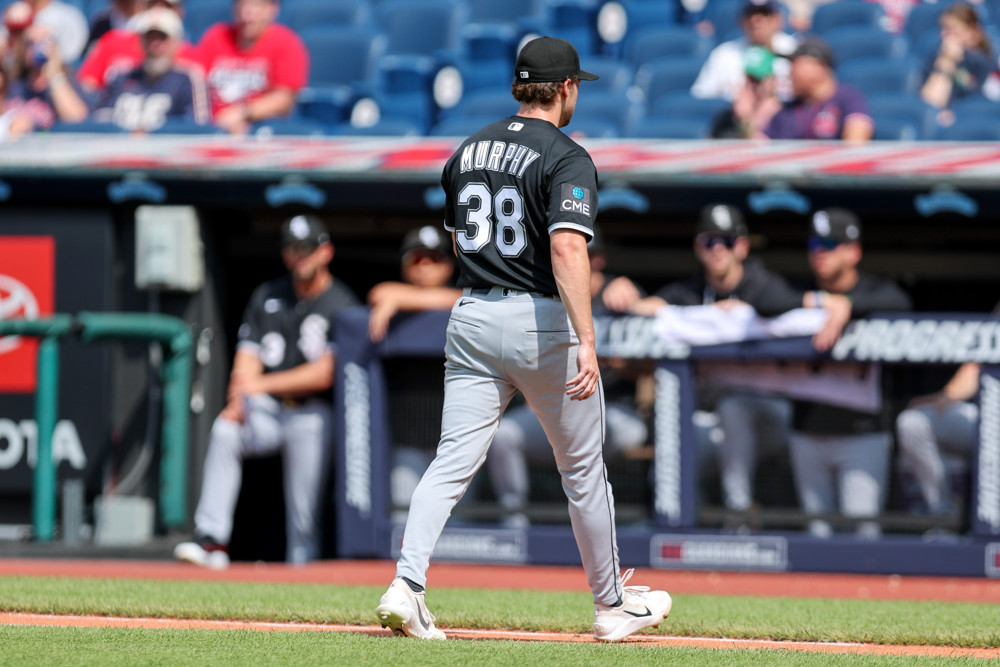
The opener-involved affair before that on July 5 was a wilder ride, as substandard defense undermined Chris Murphy and turned a 2-0 lead into a 3-2 deficit before Fedde could take the ball, and Ryan McGuffey at The REKAP had seen enough.
I get it, but……
— Ryan McGuffey (@RyanMcGuffey) July 5, 2026
…..can we stop with the openers?
Just throw who you got. #WhiteSox
Ceasing the opener practice because of a bad game is cutting off the baby's nose to spite the bathwater, and by prefacing his objection with "I get it," McGuffey seems to know that. I assume he doesn't need an explanation of the strategy, and is more arguing on grounds of aesthetics, or a larger sense of "this is no way for people to live." Sure, you can use a fungible reliever to open games and profit. You can also save money by rinsing out an old McDonald's cup to test the statute of limitations on free refills. Either way, the question is the same: At what cost?
McGuffey's lament, besides being an incorrect answer to a Daily Double under "Irish Literature for $1,200," wasn't meant to spark debate, but it did cause me to realize that if I were invited to change his mind, that I couldn't quickly or confidently answer how well the opener strategy had been working for the White Sox, and whether all the machinations were truly worth it.
One of the reasons I'm not crazy about the opener is that screws up splits and defies easy research. Baseball-Reference.com and FanGraphs haven't designated categories for it, and it's something that may be impossible to split out, because while most opener games are fairly easy to track, some are subject to interpretation.
For instance, we're not counting the April 12 game that Grant Taylor started, or the June 20 game where Sean Newcomb pitched first, because they were followed by relievers pitching their typical lengths, rather than a designated bulk boy. That's a classic bullpen game, and the first reliever has always been given the GS since time immemorial because there's no player entry for Johnny Wholestaff.
But we are counting the games on June 14 and July 11, where Fedde was the third pitcher after two lefties. In both cases, it was his turn in the rotation and he was supposed to handle the most batters in the game, so I'm considering it a double-layered opener effort.
The end result is 17 games where the White Sox have used an opener, and much to McGuffey's chagrin -- also incorrect, we were looking for "What is Finnegans Wake" -- it seems like Will Venable has found a stable form of opening, even if it sometimes seems like scrambling.
White Sox openers by the numbers
Record
| Wins | Losses |
|---|---|
| April 3: CHW 5, TOR 4 April 4: CHW 6, TOR 3 April 24: CHW 5, WAS 4 May 29: CHW 4, DET 3 June 6: CHW 6, PHI 3 June 9: CHW 6, ATL 5 June 14: CWS 6, LAD 4 June 18: CHW 5, NYY 1 July 5: CHW 7, CLE 6 July 11: CHW 1, ATH 0 | April 6: BAL 2, CHW 1 April 16: TBR 5, CHW 3 April 26: WAS 2, CHW 1 May 23: SFG 10, CHW 3 June 7: PHI 9, CHW 5 June 19: DET 4, CHW 3 June 24: CLE 4, CHW 3 |
| 10 | 7 |
Overall line
| IP | H | R | ER | HR | BB | K | ERA |
|---|---|---|---|---|---|---|---|
| 158 | 130 | 69 | 59 | 22 | 61 | 141 | 3.36 |
If this line represented a full season from Davis Martin or Sean Burke, you'd take it.
Performances of openers
Although it may occasionally be difficult to determine if the first pitcher of the game was truly an opener, it's not difficult to determine whether his outing was a success. It's pretty much a pass/fail grade, where a scoreless appearance is passing, and runs of any sort is a failure, since digging a first-inning hole is something a traditional starter could have done on his own.
By this standard, openers are 12-5. Of the "5," three of those outings involved crooked numbers, including that July 5 that rankled McGuffey.
Here's how it breaks down by pitcher in order of games pitched, with "P/F" representing the pass/fail count:
| Pitcher | P/F | IP | H | R | ER | HR | BB | K |
|---|---|---|---|---|---|---|---|---|
| Hudson | 5/1 | 7 | 3 | 1 | 1 | 1 | 1 | 5 |
| Eisert | 2/2 | 4.2 | 6 | 4 | 4 | 2 | 1 | 6 |
| Taylor | 3/0 | 3 | 1 | 0 | 0 | 0 | 0 | 3 |
| Murphy | 1/1 | 2 | 3 | 3 | 3 | 1 | 1 | 3 |
| Leasure | 1/0 | 1.1 | 0 | 0 | 0 | 0 | 1 | 0 |
| Gilbert | 0/1 | 0.2 | 2 | 1 | 1 | 0 | 0 | 1 |
| 4.34 ERA | 12/5 | 18.2 | 15 | 9 | 9 | 4 | 4 | 18 |
Four of these guys are no longer in the mix. Grant Taylor is out for the good reason, as he's ascended to the highest-leverage work, while Gilbert and Leasure are injured and Eisert was traded to Pittsburgh. It looks like Bryan Hudson and Chris Murphy are the real options, and had Murphy received standard defensive support, they'd be a combined 7-for-8.
Performance of bulk boys
Four different members of the White Sox rotation have received opener assistance, and they capture the different kinds of experiences involved.
| Pitcher | G | IP | H | R | ER | BB | K | ERA |
|---|---|---|---|---|---|---|---|---|
| Fedde | 10 | 44.2 | 50 | 24 | 19 | 18 | 32 | 3.83 |
| Burke | 4 | 25 | 15 | 5 | 5 | 6 | 26 | 1.80 |
| Kay | 2 | 7 | 7 | 3 | 3 | 3 | 1 | 3.86 |
| Sandlin | 1 | 3.1 | 3 | 3 | 3 | 3 | 6 | 8.10 |
| Total | 17 | 80 | 75 | 35 | 30 | 30 | 65 | 3.38 |
David Sandlin was facing a high-powered, lefty-heavy Phillies offense when he wasn't long for the rotation, so Venable opened with Tyler Gilbert in hopes of increasing his chances of getting by with a rookie.
You have Sean Burke, who has successfully graduated to owning his start days after throwing 7⅓ innings of "relief" for the second time this season back on June 18. He's solved the two issues -- struggles against lefties, general inefficiency -- that led Venable to use an opener for him, and now he's pitching the best ball of his career.
Anthony Kay didn't exactly graduate from bulk duties, but he didn't appreciate pitching second, especially when entering a game in the middle of an inning. The overall line suggests it might've worked had Kay acclimated to it, but he also needed 147 total pitches to throw those seven innings, so between the laborious nature of the outings and the irritation expressed afterward, the juice probably wouldn't have been worth the squeeze. Perhaps it would've been different had he continued to struggle on his start days, but he's backed up the talk well enough.
And then you have Fedde, who embodies the kind of pitcher the opener is designed to protect. He struggles to miss lefty bats, so he doesn't see as many of the dangerous ones. Opponents are hitting .296/.345/.630 against him the third time through, so he no longer has to go a third time through. That basically limits him to four innings an appearance, but after bouncing through three organizations in 2025 and settling for a $1.5 million contract with the White Sox afterward, 130-140 decent innings is a satisfactory return for everybody involved, even if they have to be carefully orchestrated.
Basically, openers are mobility aids. Sometimes they're training wheels -- useful on the way up, and worth discarding when you feel the subsequent crashes can be teachable moments, rather than pointless pain. Others are closer to walkers, requiring an acceptance of limitations, and maybe a swallowing of pride, in order to remain active. In either case, it's better than no assistance at all, which is why Venable talks about openers as a necessary part of managing a major league team in 2026.
Of course, it's a lot easier to tolerate in moderation, which is how the White Sox are currently deploying them. If one guy needs an opener, then you effectively have five starters. If you have to use an opener for three of four games like Venable did in May, you might want to check in on whether you can actually consider it a rotation.