Will Venable's reliable, metronomic stoicism seemed like a necessary strength during a 102-loss 2025 season. Now that he's helming the most exciting White Sox team in at least half a decade, there's certainly great value to bringing the same type of energy every single day, with Venable often saying he strives to be "as consistent as possible."
But he is excited, right?
"I'm really proud and happy about the belief that the group has in themselves," Venable said to Sox Machine. "What keeps me consistent is the focus on continuing to get better."
Perhaps Venable just doesn't emote in a manner we associate with the archetype of successful major league managers. White Sox executives recall that he tested out as particularly unexcitable in the personality tests he underwent in the managerial hiring process. And he's emerged from an era of the franchise that looks different in a lot of ways, what with all the stories of fixing swings with Hawk-Eye data, tracking player health with Catapult vests and, well, citing the results of personality tests in the managerial hiring process.
With as many elements of the operation that feel decidedly new wave, other than a bunting predilection that Venable admits is more often about his feelings for the game situation than what a Sox statistical analyst might tell him about the practice, it's striking how much of the team's success gets attributed to simply the boys are playing hard.
"He set the expectation in spring training," said Colson Montgomery. "That's one of the first things he told us. We're going to play fast, we're going to play hard, we're going to run balls out, we're going to do all the little things that we're going to have to do because we were overlooked at the beginning of the year, so we have to do those little things to get ourselves to where we're at now."
"It's also kind of the makeup of the team; it's like a gritty college team," said Andrew Benintendi. "But obviously Will brings it up all the time, in our meetings and little reminders here and there like, 'Hey, you guys are doing a good job of running, so let's keep doing that.' Little reminders, pretty much every day."
Getting player commitment to the plan is often more essential than the specifics of the plan itself, but the traditional lens through which fans, media and the public at large view the manager securing commitment is usually through punishment, a demonstration of consequences.
"I heard a lot, especially after taking this job, of if someone doesn't run hard, you take them out of the game," Venable said. "That certainly is an option and something we talk about. No one really is an offender like that. Really, it's setting a clear expectation of what it looks like, and what we mean by effort. Having really good players that want to play the game the right way and have that instilled in them, and then showing them on a daily basis how that effort can impact the game and help them win."
Rules aren't rules unless something happens when they're broken, unless they're enforced. Venable contends that "the enforcement is constant," it's just that his description of his work centers way more around affirming -- and reaffirming -- what he wants to see, rather than raining punishment down upon what he doesn't.
"Once you do that upfront and you have all those ingredients, and it's really reminders," Venable said. "If someone doesn't get down the line as hard as our standard has set, it can just be a reminder, like, 'Hey dude, that's a little below the standard that we've set.' And the next time they're great. Once you have it working in the right direction, it's just maintenance. It shows up in our meetings every day, where we're just telling them one of our paths to winning is just outplaying this team, or playing harder than them, or bringing more energy. It's just something that we talk about, but less of the disciplinarian approach."
Venable wouldn't mind the claim that some of the work has already been done for him at the front office level. There's not much masking how players like Miguel Vargas, Chase Meidroth, Sam Antonacci or Davis Martin are wired, and intentionally elevating the voices of key players to make the Sox internal effort level self-sustaining is an avowed practice.
That serves to make for fewer instances of needing the stick rather than the carrot, but it's ultimately to Venable's credit that no one is eager to test the boundaries.
"I'm sure Will would at some point, if he had to, get into someone's butt a little bit," said Benintendi. "But he doesn't seem like that guy, and I don't think anybody in here wants to put him in a position to have to do it."
"He does such a nice job of having credibility, and you get credibility through honesty," said Chris Getz. "It's a lot easier than to, to have conversations to individuals that may need it, but really the group as a whole, that these are what the expectations are. You really just point back to it once you establish it. When things don't align with that belief in that approach, it's a lot easier to correct itself when you've got someone as credible as Will on the staff."
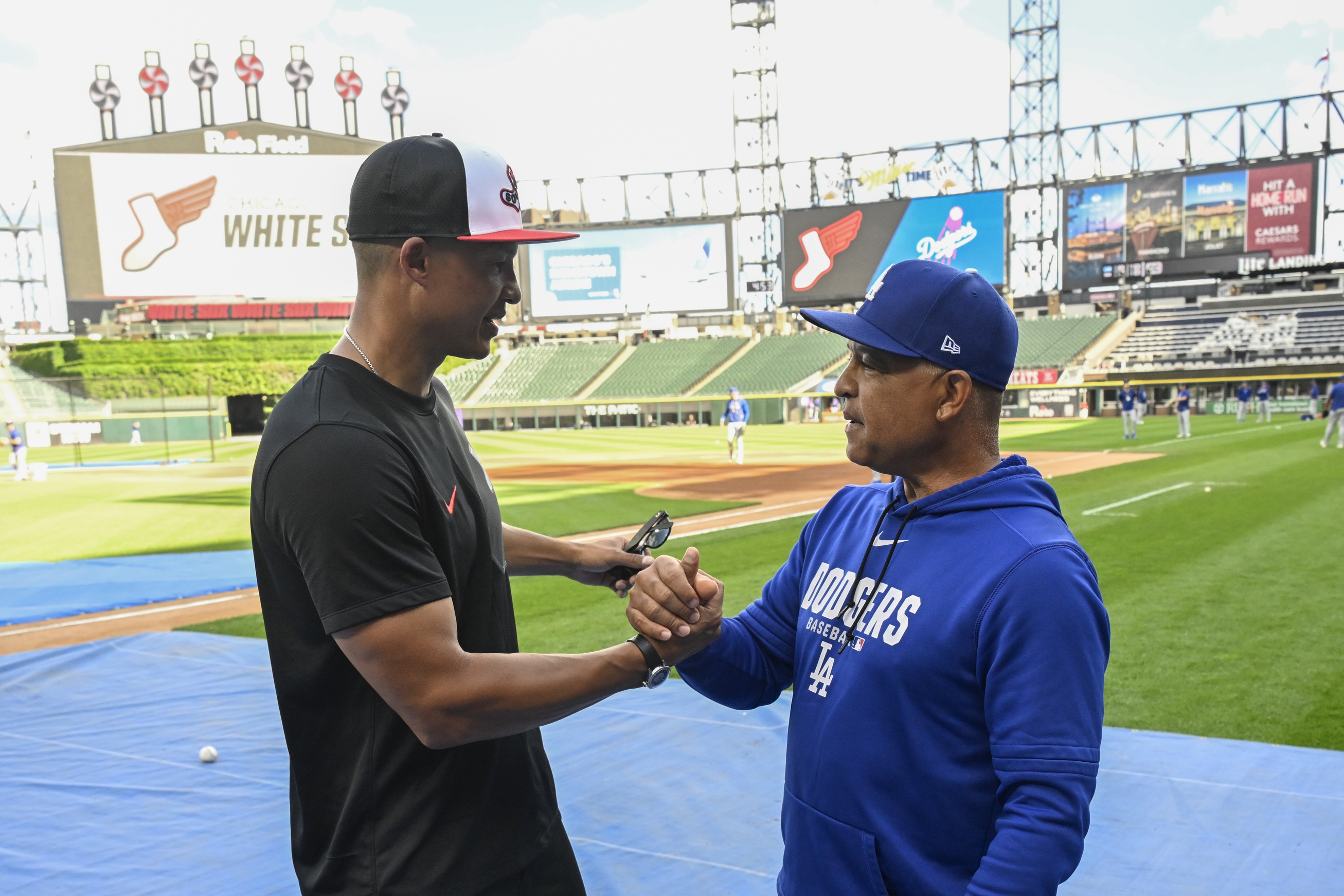
Of course, to ask Venable about where his approach comes from is to find him invoking a name that has a lot of credibility of its own, the results of this past weekend's series notwithstanding.
"Dave Roberts is a great one," said Venable, who recently said Roberts is in a tier just below his father for influences on his career. "I saw him do it as a base coach [in San Diego] with players and saw him build upfront relationships in which he felt comfortable, and was very effective being direct with them. It didn't have to be some big deal, and he was just a coach. He wasn't even the manager, and he was able to move the needle with good communication. The No. 1 thing that I noticed is it was just very clear expectations with him upfront. That's something I definitely lean into and think it's important with our players, and that makes it easier to hold people accountable."
Ultimately the only credibility Venable will receive from the public, good or bad, will stem from the results his team produces. So whether or not the fire behind his leadership is visible in the dugout is immaterial if Sox players see someone else.
"Him being such a complete competitor as he is, it bleeds into us and brings it out of us," Meidroth said. "He gets into it. Watching him play when he was a player, he was a competitor like no other. He takes losses just as hard as we do and he loves to win. You can see it, you can tell what kind of person he is. He's a winner."
"We spend a lot of time in these spaces," Venable said. "I try to keep my stuff together and be consistent but there's definitely emotions. Chase is in tune with how I'm doing, like how I'm in tune with how he's doing. That's maybe the understanding of my competitive edge comes through. We're in the dugout, we're going through a lot of stuff. It might not show up outside of the dugout, but I think people can feel it from myself and the staff."
So now that he has a team that is bought into playing hard, believes they can come back in any game, and is tied for a share of the division lead, how far can this go?
Per Venable's consistent nature, it's hard to shake him out of reiterating that he's focused on ways the team can improve. He concedes that this offense slugs more than was anticipated at the start of the year, and relatedly, the lineup has become more calcified than the mixing-and-matching that defined the early portions of his tenure.
But the team's goals and aspirations are kind of their own. Venable just wants to keep them pushing hard for it.
"I saw early on that there was a going to be a strong belief in themselves, and so I guess they started that, they started that amongst themselves. It wasn't, you know, myself or gets the standing up in the room saying, 'Hey, you guys are good, you're going to be good, you know. Really, they, they believe they were good, and we just have said, 'Okay, like, if you want to be good, then these are some of the things we believe you need to do.'"