When former Mt. Hood Community College head coach Bryan Donahue first encountered Rikuu Nishida, the slightly built Osaka native was on a traveling team of sorts, full of Japanese players more or less touring the country in search of opportunities to play collegiate baseball.
Standing in the middle of the infield calling strikes, the scrimmage wasn't far along before Donahue had already stated his interest in left-handed pitcher Tomo Murase. But then Nishida came to bat against one of the better pitchers on Mt. Hood's roster, and quickly ripped a drive off the right field wall.
"Not many triples, it's not a big ballpark," Donahue said. "Our right fielder picks the ball up, and I turn around, and [Nishida]'s already around second, and he's going into third. So I said, 'You know, I like that kid too.'"
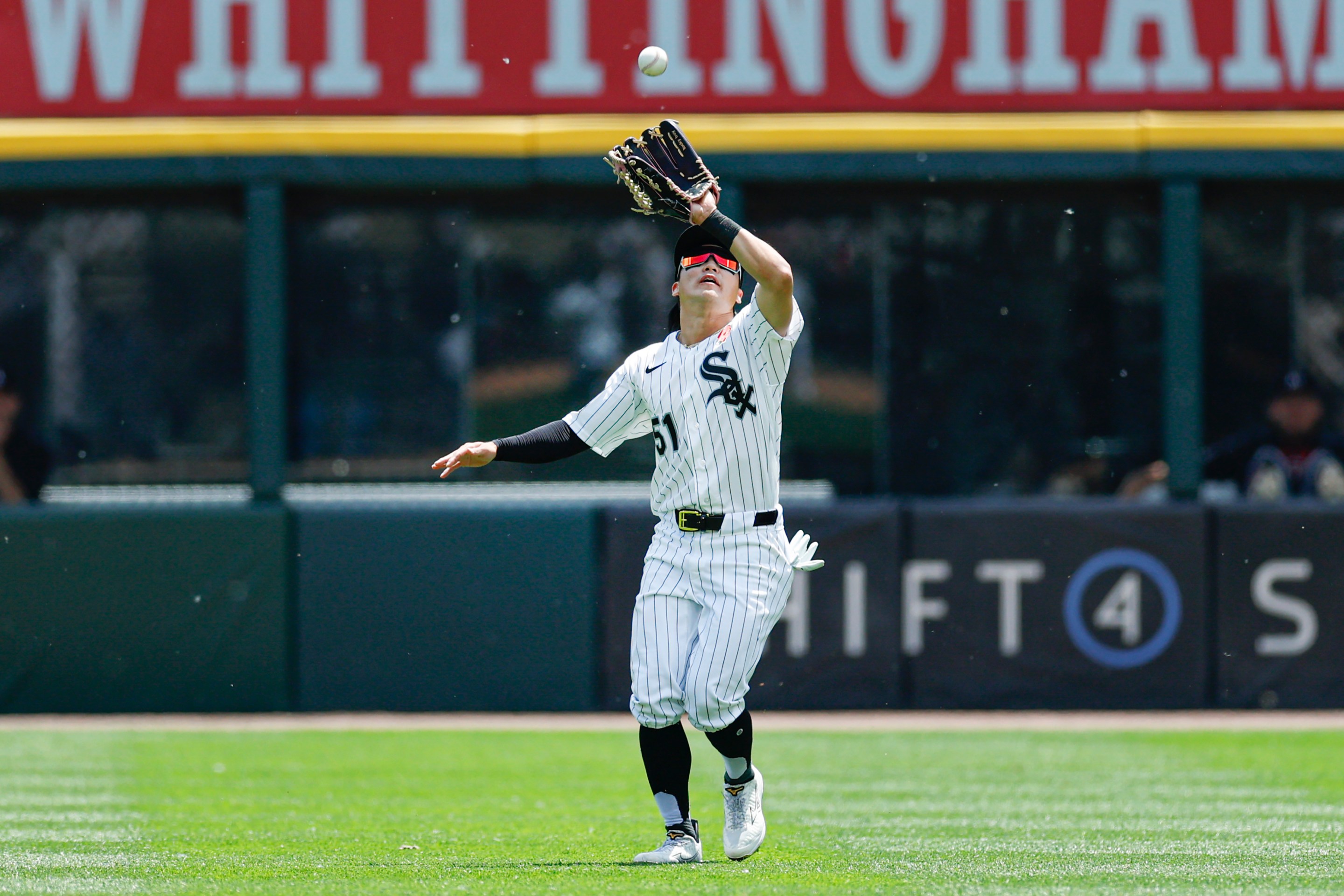
Donahue and his former assistant coach Ryan Miller have both moved on to different programs, but were both in attendance before Monday's White Sox-Twins game to see their former pupil's debut, despite learning the news around 8 p.m. Sunday night and having to fly in from Calgary and Portland, respectively.
"Thankfully for me, it was a direct flight, I just had to leave at 6 a.m. this morning,'" Donahue said.
As a display of dedication, it paled in comparison to what Nishida had showed the both of them. A month after that fateful scrimmage is when Donahue heard that Murase and Nishida wanted to commit to the program. Their flight back to the United States came while travel was still heavily affected by COVID in 2020, and Donahue holding a sign with their names on it at the airport served as the welcoming party, hailing down his two new players despite their threadbare English before dropping them off at their new stateside apartment.
For a while, especially during a disjointed 2021 season with COVID restrictions only partially eased, it was difficult for Donahue and Miller to wrap their minds around what they had. Some situations where Nishida was aggressive on defense, would steal bases or lay down bunts, weren't really what the coaching staff would generally teach, but were too clearly rooted in his ability to read the game to interrupt.
"He was different in the way that he prepared from every other junior college kid I've ever seen," Miller said. "We would hit BP, and most of our guys when we were done, they'd have 30 or 40 minutes and go back to the clubhouse and grab something to eat. Rikuu would sit in front of the dugout doing eye exercises, vision training."
"My favorite story is he had like, a 15- or 16-game hitting streak. We went on the road, played a doubleheader. He went like, 1-for-8 in a doubleheader and that snapped the hitting streak. We had to turn around and play a doubleheader again the next day back at our place ... It's probably 8:30 p.m, 9 p.m before we get home. He shows up for BP the next day, and he walks in the yard: 'Don't worry, I take 1,000 swings last night.'
"I said, 'Rikuu, what are you talking about?' He's like, 'I went to the park, and I took 1,000 dry swings, like mental preparation,' And I said, 'There's no way, you gotta be kidding me.' He says, 'Well, OK, I stopped counting at 1,000.' This guy's unreal, and then he went out and went, like, 5-for-8 in the doubleheader."
Donahue doesn't think they deserve any special credit for calling that a day like Monday was inevitable, but the coaching staff made a habit of saying Nishida would play in the big leagues. It was as much a recognition of his commitment to the sport as it was a scouting projection.
"The second year, 2022, we played for the championship," Donahue said. "After that last game, we came up one game short, and just emotionally it was just he felt so bad. I remember he just hugged me, and he apologized, and with tears in his eyes, and that's just the type of player he is."
⚙️⚙️⚙️
For White Sox amateur scout Josh Krstulovich, Nishida's junior season at Oregon after transferring from Mt. Hood doubled as his first year in the organization, and assessing him was all about figuring out the projection.
Initially, Nishida was just a name on a target list of Oregon Ducks players for a new scout trying to learn the territory, but of course he stood out immediately.
"It's hard not to fall in love with it, he just brings a smile to your face every time you walk in the park," said Krstulovich, also in attendance on Monday to celebrate the first player he's ever drafted to make it to the majors. "Obviously looks a little different in uniform, lot smaller than all the rest of the guys, but it's just the way he goes about his preparation. He takes it seriously."
Right away, both at second base and when he would rotate into the outfield, Krstulovich felt Nishida's speed and first-step quickness gave him "special" defensive range. He noticed that he seemed to rise to the occasion offensively against opposing Friday night starters, who comprised the bulk of the pitchers Nishida would face in pro baseball. An early outfield assist Nishida made to third base from right field didn't just foreshadow the highlight of his big league debut, but also answered another one of Krstulovich's early scouting questions.
"From there on, I was like, this guy can play anywhere," Krstulovich said. "It's not only the arm strength, it's the route he takes to approach the ball, the transfer is always consistent. He does the little things so well that make up for even a little bit of like, not a top-end arm."
The months just before the 2023 draft were immensely difficult for Nishida. His mother passed away and he returned to Japan after Oregon's season ended. Any selection of him would also have to include working out a new visa for him, yet his energy and deadset resolve on wanting to play in the majors stood out in his pre-draft interview.
"It was my first year going into the draft meeting," Krstulovich said. "Garrett Guest, assistant director, just plainly asked me, 'Where does this guy go?' Honestly, I said, 'He's every scout's favorite player. It's just who believes in it the most, and who trusts that this is gonna work out.' And he said, 'We like it enough, we trust it, so let's do it.'"
As successful as Nishida was right off the bat in the lower minors after being selected in the 11th round, he had been successful in a major conference in collegiate baseball, and more than a few players whose games didn't profile for the highest level have looked good in Winston-Salem. It was really when Nishida got promoted to Charlotte, only for his plate discipline and contact skills to hold as well as ever, that Krstulovich really started to let himself believe he'd see the first player he ever signed playing in Chicago.
"What gets overlooked is these guys with speed and contact can still affect slugging, because they'll put balls in the gap, they'll put balls on the line, and they'll still get to extra bases that way," Krstulovich said. "The ability to control the zone is the biggest separator at every step of this game. So valuing those guys, ID-ing those guys at a young age, and in college, and in high school, is probably what's going to be the best payoff going forward. Because those guys will continue to hit."
That certainly fits a recent White Sox trend in draft and development, investing in contact skill and swing decisions and trusting that those bedrock abilities will carry through as players get stronger and find defensive homes. But while Nishida might not wind up being some victory of the team's bat speed training efforts, there's another directive where he should fit in fine.
"Especially I think at this point in our organization, [there's a] little bit of a culture shift going on," Krstulovich said. "He's gonna bring a smile and bring energy every single day. But ultimately, Rikuu is a guy who honestly can have a great day when he's not having a great day. He might be 0-fer in the box score, but he's going to make a pitcher throw 15 pitches in that at-bat. He's going to cause havoc on the bases, he's going to do all the little things that don't show up in the box score, and that's going to help him stay up here."