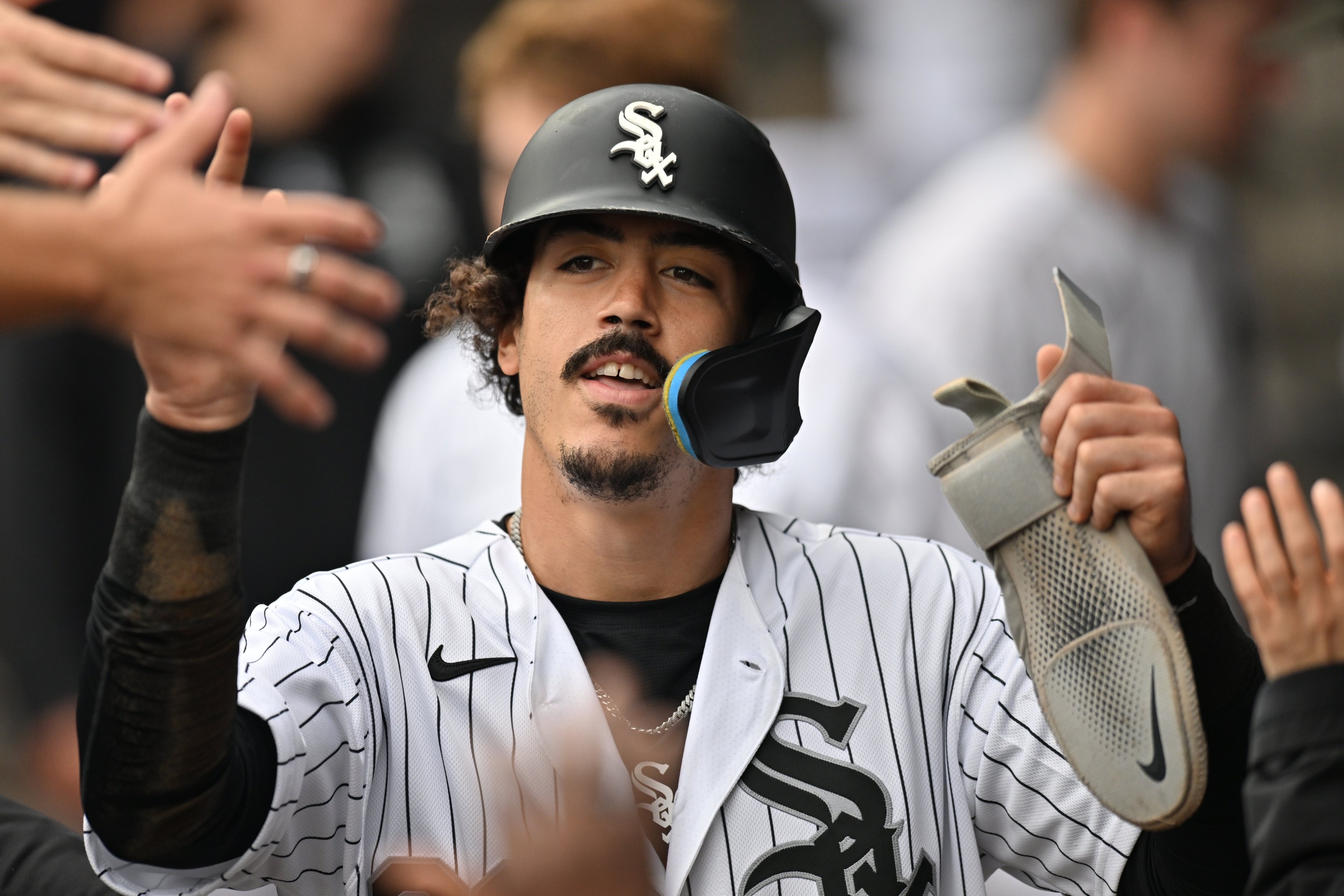
Drafted as a college senior in the seventh round of last July's draft, and signed to the 17th-largest bonus in the White Sox class, first base prospect Anthony DePino's wouldn't have immediately commanded attention unless scouting director Mike Shirley and the White Sox made a point of it.
"[Steffan] Segui, the east coast crosschecker, really loved him," Shirley said on draft night. "That R&D department, all those analysts that work here, up and down, excited when we land those guys. Pure celebration in there for him because they love that guy."
DePino felt a similar reception from White Sox player development, where he immediately felt alignment on the sort of drills that had triggered his massive improvement in swing decisions as an upperclassman at Rhode Island. Drilling with lightweight, foam balls at higher velocities with more movement, machine reps, and facing mixed pitch shapes in batting practice, DePino hit .327/.469/.688 with more walks than strikeouts in his last two years after embracing an ethos he felt the new Sox hitting department echoed: Practice in more difficult environments than the game.
"Everyone's on the same playing field now," DePino recalled being told upon joining the organization. "'You hit the ball really hard. You hit ball in the air really well, you make good decisions, and that's kind of what the White Sox look for: how well you make contact, how well you make decisions, and then how often you're doing damage with that contact. So I did all three of those things really well."
Especially with the layoff now built into the draft schedule, DePino isn't the first college bat to look out of sorts in his pro debut, but after slashing .223/.359/.320 in Low-A Kannapolis last summer -- and most troubling, a 50 percent ground ball rate -- there were concerns. Especially with the White Sox moving DePino from third to first, his bat would need his hard contact to result in louder production.
"I was definitely going insane," DePino said. "If I'm going to play in the big leagues, I can't be hitting the ball on the ground as much."
DePino spent the offseason working with former big league outfielder and Aaron Bummer doppelganger Eric Campbell, setting his intent to try to hit absolutely everything in the air, and erring on the side of hitting balls "on a 40-degree launch angle" rather than the ground. Naturally a low ball hitter, DePino also arrived in Sox camp in Arizona with a program tailored around his central issue.
"We want some of those exit velos to be usable, not 110 mph on a hop to the shortstop for a double play," said hitting coordinator Sherman Johnson. "For DePino, I might do flips with him, but it'll be flips with a heavy ball. Those plyo balls give him instant feedback about how he is making contact with the ball. If he's going to be swinging down and hitting this ball, it'll flip and end up right up at his feet and he knows exactly what happened with his swing there."
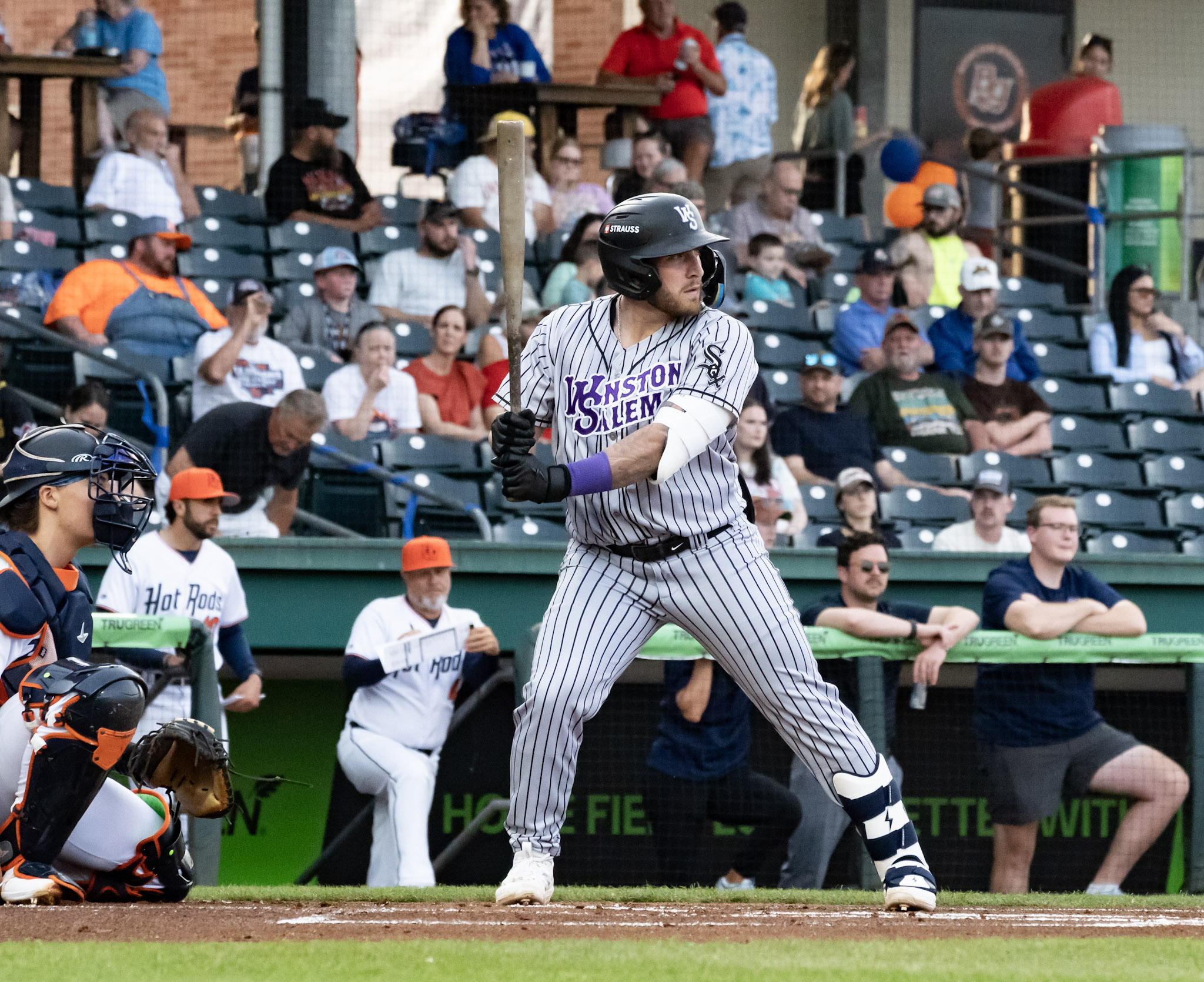
The central mechanical tweak DePino wound up with was significantly lowering his hands in his setup at the plate, as displayed in the photo up top, counteracting a more downward swing path he found himself slipping into when they were higher.
"I need to fire from my shoulder, so I need to make my swing from about where my shoulder starts, and in order to do that I need to start my hands lower, because they'll gradually climb up and get there," DePino said, acknowledging most hitters tend to naturally move their hands high-to-low. "I'm pretty much trying to get my hands down as far as they can go while still feeling like I can get them up in time to be able to do damage. With my bat speed increasing at a crazy clip from last year, I've been able to do that and been able to get my hands as low as they can go; down to my hip."
Top prospect Caleb Bonemer and Colby Shelton's award-winning week might be dominating the attention in Winston-Salem, but DePino is seeing the results. He's hitting .270/.378/.540 through 17 games in High-A, with four home runs -- twice as many as he managed in almost double the games last year in Kannapolis -- and most importantly, a reasonable 36 percent ground ball rate. And as he alluded to, he's become a devotee of the bat speed training program the Sox pushed this spring through the minors.
"As soon as we got out to draft camp in Arizona, Ryan Fuller gave us the rundown of 'this is what works; science shows this is what works,' and for me that was all I needed to know," DePino said. "It definitely plays a big factor into how you increase your bat speed using the Driveline program with the barrel-loaded, handled-loaded and then a light bat. A lot of guys think you've got to just swing heavy stuff to swing the bat faster, but if you're training your body to only swing heavy stuff slow, your body is not going to know how to swing fast. So that's why you have to implement the light bats."
The margins are still narrow for DePino as a prospect. He still takes reps at third base to retain the footwork and mobility but mostly has embraced the goal to be a "great first baseman" defensively, which as an older college draftee makes it imperative that he mashes pretty much non-stop. Those stakes only serve to reinforce his recent move to completely excise underhand flips, or anything that seems less than game speed from his practice routine. There's no time for 'feel good' reps anymore.
"I would honestly say the 'feel good' work for us right now is the game," DePino said. "You just challenge yourself so now the game feels easier."