On May 9 of last year, Grant Taylor made his last real start for Double-A Birmingham.
His fastball was uncharacteristically ambushed for two runs on three hits from the first three batters of the game, and the announcer made mention of him hitting 97 mph on the gun rather than his famous triple-digit exploits. But he also was a top-100 prospect with a 1.56 ERA at the time he exited that game. When the White Sox moved him to the Barons bullpen, no one ever said it was about performance.
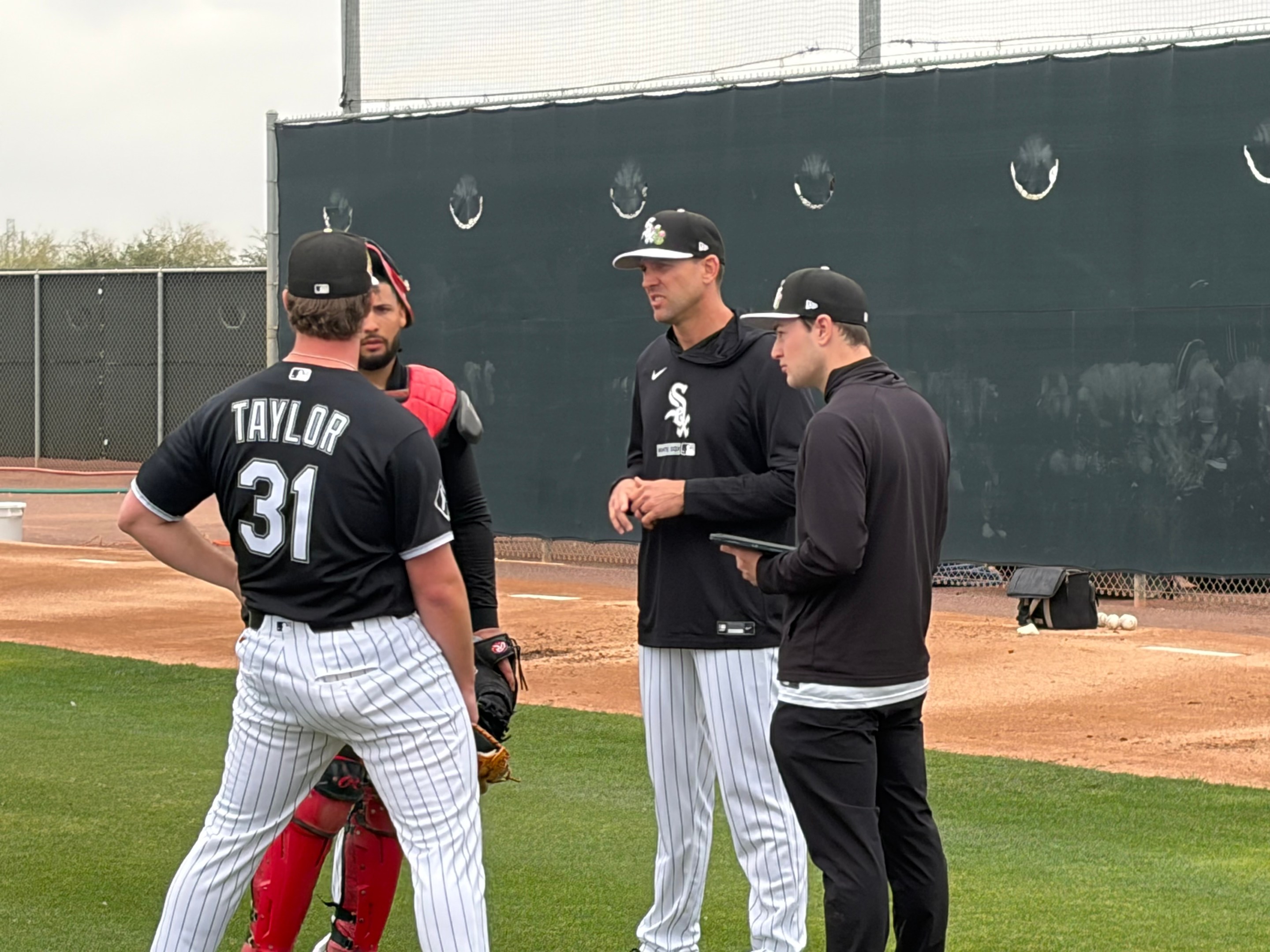
"It will forever be a starter-vs.-reliever debate," said director of pitching Brian Bannister. "We started him out as a starter last year, flipped him to the pen because he was getting sore as a starter. The velo went from mid-90s back up to 100-plus. He really just loves pitching out of the pen, and he’s dominant, and he has as good of stuff as anyone in the world."
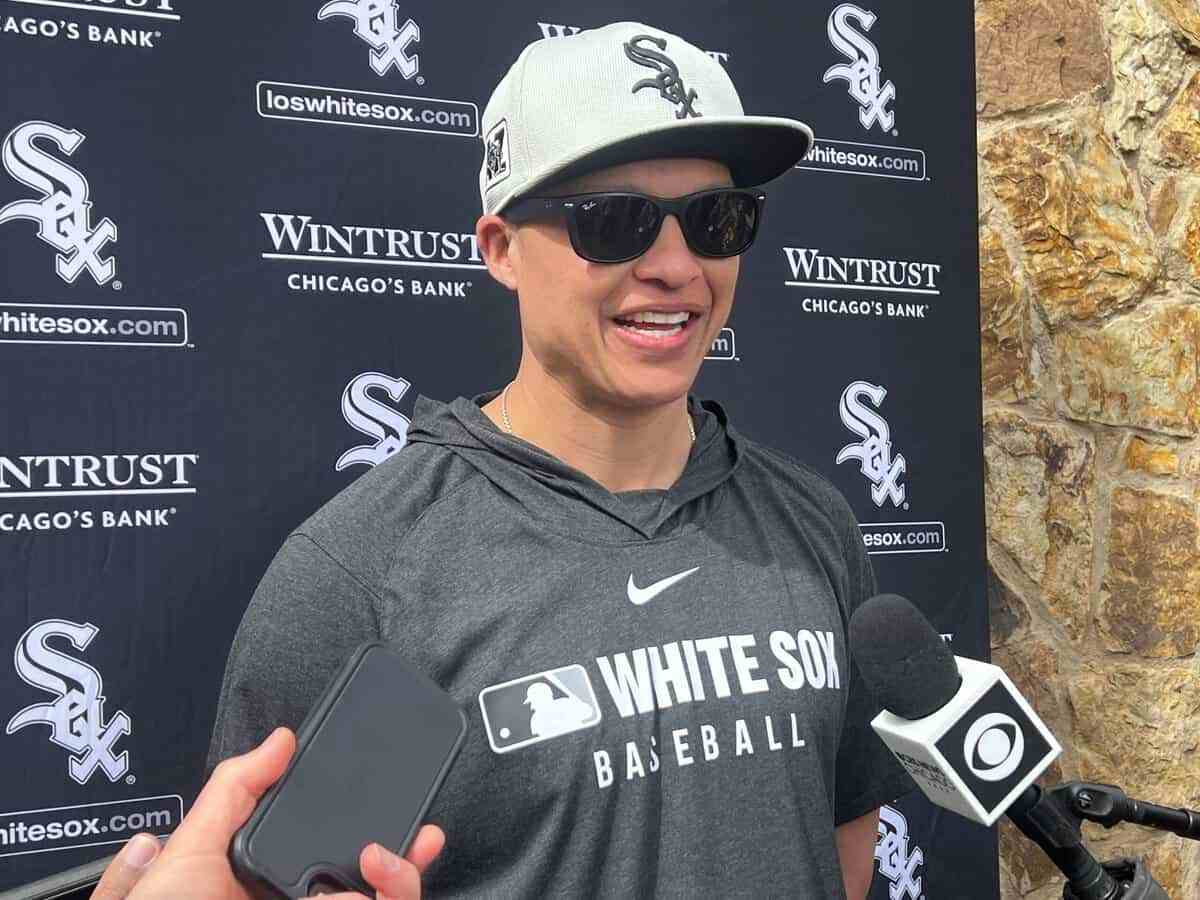
Maybe one reason the stuff is so good is that Taylor never stops trying to expand upon it. When he hit 101 mph in his first Cactus League outing last year, Taylor seemed happy about it, but readily noted the importance of flexing a wide pitch mix so that his velocity would play as big as the number looked. After simplifying a north-south, four-seamer/curveball attack in high-leverage relief work in the majors last season, Taylor was happy to spend the spring re-introducing his mid-90s cutter as a tool to work inside against left-handers, and adding a sinker that will do the same for hitters on the other side.
"If you can throw five, six pitches for strikes, even if you're a one-inning guy, I don't think it hurts," Taylor said. "This year, if I come in for the eighth or ninth or whatever, I'm still going to fall back on what I'm confident with. But ideally, all five of [my pitches] are what I'm confident with. You try to use them all and see where it takes you."
But five outings into a season where Chris Getz said "we definitely want him in a multi-inning role," Taylor has yet to come back out for a second inning at any point. Baseball seasons are marathons with a lot of role evolution along the way, but it also doesn't sound like it's going to happen next week, either.
"We talked about [multi-inning work] a little bit before the season," Taylor said. "What that looks like, I don't know. They call my name, I'll go in and we'll see where it takes us."
Instead, three of Taylor's five 2026 outings now have come in the first inning, as the White Sox have made heavy use of an opener strategy to aid a rotation that finished the first week of the year with the worst numbers in the league. Monday night against the Orioles for Taylor looked a bit more like a power reliever pitching for the third time in four days, but they've all been scoreless. And it's correlated with better work from the rotation, even if its members have to find a way to make their peace with the strategy.
"We want to start, it kind of feels like our game out there when we start," said Anthony Kay. "It gets us a little bit out of our routine as a starter, but it’s something they’re going to do and you kind of have to adjust to it."
"I had no issues with it," said Erick Fedde, who threw six innings of two-run ball behind Taylor on Monday. "I'm trying to treat it as just an afterthought, like, nothing to be concerned about. I'm just gonna go do my job when I'm called upon. I'm honestly just trying as much as I can, just to not even think about it."
It doesn't sound like the plan that was outlined for Taylor, or anyone specifically, but Will Venable also wouldn't pretend it is. He's just managing a team and solving problems as they arise, as he's paid to do.
"No, it wasn't," Venable said when asked if Taylor as a repeated opener was discussed in spring. "Utilizing the opener was something that we talked about as something that we wanted to do, if appropriate, if it lined up well. It's just happened to have lined up here three out of the last four games, and with Grant. But we didn't come into camp or into this year saying we were going to open four games in the first week, and Grant was going to be the opener. It wasn't discussed."
Rather than deploy his expanded weaponry across multiple innings, facing the top of the Blue Jays order on back-to-back days this past weekend is what acts as Taylor's opportunity to diversify his attack plans. By opening three out of last four days, Taylor gets to combine the grindiest portions of the reliever workload, with the anxiety of a starter stewing over their pending outing for the entire day, but he's open to a challenge.
"It's similar to I guess what a starter would do," Taylor said. "They face guys two to three times in a day, so they knew I was facing them, I knew they were facing me. It's kind of fun, it's enjoyable to try to play a little bit of cat and mouse with what I'm expecting, what they're expecting. I've enjoyed it."
"The arsenal is there, he’s added the two-seamer, he’s able to show one arsenal Day 1 and then a version Day 2 that was different to surprise the guys a little bit, throwing 101 mph sinkers out there," Bannister said. "Everyone wants to see him in a starting role, and I think we are doing what’s best for him. I think over time, that conversation will continue to evolve. He’s out there, he’s dominant, I think he’s one of the better arms in all of baseball and he can pitch in multiple roles. He's still very young in his career, still very young in how many innings he’s thrown in pro ball."
Forget pro ball, Taylor hasn't even yet reached 100 innings logged of any kind since the start of 2023. Few teams would count on a reliever who covered 63⅓ innings last season to fill a rotation slot, at least not all year long, and certainly not one carrying concerns about the strain of his delivery. A year that bridges Taylor toward a starter workload, which 2026 can still become, is a sober route to choose.
But as much as the White Sox recoiled from the trade interest they received for Taylor last July from contenders, the teams that reached out weren't simply wishcasting. The current version of Taylor, certainly the most recent version that has put up scoreless innings on command a few times per week, has greater value to a team that needs him to shut down the same team for an inning multiple times in a playoff series. And this current version of the White Sox is more inclined to turn a controllable high-leverage reliever into multiple prospect assets via trade, rather than retain them for six whole seasons.
So whether Taylor is actually moving toward becoming more than a short reliever, even if he's an elite one, is a question that won't be going away. It's just not necessarily one that the White Sox are tackling in the first month of the season. Venable and his coaching staff have ultimately been the ones using Taylor as an opener for the past four days, and the scale of the issue they're addressing has been smaller. Early into the year, their starting pitching was struggling, and Taylor looked like a way to help.
Also, he's willing.
"In this clubhouse, it's pretty easy," Taylor said. "There's a lot of guys that have a lot of buy-in, especially right now. Everyone's doing stuff and willing to help the team win. So you've got guys laying down bunts and pitching in different spots and accepting an opener as a starter. It's pretty easy in this clubhouse to adapt and change because everyone else is, too."