After reading through thumbnail sketches of the task at hand for 29 White Sox players earlier in the first installment of the most essential White Sox for the 2026 season, are you ready for the rest?
Tough. Here they are.
No. 20: Jordan Leasure (25)
The line from his last two months: 25.1 IP, 10 H, 8 R, 8 ER, 4 HR, 7 BB, 35 K. That'll play, especially if he's the third option to close out a game. Figuring out how to keep lefties in check is his key to advancement.
No. 19: Sean Newcomb (NA)
He didn't crack the rotation, and Chris Murphy is around as a multi-inning southpaw reliever, so Newcomb is freed up to concentrate on important lefty-lefty situations.
No. 18: Austin Hays (NA)
Is he important to this offense? Yes, but there are lots of reasons to temper expectations, whether you're looking at the contract (one year, $6 million), career production (106 OPS+) or recent health issues (calf strain, hamstring strain, foot bruise, kidney infection).
No. 17: Andrew Benintendi (9)
The White Sox are carrying six outfielders on the Opening Day roster, which puts Benintendi in position to succeed by not demanding too much from him defensively. It just requires him to hit, is all.
No. 16: Tanner McDougal (NR)
He'll be making his Charlotte debut to open the season, so we'll see if the combination of a smaller park and more experienced left-handed hitters pose problems for him, but the way he came out firing in Cactus League play suggests that he's not going to be cowed by the challenge.
No. 15: Luisangel Acuña (NA)
Nobody's expecting him to replace Luis Robert Jr., but playing a good center field and providing a kind of prime better-not-let-him-get-on-base Leury García-like presence in the lineup and on the basepaths would give him staying power.
No. 14: Chase Meidroth (27)
The hope is that he'll continue providing strong defense while a little bit more pop will bring out the effects of his plate discipline, but there are ways to give him some support if he repeats 2025.
No. 13: Sean Burke (9)
Hopes of an above-average rotation out of the gate rest on Burke providing the best swing-and-miss stuff with increased efficiency. Ideally, a better slider and a semblance of a changeup give him secondary pitches to grab strikes with, because it's hard doing that with a 12-6 curveball.
No. 12: Miguel Vargas (7)
Last year showed he's a major leaguer of some sort, but further gains at the plate are needed to hold down a corner spot, either in the form of hitting 20-plus homers or raising his batting average 20-plus points.
No. 11: Anthony Kay (NA)
He's already the fulcrum of the rotation simply by virtue of being the No. 3 starter, but being the rotation's only lefty makes him the first place to look in slowing opponents' running games.
No. 10: Hagen Smith (5)
No. 9: Noah Schultz (2)
The White Sox are starting Smith slowly with the intention of letting him pitch full outings at the end of a six-month season. Schultz has already gotten his feet wet at Triple-A, so if his knee truly was the cause of all his problems in 2025, there will be little standing in between him and a rotation spot in Chicago. The White Sox don't need both of these guys to click in 2026, but one of them would provide a needed blast of upside.
No. 8: Seranthony Domínguez (NA)
The White Sox went 15-36 in one-run games, which made their actual finish (60-102) come in well below their BaseRuns (67-95) and Pythagorean (71-91) records, making it a little hard to discern the true quality of the roster. There's a lot that goes into one-run records besides save rates, but Domínguez is tasked with minimizing the preventable failures.
No. 7: Davis Martin (8)
Martin is the second-most reliable pitcher in the White Sox rotation, which is a little scary given that he struck out just 104 batters over 142⅔ innings last year. His job is to bolster confidence in the idea that he just gets outs.
No. 6: Grant Taylor (NR)
Between his 36 games in the majors last season and his eight Cactus League appearances this spring, Taylor has given up 50 hits over his last 45⅓ innings wearing a White Sox uniform. It doesn't seem like he should be that hittable, so the spectrum of outcomes is pretty wide. He could be one of the best relievers in the league if his ERA matches his FIP, and then you get into the conversation of whether he should start next season. Alternatively, big league hitters could continue to reveal command issues and show why he could've used more than 26 ⅔ minor-league innings above A-ball.
No. 5: Edgar Quero (4)
It's his time to prove he can be the catcher of the future, even if it's for a trade that brings back an outfielder of the future.
No. 4: Shane Smith (20)
All-Star last year, Opening Day starter this year. The labels feel a little premature, but that's not his problem. He just has to make sure they're not wrong.
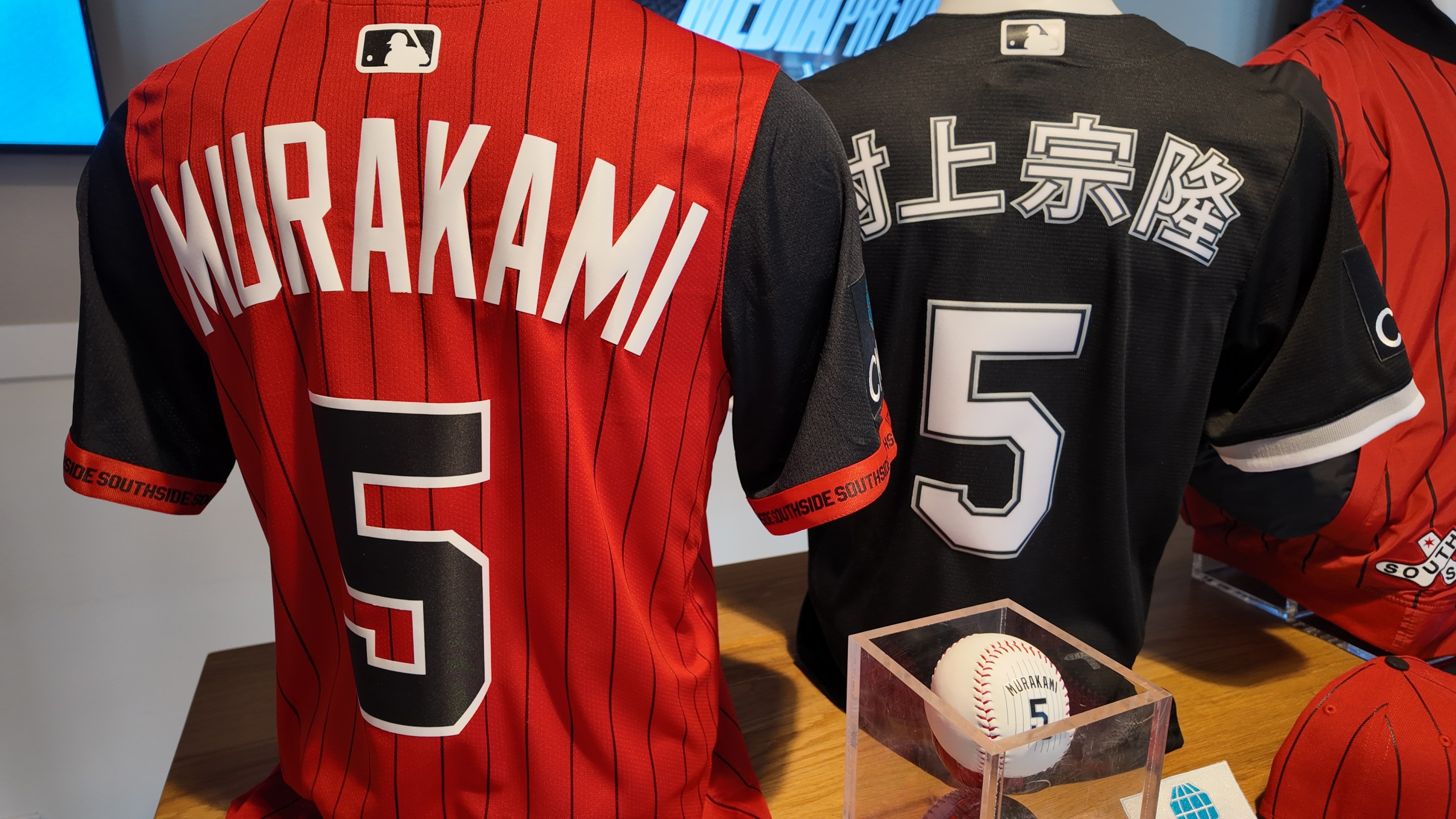
No. 3: Munetaka Murakami (NA)
If he can't hit major league pitching, he can't hit major league pitching. But it was worth the White Sox's two years and $34 million to find out, because imagine the fun if he's even average.
No. 2: Kyle Teel (3)
A season-opening hamstring strain isn't the most encouraging omen, but otherwise everything is lining up for a breakout season at the plate, and solidifying his work behind it.
No. 1: Colson Montgomery (6)
He played at a 6 WAR pace after the All-Star break, but he's less than a year removed from contact issues so severe he had to be pulled out of circulation in Triple-A. The shortest route to contending theoretically goes through the shortstop, but there isn't an easy place to turn around.