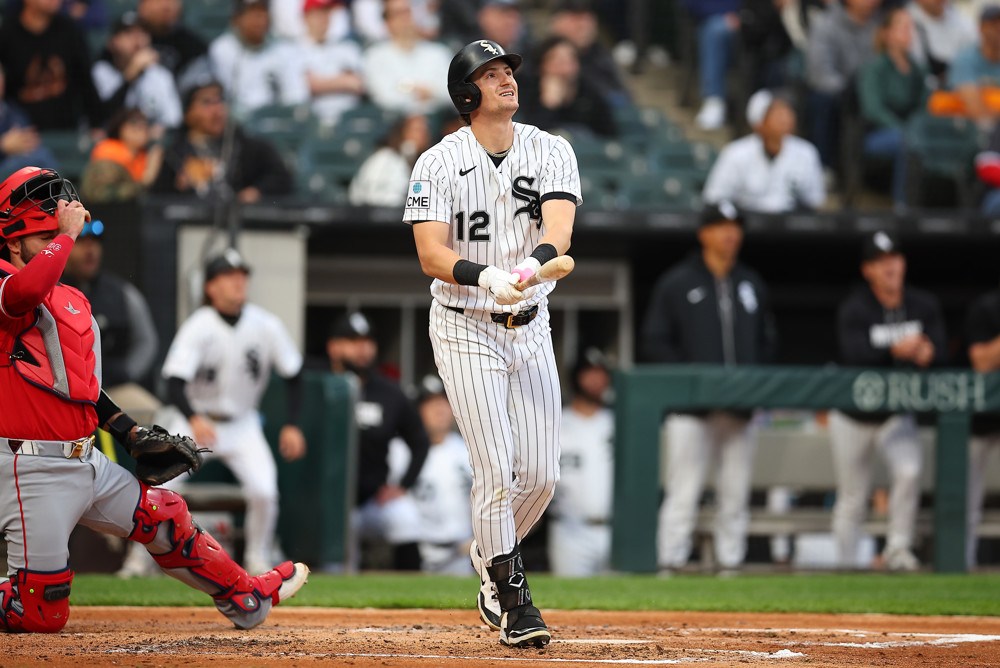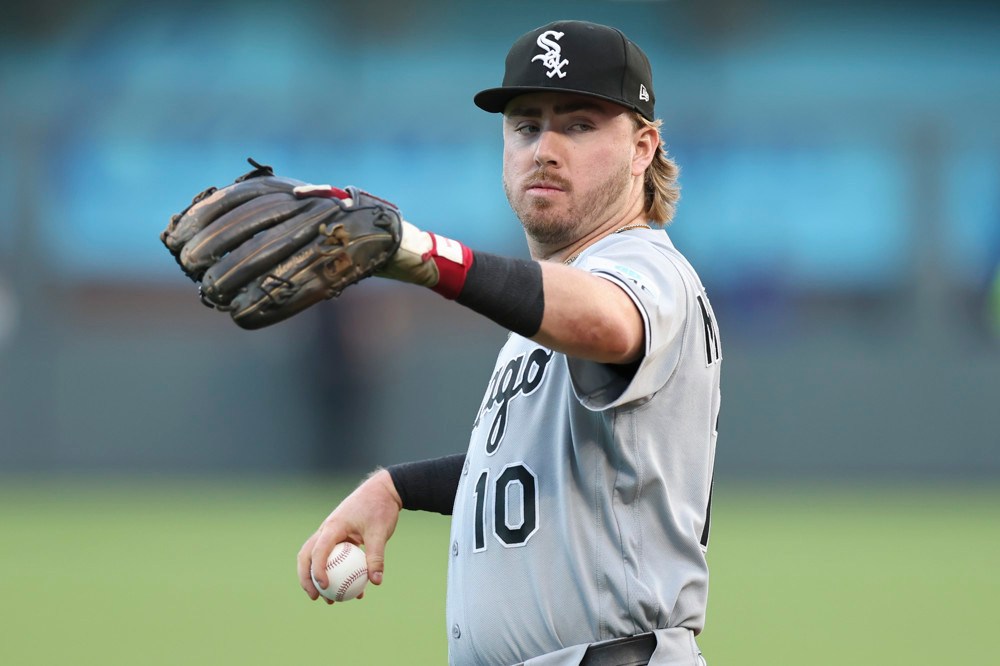
The White Sox's first hope for an individual honor went by the boards this awards season, as their lone Gold Glove nominee came away from the Rawlings announcement empty-handed. Seattle's Cole Young, not Chase Meidroth, ended up receiving the award as the American League's top defensive second baseman.
It's hard to say whether Meidroth was snubbed, but if you only looked at Statcast, you may be wondering what gives.
According to Baseball Savant, Young was among the worst second basemen in baseball, grading out as -5 Outs Above Average. Meidroth was toward the other end of the spectrum, finishing with 8 OAA, while the third finalist, Kansas City's Michael Massey, was even better (11 OAA).
However, if you only looked at Defensive Runs Saved, then Young was the obvious choice. He lapped the field twice over with 16 DRS at second base, with Massey tied for second at 5 DRS, and Meidroth breaking even with zero.
That's a rather sizable disparity, and when it came to the SABR Defensive Index, an aggregate defensive metric that accounts for roughly a quarter of the Gold Glove vote, it chose Young. Yet the results weren't as straightforward as averaging them out, or totaling them up, or even leaning toward one metric in an obvious fashion.
Young did have quantity on his side, leading the field in games, innings, chances, putouts, assists and double plays. That at least set him apart from Massey, who logged 356 fewer innings at the position. Meidroth (1,275.2 innings) finished second in innings at second, and was the only one who was in Young's neighborhood (1,350.1 innings).
As for what made Young such a DRS god, the system was enamored with his range, which is notable since Statcast panned Young's ability to go to his left.
Tom Tango, MLB Advanced Media's Senior Data Architect, reviewed the differences and predictive value between Statcast and DRS a couple years ago, and while he said OAA was the superior metric for outfielders because player tracking covered it, he gave DRS the slight edge for infielders due to double plays and the other players that involve more factors and subtleties that video scouts might catch.
Basically, if you had to choose one metric to determine the league's best second baseman, DRS would be fine. But you don't have to, and it's odd that the discrepancy between the two systems would be so sizable, so I'm hoping that the pros who know will be able to produce something about how the systems disagreed so severely.
With Meidroth finishing a runner-up, Will Venable is the White Sox's next best hardware hope when the Managers of the Year are announced on Nov. 10. In the meantime, Meidroth can take solace in being considered the AL's most valuable second baseman according to both fWAR (4.5) and bWAR (4.2).