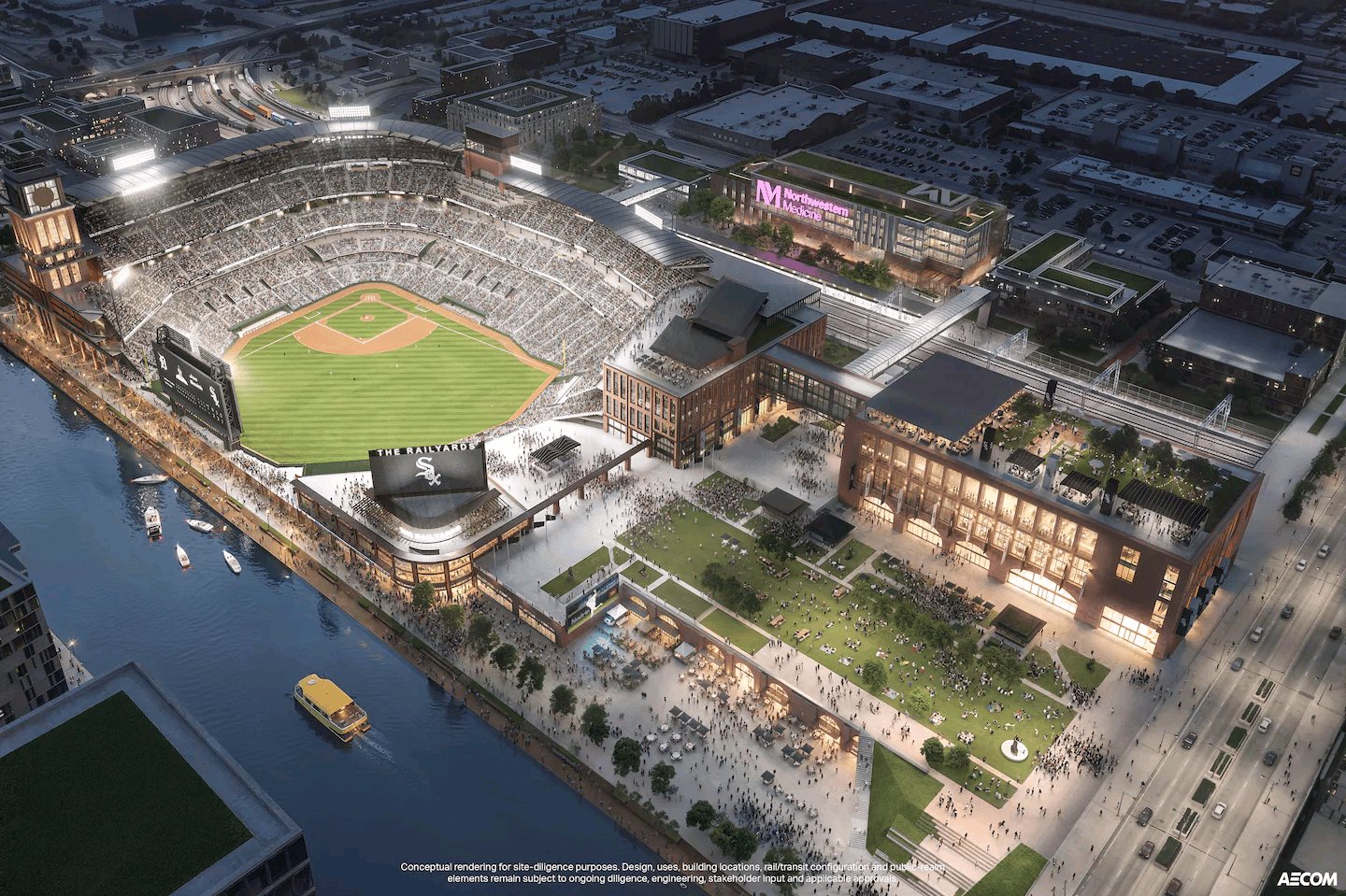
Justin Ishbia’s grand vision for a new South Loop-located Chicago White Sox home is on hold, if not on life support, because Amtrak’s 14th Street rail yard is no longer in play.
In a stunning turn of events, the Federal Railroad Administration has pulled all funding for Amtrak’s planned maintenance facility in Bridgeport and is prohibiting it from selling its current 14th Street site.
As first reported by Trains.com, FRA Administrator David Fink provided the following statement for this decision.
“Subsequent due diligence by Amtrak and Canal Edge LLC has exposed major, previously unquantified infrastructure costs that render the Canal Street relocation fiscally untenable. Most notably, an independent lifecycle analysis estimates approximately $400 million in cumulative costs over 50 years, above and beyond the work to be funded by the grant, to stabilize 17 viaducts and bridges at the site.
Alongside these projected costs is a deficit in Amtrak’s required non-federal cash match, resulting from its updated determination to retain the A5 main line segment and forgo the associated land-sale proceeds. Although earlier pre-award assessments indicated the segment was not needed, subsequent operational evaluations and the completion of due diligence identified significant additional scope that Amtrak considers essential for a viable relocation from 14th Street Yard to Canal Street Yard. Delivering that essential additional scope would require a further capital investment of $700 million or more.”
Amtrak's and Canal Edge's severe underbids could have massive implications for the Chicago Hub Improvement Program (CHIP). With a new maintenance facility, Amtrak hoped it would help expedite the initiative and accelerate the transformation of rail use across the Midwest.
For Ishbia, it’s back to square one. While many will point to Project 78, Third Ward Ald. Pat Dowell has made it clear the land is for one professional stadium, not two, citing concerns from residents about what impact the new Chicago Fire home, McDonald’s Park, will have on traffic congestion. Adding another stadium is a bridge too far.
Speculatively, there will be even more attention paid to how the Illinois state government negotiates a deal and passes a bill to help the Chicago Bears build a new stadium. Even though there are promises that most of a new Arlington Heights stadium will be privately financed, there is the matter of building out infrastructure to make this dream a reality. Could these avenues allowing cities to create their own stadium authorities provide a framework in which professional sports teams in Illinois could leverage public subsides in building new stadiums?
While Illinois politicians hash out that new bill with hopes of voting on it prior to Dec. 3, Ishbia will have to work on new plans with Jerry Reinsdorf regarding where to build a stadium. With Amtrak no longer moving into the neighborhood, there's plenty of parking lot space to repurpose in Bridgeport.