A team traded for a name-brand right-handed starter in the midst of a career-worst season and an identity crisis before the deadline, raised his arm angle, re-emphasized the changeup in his pitch mix, and are getting quite the buy-low boost as a result.
Unfortunately, we're not talking about the White Sox and Luis Castillo, but the Tampa Bay Rays and Freddy Peralta.
After a rocky transition to the American League, Peralta has reversed the low of his season. He's won his four last starts, allowing just two runs and 15 baserunners over his last 23 innings, and Eno Sarris dug into his success for The Athletic. The keys sound awfully familiar.
First, yes, Peralta ditched the windup. He also found his release point again, a couple of inches further out in front from where he was releasing the ball with the New York Mets over the last few months. The new release point is a couple of inches closer to where he’d been in the past when he was “Fastball Freddy.” That, and an arm angle that he’d been working to raise since it dipped to an all-time low in June, has made his fastball play up again.
But while it’s not surprising to see a pitcher benefit from mechanical changes, it has been more interesting to see Peralta surge after the Rays had him use his changeup differently. Batters were hitting .280 and slugging .449 against the changeup when he was in New York. He moved to the Rays and they decided to turn the dial … up? With the Rays, he’s thrown the changeup nearly a third of the time, a jump of more than 10 percentage points.
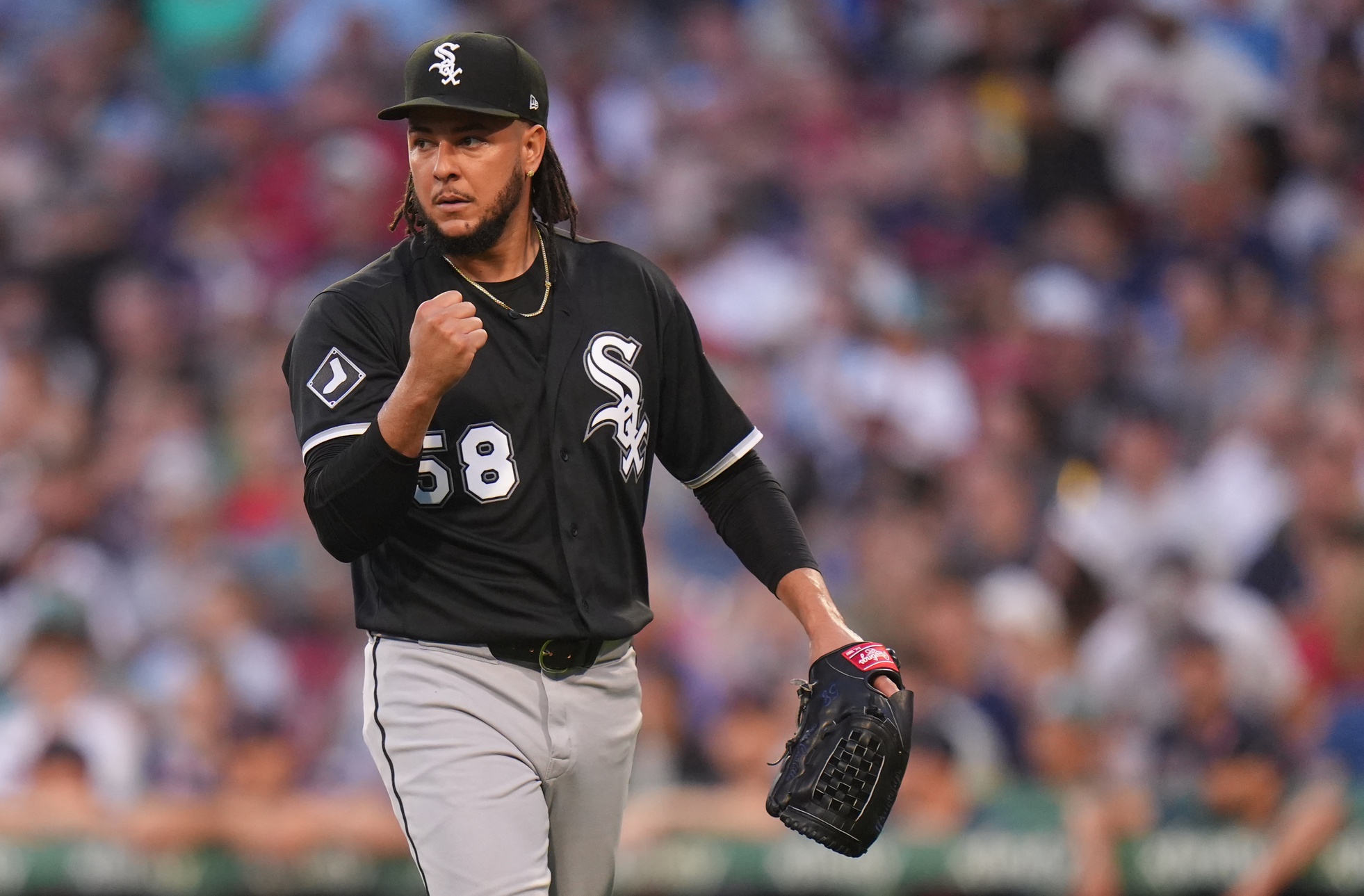
Castillo has tried basically all of that -- raising his arm angle, reclaiming a little bit of an extension, trying to throw the changeup more, and he's even moved towards the middle of the rubber some. None of it has provided traction. Instead, six of his seven starts have been duds. He has a 7.76 ERA and a 6.31 FIP with the White Sox, and that ERA swells to 10.23 if you exclude his seven shutout innings against Cincinnati.
Of course, if you strike his best start, it's only fair to remove his worst start as well. Two problems: 1) It's not necessarily easy to identify his worst start, and 2) If you go by runs and innings, that ERA only revises down to 9.77.
If there's any solace in Castillo's performance, it's the fact a majority of the pitchers moved at the deadline have thus far disappointed for their new teams, at least if you take Tarik Skubal out of the equation:
| Pitcher | G | IP | H | HR | BB | K | ERA |
|---|---|---|---|---|---|---|---|
| Castillo | 7 | 29 | 41 | 8 | 11 | 25 | 7.76 |
| Mize | 7 | 32.2 | 36 | 9 | 10 | 22 | 6.34 |
| Ray | 7 | 33.2 | 29 | 6 | 24 | 25 | 5.35 |
| Gausman | 7 | 39 | 40 | 9 | 10 | 44 | 5.31 |
| Holmes | 7 | 39 | 31 | 3 | 16 | 26 | 3.46 |
| Peralta | 8 | 44.1 | 33 | 6 | 10 | 33 | 3.86 |
| Griffin | 7 | 33.1 | 40 | 4 | 13 | 30 | 5.94 |
| May | 7 | 29.1 | 27 | 4 | 11 | 27 | 4.91 |
Peralta is an exception, as is Clay Holmes. His numbers are technically worse with the Cubs than they are with the Mets, but he's providing the kind of value they'd imagined, and is generating speculation of whether the Cubs will make an effort to retain him after the season. Foster Griffin is somewhere in between for Cleveland, with a productive five-start stretch sandwiched by duds, one of them a total thumping by the Orioles his last time out. The White Sox will have some say on his fortunes when they face him Tuesday.
Everybody else on this list has been some form of mediocre, and while Castillo is the worst on the list, it becomes that phenomenon we've discussed so frequently with the White Sox over the years, where upgrading from "league worst" to "replacement level" doesn't necessarily generate a commensurate team improvement in wins. If the White Sox acquired Kevin Gausman or Casey Mize and witnessed similar results, it wouldn't shift the attention away from the struggles of Munetaka Murakamia and Colson Montgomery.
With the bulk of these pitchers being either projects or decline candidates, Castillo doesn't necessarily stick out. As we discussed when the White Sox traded for him, the problem wasn't necessarily the talent, but the terms ($24.15 million owed for 2027). The prescribed fixes for Castillo were sensible, even if they were easier said than done. But while the White Sox weren't interested in rentals, the pitchers involved in the other deadline deals are inadvertently showing the value of expiring contracts: If it doesn't work, a team is able to shrug, express whatever amount of regret is necessary, and direct all forms of resources elsewhere.