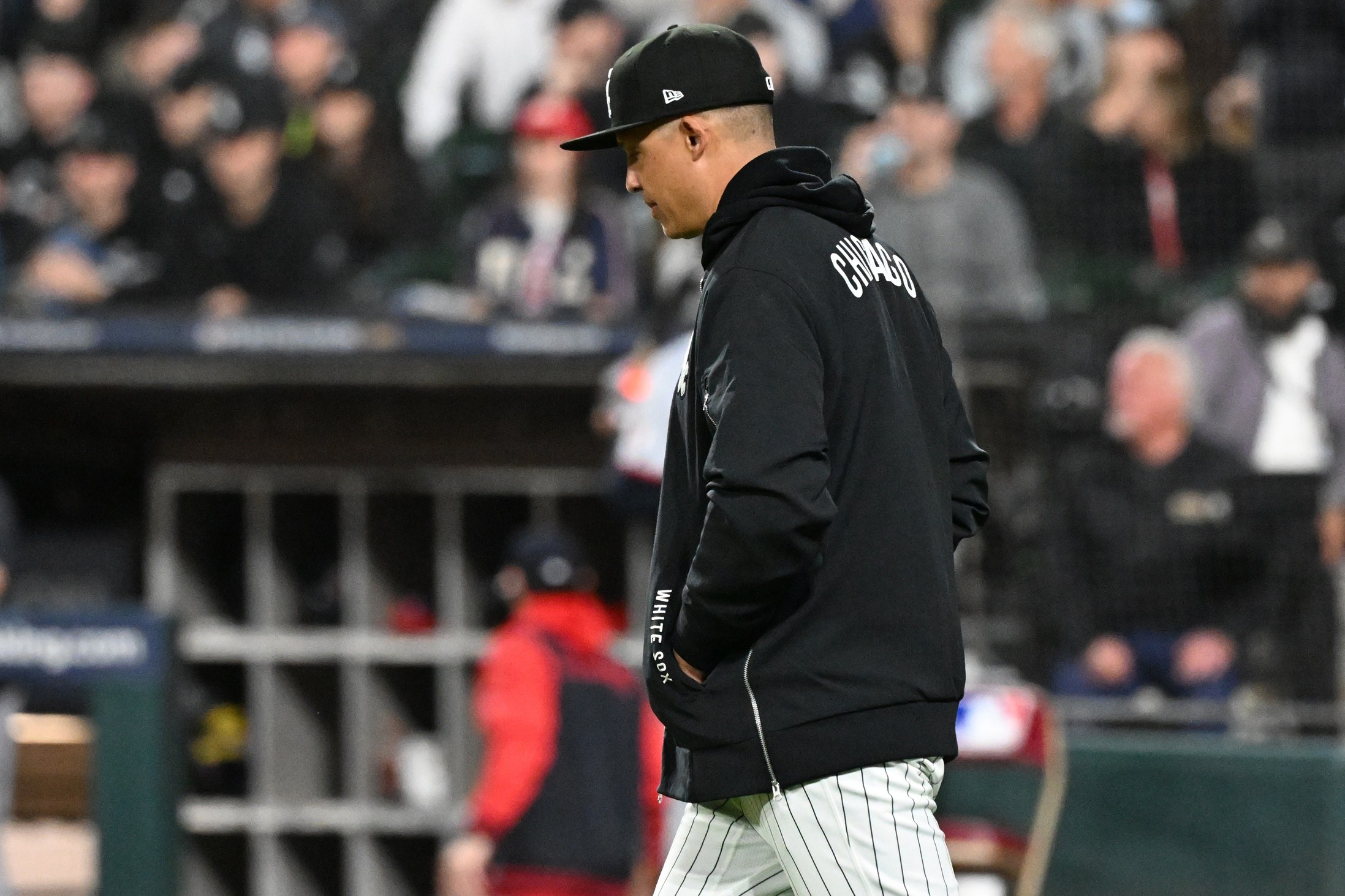
Former White Sox shortstop Tim Anderson is retiring from baseball, he announced Monday in a Zoom call with Chicago-area media.
"I still love the game, but it’s just brought too much pain to me, so going back to play is probably not for me," Anderson said, in an emotional session with reporters. "Definitely were great moments, but just overall, the anxiety is just something I would rather not step into. I fought to try to get back. I fought for the last two, three years. I trained. I just couldn’t get the body to operate like it used to. So, I’m not one of those guys that’s going to continue to try to get back to somewhere where I couldn’t get it back there. Overall I’m happy. I’m happy in real life, happy in the real world."
Anderson, still just 33, has not played since he was released by the Angels near the end of May last season, after a similarly brief stint with the Marlins the year prior. When he spoke with Sox Machine last March, he was reflective on a slew of lower-body injuries that had robbed him of the effectiveness he enjoyed just a few years prior, and now sounds content to focus on his wife and children, as well as some non-baseball business ventures in food service and apparel.
But from 2019-2022, Anderson hit .318/.347/.473, with shortstop defense that graded out as +4 in Statcast's Outs Above Average over a span that saw him win an American League batting title, a Silver Slugger award and make two AL All-Star teams. A former 2013 first-round pick who matured during the most grueling stretches of a full-bore rebuild, Anderson was the most attention-grabbing star of two White Sox playoff teams in 2020 and 2021. As much as those Sox teams are now remembered for underperforming their potential, and not winning a single playoff series, Anderson went 16-for-33 (.485) for his career in postseason play.
Anderson's iconoclastic and jubilant playing style made him a lightning rod during an era where bat-flipping after home runs and unrestrained emotional expression were transgressive acts in pro baseball. A junior college star from Alabama who primarily focused on basketball in high school, Anderson's non-traditional path to major league stardom already seems antiquated, just 10 years after his debut.
"I'm from Alabama, it's a small community, I never had to deal with that," Anderson said when asked how he dealt with the fame of his career. "I never did the camps or anything. But to get it and live it, you kind of understand it as you go, and you kind of grow with it. It depends on the people you come across and I was able to connect with some of the right people, and connect with some good people, but also connected with some bad people as well. That's something that you don't know, and just try to find mentors along the way. But it's definitely different. You find out who with you, you find out who against you."
As such, Anderson's rapid emergence into a national figure had plenty of moments of friction. Early in his first full major league season, his best friend Branden Moss was murdered in an incident of gun violence in Tuscaloosa, Ala. Anderson would later admit to seeking therapy to deal with the insomnia he suffered from as a result, and his charitable work with the White Sox was rooted in outreach programs for at-risk youth on the South Side of Chicago. In the wake of being purposely hit by a pitch by Brad Keller during his breakout 2019 season, and suspended by MLB for language used in the subsequent benches-clearing conflict, Anderson told Sports Illustrated "I kind of feel like today's Jackie Robinson" while reflecting on the pushback his brash and unguarded on-field demeanor was receiving across the sport, which only spurred it further.
Leg injuries initially drove Anderson from basketball to baseball in high school, and they hastened the end of his peak in MLB as well. He suffered a significant ankle sprain in 2019, dealt with hamstring issues in 2020 and 2021, and a groin strain in 2022 before that same season was ended by a torn finger ligament. He briefly seemed rejuvenated at the outset of 2023, before suffering a knee sprain in a botched rundown play that April, which marked the end of his run as an effective major league hitter. That same year saw turmoil in Anderson's marriage publicly exposed, and an embarrassing on-field brawl in Cleveland with Guardians star José Ramírez, before ending with the White Sox declining the club option on his contract.
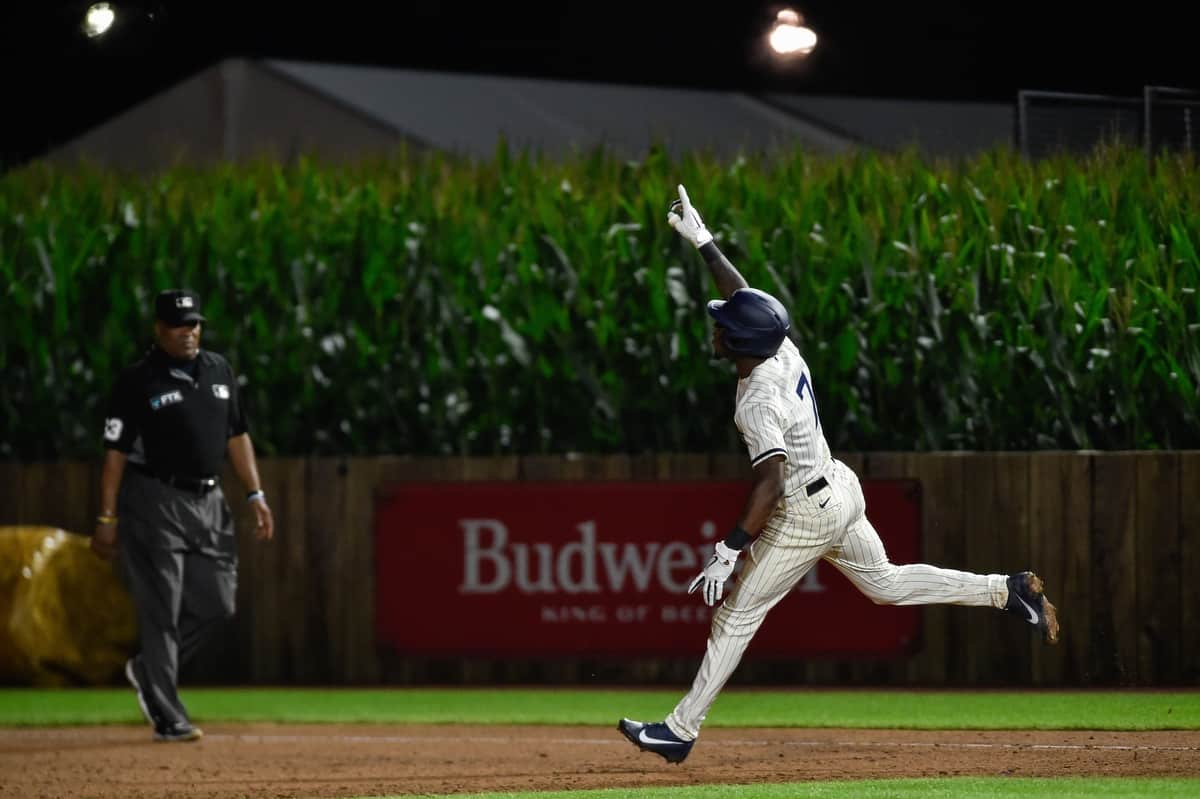
As a result, Anderson's retirement announcement wound up focusing as much on the difficult manner in which his career ended, and the mixed feelings it created for him about the sport, as it did on its many tremendous highs; notably his walk-off home run at MLB's initial Field of Dreams game five years ago this month.
"I'm getting emotional now because we're talking about something that I worked my whole life to get there. I never knew the route, I never which turn, I never had no guidance. I kept going. As you know, that was my saying, just keep going. I know I came to the ballpark every day ready to compete, just ready to play for the logo that's on the front of that jersey, and that's what I did. Nobody knows, nobody knows what I sacrificed and what the body felt every day, what I was leaving at home from my kids, to my wife, through some of the decisions I made.
"I still kept going, I still kept going, and I had my moments to where it bothered me. But I couldn't show it, and it got to a point where it started showing out loud, and I couldn't control it. I think it was just one of those moments where the time is now, the time is now where I can enjoy life. I'm kind of happier, waking up and being able to be around my kids and really living a real life. Because life is bigger than trying to make people happier with a bat and a ball, you know what I mean? Now I get to step outside of that and see what life is and really enjoying it."
Anderson revealed that he had not formalized his plan to retire until the White Sox reached out about having him throw out the first pitch at their Sept. 17 game against the Tigers, which will now become a ceremonial affair recognizing his career, with the team donning their previous Southside City Connect jerseys for a single game. While the plans do not seem finalized, Anderson said he wants to become involved with the White Sox organization going forward, possibly in community outreach work on the South Side that he greatly valued during his playing career.
Never one for adhering to baseball's traditional social mores, Anderson said he's still never seen the film Field of Dreams, and doesn't watch a ton of baseball these days. But when he does, unlike when he was growing up, he has a rooting interest.
"I'm super excited the way that things are going," Anderson said of this White Sox season. "I just can't wait and I'm really excited, I want them to finish it. South Side deserves one."