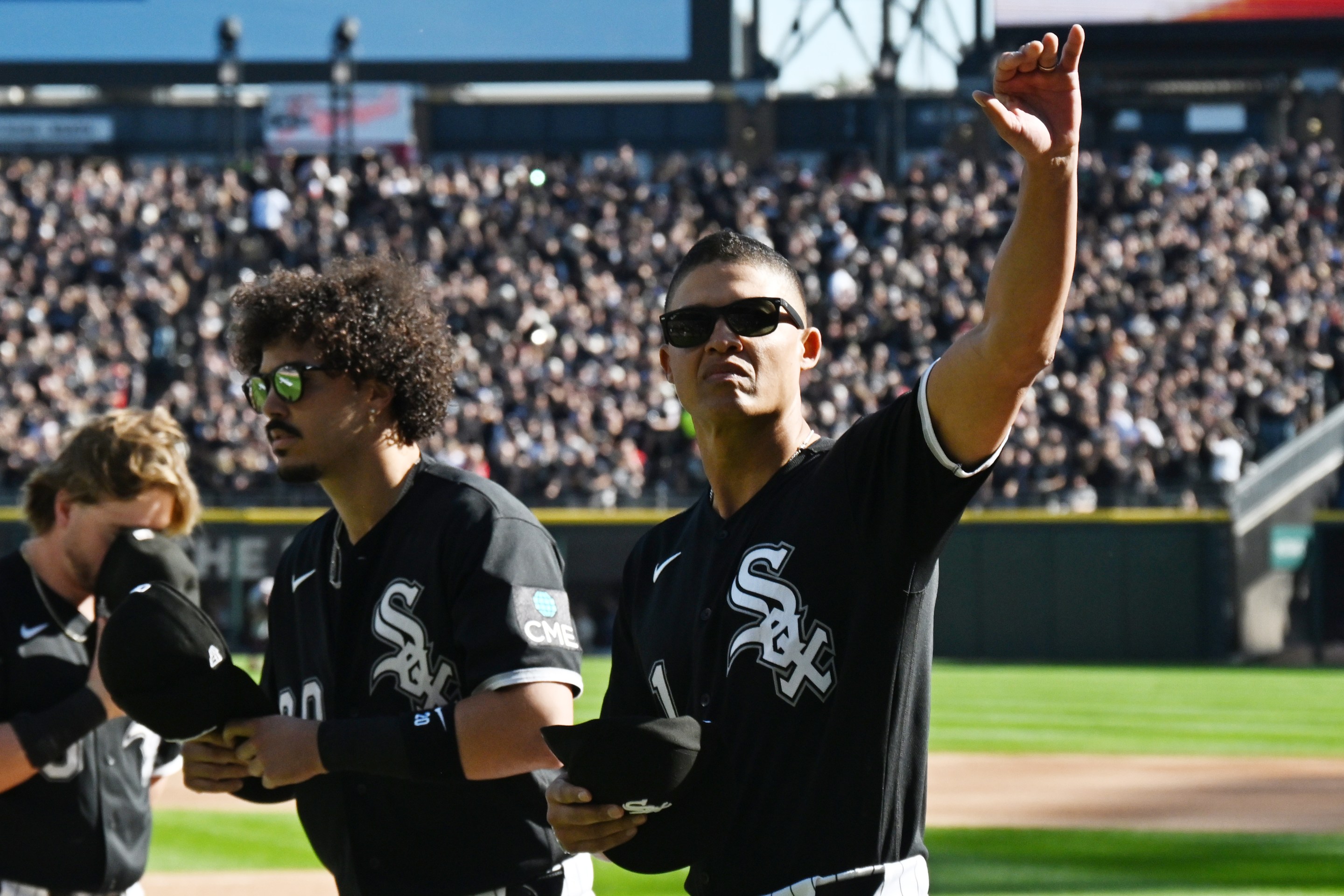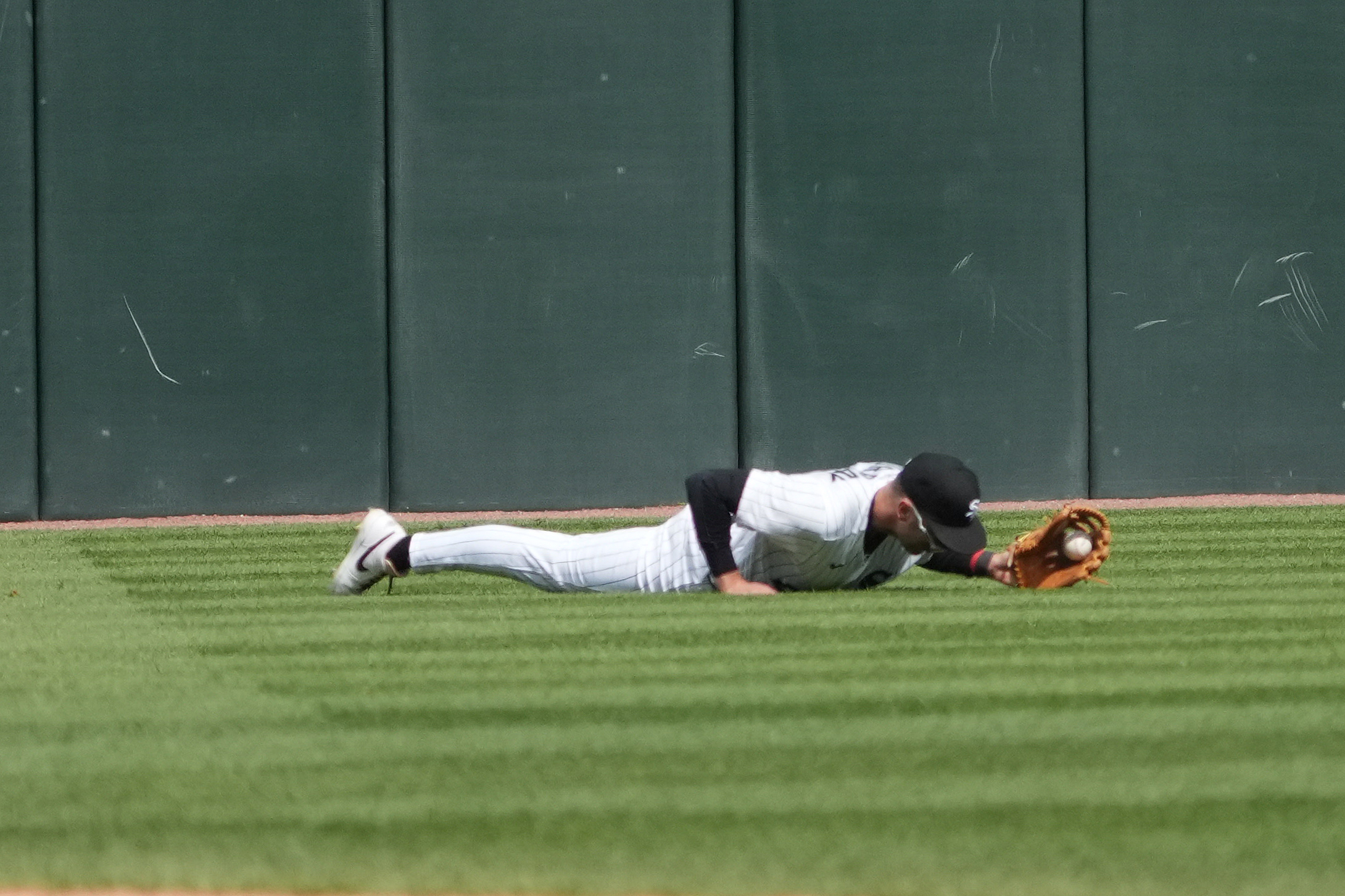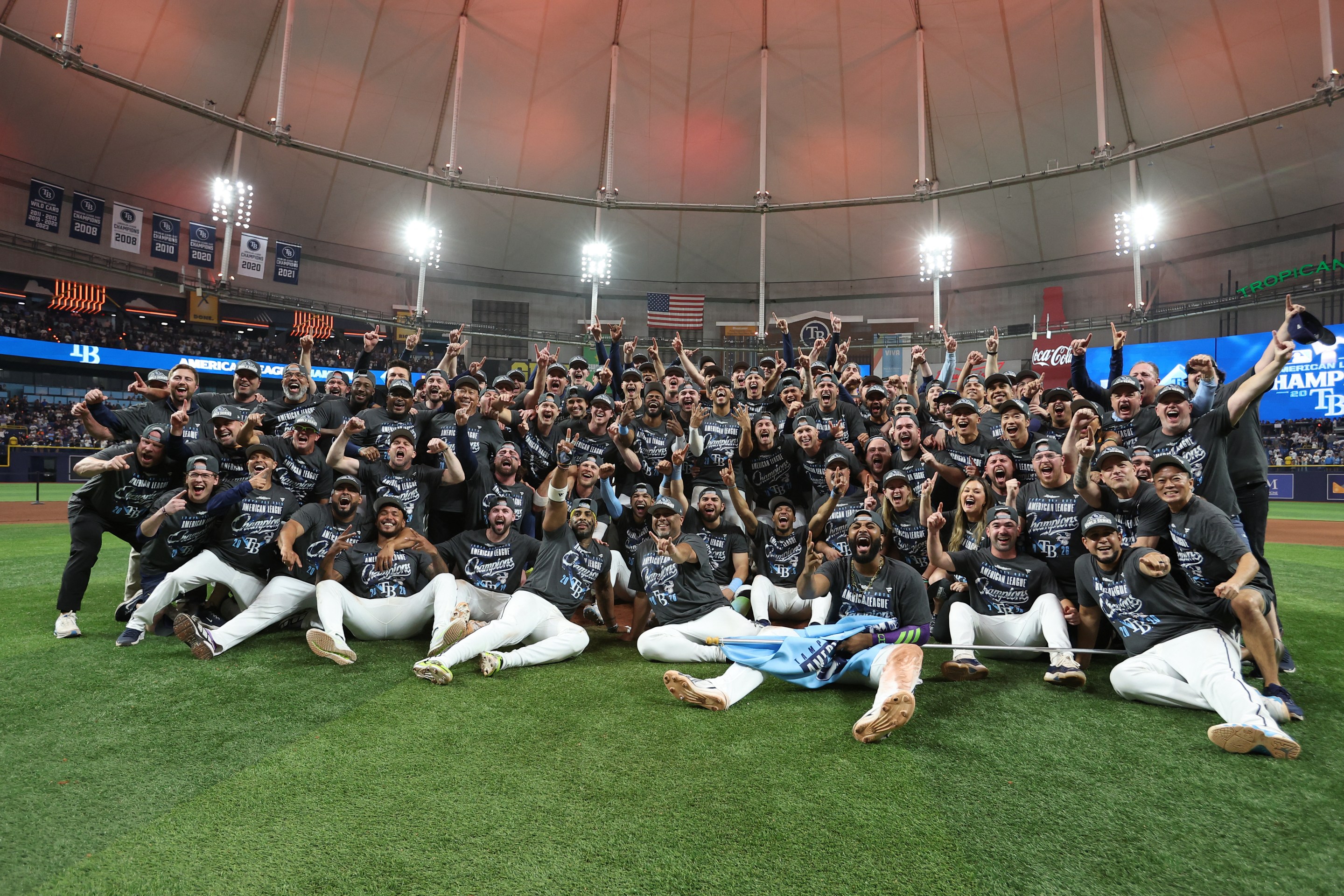
On June 9, with two outs in the bottom of the 10th, Braden Montgomery was digging in for the fifth plate appearance of his major league debut, while future first overall pick Roch Cholowsky was in the building as the White Sox were opening a harrowing stretch of schedule.
Seemingly no one could have predicted that Montgomery's late swing on an 0-1 changeup from All-Star closer Raisel Iglesias would launch a ball off the top and over the left field wall for a walk-off home run. Guest announcer Bob Costas raved "Talk about drama, talk about theater!" as Montgomery joyously circled the bases, seemingly as stunned as anyone.
Yet the shocking moment was meticulously documented. White Sox photographers Darren Georgia and Sage Zipeto had been strategizing, at least as much as you ever can.
"I told Sage, once it's hit, take the long lens and run out behind third [base] so you can get that shot of all the guys waiting for him at home plate," said Georgia. "And I'm hightailing to home plate so I can be there for whatever."
Montgomery's was the fifth of seven walk-off victories the White Sox delivered in the first half of the season, which is a testament to their resilient offense and ebullient dugout atmosphere. That the joy and collective spirit of the team and their wild fervor for one another has shone through during their post walk-off celebrations is a testament to the work of the team's photographers and videographers in capturing it.
And also, that they've become battle-tested enough to develop a process.
"You could feel it in the stadium that it wasn't just some random game, and I think that photo of [Montgomery] running was probably one of my favorites," said Zipeto, who is in her second season as a Sox photography intern and held a similar role previously with the Twins. "Everyone is so high emotions, it kind of makes your job a little easier. Whatever you capture, you're going to be able to capture the moment."
"[Montgomery is] just such an expressive guy, and obviously it was an incredible moment with it being his debut and everything, but that's a really good example of even after the big scrum of just staying on him, follow his face, and capture all the emotion there," said Sox videographer Anna Ebl, who is also in her second season and also previously interned with the Twins. "I got lucky with Braden and [Miguel] Vargas['May 29th walk-off] being home runs because I have had a shot that I've wanted to get my entire career, and it's the exact shot I got for both of them, which is just following them once they get around third base and then like down the line into the into the celebration."
There are TV cameras capturing the game action, so in these moments the Sox in-house staff is prioritizing reactions; the expressions on the face of the heroic player and the joyous response of their teammates, and creating a connection between the emotions of the fans and those of the players they're watching. Walk-off victories offer richer raw material than a ho-hum loss, but calling it easier is clearly just about the practice of finding a worthy subject. The actual work offers myriad logistical challenges.
"Any time it's a base-hit walk-off, 90 percent of the time you're going to get blocked by TV cameras, all 26 guys running out there, so that's why shooting from the [camera] wells can be difficult because you may only get two or three shots before you're completely blocked," said Georgia, who is in his fifth season as the team's full-time photog. "When [Sam] Antonacci ran out [to left field during his walk-off celebration], I was sprinting. But I can't run with the camera [to my face]. I was just holding it up, holding down the shutter and just seeing what came out of it."
Here's some of what's resulted from Georgia's efforts:
This approach is more casually known as spray and pray, where the appeals to a higher power are asking for just a few in-focus shots that capture the vibes of an infectiously enthusiastic young team in action.
The videographers have slightly different tactics, but a similar ethos.
For moments like chasing Antonacci into left field after his June 22 walk-off single against the Guardians, Sox videographers Ebl and Remi Silvan often make use of a ronin -- a gimbal, not a samurai without a master. Their ronin takes the appearance of a black metal frame that serves as a stabilizer on which their cameras are mounted, keeping the shot steady while they follow the action on foot.
When it's available at least. As Georgia's infiltration mission to Cholowsky's draft party reminds, there are plenty of off-site assignments that split the staff up for game coverage, and there are still plenty of technical details to obsess over beyond holding the camera steady.
"For [Edgar] Quero's [walk-off home run] I didn't have the ronin, our ronin was actually on the road, so I just had to put my elbows in and hope for the best, and you can do a lot in editing," said Silvan, who started with the Sox last season but has previous experience in the NBA and NFL, and feels that walk-offs bring wholly new considerations into her work.
"It all depends also on how much light the lens lets in to make the shot brighter. The 16-35 mm, you can open up the light in the camera more than the 24-70 mm [lens]. So I used the 24-70 mm for Quero [which was in daytime] because it's not as bright of a lens and I don't need to open up as much, whereas with Antonacci it was night time when they won."
Silvan added that the frequent nature of Sox comebacks has turned her into a person who is often beginning to prep their gear for late-game dramatics as early as the fifth inning. When possible, Ebl says she likes to mount the camera she'll burst out of the camera well to the ronin ahead of time, and shoot footage from the later innings with a separate one. But even the best equipment doesn't erase the challenge of the work so much as enable greater ones.
"You could hold it with two hands, I've seen people do that," said Ebl, who is in her second season with the Sox . "I'm a one-hand person. I just hold it with my right hand and with my left hand as I run out. It's kind of a lot as you run out, when you really break it down."
It kind of sounds like texting while driving, but if the text was the work product that you'll spend the next few hours editing and sharing with a rabid fanbase that the organization is driven to engage.
"I'm running out onto the field, holding the ronin and the camera in my right hand, and the left hand I'm using to focus," Ebl continued. "Our cameras have a tap-to-focus. You tap on the subject on the little camera screen for where you want the focus to be. As you're running out and looking up, trying not to run into players, trying not to run into umpires walking off the field, and also trying not to like get trampled by the team running out in the same direction you are, I'm looking at this little screen, trying to both look up and look down, and tap the screen to focus as well."
The lack of room in their jobs for peripheral vision underscores another chaotic element of the work. The best way to get engrossing shots is to put themselves right up close to the action, and the action involves very large young men jumping around deliriously while wearing sharpened edges under their shoes.
"Anytime a walk-off happens, guys are just in a different reality when that stuff's going on," said Mike Vasil, resident frivolity expert. "What I'm trying to avoid is getting like a spike in my foot, or anything like that from from somebody who's actually wearing cleats."
"I've definitely been moved around by both players and other people," Georgia said. "You want to let them do their thing. I try and be on the outside of it, but I think it was for Braden's walk-off, I was definitely bouncing off people."
When it comes to those moments, the players aren't the only ones having their senses drowned out by adrenaline.
"I'm not gonna lie, you kind of black out when you're out there, at least I do, and you're kind of just trying to get whatever you can," Silvan said. "There are some things in the moment of 'Oh, this is gonna look crazy.' The Quero one I knew with some things, this was really cool. But when I'm running out there I'm just trying to get there."
For this reason, Silvan emphasizes that she's often shooting as wide as possible, with the idea that the postgame editing process might reveal the real gems of her work.
"I want as much reaction as I can," Silvan said. "If we're cropping in for social, like say if I don't want Antonacci at the center of it and there's another interaction happening on the side, I can just slide the shot over. There's all these different stories in a sense that are going on within the shot."
That might be some of the split between still photographers and videographers at play, because after seven walk-offs and countless more post-game Gatorade baths, sometimes you have to work to keep things fresh.
"If you want more creativity or more artsy shots, going with something that might be a little more restrictive, it can produce something completely different," Zipeto said. "I'm constantly thinking of new ideas for that because we've been lucky now with so many. Even with the Gatorade dumps for interviews, that are not on walk-off nights, trying to think of something to do with that and capture it differently."
There's a tactical reason for all the fancy edits and angles, in the sense that's the vast majority of this content exists for social media, and Sox creators are looking for a hook that will keep people from scrolling away to countless other sources of game action. But often the biggest appreciators of the finer touches put on these moments are from the guys who have slowly gotten used to their presences, and take an extra moment to not run them over.
"I think a lot of them realize that they're not going to be a major leaguer forever, and when it's all said and done, you want to be able to look back at all the memories through photos and videos," Georgia said. "A big reason that I shoot too is like not necessarily for the organization but for these guys. It's for them."
"It's like when your mom is taking pictures of you growing up and you're like, 'I don't want to take these pictures,' but then you end up liking them later down the road," said Sean Burke. "But now you don't have to have your mom annoying you, asking you to smile for pictures, they're just always there."
Silvan tries to think about the tendencies of hitters who come up in late-game situations and what sort of hit is most likely to happen when positioning herself, but her memory of the Antonacci walk-off is the scrum taking off away from where she was positioned, and winding up with a unique view of a player returning to the dugout as the most exhilarating moment of their young career settles upon them. Georgia and Zipeto like to plan out their angles and positioning, but also view themselves as at the mercy of fate.
"You can be prepared as you want," Zipeto said. "But you never really know what's going to happen."
Even with all the science behind it, photography is still an art. A lot of the times it's about feel, and in the best of times, you just know.
"When you shoot a sport for so long and you're around a sport for so long, you know what the cinematic moments look like, you know what you've seen other people do in the past that you thought was really cool, and you know when you're able to replicate or even kind of step it up from that," Ebl said. "What it comes down to in this industry, at least for me, is like I feel the most successful when I just have a feeling. I know in my chest, in my heart, like that was a good shot."