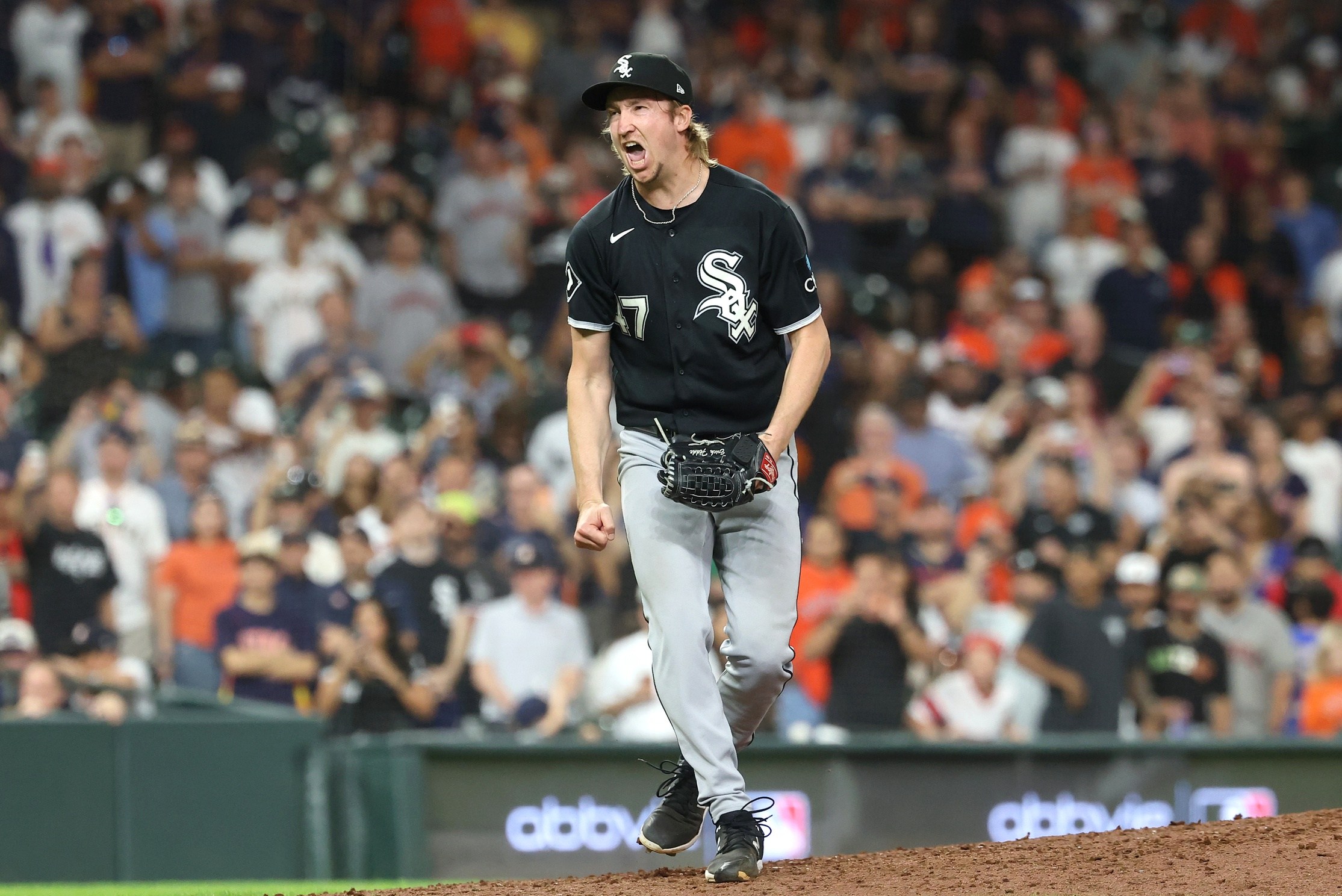
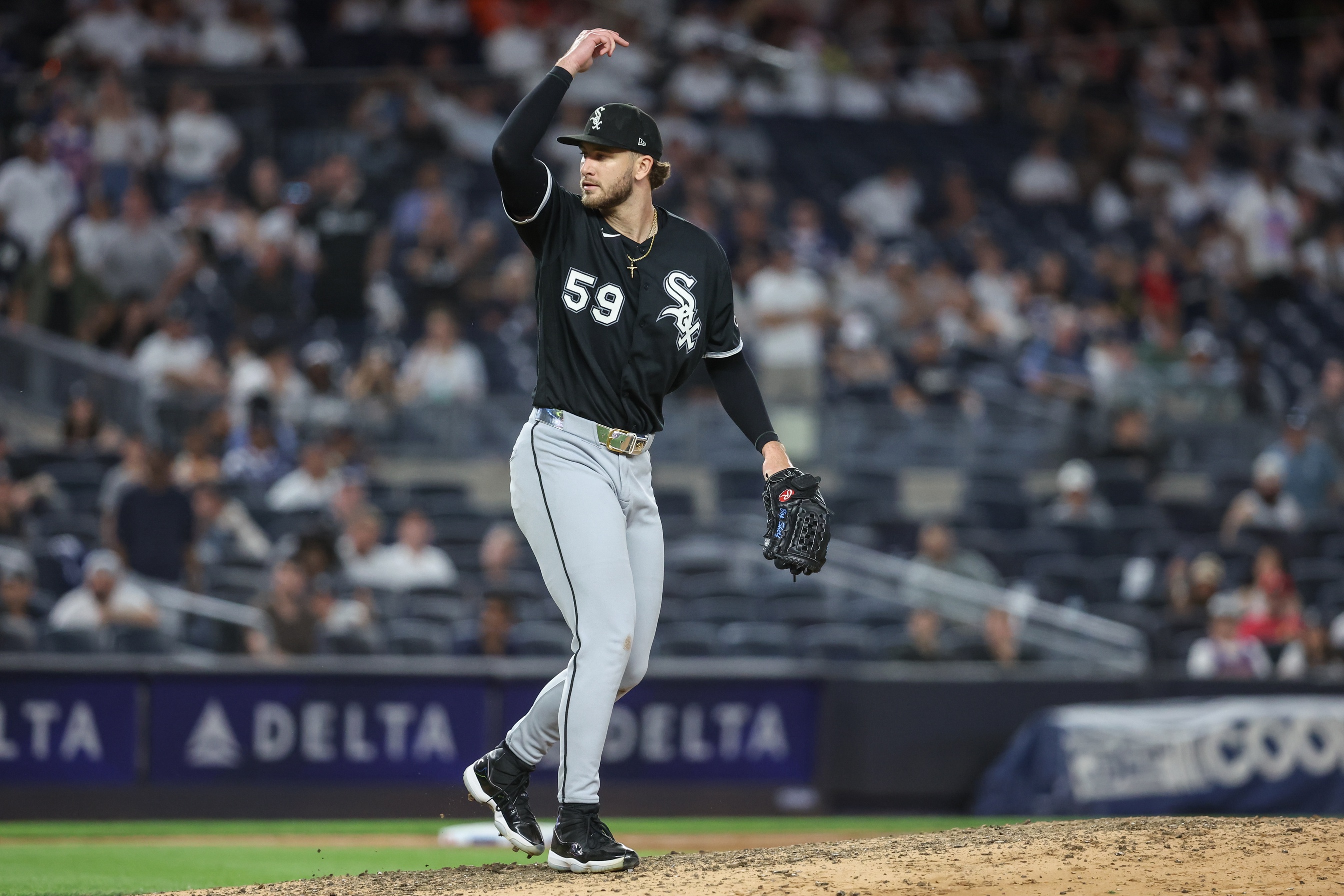
The fastest pitch Sean Burke has thrown this season was his last one -- a 99.3 mph fastball he threw to strike out Jasson Domínguez last Thursday and close out a 5-1 White Sox victory.
"I was hoping he'd call a fastball, because in my head I was thinking 'I'm just going to throw it as hard as I can and see if I can hit 100 mph right here,'" Burke said. "I'll have to try again this year."
A Boston-area native who will be trying to shrug off Giannis Antetokounmpo-related heartbreak on the mound Tuesday night, Burke received a host of messages from old friends after his 7⅓ innings of one-run ball at Yankee Stadium. Few were concerned about the White Sox winning, maybe a couple of them were happy about Burke bouncing back from consecutive five-walk outings to put together a shortlist contender for the best outing of his life, but all of them were joyous about seeing their friend stick it to the Yankees.
Part of the reason why baseball is great is that everyone is free to engage with it at whatever level suits them. For example, Burke's main takeaway from his bounce-back outing in New York is probably one that most viewers could call out from the couch. He went from pitching tentatively against stout offenses in the Phillies and Dodgers, to attacking Yankees hitters who had put up 22 runs the prior two nights against his teammates.
"I was just doing a much better job of getting ahead of guys and getting back to the mindset of 0-0, blowing up the middle of the zone," Burke said. "The Dodgers game I got away from that, trying to make perfect pitches too early. Kind of overthinking it, instead of being simple with my approach. Instead of trying to get my fastball to this exact location, thinking 'I'm going to throw the shit out of it to this part of the zone.'"
Everyone would like to pitch with confidence all the time, but elite offenses have a way of punching it out of guys.
"The Dodgers game when [Shohei] Ohtani hit that homer right away, I got away from that plan a little bit," Burke admitted. "It was just telling myself to get back to that regardless of the outcome. Obviously [the Yankees] are hitting well but I wanted to make sure we were getting ahead of those guys."
It's also easier to attack the strike zone with confidence while sitting 96 mph as Burke was last week, which is where we get to start engaging the sport with the sort of microscope that is commonly used around these parts.
At the end of spring, start of the regular season, Burke was dealing with some neck stiffness/soreness that he tied to some less than ideal mechanics, which he also tied to more middling, low-90s velocity. He felt when he rotated his body away from the plate at the start of his delivery, both his upper and lower half were getting stuck back there, and not giving him the snap and hip-and-shoulder separation necessary to power his best fastball.
If that seems like gobbledygook, let's just see if you can spot the difference from his last start of spring to his most recent outing, paying attention to how his hips and torso are moving at the beginning of his motion, and just the general explosiveness of his movement.
Yes? No? Maybe so?
Either way, the counter-rotation--a term for when the pitcher is rotating away from the plate for a split second to build up force--is something Burke has been working on for a minute.
"It's something that we noticed, something that know he's felt before, and definitely clicked last outing, so it was good to see the jump," said pitching coach Zach Bove. "It's been something that we've been working the last couple weeks, really. But sometimes it just takes a little bit to resonate."
"Working on doing it more with my upper body instead of my lower body, keeping my hips a little bit more neutral," Burke said. "It's allowing my arm climb to take my torso back, as opposed to rotating my whole hips and torso back. It creates better stretch and my arm is freed up, and the timing of everything felt much better."
The beautiful synergy of the work is that while bigger velocity is not something the public usually associates with better command, Burke feels that keeping his hips more neutral has unlocked the timing to work the arm side of the plate with his sinker and changeup. When he hits 99 mph, it's usually a sign that his delivery is synced up in a way that pays dividends all over.
"I don't think I was doing a very good job the past couple weeks of getting my two-seam in to righties," Burke said. "It was either middle, or it was way in where they weren't swinging at it. I wasn't doing a good job of getting stuff to the outer rail. It was over the heart of the plate or it's a take out of the hand.
"Doing that stuff, harping on that to own that side of the plate, because if I can control that side of the plate, then all the spin is gonna play off that too, it's going to go a lot harder. Then glove side, I can get to that when I want, or I can get to that easier for me. So, if I can kind of dominate that [arm side] of the plate, it makes everything kind of open up."
And as last Thursday in the Bronx reminded, when Burke is pumping 96 mph and commanding both sides of the plate, there is the ability present to see him as a key cog in a rotation that can fight for a playoff spot all year.
Physically, he insists he's feeling good as his stuff looked last week, and has been pleased with how he's recovered after starts all year. Burke says he does FaceTime check-ins with his personal trainer back home twice per week, on top of his routine with the White Sox, to help stay on schedule with all his range of motion work and strength program, and avoid any physical issues cropping up on him.
Because the big right-hander has shown mid-rotation ability from the moment he arrived in the majors, and flashes of it pretty much whenever he's healthy. In broad strokes, his ERA, FIP and WHIP all suggests Burke has taken a step forward from last year. But making his best work show up in more than flashes is the big separator between his current progress, and where he thinks he should be.
"I've been trying, really since college, to match the consistency with it," Burke said. "That's what separates good players from great players, really good players from Hall of Fame players, is how consistent they can be, time in and time out. There's been some stretches where I've been frustrated with the inconsistency of stuff. I'm just trying to do everything I can to be more consistent."