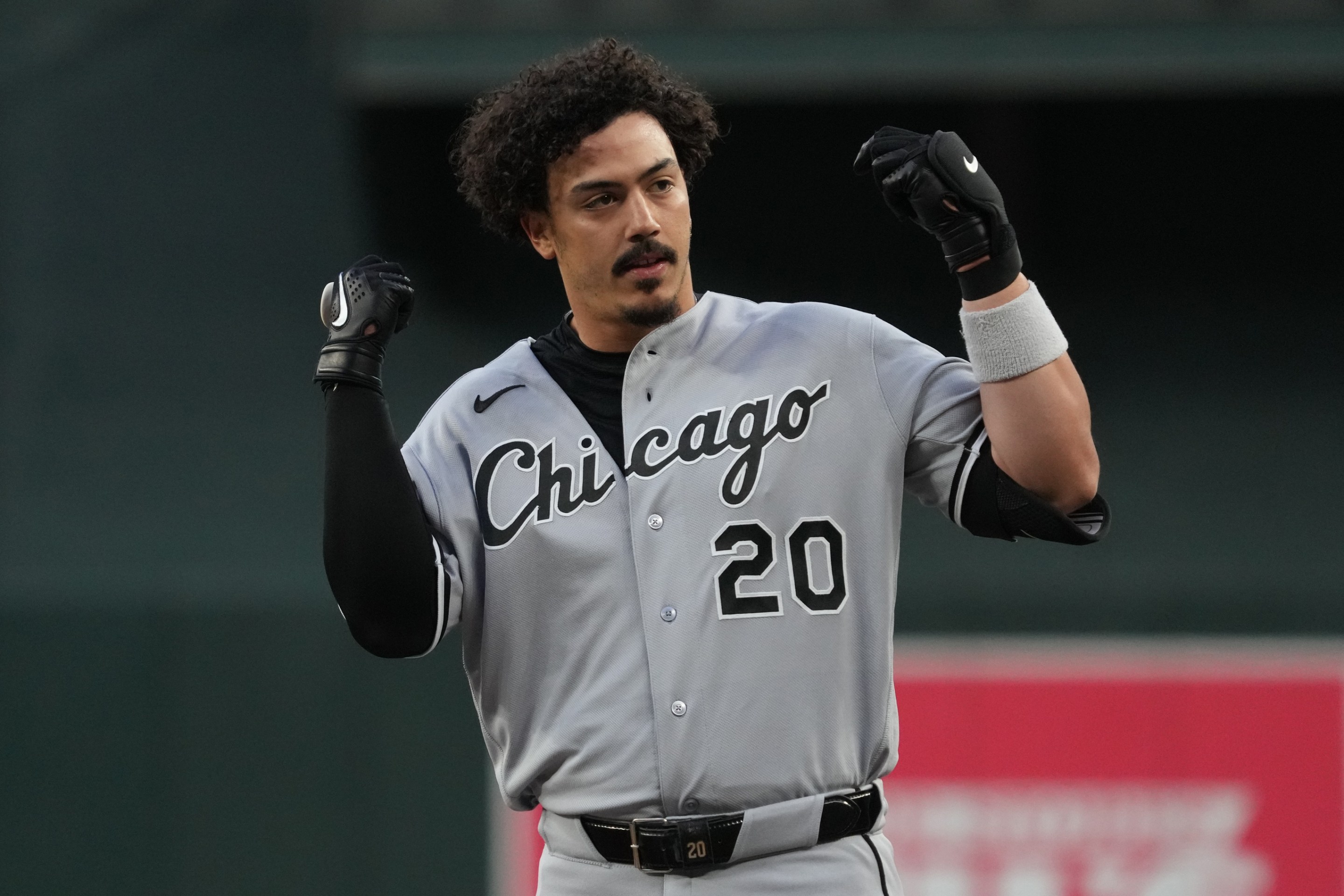
Being able to pull and lift the ball isn't anything new for Sox Machine top prospect Caleb Bonemer. But even with home runs way up in portions of the minors, hitting as many in 27 games as he did in 107 games last year is a noteworthy development for him, especially since he lifted No. 12 in very attention-grabbing fashion.
Caleb Bonemer takes former Cy Young Award winner Gerrit Cole WAY out at High-A 🚀
— MLB Pipeline (@MLBPipeline) May 5, 2026
The @whitesox third-ranked prospect pulls into a tie for the 2026 Minors HR lead (12).
See what else he and @WSDashBaseball have in store FREE: https://t.co/7xBadLh8HR pic.twitter.com/KWFDUCnxGQ
"Not really changed too much with my swing or anything," said Bonemer, speaking to media after winning White Sox minor league player of the month. "I think it's a lot to do with just added strength. I put on a good amount of weight in the offseason, getting stronger, swinging the bat faster. I also think kind of having a full year under my belt, probably just a little bit more wise, and there are some things with my approach overall. But I think just the biggest thing was just getting stronger."
Bonemer won't turn 21 until October and is hitting .297/.433/.743, which is the type of results that lead to rival scouts bringing up unprompted how impressed they are with his progress while Josh and I are out scouting 2026 MLB Draft prospects. But after his contact, power and swing decisions all graded out as above-average in his first pro season, his emergence as an elite power bat with a 30.7 percent strikeout rate in the early going doesn't sit perfectly with him.
At this point it seems related: Throwing Bonemer fastballs has become a cataclysmically bad idea. The response it's generating from opposing pitchers is something he needs to adjust to.
"Definitely, certain teams throw a lot more breaking balls," Bonemer said. "I think the biggest thing for me was, or has been, just trying not to chase, because that's where a lot of the breaking balls are. They're just strike-to-balls that they're trying to get me to chase on. So I feel like if I can just shut down on those, hopefully, eventually I'll get a good pitch to hit and do some damage with it."
⚙️⚙️⚙️
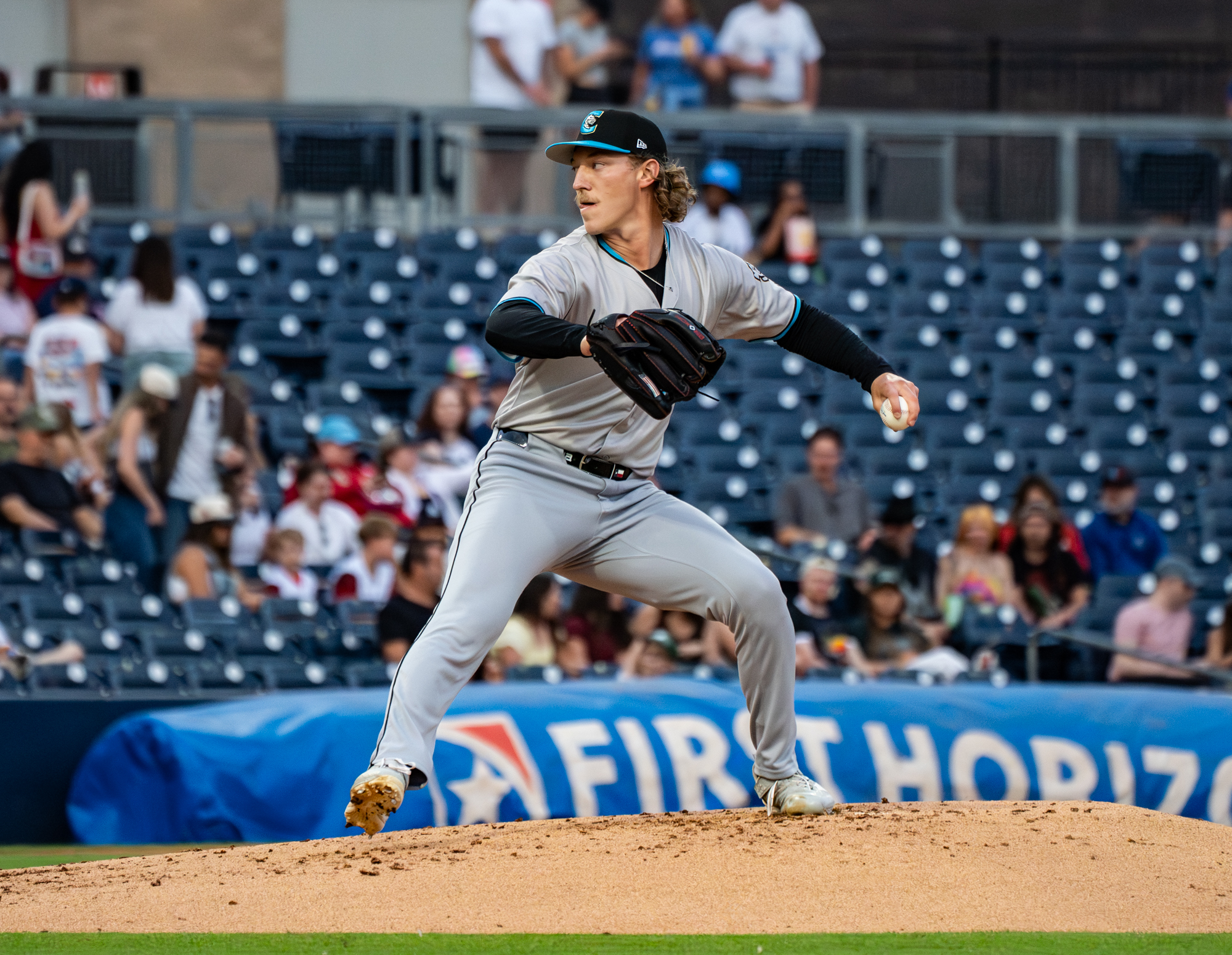
"I'm not overly concerned with the velo tapering off," pitching coordinator Matt Zaleski said of former fifth overall pick Hagen Smith, who has developed a disquieting habit of dipping into the ~92 mph range at the tail end of some of his starts this year in Triple-A
That was more meant in the vein that Smith is healthy, still building up innings after a slowly played spring training, and the underlying issue is viewed to be mechanical and fixable. The attention paid to Smith's issue of "feeling a little more robotic" in the lower half of his delivery by Sox pitching coaches, strength and conditioning and sport science personnel would otherwise contrast with Zaleski's statement.
"The stuff we've gone over is the momentum in his back hip, back leg, if he gets into that violently, his hands break later, which ends up syncing up and keeping his front side closed longer," Zaleski said. "It's just a nice package when it all happens together. If he doesn't sit down or sink into that back leg as violently, the hands break a little bit earlier than they're supposed to, the front side opens up and then that's when you start seeing the velo dip and the sprays happen. It's just stuff that guys gotta be constantly reminded of."
Even on a Zoom call set up to honor Smith for winning White Sox minor league pitcher of the month, on the strength of a 2.82 ERA with 32 strikeouts (but also 16 walks) in 22⅓ innings in Triple-A, the left-hander seemed to agree.
"Just talking to [Zaleski] and watching some old video of myself when I was going really good, just really getting into that back leg quick and explosive, it kind of helps me feel more in rhythm rather than robotic up there," Smith said. "Just allows my body just to kind of reorganize itself in a way. I know when I miss up and armside for me, it’s more my hips and shoulders go at the same time. When I drop into my back leg a little bit quicker and more explosive, it allows it to delay a little bit longer."
Smith generally seems to think that his best stuff and steadiest command come from the most locked-in version of his delivery, and the walks and velocity decline both come when he's out of sync and thinking through his process too much on the mound. That and his early results against Triple-A hitters suggests Smith's arrival in Chicago is up to him, but in more of an existential way.
"[Brian Bannister] and I have always had this discussion; Hagen feels like it's Hagen versus the strike zone out there," Zaleski said. "If he gets into the strike zone, they don't touch him. If he doesn't, guy's going to end up on first base."
There might be another front in that battle, which is Hagen versus his innings limits, which have kept him to outings no longer than four frames and/or 66 pitches in any of his seven appearances. Slow-building Smith up after pitching through October in the Arizona Fall League was the justification, but he seems ready for whenever it's lifted.
"I feel really good right now," Smith said. "Definitely ready to go for more, but obviously we have a plan set in place. Whenever that time comes, I’ll be ready for it. I’m excited for it as well."
⚙️⚙️⚙️
Christian Oppor clearly isn't right. Despite flashing dynamic secondaries and upper-90s heat, he's struck out just 11 in his first 15⅔ Double-A innings, while walking 19 and plunking another four. He also has a 8.04 ERA, but even if it was zero, those peripherals would be red flags.
But at least the Sox feel like they have a concept of what's up mechanically, even if it involved assistant pitching coordinator Curt Hasler and Birmingham pitching coach John Kovalik putting their heads together.
Essentially, it sounds almost like the opposite of Smith's issue.
"Some lower-half stuff, some glove-arm stuff, some positions he was not getting into compared to last year," said Zaleski. "Not go as deep in his back leg, which he was doing early on in the season, and then, like, when he throws and clips the ball right, his front arm is actually pretty high.
"He was getting really deep into the hinge and really flat with his front arm, and it just ended up like rotationally off, and off how he naturally wants to move. That happens with guys, and keeping them on track can be challenging. But now that we've seen it, if it starts to rear its head again, you know what you need to do to get it back."
Zaleski said this in between Oppor's best outing of the season (four innings of one-run ball with six strikeouts to one walk on April 25) and his most recent regression (two runs in four innings, but five walks and just one strikeout on May 1), but at least now you know what they're working on.