
The thing about the White Sox hitting a bunch of homers recently is that none of their leadership was trying to hype up this lineup's power potential ahead of the season.
"There is some slug for sure, but this isn't necessarily a total slug offense," said hitting coach Derek Shomon during the first series of the season. "We have guys that can move the ball forward at a high rate. We have guys that do have the club in their bag where they can back it up and shoot it the other way. We have guys who can lay down bunts. We have an offense that can do a bunch of different things."
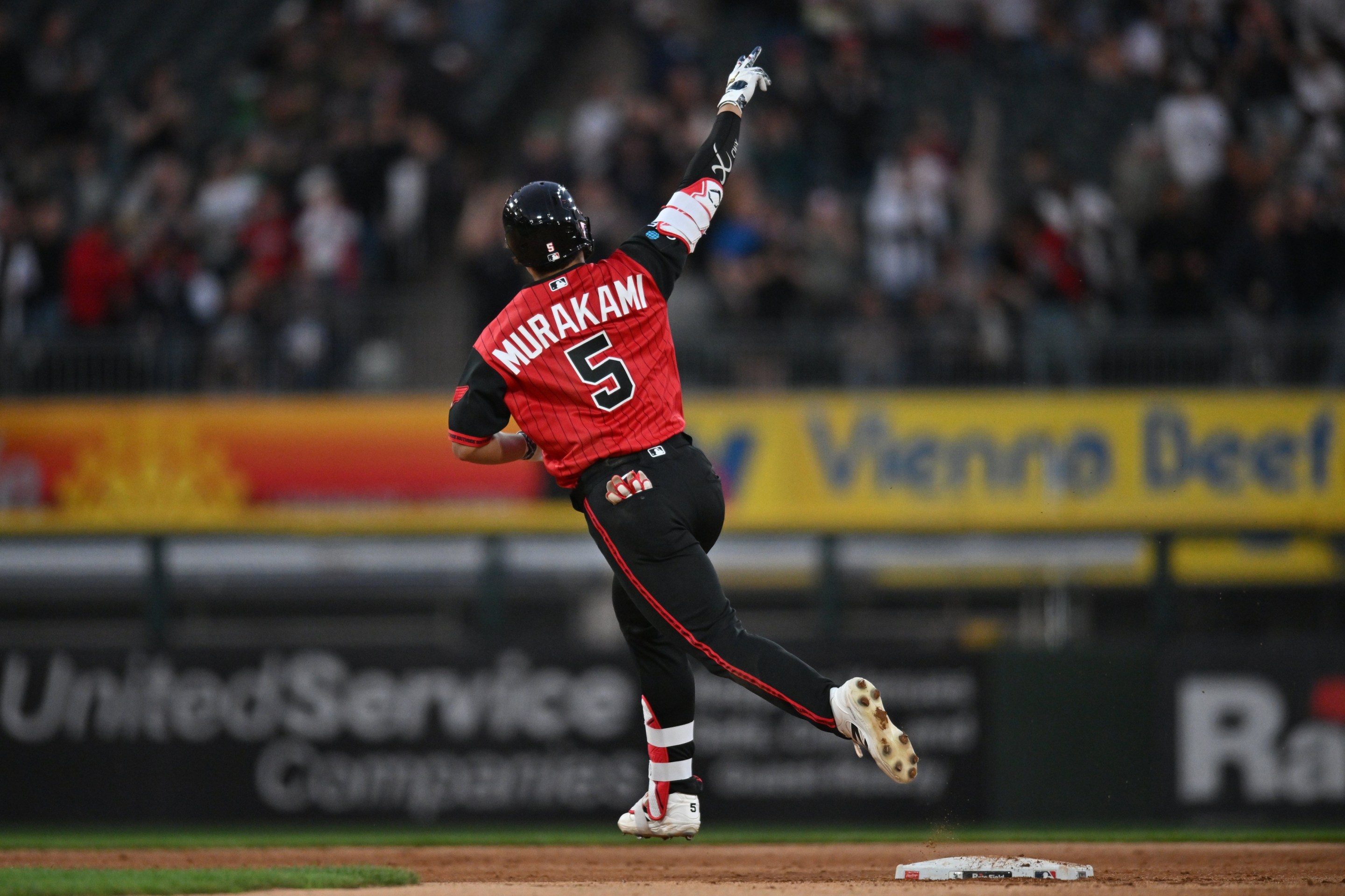
Munetaka Murakami is responsible for literally a third of their season total (11 of 33), but with the White Sox having now hit 23 home runs over their last 12 games, they've suddenly vaulted to eighth (tied with the Nationals) in the majors in long balls. Moreover, as silly as it can seem to ask if a team that went homerless for seven consecutive games earlier this month is a home run-dependent offense, the math kind of backs up such an assertion, at least in this current tiny sample.
Baseball Prospectus has never stopped housing The Guillen Number on their site -- percentage of runs scored via homer, poking fun at how homer-dependent the 2005 White Sox actually were -- and this current Sox team leads the league with 51.8 percent of their runs coming by the long ball. The Dodgers and Yankees are second and third, but the Sox are the only team above 50 percent.
For their part, the Sox are trying to emphasize the part where their hitters are coaxing out pitches to drive in the zone and putting good swings on them, and not dive too deeply on the end result being the measure of success.
"Mune is a prime example of someone who is punishing certain pitches in the zone, but anything outside of the zone, he’s taking and earning those walks," said Chris Getz. "That patience can have an effect. When you are in a lineup and your hitter and you are watching someone have success like Mune is having right now, you take note on why he’s having success. Not everyone has the power that Mune has, but that patience, the ability to take pitches that are not strikes or pitches that you cannot do damage with, that’s really something we’ve stressed."
To his credit, Will Venable was forthright about having played for too many mid-2000s Padres teams to be anything less than thrilled about the power output, and also way too scarred from playing for mid-2000s Padres teams to not be preparing for future lean times.
"I played on teams in which we didn't hit any home runs and we didn't score any runs," Venable said. "Hopefully [the power hitting] is something we can continue to have as part of our offense, but you find stretches where you have to find other ways to score runs as well. We want to be able to do all these things as far as running the bases well, playing small ball, putting the ball in play and keeping the line moving, knowing that on a different night, there's going to be a different way we have to find to score runs."
⚙️⚙️⚙️
As much as Andrew Benintendi's hero moment in Arizona, pulling a fastball for a go-ahead three-run homer in the ninth inning of a 4-1 win, felt like the best time to mention his change in bat size this year, the opposite field double he slashed on an outer half sinker Friday night might've been a better example of why he did it.
"I think my swing is fast enough now, it's quicker than it was last year, I can see the ball a little deeper and hopefully go that way [left field] a little bit more, which will open up the pull side," Benintendi said near the start of the season.
He's not putting some new red on his Baseball Savant page or anything, but Benintendi's measured bat speed is indeed up this year -- 68.7 mph to 69.5 mph -- and he attributed to a change in equipment aimed at a more balanced approach than his previous pull power focus.
"Last year I was getting pitched away a lot, and I was using a bigger bat -- and a longer bat -- to make that away pitch more middle," Benintendi said. "I'm not still able to pull those pitches, so now I'm not necessarily trying to do that. I think staying inside the ball, with a smaller bat, is a little easier."
A lot of conversations with Benintendi since the start of the season have involved him being alarmed, albeit not fatalistic, about his strikeout rate (35.6 percent!). So he's definitely still getting calibrated, but this is a helpful reminder that even the players you write off as finished products are usually still trying things.
⚙️⚙️⚙️
Statcast defines their sprint speed metric as being derived from "feet per second in a player's fastest one-second window," which is supposed to make it immune from being influenced by and overrating max effort grinders, even for teams that have a lot of them.
"We've got no one dogging it down the line," said Sam Antonacci.
That said, Miguel Vargas going from 27.5 feet per second last year to 28.3 so far in 2026, with his already his third infield hit of the season coming Friday night to set up the eventual game-winning run in the eighth, correlates with him running absolutely hard as hell all the time as a matter of principle.
Vargas' chatty and warm clubhouse presence might be part of why the White Sox coaching staff tabbed him to be a team leader in spring, but he's adamant that he has to assert on-field habits as well.
"Will said we want to make a big impact, first step out of the box, so I think it's very important for him and it's very important for us for what we're trying to do," Vargas said. "I'm trying to be a good example out there. We've got the guys, we've got great energy. I'm not going to be the type of guy who steps out there and isn't part of the group. I'm just trying to be part of the group and do my best."