In chronological order:
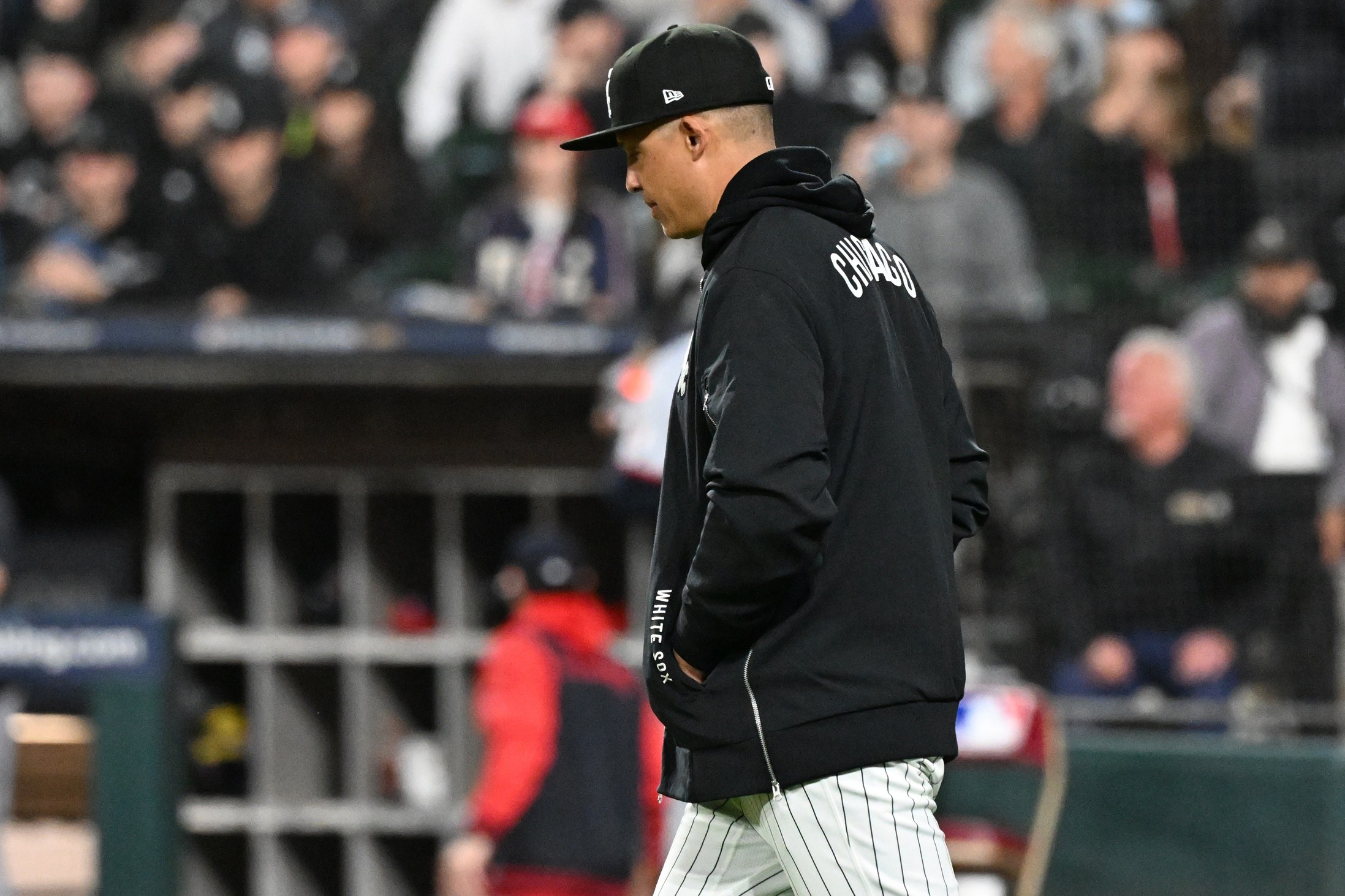
Jeff Torborg
Born: Nov. 26, 1941
Died: Jan. 19, 2025
Managed White Sox: 1989-91
Jeff Torborg managed 11 seasons in the majors, and only had a winning record in two of them. It just so happened that both came with the White Sox with whom he was the right man at the right time.
As the White Sox closed down Old Comiskey Park and opened up the new one, and as they shed unremarkable uniforms for ones that would become a sensation, the on-field product also finally sustained momentum. At the head of it was Torborg, who turned out to be a terrific fit for a young, impressionable team.
Torborg, a heady backup catcher who played 10 seasons and caught three no-hitters, had such classic managerial makings that the Cleveland Indians named him interim skipper in 1977 at the age of 35. It didn't work out there, but when White Sox GM Larry Himes hired him away from the Yankees' coaching staff to replace Jim Fregosi after the 1988 season, Torborg was still just 47 years old, but with former manager experience to draw upon.
It seemed to serve him well. He still had the reputation of a players' manager who gave rookies room to grow on the field, but said he developed more of a backbone for enforcing standards in the clubhouse. He also encouraged mature behavior away from the ballpark, like wearing a coat and tie and allowing players to bring their wives on road trips.
These tendencies backfired on Torborg in his subsequent gigs. The "Worst Team Money Can Buy" Mets rejected his agenda and forced him out of New York before the halfway point of his four-year deal, and Torborg's hands-off managing style was second-guessed when a young Marlins pitching staff suffered a spate of injuries amid high pitch counts. At every stop, Torborg couldn't change who he was, which won more admirers and friends than it did ballgames.
But for two hopeful years, as Jack McDowell told the Chicago Tribune in October 1991 after Torborg left for New York, the White Sox had a group of players Torborg could mold.
"He had the luxury of working with a young team that was was real responsive to that," McDowell said of the emphasis on family. "This combination of his attitude and his approach and the people he was working with was real good."
So why did it end? To hear Ron Schueler and Jerry Reinsdorf tell it, Torborg couldn't resist the opportunity to manage close to his New Jersey home, especially on a fresh four-year contract that nearly doubled his salary. Torborg's side said Schueler, who replaced Himes as GM, offered no assurances as Torborg entered the final year of his contract after a second consecutive second-place finish behind the Oakland Athletics in the AL West, giving the indication that he wanted to hire his own manager.
At the time, it was treated as he-said-he-said. Decades later, it has all the characteristics of a Reinsdorf organization's leadership through passive aggression. However it unfolded, Torborg left the White Sox with his dignity intact. That could be said about him everywhere he went because of his defined sense of self, but in this case, he also left with a winning percentage above .500, and with room to spare.
Don Secrist
Born: Feb. 26, 1944
Died: Jan. 30, 2025
Played for White Sox: 1969-70
RIP Baseball obit
Don Secrist, a 6-foot-2-inch lefty who was raised in Central Illinois, pitched the entirety of his MLB career with the White Sox, totaling 28 games over two seasons. The White Sox acquired him from the Reds in December 1968 alongside Don Pavletich for Jack Fisher after an outstanding season in Triple-A , but he never replicated that success with the White Sox.
Secrist made the White Sox out of spring training in 1969 due to the team's need for a lefty reliever more than Secrist's own performance. From the Chicago Tribune on April 2, 1969:
No one is more astounded by his membership on the Chicago White Sox varsity than Donald Secrist, a left-handed Illinois native who said today, "I had a lousy spring. I really don't belong." [...]
Secrist said he had spent most of the exhibition season this year on the phone getting his wife accustomed to the feeling that she was going to Tucson, which is where the Sox have their new Pacific Coast League station.
The Secrists live in Williamsfield, Ill, not far from Peoria. They have two childred of preschool age, and two days ago when Don called to tell his wife that he had made the ball club, he said she broke into tears.
Along with noting Secrist's 11-2 record over 38 games and 137 innings with the Indianapolis Indians, the Tribune said that Secrist went on to win 15 games in the Mexican League over the winter. That seems like a lot of pitching, and maybe it was. Secrist struggled both in Chicago and Tucson, and was out of professional baseball after 1971. According to his obituary, he worked as a dozer operator for multiple Illinois coal mines after his career.
Eddie Fisher
Born: July 16, 1936
Died: Feb. 17, 2025
Played for White Sox: 1962-66, 72-73
RIP Baseball obit
According to Richard Lindberg in Total White Sox, White Sox GM Ed Short had a tendency to trade player representatives for unproven players during his tenure in the 1960s. That's how Eddie Fisher came to the White Sox after the 1961 season, and that's how he departed the White Sox six years later.
The Sox acquired Fisher from the Giants in the trade that's more notable for sending Billy Pierce to San Francisco. Pierce went on to have one more good year with the Giants, going 16-6 and helping them reach the World Series in 1962, but Fisher gave the White Sox pitching staff significant value for years to come, albeit in a different role.
From 1962 through 1966, Fisher averaged 60 appearances and 140 innings out of the White Sox bullpen, posting a 2.98 ERA. When Hoyt Wilhelm joined the Sox in 1963, Al Lopez had two rubber-armed knuckleballers to choose from, although since Fisher was 14 years younger, he absorbed more of the workload.
Fisher immediately established himself as a viable major league pitcher in his first year with the Sox, throwing 182 ⅔ innings split between spot starting and long relief. Eventually, the Sox leveraged his faster recovery time by making him a pure reliever, and he put together his masterpiece in 1965. He set franchise records for games pitched (82) and relief innings (165⅓), and alongside the quantity came quality -- a 2.40 ERA, 24 saves and a league-leading 0.984 WHIP.
A half-season later, the White Sox sent Fisher to Baltimore for infielder Jerry Adair; a trade failed to pay dividends. Fisher went on to have several more successful seasons in the American League, while Adair was shipped to Boston the following summer. At least the Sox were able to find their knuckeballing replacement via a different veteran-for-youth trade, acquiring Wilbur Wood from the Pirates for Juan Pizarro after the season.
Ted Wills
Born: Feb. 9, 1934
Died: March 7, 2025
Played for White Sox: 1965
SABR bio
The left-handed Ted Wills was 31 and hadn't appeared in a major league game since 1962 when the White Sox acquired him from the Reds in a conditional deal prior to Opening Day. He made the Chicago roster to open the 1965 season and recorded a one-out save in his White Sox debut, coming on in relief of Gary Peters and preserving a 5-1 victory over Washington by getting Willie Kirkland to pop out with the bases loaded.
Wills was successful, at least superficially, over 15 games with the Sox, with a 2.84 ERA over 19 innings, but he walked his share of batters. With Fisher, Wilhelm and Bob Locker absorbing a staggering 77 percent of the White Sox's relief innings, Wills pitched infrequently enough that the Sox optioned him to Triple-A Jacksonville. According to his SABR biography, he interpreted it as a short-term demotion, but he fell into a disagreement with manager Grover Resinger about his mechanics, and was then transferred to Portland in the PCL.
It wasn't the first time Wills failed to see eye-to-eye with a minor league manager, but combined with strains in his personal life, this one prompted him to retire. He told The Sporting News he was "fed up with being pushed around in a business where you a just a pawn from some business manager, owner or field manager."
Jim Breazeale
Born: Oct. 3, 1949
Died: March 13, 2025
Played for White Sox: 1978
RIP Baseball obit
Jim Breazeale appeared in 25 games for the White Sox in 1978, but while his performance was largely inconsequential, the fact that he played at all was a major triumph, because he could've been dead years earlier.
A first-round pick of the Braves in 1968, Brazeale eventually found his footing on Atlanta's big-league club in 1972 as Hank Aaron's backup at first base and a reliable pinch hitter. He hit .247/.297/.447 with five homers in just 91 plate appearances as a 22-year-old, and with Aaron moving back to the outfield for 1973, Brazeale had a chance to take ownership of an infield corner.
But in December of 1972, Brazeale was badly injured in a head-on crash with a car that was trying to pass a tractor-trailer. He was lucky to escape with just a broken wrist and ankle, but the injuries to both were severe. It cost him most of the 1973 season, and it took him years to regain an ability to hit even Triple-A pitching.
He credited a stint with Durango in the Mexican League in 1976 for helping him learn to hit breaking pitches, and he was eventually able to parlay that into enough minor league success for Bill Veeck to give him a shot in 1978.
Breazeale was briefly a phenomenon that season. He joined the team in late May as the White Sox searched for any kind of offense, and he instantly provided a source. He hit .326/.388/.535 over his first 49 plate appearances, including a two-homer game against Seattle on June 20. A Chicago Tribune story two days later painted a vivid, brutal picture of what he looked like doing it:
Breazeale never will be able to convince folks he is a Charles Atlas graduate. A good portion of the 210 pounds on his 6-2 frame sits south of the north 40. His bespectacled head is small for his size, and he has more than an ample belly.
He looks so little like an athlete that Tuesday the guy who guards a door to the Sox front office suggested to Breazeale that he enter through the trademan's entrance -- until assured that Jim was one of Bill Veeck's registered Hessians.
The article also detailed the damage from the accident, both physically (11 broken bones plus ligament and tendon damage in his ankle), and mentally (he wouldn't ride in the passenger seat of a car).
The magic faded shortly after. He went 1-for-29 over his final 10 MLB games before the White Sox sent him back to Iowa. He was employed by the White Sox one more season as a minor league manager, then followed baseball from outside the game afterward.
Octavio Dotel
Born: Nov. 25, 1973
Died: April 8, 2025
Played for White Sox: 2008-09
Octavio Dotel was the first player to suit up for 13 MLB teams, which is incredible for a guy who only pitched in 15 big-league seasons. Dotel broke into the majors at 25 and didn't reach free agency until after his age-32 season, so he was never able to parlay his success as a reliable right-handed leverage guy into even one massive contract. Instead, he had to settle for a bunch of shorter deals, and a handful of teams that signed him ended up trading him in the middle of a season to a team that needed him more.
It also helped that everybody liked him.
“He got traded a lot because everybody always vouched for him," said Steve Phillips, the former Mets GM who was the first to deal him away.
"I've been with so many teams because everybody wants some piece of Dotel," Dotel told MLB.com in 2012.
The White Sox wanted some piece of Dotel as they looked to address an atrocious bullpen after the 2007 season. They signed Scott Linebrink to a four-year deal and Dotel for two, but while Dotel was three years older, he and his contract aged better. He provided 134 games of quality setup work ahead of Bobby Jenks over 2008 and 2009, and with the White Sox winning the AL Central in the first year and contending into August in the second, Dotel actually stayed put. Outside of Dotel's early 4½-year run with the Astros, the White Sox were the only team to employ Dotel for consecutive full seasons.
Dotel was among 236 people who died from injuries suffered under a roof collapse at a Santo Domingo nightclub on April 8, 2025, and as news of his death spread, Jose Contreras remembered Dotel as "the happiest person he ever knew," Ozzie Guillén used similar words, but ones that were also his own.
Chet Lemon
Born: Feb. 12, 1955
Died: May 8, 2025
Played for White Sox: 1975-81
Most of the South Side Hit Men who pumped life into the White Sox franchise during the summer of 1977 were there for a good time more than a long time, but Chet Lemon emerged as the one player to build around.
The White Sox acquired Lemon two seasons earlier in a nifty four-player trade with the Oakland Athletics. At the time, Lemon was 20 years old and a promising hitter, but an erratic third baseman. The White Sox soon decided to move him to center field, which had more space to contain his all-out efforts.
Lemon won fans over with a hair-on-fire style of play that was generally electrifying and occasionally maddening. From his emergence in 1977 through his last season in Chicago in 1981, Lemon hit .296/.376/.477, good for a 135 OPS+ and an average of 5 WAR per season. His body also took a beating, getting hit by 57 pitches while he threw himself around the infield dirt and outfield grass on defense.
Some of it was unnecessary. He was known for diving into first base and succeeded on just 58 of 134 stolen base attempts. In his 1984 Baseball Abstract, Bill James had a hard time ranking him:
Such an odd player; talented and productive, plays hard. And he's the captain of baseball's airhead team. Although he is fast he's an awful baserunner. He tried to steal 7 bases last year and was out all seven times; in the last two years he is 1 for 12. The last time he was over 50% was 1977, when he was 8-for-15. And besides the caught stealing, he must make 20 baserunning errors a year. On the other hand, he is on base a lot, is a patient hitter and always leads the majors in being hit by the pitch. He hits for power, is a good center fielder with a good arm... It's an interesting combination and seriously flawed, but there is no doubt that he is valuable.
At this time, Lemon had been on the Tigers for two seasons, signing with Detroit as a free agent after falling out with the White Sox over a contractual dispute. Lemon said he had "verbally agreed" to a five-year contract before the 1981 season that would've made him the team's highest-paid player, but that title instead went to Carlton Fisk after the Sox pounced on Fisk's unexpected foray into free agency. Unsuccessful in his attempts to renegotiate, Lemon never signed the contract.
Instead, the White Sox traded him to Detroit, where he spent the rest of his career. While Lemon admitted some culpability in his departure, there were ultimately no reasons for regrets. His production transferred cleanly to Detroit, and his contributions on both sides of the ball played a vital role in the Tigers' 1984 World Series title. After his playing days, he poured his efforts into Florida youth baseball and created a travel ball juggernaut.
Lemon made it back to Detroit in August 2024 for the team's 40th reunion, and although a series of strokes had left him unable to walk or speak, his joy was evident, and his wife said she thought the trip added months to his life.
Mark Esser
Born: April 1, 1956
Died: May 12, 2025
Played for White Sox: 1979
RIP Baseball obit
Mark Esser was drafted in three consecutive seasons, and the White Sox picked him in two of them. He spurned a 20th-round offer in the 1975 June draft from the Orioles to attend Miami-Dade College, and although that resulted in the White Sox selecting him in the seventh round of the 1976 draft in January for previously drafted players, he again returned to college. When the Sox took him once more in the eighth round in January 1977, he finally began his pro career.
Esser struggled with control from the jump, although he racked up enough strikeouts in relief at A-ball Appleton in 1978 —109 over 84 innings — to put himself on the major league radar. The White Sox gave him a brief look early in the 1979 season, but he only made two mop-up appearances a week apart. The first was a success around a couple of walks, but he retired just one of the four batters he faced in the second game, necessitating a third pitcher in the ninth inning of a game the White Sox ended up losing 10-0.
The White Sox returned Esser to the minors afterwards, but while he showed some signs of progress upon returning to starting for three different Sox affiliates in 1980, a hand injury in winter ball cost him all of the 1981 season, and he never got past it.
Verle Tiefenthaler
Born: July 11, 1937
Died: May 28, 2025
Played for White Sox: 1962
RIP Baseball obit
Verle Tiefenthaler came to the White Sox in the same trade that sent Eddie Fisher to Chicago from San Francisco, but not at the same time. While the trade was struck in November 1961, Tiefenthaler joined the White Sox the following August as a player to be named later that completed the deal.
One of the reasons for the delay was military duty. Tiefenthaler was drafted into the Army in 1958, and after posting a 13-6 record and a 3.92 ERA over 56 games and 85 innings for Triple-A Tacoma in 1961, was recalled into active duty by the Army after the season and sent to nearby Fort Lewis. He was discharged during the summer of 1962, and the Giants sent him to the White Sox that Aug. 17.
He made his major league debut two days later, but his career lasted only three games over two weeks. He issued seven walks over 3⅔ innings, twice failing to finish the middle inning he'd been brought in to handle. He returned to Triple-A for Indianapolis the following season, but wore a 5.38 ERA over 117 innings. That marked the end of his playing career, and he returned to his hometown of Carroll, Iowa, where he spent the rest of his life.
Bobby Jenks
Born: March 14, 1981
Died: July 4, 2025
Played for White Sox: 2005-10
No player better embodied all the good fortune that helped the White Sox win the World Series in 2005 than Bobby Jenks, because he should've never been on the team to begin with.
With a fastball that hit 100 mph and a feel for spin that made him a top-100 prospect in the Angels system after they selected him in the fifth round of the 2000 draft, Jenks shouldn't have been freely available on waivers. With elbow issues interrupting his rise and bringing his addiction issues and troubled upbringing to the fore, Jenks could've been out of baseball entirely, if not worse.
Instead, the White Sox claimed him during the 2004-05 offseason, and the rest is history. He found success in short order at Double-A Birmingham, and when the Sox called him up in July for a midseason boost to the bullpen, he became an immediate sensation, stepping in as the team's third closer of the season and recording the final out of the only White Sox World Series title over the last 108 years.
Jenks ended up recording 173 saves over his six seasons with the White Sox, making two All-Star games and tying the record for most consecutive batters retired, which Mark Buehrle ended up surpassing. It wasn't always as easy as he initially made it look. As years went on, Jenks pitched fewer and fewer innings, and more mutual grumblings escaped contain, but given the expansive range of potential outcomes, everybody had to consider themselves extremely lucky for the success from which everybody on the South Side benefited.
That became especially clear the way Jenks' fortunes turned after leaving Chicago. He signed a two-year, $12 million contract with the Red Sox after the 2010 season, but only pitched 19 games with Boston. He dealt with a torn bicep, then a back injury, and then a blood clot. And when he underwent surgery to clear it all up, it ended up in a botched procedure and an addiction to painkillers.
In another improbable turn, however, Jenks rebounded. He gained sobriety, remarried, and got back into baseball by managing at the lowest professional levels, first in the Pioneer League, and then with the Windy City ThunderBolts.
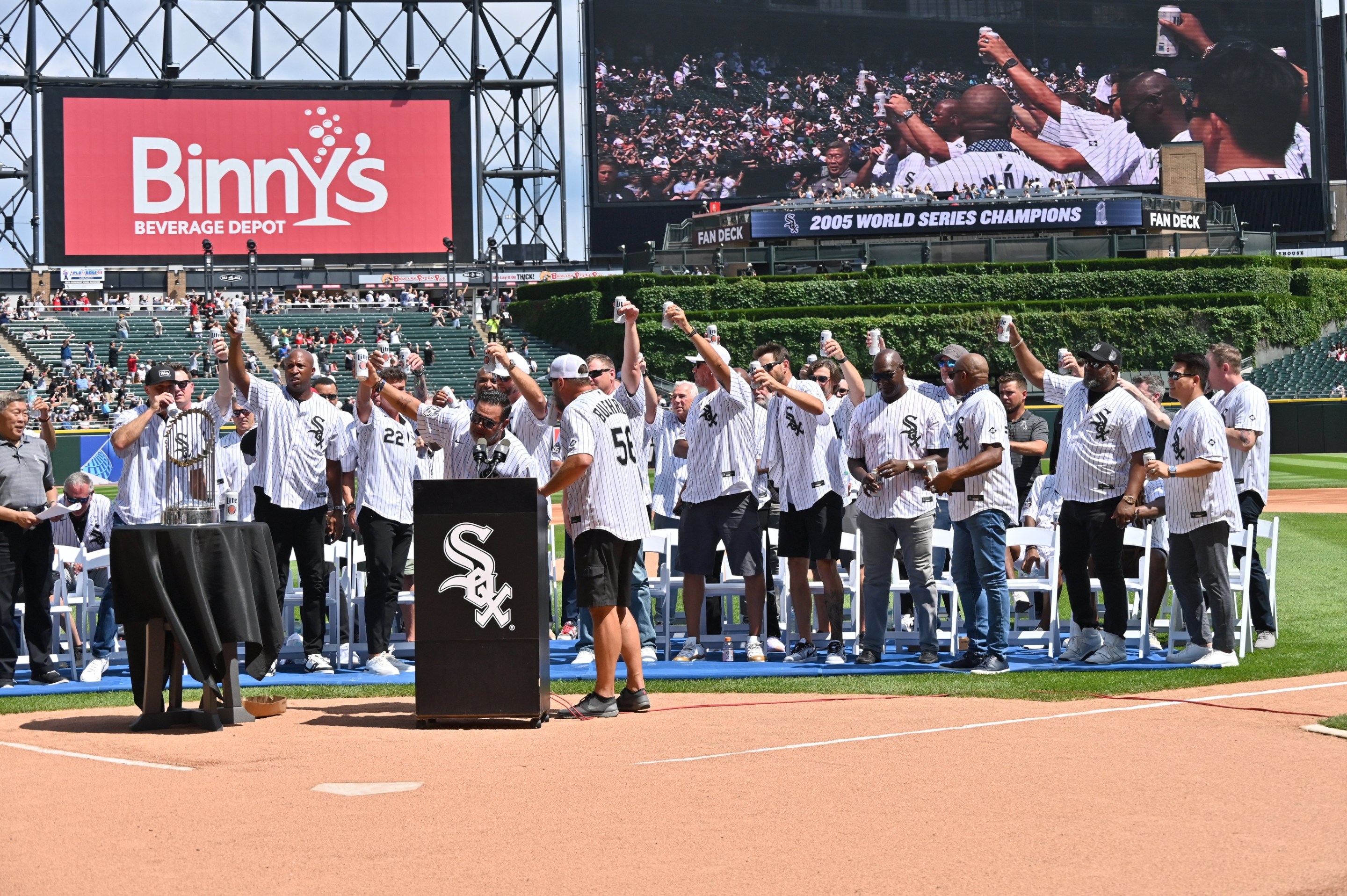
Unfortunately, it didn't last, but for reasons beyond his control. Jenks was set to enter his second season managing in Joliet when he was placed on leave in February due to Stage 4 stomach cancer, and by April, it became clear that Jenks' time was running short. He expressed hope that he could make it for the 2005 White Sox's 20th anniversary reunion at Rate Field in July, but he died a week before the event, which turned the weekend-long celebration into a celebration of life.
Jenks' death at 44 was way too early, not just in terms of life expectancy, but in the sense that after 15 years of oscillating between struggling and succeeding in a public life he was physically equipped but mentally unprepared for, he should've had more time to reap the benefits of Figuring It All Out. Jenks achieved immortality as soon as he recorded the 27th out on Oct. 26, 2005 and caught A.J. Pierzynski leaping into his arms, but it's a shame it's being tested so soon.
Lee Elia
Born: July 16, 1937
Died: July 9, 2025
Played for White Sox: 1966
Ranted against Cubs fans: 1983
RIP Baseball obituary
While Lee Elia's greater legacy came as the manager of the Chicago Cubs, he spent most of his MLB playing career with the White Sox, for whom he appeared in 80 of his 95 big league games during the 1966 season.
A shortstop by trade, Elia came to the Sox as a secondary player in a swap with Philadelphia in December 1964. After slugging 29 homers over 137 games for Triple-A Indianapolis in 1965, he finally broke into the big leagues as a 28-year-old in 1966, stepping in at short when the White Sox lost Ron Hansen to a back injury. Elia received a lengthy look as a starter, but ultimately failed to hold down the job, hitting .205/.265/.297 over 80 games.
The White Sox sold him across town the next season, and while the Cubs initially offered him a minor league manager gig after his playing career, he took some time away from baseball and eventually found such a role with the Phillies. Dallas Green had been responsible for bringing Elia to the Phillies, so when Green departed to become the Cubs GM after 1981, Elia came along for the ride.
Elia lasted only 1½ seasons as manager, finishing 127-158 over 1982 and 1983, but a rant recorded by Les Grobstein on April 29, 1983 cemented his status as a Chicago cult hero.
Jeff Bittiger
Born: April 13, 1962
Died: July 19, 2025
Played for White Sox: 1988-89
SABR bio | RIP Baseball obit
A first look at Bittiger's Baseball-Reference.com page shows a right-handed pitcher who offered replacement-level swingman innings for three teams over four seasons in the 1980s. His best work came with the White Sox in 1988, where he pitched in 25 of his 33 career MLB games. He started seven of them, finished nine others, and ended up posting a 4.23 ERA over 61 ⅔ innings, but was unable to replicate success the following season thanks to an injury that resulted in an IL stint after his second game.
Then you click on his minor league stats, and like a small island in the middle of an ocean, what's more impressive is all the work that went on underneath.
Bittiger pitched in 23 professional seasons, starting his his debut as an 18-year-old with the Mets' New York-Penn League affiliate in 1980, and ending as a 40-year-old pitching his seventh and final season for the Fargo-Moorhead Redhawks during their first seven seasons in the independent Northern League in 2002. After his playing days, he spent the next 22 years as an area scout for the Oakland A's before succumbing to cancer at age 63. He literally spent his entire adult life around the game.
Rich Hinton
Born: May 22, 1947
Died: Aug. 7, 2025
Played for White Sox: 1971, 1975, 1978-79
SABR bio | RIP Baseball obit
Rich Hinton pitched for five big league teams over six seasons during the 1970s, including three different stints with the White Sox. That seems fitting, considering Hinton was drafted five different times, ultimately signing with the Sox after they selected him in the third round of the secondary phase of the June draft in 1968. You'll never see an introduction to somebody's B-Ref page like his:
Hinton went from starring at the University of Arizona to pitching at Triple-A Tucson for his first two full pro seasons. He was called up to Chicago in the middle of the 1971 season, but an encouraging start to his big league career didn't last. First, the White Sox traded him to the Yankees, and then Hinton contracted mononucleosis during spring training in 1972. That more or less disrupted his entire season, and he spent the rest of his time in the majors on an itinerant track.
After his playing days, Hinton worked as a general contractor. Despite appearing in six seasons, Hinton didn't quite accrue four years of service time, and he last appeared in a game in 1979. A year later, the MLBPA and MLB changed vesting requirements to where a player only needed to play a day to start earning pension credits, and 43 days for post-medical insurance, but it didn't apply retroactively.
Marc Hill
Born: Feb. 18, 1952
Died: Aug. 24, 2025
Played for White Sox: 1981-86
RIP Baseball obit
"I've never met anybody as totally unselfish as Marc Hill," Tony La Russa said in a Chicago Tribune article on July 4, 1984. Then again, Hill kinda had to be. He opened his 14-year MLB career backing up one Hall of Famer with Ted Simmons in St. Louis, and then spent the last six years of it behind another in Carlton Fisk with the White Sox.
That said, Hill could have taken some umbrage when he signed with the White Sox in February of 1981, with a chance at real playing time, only for Fisk to show up in Chicago a month later because the Red Sox failed to tender the final year of his contract on time, making him a surprise free agent.
But Hill, whose nickname of "Booter" wasn't a comment on his defensive chops, was well suited for the backup backstop lifestyle. He was a popular clubhouse presence who controlled the game with his running arm, and while he hit just .223/.295/.317 over 2,047 plate appearances, teams generally knew what they were going to get from him in terms of production and planned accordingly.
His hitting eventually became truly untenable in 1985, although it was masked by Fisk catching 130 games and more than 1,000 innings behind the plate. Hill managed to survive into 1986 because he was on a guaranteed contract and Hawk Harrelson had the idea of opening the season with Fisk in left field, but once the White Sox abandoned that experiment, Hill's playing career came to an end...
...kind of. Hill remained with the White Sox as a catching instructor for the rest of the season, and signed as a free agent for the final week of the 1986 schedule when Ron Karkovice's rookie season ended with a broken finger, but he didn't appear in another game.
Sandy Alomar
Born: Oct. 19, 1943
Died: Oct. 13, 2025
Played for White Sox: 1967-69
SABR bio | RIP Baseball obit
All three Alomars plied their trades for the White Sox, but unlike his sons Sandy Jr. and Roberto, Sandy Sr.'s South Side stint happened before his prime.
That said, while the Whtie Sox didn't stick with him long enough to see him turn into a credible everyday infielder, his time on the South Side restored his confidence.
When the Mets sent Alomar to the White Sox in August 1967 as the player to be named later in a four-player trade headlined by Ken Boyer, the 23-year-old was joining his fourth organization in four years, none of which offered him steady playing time at the major league level. The SABR bio by Irv Goldfarb cites an interview Alomar conducted with the Los Angeles Times in 1970:
It was at this point that Alomar became disillusioned. “It was a nightmare,” he told a reporter in an interview three years later when asked about the season in which he was on the roster of four different major league teams. “Like a piece of garbage…They treat me like I was something they could throw away when they want to…They brainwash me. They tell me I cannot hit, that I good glove man…they say I am too little to not wear down. They make me believe these things myself…almost.”
Grover Resinger, a White Sox minor league manager previously cited helping drive Ted Wills out of the game, here is identified as an advocate. In 1968, Alomar finally got his first sustained shot at big league playing time, appearing in 133 games as a utility infielder and accumulating almost 400 plate appearances.
That said, he didn't stake his claim to a position. He hit .253/.292/.287 with just 10 extra-base hits, and while that didn't stand out as individually disastrous for the league's worst offense in the Year of the Pitcher, it didn't generate him much security, either. When he opened the 1969 season 4-for-31, he lost his starting job, and then ended up being traded to the Angels for Bobby Knoop in a swap of struggling second basemen.
It looked like an upgrade, as Knoop had won three consecutive Gold Gloves at second base and while providing league-average offense, but his production also cratered at the start of the 1969 season. The White Sox were hoping to buy low, but for the 30-year-old Knoop, it was the start of a swift decline.
Alomar didn't provide immediate returns in Los Angels, but he did get unprecedented stability in Anaheim, and eventually he blossomed into a literal everyday player. He peaked in 1970 and 1971, playing 162 games in each season and leading the AL in plate appearances both times. While he made his only All-Star team in the first of those seasons, the latter campaign was the best one of his career by just about every other measure.