For the first time since 2005 and just the second season in their most recent 109 years as a baseball concern, the Chicago White Sox have won a postseason series.
Yes, it was in a round that didn't exist in a permanent fashion until 2022, and against a team that was the first to win its division without a winning record, but the White Sox hadn't experienced any kind of postseason success in the entire history of this site, nor for the lifetimes of the most recent generation of Sox fans. In this case, a small victory is still a victory.
It isn't really a small victory, either. In terms of the way the series unfolded, the White Sox won big. They led all 18 innings of the series, scoring in the top of the first in both games, and while the Astros had enough talent to make runs at closing the gap, the Sox ultimately beat them back.
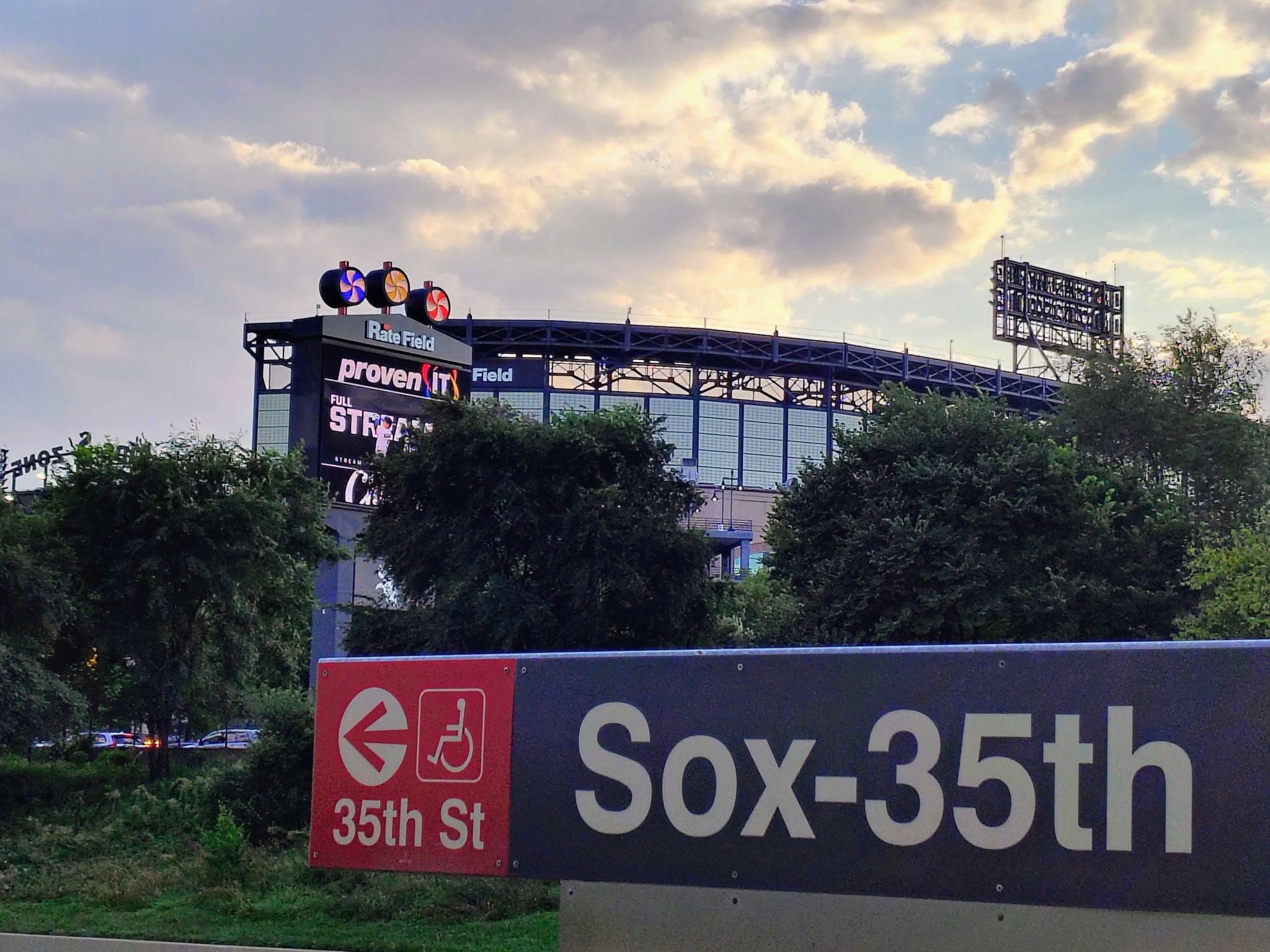
There are also smaller rewards that stack. With the Cubs being swept out of the National League bracket by the Padres, the White Sox have the entire city's baseball discourse to itself, at least for a few days. They'll also be guaranteed at least one postseason home game at Rate Field, which as Houston reliever Bennett Sousa helpfully reminded everybody at the expense of his own team's vibes before unsuccessfully backtracking, will "probably be loud as shit."
The 2026 White Sox deserve at least that much, because the Wild Card Series round showed them to be one of league's four best teams at the end of it.
These Sox might have flaws, but their 26-man roster is surprisingly sound. What the pitching staff lacks in starters, it makes up for with relievers or bulk guys who have held down some sort of job at the major league level for meaningful chunks of the season. Will Venable made eight pitching changes over two games, and the shakiest decision might've been using Huascar Brazobán to start the fifth in Game 2 -- yet he's a reliever who had a successful 2026 regular season, by and large. On Houston's side, without his best left-handed reliever in Steven Okert, Joe Espada was pressed into using guys like Bryan King (5.19 ERA), Sousa (6.00 ERA), and Josh Hendrickson (2⅔ MLB innings, no Gameday headshot) to get the White Sox's lefties out, and they largely failed.
The position player side is equally sensible. Venable used the same nine hitters in both lineups with only one small alteration, which happened to produce an immense payoff. In Game 1, Braden Montgomery batted seventh and Chase Meidroth eighth. In Game 2, Meidroth batted ahead of Montgomery, putting him in position to deliver the White Sox's finishing move with his three-run blast off Bryan Abreu in the sixth inning.
Now that Colson Montgomery is batting ninth, there are no major questions about who should be appearing where, because every vulnerable player has a corresponding pinch hitter and/or defensive replacement for reinforcement. It's not the scariest lineup left in October, but it's a real nine with multiple configurations and a way to start scoring innings from any part of the order. To put it another way, the White Sox posted 13 runs over two games where Miguel Vargas and Munetaka Murakami went a combined 1-for-17.
The White Sox are dancing with who they brought on both sides of the ball. That's a phrase that's come up a number of times this season, often with a dispiriting connotation to reflect a lack of real alternatives. Here, it's actually reassuring. With a couple of exceptions on the margins, Venable is largely managing the same cast he's had all year, and thanks to the shortage of starters, the way he's managing them in the postseason resembles so many regular-season games. What results may not be the most elegant routine, but at least nobody's feet are being stepped on.
There's an Onion story from the Great Recession about whether T.J. Maxx was in a downward spiral or conducting business as usual, which I've thought about the last couple of days.
“The state of this store does not in any way correspond to our standard criteria for judging long-term viability,” said economist Graham Stinson, referring to Chicago’s Fullerton Avenue branch, where more than half of the fluorescent lights are burnt out. “For instance, the canvas bins heaped with broken stemware in aisle six may be a sign that T.J. Maxx is on the verge of complete bankruptcy. Either that, or it’s doing perfectly fine. It’s impossible to say which.”
When the Phillies call upon their closer in the seventh inning, desperation hangs in the air. When Houston has to play its two most battle-tested veterans at defensive positions, it's the sign of an impending identity crisis. When the Red Sox cut short Wild Card Series starts out of deference to the Times Through the Order Penalty even though those starters will end up getting Cy Young votes, it reveals a major rift between the clubhouse and the decision-makers.
Meanwhile, when Venable uses a rookie lefty in Game 1 to cover the first inning or two -- hell, make it three -- then calls upon his best bullpen arm to handle the final seven outs despite what ends up being the highest pitch count of his relief career relief, it's just a Tuesday.
The standard postseason baseball game continues to distance itself from the regular-season form, but the White Sox who trounced the Astros in their home park looked largely composed in demeanor, strategy and execution, which makes one wonder how much their place in the regular-season standings applies to what comes next. After six months of handwringing about roster construction compromises that wouldn't pass inspection, it'd sure be funny if October baseball was what it ended up being built for.