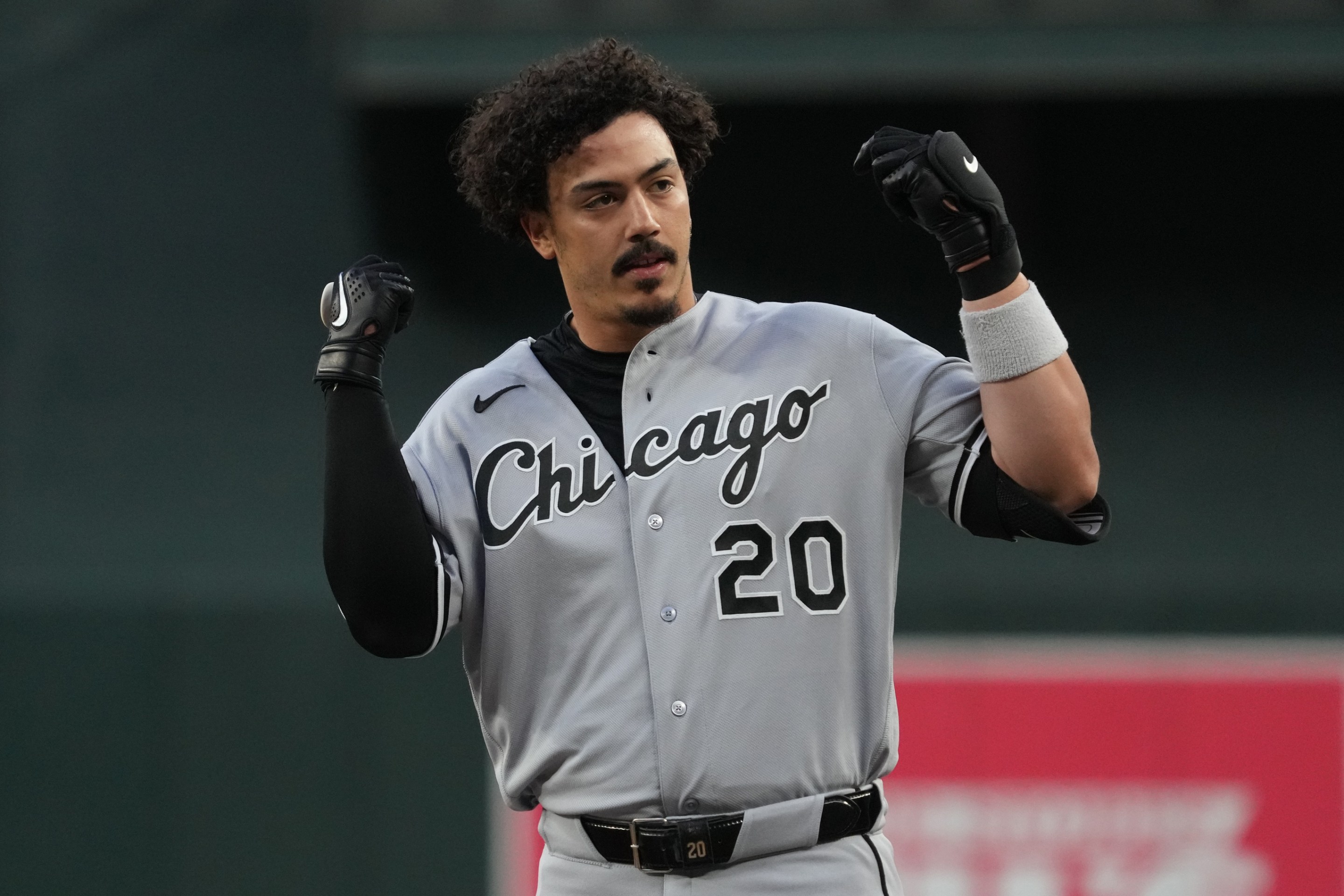
Once envisioned as a potential midseason line change, Hagen Smith's shoulder impingement means that he, Tanner McDougal and Noah Schultz (rehabbing, but nevertheless) are all on some form of injured list, as is Opening Day starter Shane Smith. Figuring out who is the Sox fifth starter is enough of a conundrum on its own, before considering upgrades elsewhere in the rotation.
As such, Anthony Kay's about-face after a decidedly rocky opening month back in MLB has been a vital pillar in the rotation's efforts to keep the ceiling from caving in on the party being thrown by the White Sox offense.
| IP/G | ERA | K% | BB% | GB% | Hard% | xBA | xSLG | xERA | FIP | RHB OPS | |
|---|---|---|---|---|---|---|---|---|---|---|---|
| Pre-May 1 | 4.17 | 6.12 | 12.3 | 11.5 | 36.8 | 47.7 | .316 | .544 | 8.30 | 6.26 | .998 |
| Post-May 1 | 5.17 | 3.27 | 21.2 | 7.3 | 52.1 | 37.2 | .251 | .388 | 4.27 | 4.60 | .808 |
"It’s kind of what I’ve planned to do this whole time," Kay said. "Obviously, the first month wasn’t great, but we bounced back good and hopefully we can keep it going."
For someone who had just won the NPB ERA title on the strength of pristine control and piles of ground balls, the carnage of the first month could've spurred some real outside questions about whether Kay's arsenal would play in this league. But whether the alterations made to reverse course were breakthroughs, or basic maintenance combined with regression, could depend on whether your perspective is that of a team with limited options, or a self-confident pitcher who felt they were just experiencing variance.
"Some variables we changed and now you are seeing those results, specifically against the right-handed hitters, and he deserves all the credit," said pitching coach Zach Bove. "Development never stops. It doesn’t stop at the major league level. Anthony was struggling. He would be the first to say so. We got the group together, a lot of smart people in this org, and we said we have to make a change."
"I don't really a feel a difference, but obviously the results have shown," Kay said. "It might be a little bit of a weird angle for righties, and then I have just been in the zone way more."
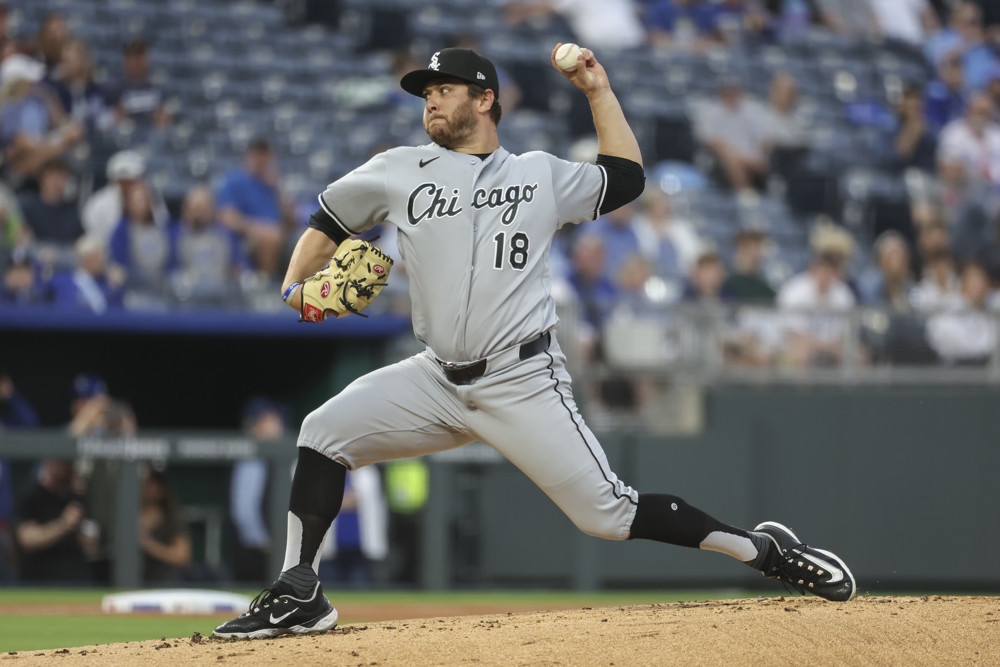
The tweak in Kay's game that's grabbed the most attention is probably the one he finds to be most minute, shifting his back foot to the first-base side of the pitching rubber, when he would have already described himself as setting up in the middle previously. Kay throws from a low three-quarters arm slot and in 2026 baseball, accentuating a funky crossfire angle is the sort of extra quirk that pitching coaches covet.
But being in the zone can actually be a surprisingly vibes-based assessment. Kay's in-zone percentage and first-strike rate were higher while he was struggling, but the most walk-avoidant command artists in the sport are often playing off the edges of the zone more than you'd assume. Kay is pitching like someone who is ahead in the count more often, regardless of what raw totals can readily tell us.
| FB% | SI% | CT% | SL% | CH% | Chase% | |
|---|---|---|---|---|---|---|
| Pre-May 1 | 31.7 | 14.4 | 18.4 | 20.0 | 15.5 | 28.6 |
| Pre-May 2 | 20.3 | 22.0 | 17.2 | 27.7 | 12.7 | 35.2 |
"I've always handled the glove side really well, so I think me moving over is [allowing] me able to tunnel everything from that way just a little bit better," Kay said. "You can just throw anything really, when you're ahead in the count. You don't have to be so aggressive in the zone, you can nibble a little bit and try and force guys to swing and miss."
The influx of sinker usage has unsurprisingly correlated with a return of high ground ball rates for Kay, and more swings on pitches out of the zone has lined up with weaker contact. Despite much firmer left-handed velocity (95.8 mph) than the league average, Kay's four-seamer was getting absolutely tattooed in his reintroduction to MLB (.368 BA, .684 SLG pre-May 1). There's certainly an element of needing to throw it to get back into counts less, because the four-seamer is performing dramatically better (.171 BA, .314 SLG since May 1) as Kay has re-expanded his mix and used it more sparingly.
But just as so many Sox rookies have gotten going this year when they stopped trying to adjust their games to the majors, and got back to playing like themselves, Kay's resurgence comes as he's tracking closer to the three-fastball types (four-seamer, sinker, cutter) style of pitching that worked so well in Japan and made him attractive to the White Sox in free agency.
In spring, Kay spoke about how MLB hitters have more damage-oriented, uphill swings, and that he would probably incorporate more four-seamers in response, in order to generate in-zone swing and miss. After a couple of months of experience, he feels he overdid it, and is back to trusting his mix to generate grounders.
"Early on I was worried about damage a little bit too much," Kay said. "Now it's just be in the zone, and if you're going to give up the solo shot, it's going to happen. That's just the game now. You can't be too afraid of it. You have to just keep attacking, and if it happens, it happens. The sinker is a huge contact pitch. You want them to hit it in the ground and it's just been massive. I've started to use that more to force some contact, weak contact to get the ball on the ground more, force some ground balls. Using that a little bit more, especially to righties, has helped a lot."
There's a small issue that earlier usage breakdown of Kay's pitches. It's from a Sports Info Solutions dataset that groups all of his sliders in one category. In truth, Kay has a sweeper and also a new, harder and more vertically-oriented slider that has been another recent upgrade for his attack plan against righties. The sweeper has a healthy 30.7 percent miss rate, but the slider is riding at 45 percent early on, and doubling up on it to Andy Pages helped him escape a bases loaded jam in his last start.
There's no secret split to uncover that will make Kay's work to date look like that of a typical No. 2 starter on a playoff team. This current roster doesn't have that in tow. But that Kay has the breadth of arsenal and ability to manipulate the baseball to adjust his attack and be effective is not viewed as a fluke, nor even a big revelation, but kind of the selling point for signing him in the first place.
"He’s made his adjustments," said Will Venable. "He’s somebody that’s had to do that, going overseas and then coming back. It’s something that’s not foreign to him. It’s nice to be able to see him go to work, make these adjustments and get some results on them after what wasn’t maybe the best start that he had, the first couple of outings for him. Really cool to see that his hard work is paying off."