An already tumultuous baseball labor landscape didn't necessarily need MLBPA executive director Tony Clark to resign under an even more radioactive cloud of scandal than he'd been courting, but when it comes to resolving the next collective bargaining agreement over the next eight to 80 months, everybody should probably steel themselves for all sorts of bad scenes.
The news broke in two parts on Tuesday. The first was the news of his resignation, which The Athletic initially reported was connected to a federal investigation into Clark's handling of union finances. That was news, certainly, but it wasn't entirely out of left field, as the investigation had been ongoing for most of the past year.
That wasn't all, however. Later, Jeff Passan added that an internal investigation of Clark "revealed an inappropriate relationship with his sister-in-law, who was hired by the union in 2023," and that apparently made him too great of a liability to shoulder, especially since it added to the number of questions about improper uses of funds.
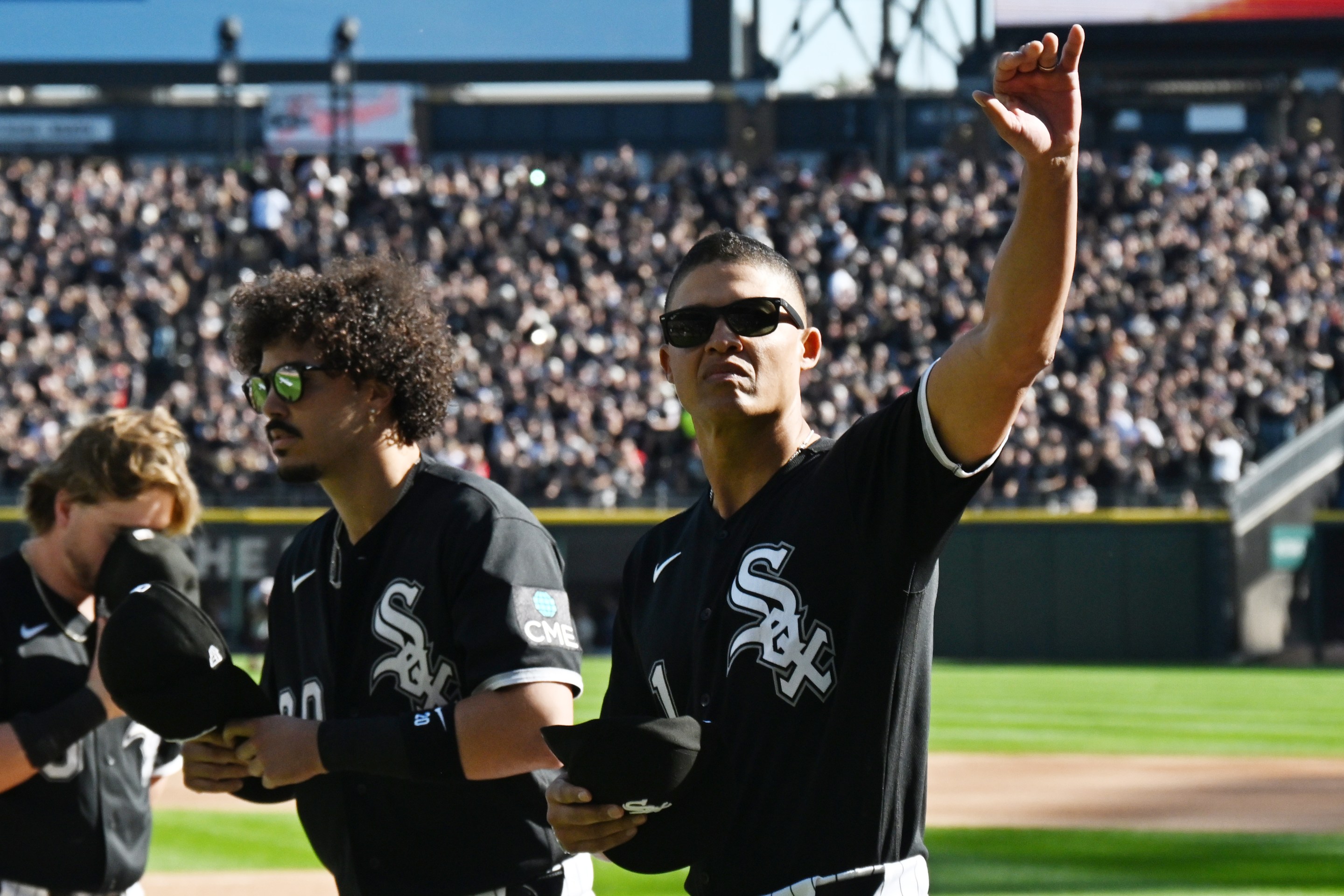
White Sox personnel were asked about Clark's departure after it became known, but before it became more salacious. Andrew Benintendi and Davis Martin said the union would remain united despite the news, and members were still considering their next steps (the MLBPA opted against voting for an interim director on Tuesday).
Perhaps the most enlightening part was learning about the White Sox's ever-shifting player representative structure, since it figures to be a part of our offseason coverage if the league locks out the players as expected. Chris Murphy seems to be leading the way, which is interesting since he's not necessarily a lock for a spot in a crowded bullpen. But Martin and Benintendi said they're a part of the discussions as well, and a division of labor probably makes sense, because based on Martin's account of the history of the position, they should opt for strength in numbers.
"So Austin Slater was our guy and when Slater got traded, Steven Wilson took over the role," Martin said. "Then when Steven Wilson got traded, he passed it down to me, Murphy and a couple of others. So we kind of shared the load a little bit. It is funny just the realization of how old I am getting and where we're at. Usually I wasn't anywhere near these conversations and now we're in the thick of it. It's really cool. [...]
"We've had great conversations with Murphy. Murphy is a smart guy and he's been around and he knows what he's talking about. So me, Shane [Smith] and [Mike] Vasil and some of the other guys are still trying to learn from him, like we learned from [Wilson] and we're just trying to be as smart as we can about the situations and understand them as best we can. Learning from those guys is always great."
Meanwhile, in Minnesota...
After three consecutive 100-loss seasons and two wire-to-wire last-place finishes in the AL Central, the White Sox won't be able to look down on any team until they spend at least part of the season ahead of one.
That said, while we've spent the bulk of the last 20 years chronicling uninspiring or incomplete offseasons, I can't remember a winter-turned-spring as disjointed as the ones the Twins are experiencing.
The asymptotic shift in direction followed the ascent of new chairman Tom Pohlad, who took over in mid-December with the the sort of energy and fan awareness the team could have used three years ago, or even three months earlier. Instead, he's coming onto the scene after the Twins already largely committed to a teardown and trying to will them back into contention, whether by rejecting a 73½-win over/under as "ridiculous" or talking about a failed pursuit of Framber Valdez.
To a point, it's commendable to see a Pohlad speaking to the frustrations of the fan base after watching the family divest from a roster that could have controlled the AL Central for a few years. There's just a recklessness to the rhetoric that risks undermining confidence just the same, as the events of Monday laid bare.
In the morning, Pohlad spoke for 10 minutes at a team meeting, emphasizing a new level of accountability at the ownership level that seemed to resonate with players. In the afternoon, Pablo Lopez tore his UCL. He's likely to miss the season, which would damage a Twins rotation that looks -- or looked -- like the team's best source for projection-beating production. Perhaps this development will force the new chairman to ease up on vowing success his front office hadn't prepared for, but his PR offensive hasn't shown signs of a contingency plan just yet.
It all sets up a seizure-inducing contrast when judged against the White Sox, who have taken the opposite tack by boasting careful, gradual infrastructural improvements while specifically promising very little on the field. That seems far more responsible, but neither method seems designed to satisfy or entertain, which sets the stage for a fourth-place battle that's ironically compelling.