By this point, Chris Getz has said it enough times that we have to take him at his word.
I'm not talking about his emphasis of organizational infrastructure, the importance of a new Dominican Republic training facility, or his willingness to retain Luis Robert Jr. or Edgar Quero despite the natural sense in trading them. No, we're talking about his tendency to say understate in reaction to thrilling news when most people would say overstate.
After the White Sox won the draft lottery at the Winter Meetings, Getz told MLB Network's Greg Amsinger, "I can't understate how big of a deal this is." It wasn't a slip of the tongue, because he then said to reporters gathered afterward, "It's a significant event for us. It can't be understated how important it is."
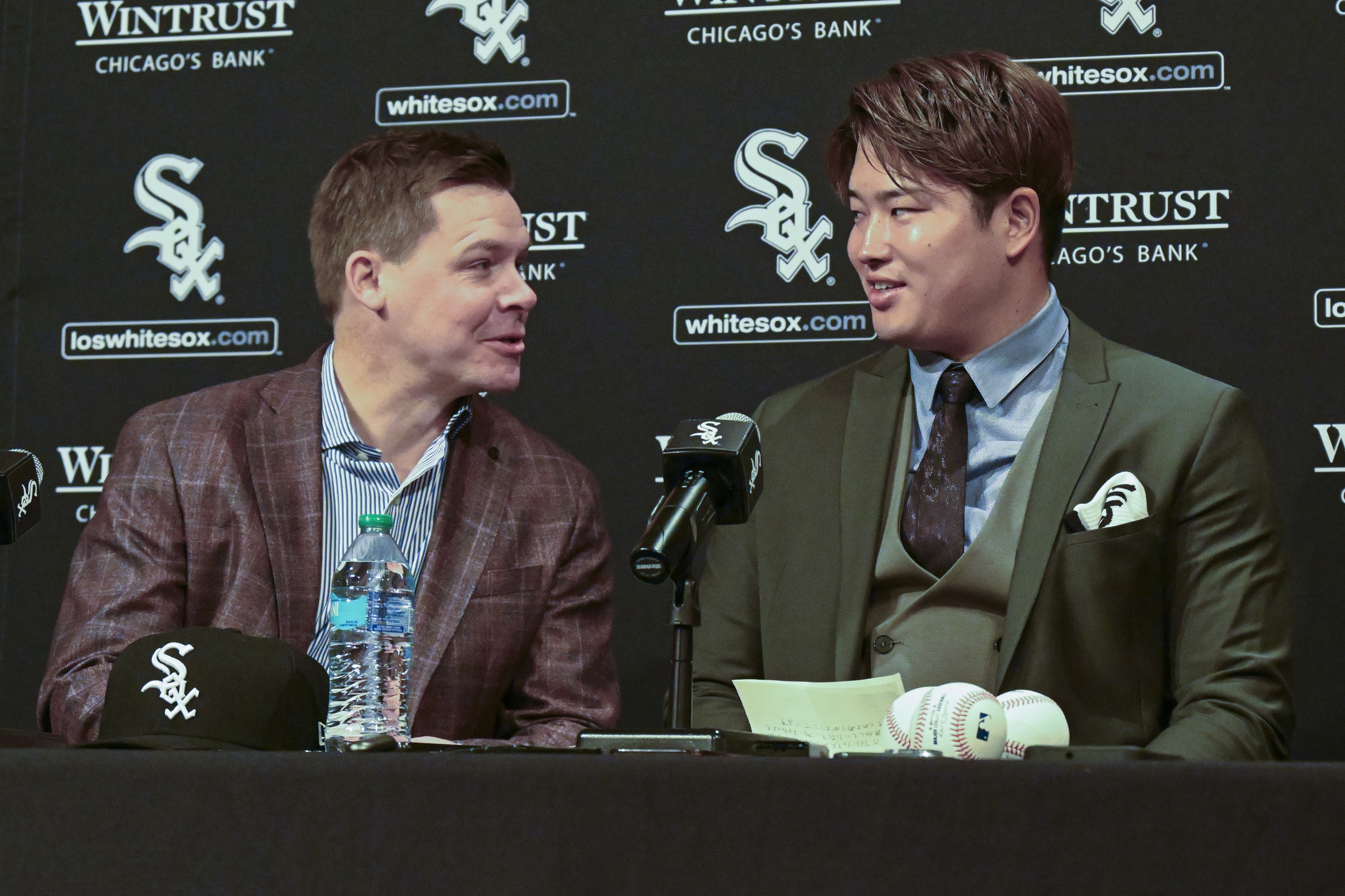
Perhaps that was adrenaline talking, but he had 24 hours to digest the two-year, $34 million signing of Munetaka Murakami before his introduction on Monday, and Getz still came out and said, "It really can’t be understated how significant this boost is."
Sure, I suppose there's a chance that he's unintentionally misspeaking, the way people say "I could care less" when they intended to say they could not care less. But on both occasions, the stroke of amazing luck still couldn't inspire Getz to set any firm expectation of when he expects the White Sox to be good again, even though he's in the middle of his third winter running baseball operations.
"We’re going to look up and all of a sudden we’re going to start working our way up the standings. We felt that a little bit last year -- we’re going to take another jump next year and we’re just going to continue to build off this momentum," is as close as he got at Rate Field on Monday.
So when it comes determining whether overstating or understating is a misstatement, allow for the possibility that Getz means what he says. Whether it's having the first pick in the draft or a Japanese slugger who was expected to sign for nine figures at the onset of the offseason, perhaps Getz earnestly tried finding a way to temper the impact, and gave up.
The acquisition of Murakami might not end up being the greatest move Getz ever makes, because there's a very real chance the contact issues undermine the power, and he isn't able to offset ordinary offensive production with any real defensive value. Those concerns are how he ended up on the White Sox on a two-year deal in the first place.
But this might be the easiest $34 million Getz ever spends, in the sense that everybody automatically understands why the White Sox signed him for the amount they signed him for, even if the framing is equal parts cynicism and snark. For somebody like Getz, who frequently alludes to compliments from peers about their progress in lieu of on-field evidence, this is as good as it gets.
The immediate interest and intrigue generated already justifies the commitment, because there wasn't a more straightforward way to make the White Sox compelling to audiences that previously didn't have reason to care, both domestic and international. Trying to plot out where it all goes from here? That's a far more open conversation.
There's a scenario where Murakami flops, yet the signing is still a success. In that version of the future, the two-year commitment doesn't impede development elsewhere, the young talent coalesces into a respectable base to maintain most of the energy from the offseason, and an upside-hunting front office, undaunted by a whiff on Murakami, strikes gold elsewhere, perhaps with NPB talent that was previously unaware of the White Sox.
Yet there's also a scenario where Murakami succeeds, but the signing ends up being closer to a nothingburger. Nobody should bank on instant stardom, but it's entirely possible that Murakami is immediately useful on both sides of the ball, and it only amounts to a July trade for other prospects, further delaying the establishment of a timetable by which Getz could be held accountable.
The White Sox didn't really have answers to the new questions about the state of the franchise on Monday, which is understandable given how suddenly it all changed. It's not like Brooks Boyer could strike overseas marketing deals on a contract that hadn't been signed. Likewise, Getz couldn't promise future spending without first convincing Jerry Reinsdorf to see an investment in Murakami all the way through. It's reasonable to give them a couple weeks, or at least the holidays, to revise their blueprints.
But absent of any ambitious rhetoric accompanying the news, Getz's references to "a clean two-year deal" being a leading reason Murakami and the White Sox came together indicate a limited vision, a marriage of convenience. It's not nearly as deflating as Reinsdorf talking about how Liam Hendriks wasn't worth a standard four-year contract shortly after the ink dried on his unusual three-year pact, but if the White Sox aren't expecting to contend in either 2026 or 2027, it naturally invites questions about why the White Sox are even bothering, especially when it sounds like they might have to make like the rest of America and put all other winter expenditures on Klarna in order to pay for it all.
That question has an easy answer, regardless of your immediate enthusiasm. Three off the top of my head:
- The White Sox might be better than everybody thinks.
- The White Sox are in the entertainment business, and signings count.
- The White Sox are prohibited from a lottery pick in 2027, so there's no value in piling up losses in 2026.
It's just a little weird for customers to deploy Argument No. 1 when the actual White Sox GM isn't willing to go out on that limb. It seems like Getz saw what happened to Rick Hahn and realizes his mouth shouldn't write checks his boss won't sign. Furthermore, while Hahn always had 2005 to point to, three consecutive 100-loss seasons automatically has Getz operating from a position of humility.
Still, between the draft lottery and the Murakami signing in this December to remember, he's twice been exhilarated beyond his capacity of voicing it. After the smoke clears and both wings of the front office have time to adjust to their new circumstances, perhaps that should be his cue to set some real goals.